Laurie,
Thanks for your kind words about our community.
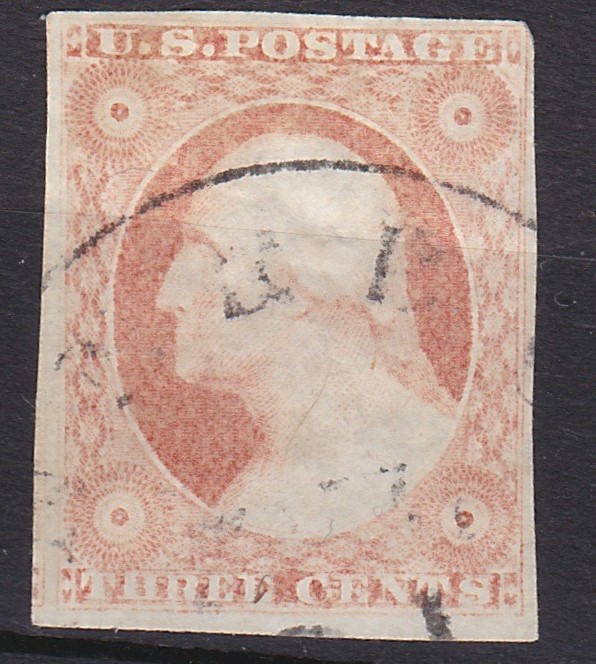
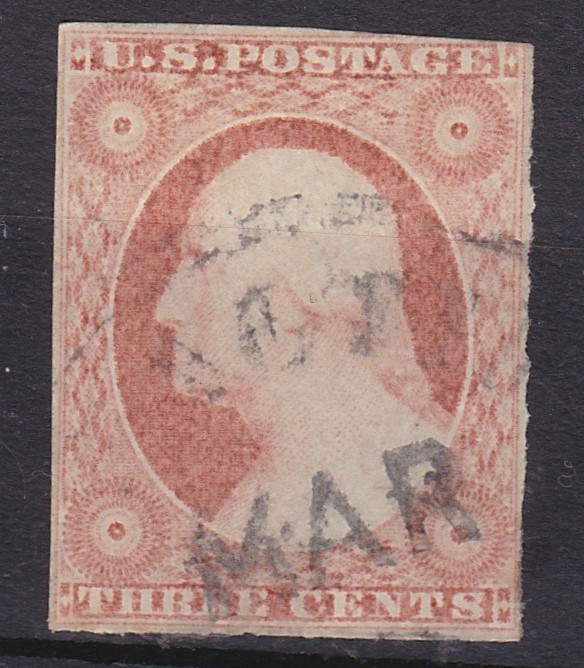
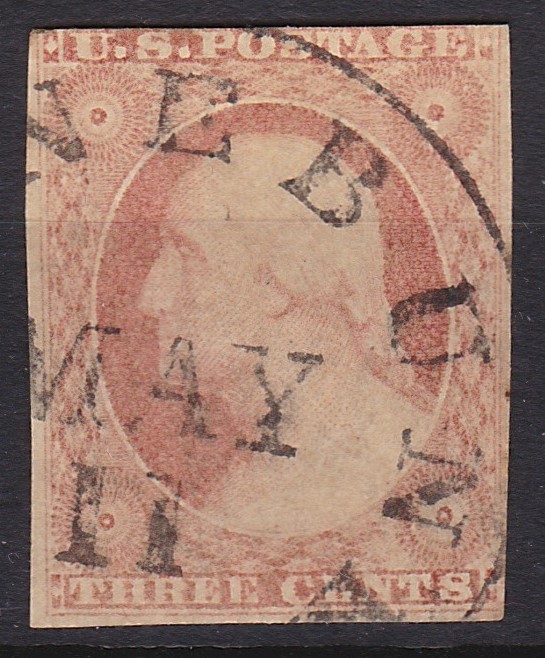
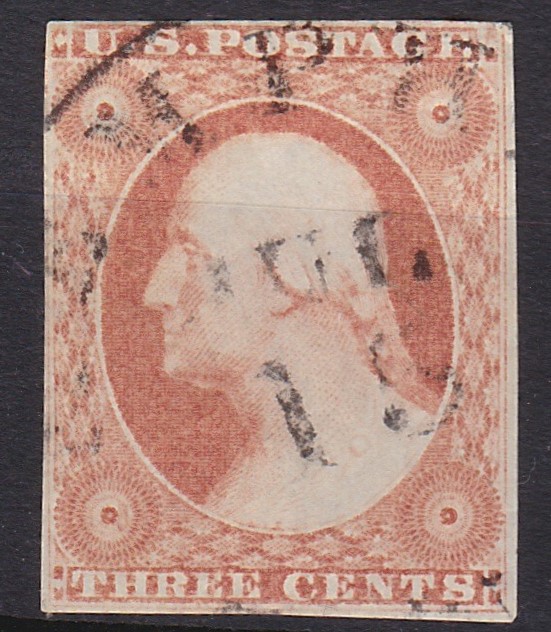
Your first stamp on the previous page possibly has a New Bedford Massachusetts postmark (common). Your second stamp is probably from plate 4, and it appears to have a guide dot at top right, making it a top row position.
In your second group;
The first stamp has nice, big, margins, with a probable sheet margin at bottom. It is from plate 2L or 3 with one line recut in the upper left triangle. The inking of the lower label block (THREE CENTS) is interesting.
The second stamp is from plate 1L, 2L, or 3. I see nothing remarkable.
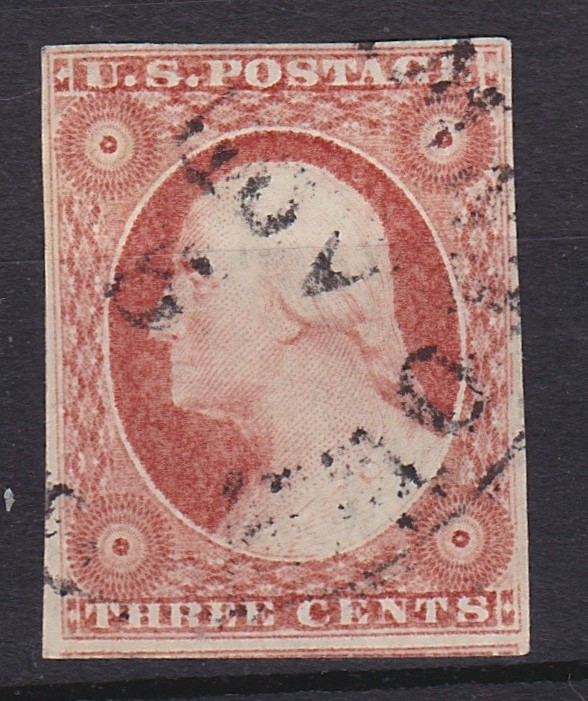
The third one is a nice four-margin stamp from plate 2L or 3. It has some interesting skips in the right outer frame line (let us know if any of your stamps have plate position numbers written on the back).
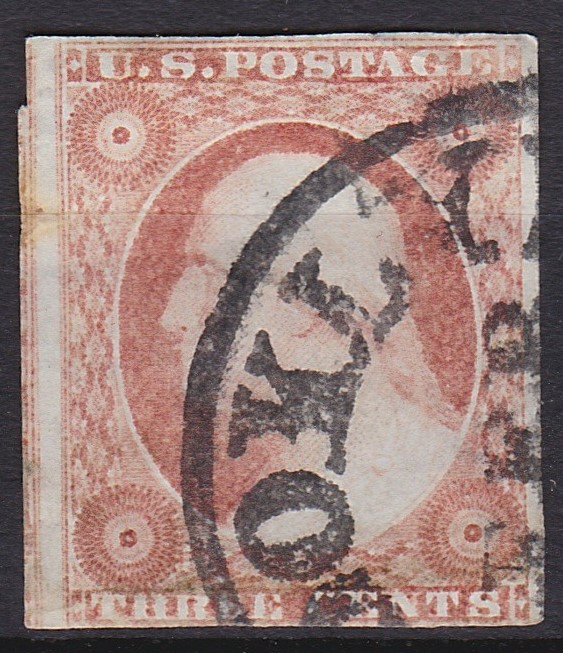
The fourth stamp (Brooklyn NY) is the most interesting in this group, and it comes from the famous "three rows" of plate 3 left. The position is 59L3, 69L3, or 79L3. If the position number isn't written on the back of your stamp, we can figure out which of the three it is.
Here is a brief story of the "three rows":
After the stamp designs were transferred from the transfer roll to plate 3, the spacing between the eighth and ninth vertical rows of the left pane got gradually too wide toward the bottom, and the spacing between the ninth and tenth vertical rows was too narrow. To make the alignment errors less conspicuous when the sheets were printed, extra frame lines were cut into the plate between the eighth and ninth vertical rows at most of the horizontal rows. Conversely, the side frame lines were cut abnormally close to the design on some positions between the ninth and tenth vertical rows, and the inner frame line was omitted for some positions.
Here is a diagram from Carroll Chase's book that shows the unusual frame lines of the three rows:



 Replies: 3,821 / Views: 252,769

 Posted 05/19/2020 02:40 am