| Author |
 Replies: 3,825 / Views: 255,771 Replies: 3,825 / Views: 255,771 |
|
|
|
Pillar Of The Community
United States
2230 Posts |
|
|
Here is a fairly late usage of a clearly-printed #11A from plate 3 (54L3) tied to a piece with a nice, blue, August 17 1857 Keene New Hampshire CDS. The usage is about six months after the perforated 3-cent stamps (#25) first appeared. The reason the stamp impression, from a plate which had been in use for over five years by the spring of 1857, is so clear, was explained by Carroll Chase. Chase wrote that plate 3 was very likely carefully cleaned in 1856 ". . . because the 1857 impressions are beautifully clear, which was not the case with those printed in 1855. This, however, may have been due largely to the variation in the ink used during the two years mentioned."   |
Send note to Staff 
|
|
|
Valued Member

United States
327 Posts |
|
|
Cleary printed indeed. Thats a beautiful specimen all around. Looking at the the color distribution chart on the USPCS site, this would likely be brownish carmine or claret? |
|
Send note to Staff
|
|
|
Pillar Of The Community
United States
2230 Posts |
|
|
Thanks, Harper.
The color is brownish claret, but it seems to have a touch of brownish carmine. My Epson scanner puts too much red in scans of claret stamps for some reason, and the color I see on my monitor isn't true. |
|
Send note to Staff
|
|
|
Valued Member
United States
342 Posts |
|
|
Pillar Of The Community
United States
2230 Posts |
|
|
Thanks, Stan. I appreciate seeing all the unique items you have posted. |
|
Send note to Staff
|
|
|
Pillar Of The Community
United States
1162 Posts |
|
|
Valued Member
United States
342 Posts |
|
|
I know that some of you guys like to keep images for your own references. Here is what I believe to be position 1R3 with enough selvage at left to show the centerline being 6.25 mm away from the left outer frame line. This also shows the upper left guide dot, which isn't shown on Chase's or Lund's images on the stampplating.com website. The lower right corner has a bit of trouble, but you can get that portion from the plating site. The misalignment of the left frameline of the stamp below is also evident on this example. It only shifts left about a 1/4 mm, but it is enough to be noticeable to the naked eye. Enjoy! Stan Shepp 1R3 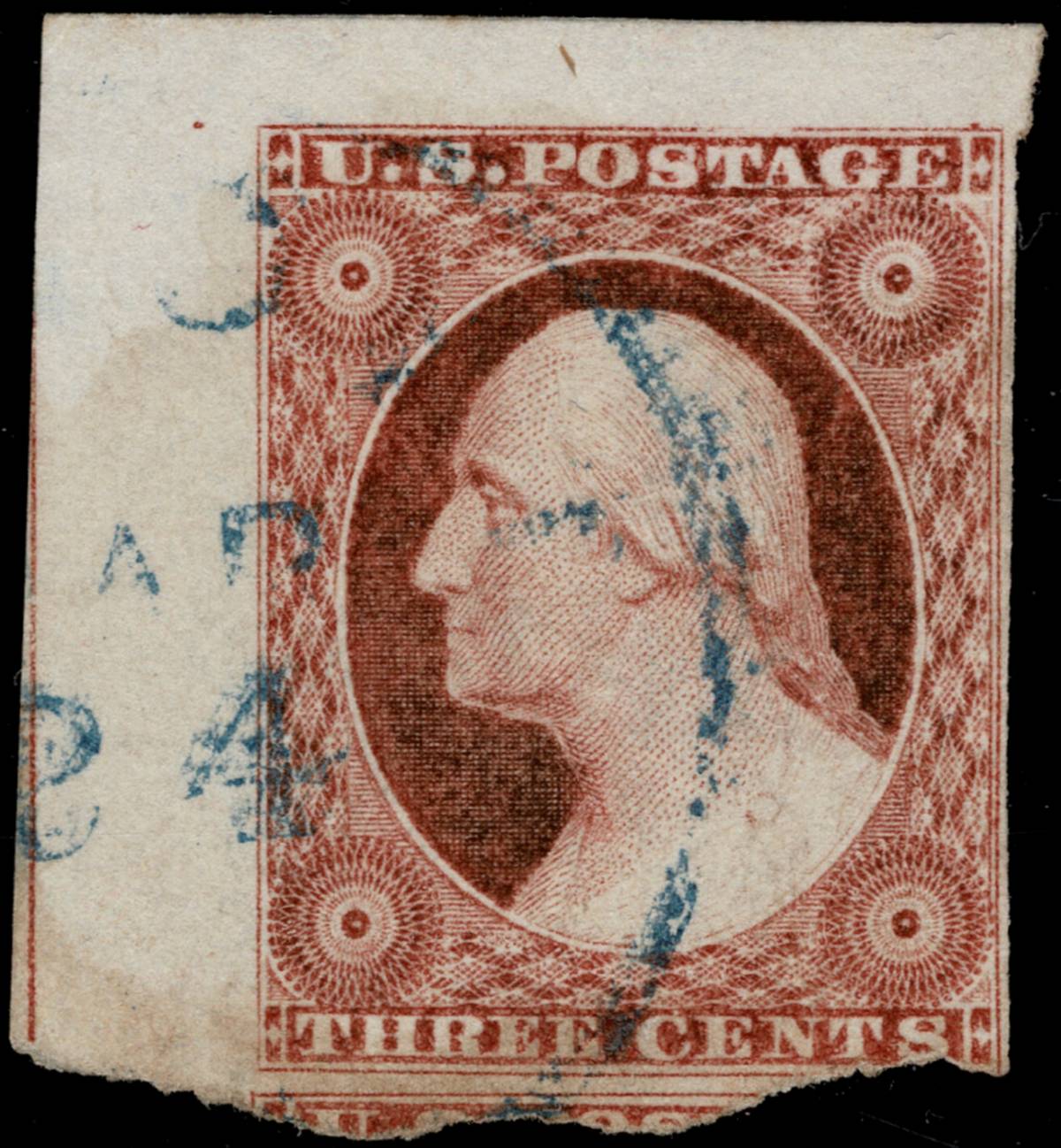 |
|
Send note to Staff
|
|
|
Valued Member
United States
342 Posts |
|
|
This one comes across a little bit plum-ish. I gave it an H202 treatment and have also posted the "after". Not a whole lot of difference in the color after the treatment. This one just might be Plum. I will mention that my other plums seem to have a little more of a reddish tint to them, where this one appears more plain brown. It fits in fairly well with my other plums. It is also possibly the 1857 color that Dr. Chase mentions on page 157, "In addition to the colors mentioned there was a small printing, and thus rare, which is in a color really not red at all, but brown. The paler ones of these I call dull yellow brown and the deeper dull rose brown." Maybe it is a "Dull Yellow Brown". Minus a certificate, I will just store it with my dull yellow browns. It looks more straight up brown in real life than the scan makes it appear. Thoughts? PS - the lower left corner looks to have a tear or something - but from the back, it looks completely sound. Even in fluid. Stan Shepp Before: 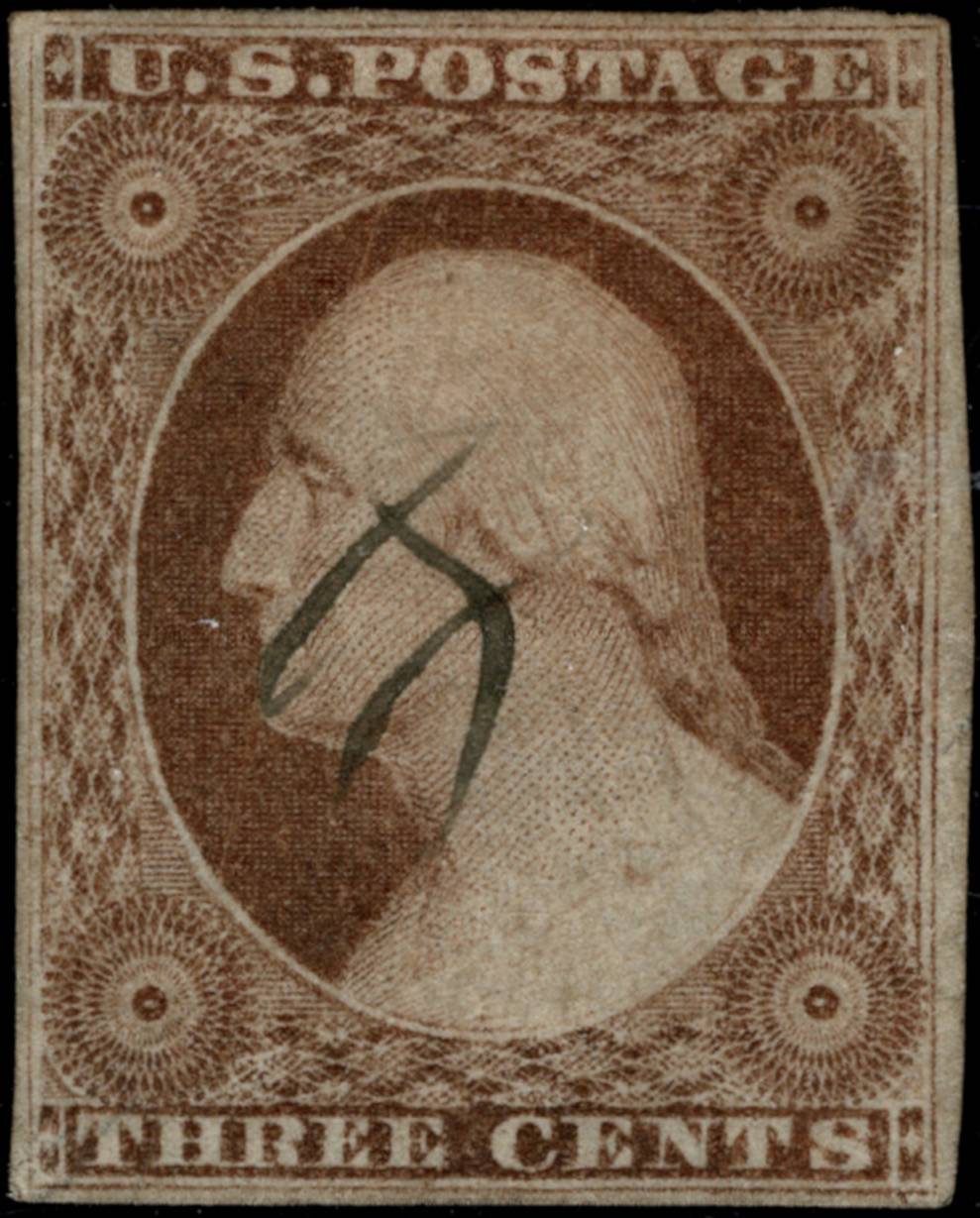 After: 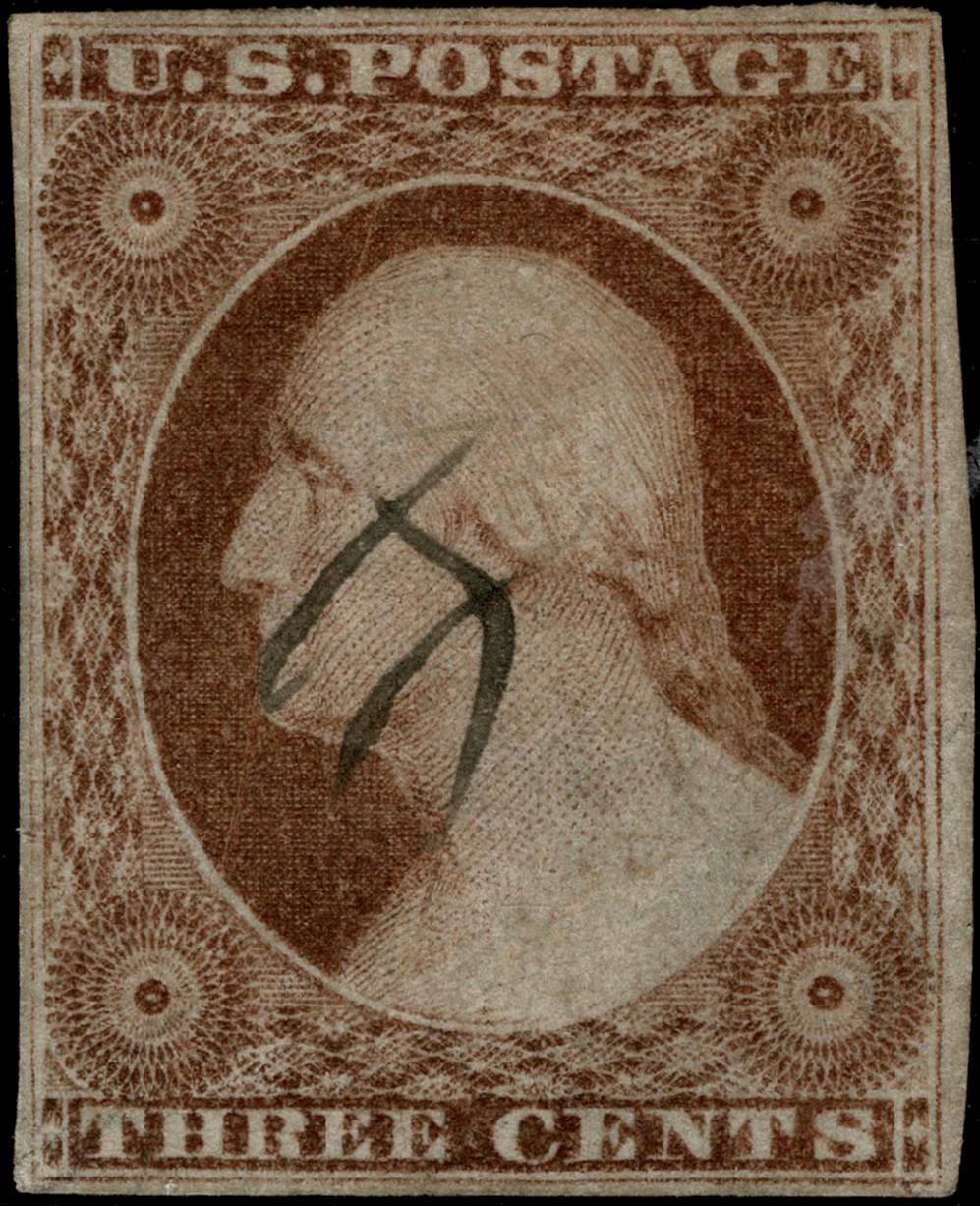 |
|
Send note to Staff
|
| Edited by stanshepp - 11/09/2022 6:05 pm |
|
|
Pillar Of The Community
United States
1162 Posts |
|
|
It looks quite plum-like, as you say. From an aesthetic POV, I find plum to be quite an ugly color on this stamp. To me, it looks like mud - very little red, but lots of brown. Having said those nasty comments, I still think a plum 3c '51 is a thing of beauty, leaving my aesthetics aside! I've never seen a dull yellow brown, so I cannot comment on that.
I wonder if the 'tear' in the lower left corner is some stray cancel? Very light, but if nothing shows in fluid, it is probably not damage. There's not an awful lot else it can be. Stray addressing ink? Stray ms cancelling ink? A highly under-inked cds, requiring the PM to ms cancel it somewhere along the way? Heck, it might even be some soiling that it has picked up over the years. |
|
Send note to Staff
|
|
|
Pillar Of The Community
United States
939 Posts |
|
|
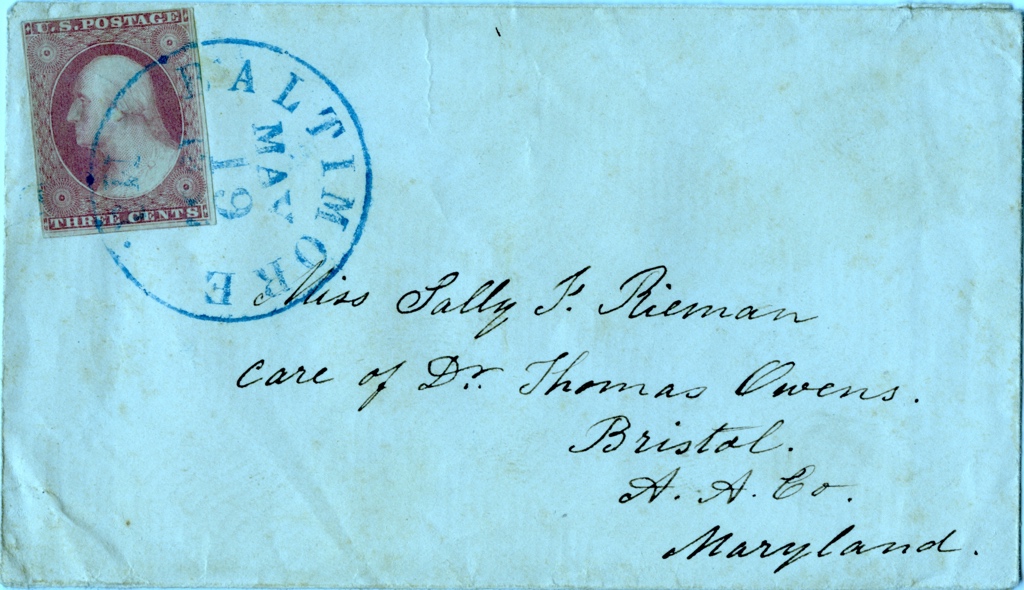
Annapolis MD cover with 2R8 (1857) Couldn't find the cancel in Simpson's. Not sure if it's a double strike or overlapping rings. Text isn't doubled. 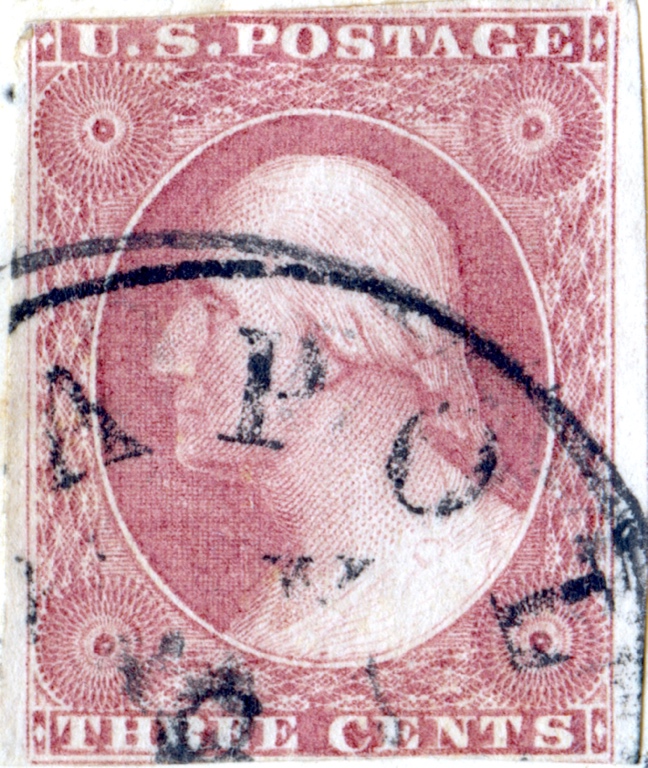 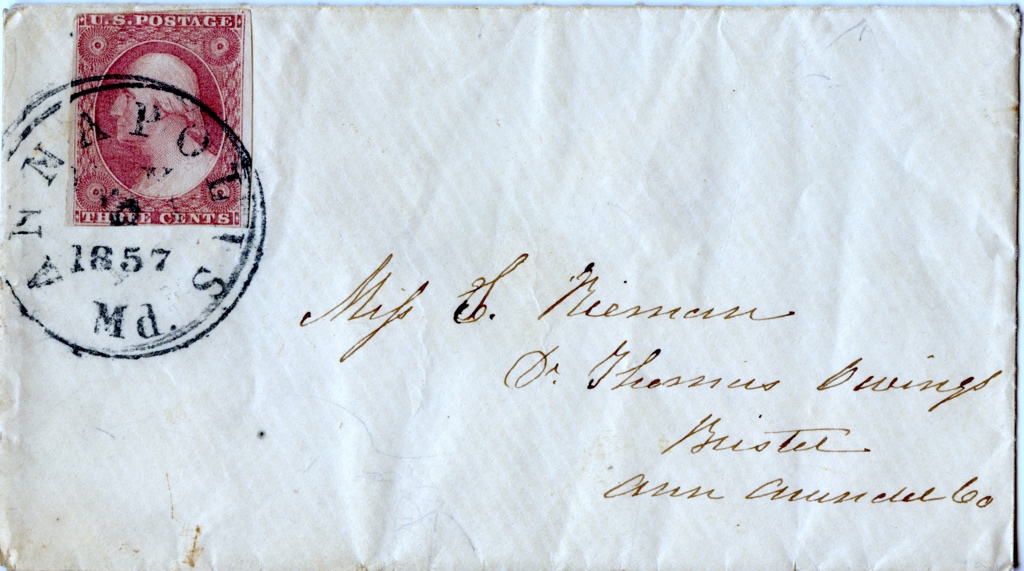 |
|
Send note to Staff
|
|
|
Pillar Of The Community
United States
939 Posts |
|
|
Pillar Of The Community
United States
2230 Posts |
|
|
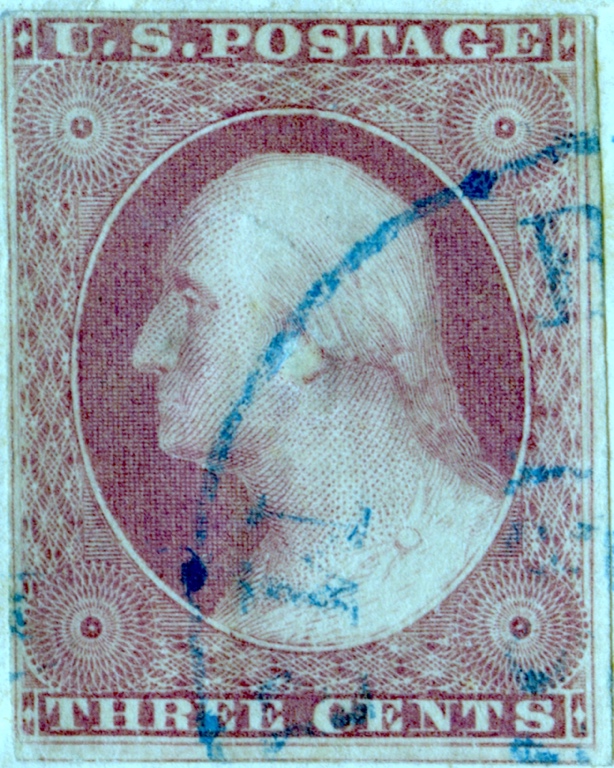
Hi, Moyock13, Those are two nice covers. Thanks for showing them. Regarding the stamp on the Baltimore cover, the line connecting the lower-right triangle to the diamond block originates from the master die, so it's not a recut. This line can be seen on many better printings of the 3-cent imperforate issue. Below is a scan of a proof, 41P4 that shows this line. Likewise, the faint line just left of the right frame line likely is the RFL that got transferred very lightly from the master die. The frame lines from the master die barely survived the entire process of transferring the design to the plate (see ioagoa's post on page 164 detailing all of the steps to the process). It is not uncommon to see a thin remnant of a "transferred" frame line in this area, especially when the "recut" frame line curves away from the original FL. Also below is a repost of a three-rows position, 19L3 that shows the faint original frame line where the right frame line was not recut. The good news is that the frame line remnant on your Baltimore stamp can be used as a key diagnostic for plating.    Edit: Corrected minor typo |
|
Send note to Staff
|
| Edited by Classic Coins - 11/13/2022 4:17 pm |
|
|
Valued Member
United States
238 Posts |
|
|
I don't have much in this section of the book. Here's my #11. A #7 and a #9 are on the way. 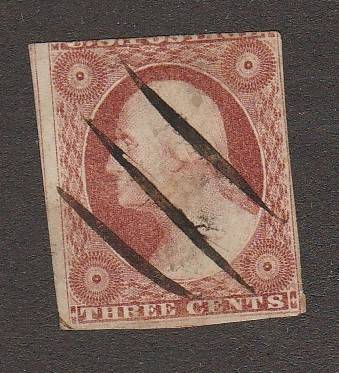 |
|
Send note to Staff
|
|
|
Pillar Of The Community
United States
2230 Posts |
|
|
Pillar Of The Community
United States
2230 Posts |
|
|
Hi, Moyock13,
I plated your Baltimore stamp. Hint: It has an inner line on each side. Both inner lines are faint and difficult to see because of the degraded condition of the stamp.
Let me know if you'd like me to reveal it. |
|
Send note to Staff
|
| Edited by Classic Coins - 11/14/2022 10:25 pm |
|
|
Replies: 3,825 / Views: 255,771 |
|




 Posted 11/07/2022 9:24 pm