| Author |
 Replies: 831 / Views: 75,810 Replies: 831 / Views: 75,810 |
|
|
|
Valued Member
United States
71 Posts |
|
|
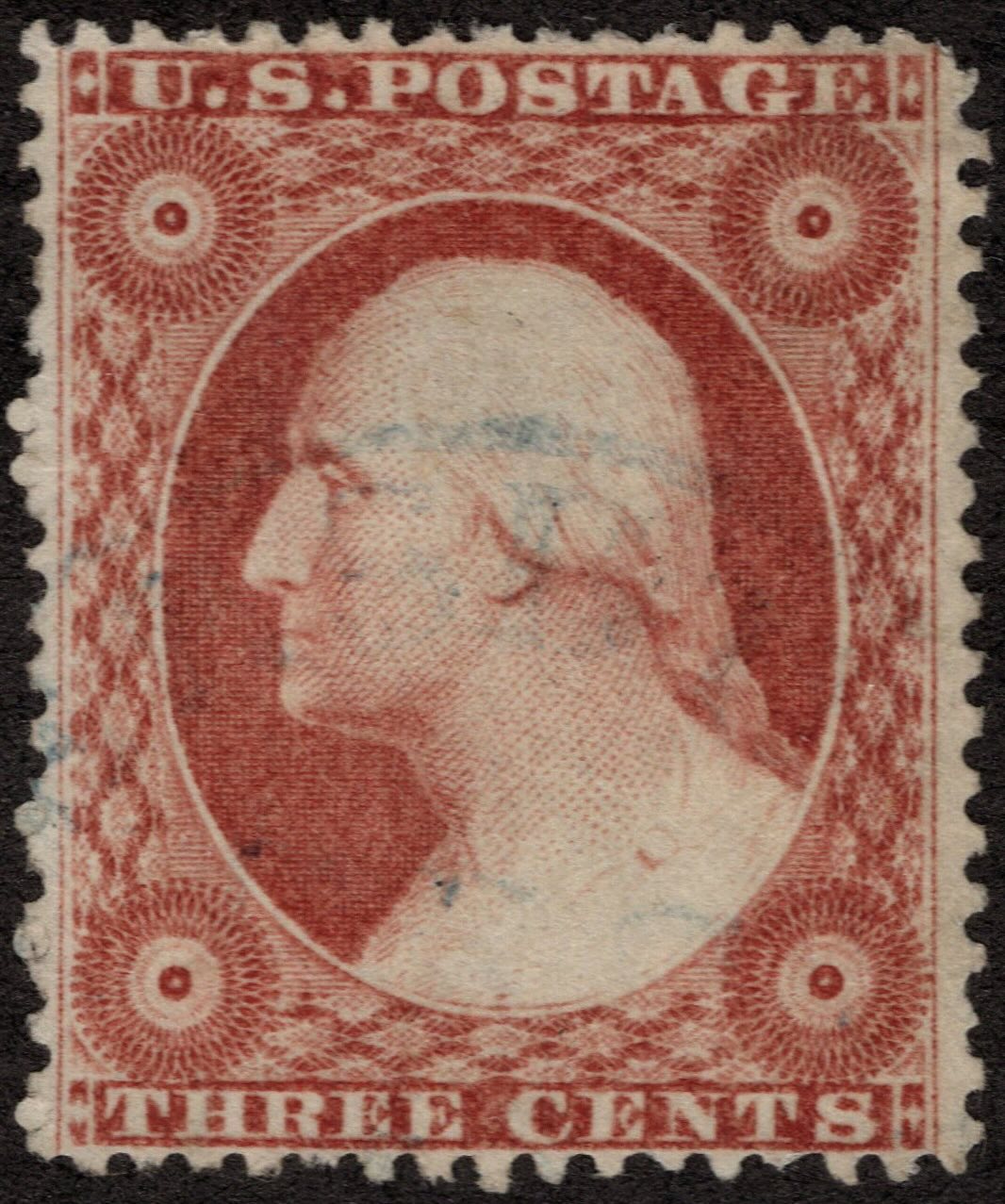
The guy I bought this off of told me it might be worth plating. I know nothing about plating. Are there certain plates that are more desirable? 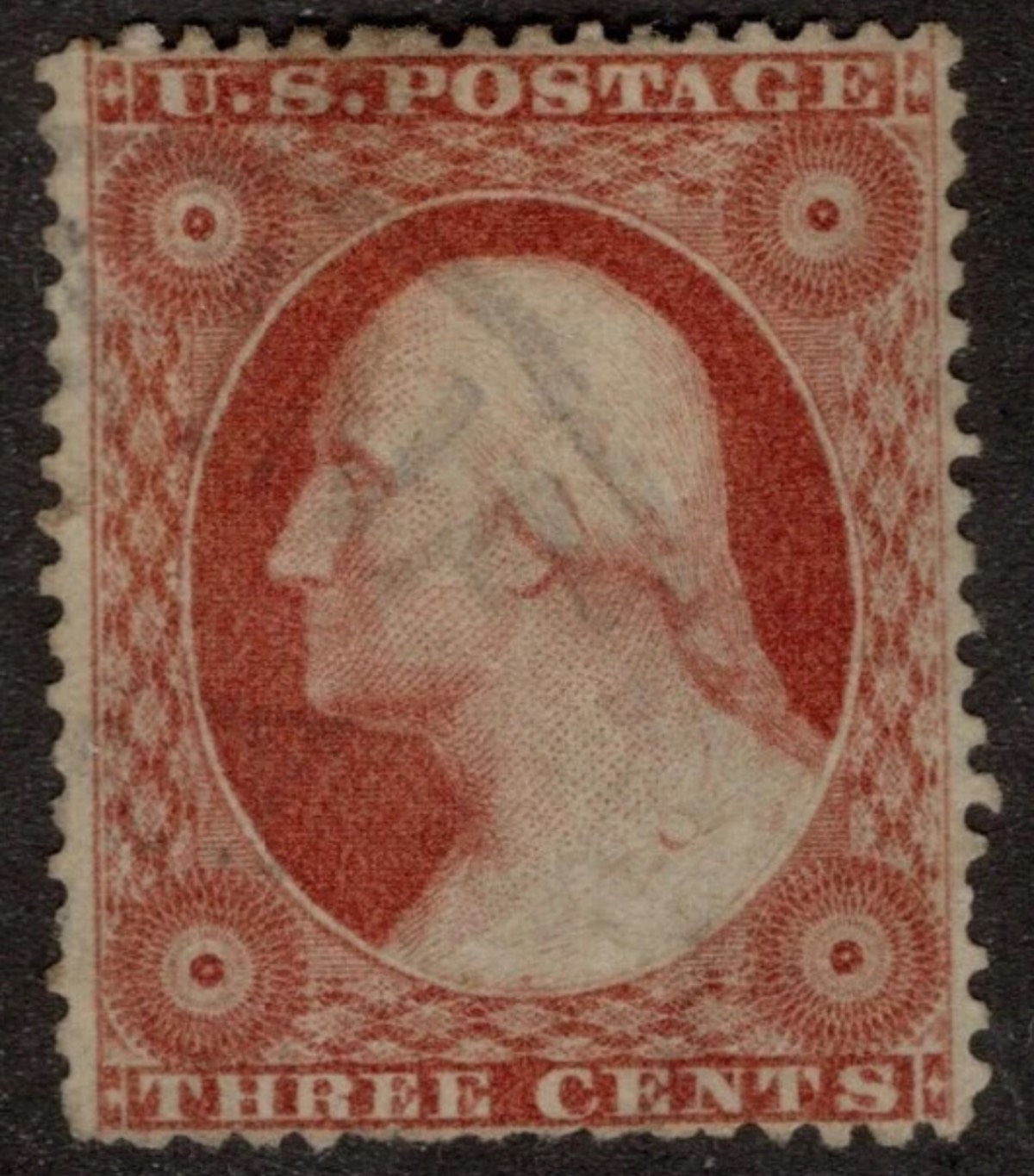 |
Send note to Staff 
|
|
|
Pillar Of The Community
United States
811 Posts |
|
|
That is a Ty. 3 Scott 26 (or maybe Ty IV 26A - can't be sure on my phone). Either at, it is practically unplatable. I don't see anything on this stamp that says "worth plating" beyond a general interest in plating these stamps. Some positions on these stamps are more valuable than others, but by plate, there is not any difference in value. Nothing on this stamp appears to differentiate it from any other 26/26A. It is a decent, but not great copy with the short perfs on the bottom. |
|
Send note to Staff
|
|
|
Pillar Of The Community
United States
811 Posts |
|
|
It is a Type III #26. And it is a pretty copy. Maybe a little better than "decent." It is nicely centered with a very light cancel. ..only thing detracting are the short and missing perfs at the bottom. |
|
Send note to Staff
|
|
|
Valued Member
United States
71 Posts |
|
|
Thanks for the info. It was a $3 stamp so the bottom perfs didn't bother me at all. If I can get nicely centered 26's with descent perfs I grab them. |
|
Send note to Staff
|
|
|
Pillar Of The Community
United States
811 Posts |
|
|
I have this 26P3, but I do not have a lot of information about it. The auction description said it is from the top row of plate 20 and that it is ex-Finkelberg. My Scott Catalog is not terribly clear about who printed this - I assume Toppan, Carpenter, & Co. The catalog gives a date range of 1851-1860. Does anyone know more about this one? 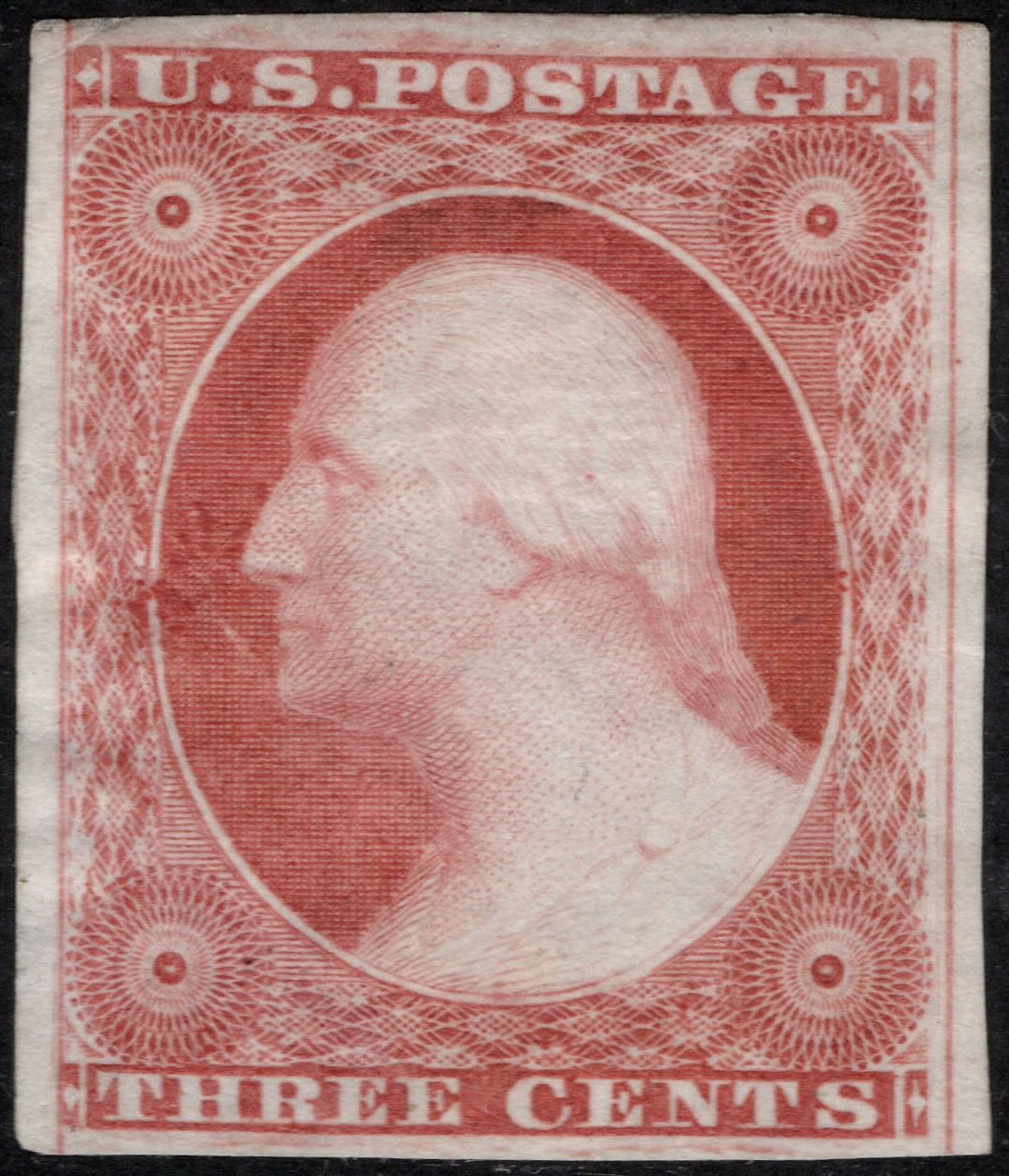 |
|
Send note to Staff
|
|
|
Pillar Of The Community
United States
3520 Posts |
|
|
26P3's seem pretty clearly to be plate proofs for one (or more) of the Ty III plates.
Of course you knew that. These are pretty scarce, and I don't know any more about them than that. So I fired off an email to someone who may know more - I'll advise when I hear back. |
|
Send note to Staff
|
|
|
Pillar Of The Community
United States
3520 Posts |
|
|
@philazilla - can you clarify if the blotchy area of color that crosses the colorless oval at around 9:00 is ink from the printing, or if that is some extraneous ink?
Any impingements in the colorless oval area are of particular interest as they have proven useful over time to determine reliefs and help differentiate die proofs vs plate proofs.
Chase states that these proofs are all from plate 20, but not much else is known.
Plate proofs can be pulled at any time from a plate.
The 1c stamp has some similar items, all scarce to rare, where a proof was pulled from some 1c plate. I seem to recall seeing proofs from Plate 1e, 2, 9, and probably others.
I don't recall seeing any documentation in the Travers papers on these, and I'm not sure where else there would be anything.
You made a good purchase, I would think, as this is a nice and interesting item. Certainly scarce. |
|
Send note to Staff
|
|
|
Valued Member
United States
71 Posts |
|
|
Pillar Of The Community
United States
811 Posts |
|
|
Thanks @txstamp! I got this proof well under SCV, and I think it will add and interesting addition to my collection. I checked against references for the top row of plate 20, and it is not a match for any of those positions - notably the frame lines stop at the top of the design for top row stamps unlike my proof. If it is a plate proof, my proof would follow, but if it is a die proof, who knows - guess there are not really positions for die proofs. The extraneous ink looks to me to be from the proof printing itself - not from some ink after the fact. I cannot tell if it is an inking anomaly or if it is something the proof inherited from the transfer roll. I do not know much about the reliefs of these stamps - I only know the Type I and II reliefs. Note also the ink on the right of the oval, possibly some extra gouging just below the extra ink "dots" on the inside of the oval, and the ink blur at the bottom of the oval. . .I have no references to compare anything to. . .perhaps someone else does. I also note some possible damage to the die or transfer roll in the tessellated design above the LL rosette . . .maybe or maybe not - at the least, the design there is weaker than it is elsewhere. As scarce as plate proofs are, I imagine die proofs are even rarer - that would be exciting to find out that this is a die proof! @HWDear - I started learning to plate these stamps in earnest a few months back and to my surprise, it is really increased my enjoyment of collecting them. If you can plate a stamp, identify the cancel, and id the color, you have a good chance of placing it at a specific time and place. I am shocked at how fast I can plate "easy" stamps now - I plated 4 tonight in about 20 minutes. Not all of them go that easily. The keys are the Chase book and the 3¢ plating website. The StampSmarter section is somewhat helpful with the compression charts. It is a pretty straightforward and methodical process. . .identify the type, plate, relief, recuts, and guide dots, and then it is a process of going through all the possibilities one by one. . .often you can buzz through candidates a second or two at a time when you key in on a distinctive feature like a guide dot location or some distinctive spacing. Give it a try and see how you do. . .looks like you have some great material to work with! |
|
Send note to Staff
|
|
|
Pillar Of The Community
United States
3520 Posts |
|
|
3c Panama Pacfic Small Die Proof - Scarlet 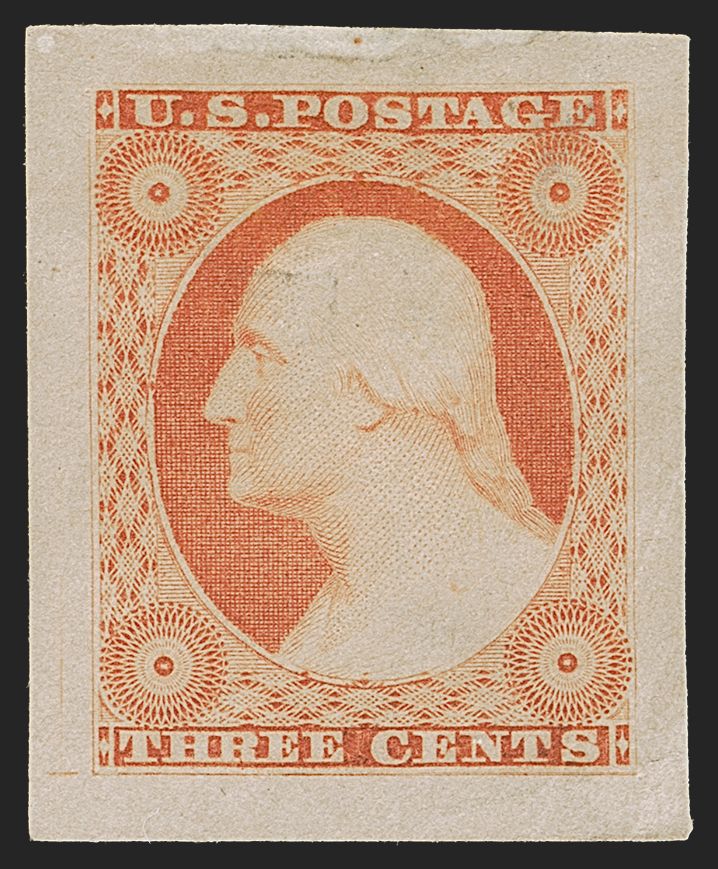 3c Panama Pacfic Small Die Proof - Orange Brown 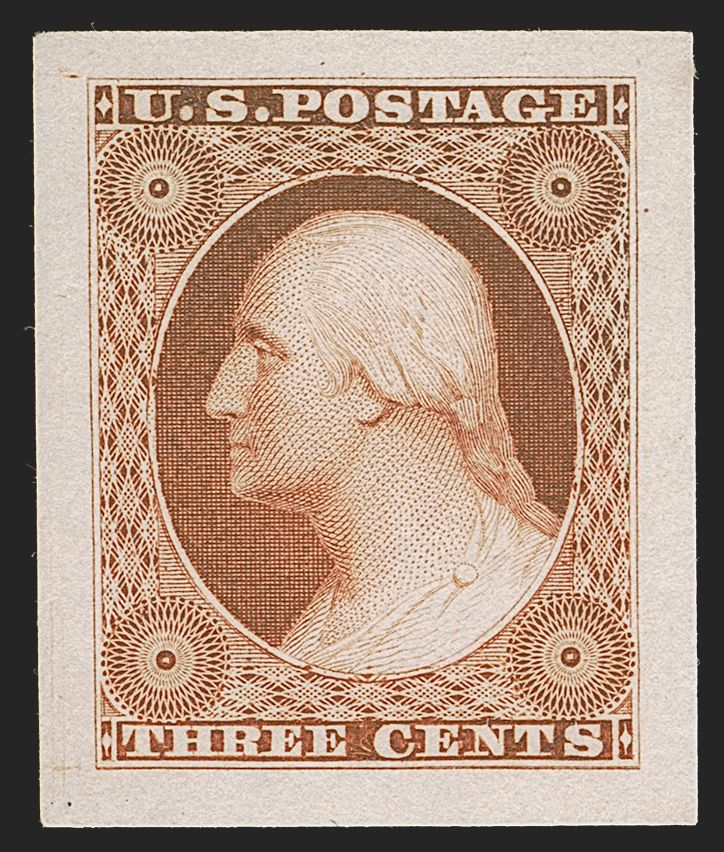 Both of the above are 41P2a's - showing both known colors of these. I realize this is a perforated stamp thread, but since we are talking about proofs related to the 3c stamp, perforated, this seems appropriate. Since these are die proofs, you can look at the colorless oval region in these and compare to your 26P3 for similarities and differences. I was fortunate to pick up the orange brown one above in one of the major essay proof sales earlier this year. It is in such nice condition, I didn't want to pass it up. You can really see good detail in it. |
|
Send note to Staff
|
|
|
Pillar Of The Community
United States
3520 Posts |
|
|
Valued Member

United States
327 Posts |
|
|
Greetings all. It's been a while since I posted anything and I came across this cover yesterday while looking through my covers. It's a folded letter/wrapper with four 25A's - Positions 19R5L, 10R5L, 11R5L and 13R5L. Docketing has October 15, 1857 and appears to be from a "??? Welsh" which appears in both the docketing and the hand stamp on the front. Anyone have insight into why they paid a 12c rate from Philadelphia to New York? Hope all are well. Harper1249 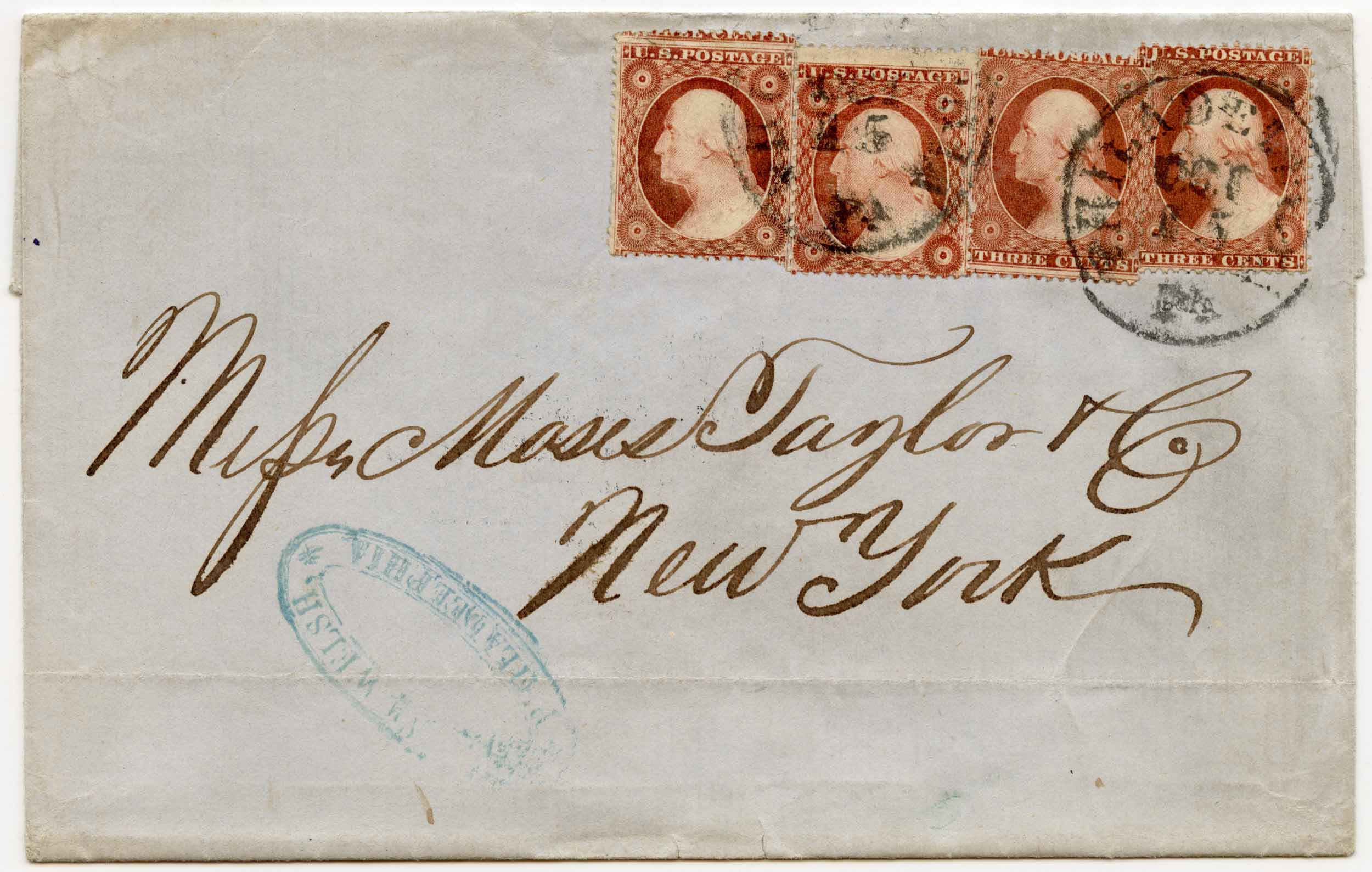 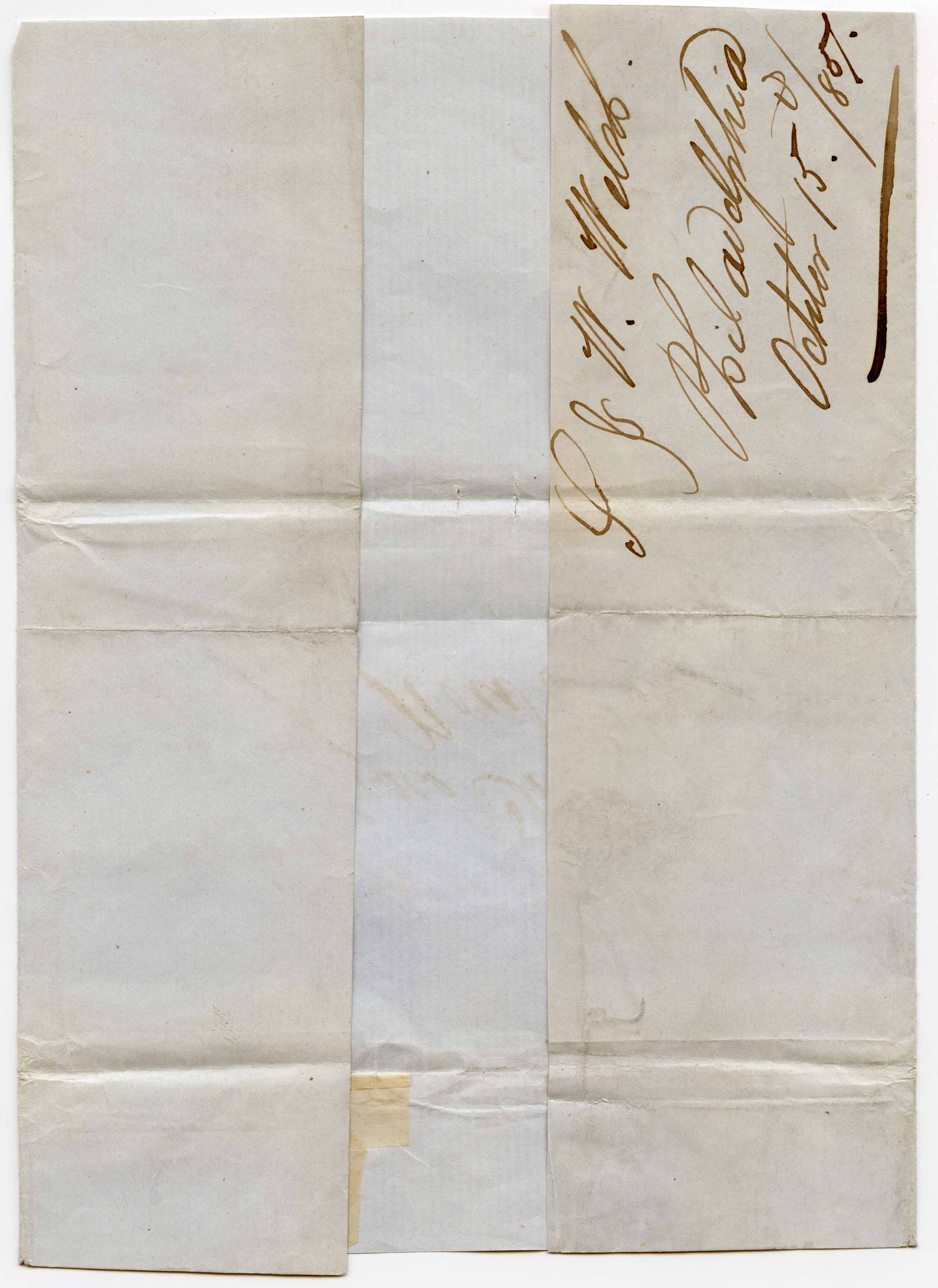 |
|
Send note to Staff
|
|
|
Pillar Of The Community
United States
3520 Posts |
|
|
It looks like a wrapper that was on something heavy.
Specifically this paid a 4 times 3c rate or 12c for a quadruple rate due to weight. |
|
Send note to Staff
|
|
|
Bedrock Of The Community
United States
10824 Posts |
|
|
Quote:
As scarce as plate proofs are, I imagine die proofs are even rarer - that would be exciting to find out that this is a die proof! Almost all die proofs are rare, there was never a need to produce more than a small handful for most of them. |
|
Send note to Staff
|
|
|
Pillar Of The Community
United States
811 Posts |
|
|
Replies: 831 / Views: 75,810 |
|




 Posted 06/27/2025 7:11 pm