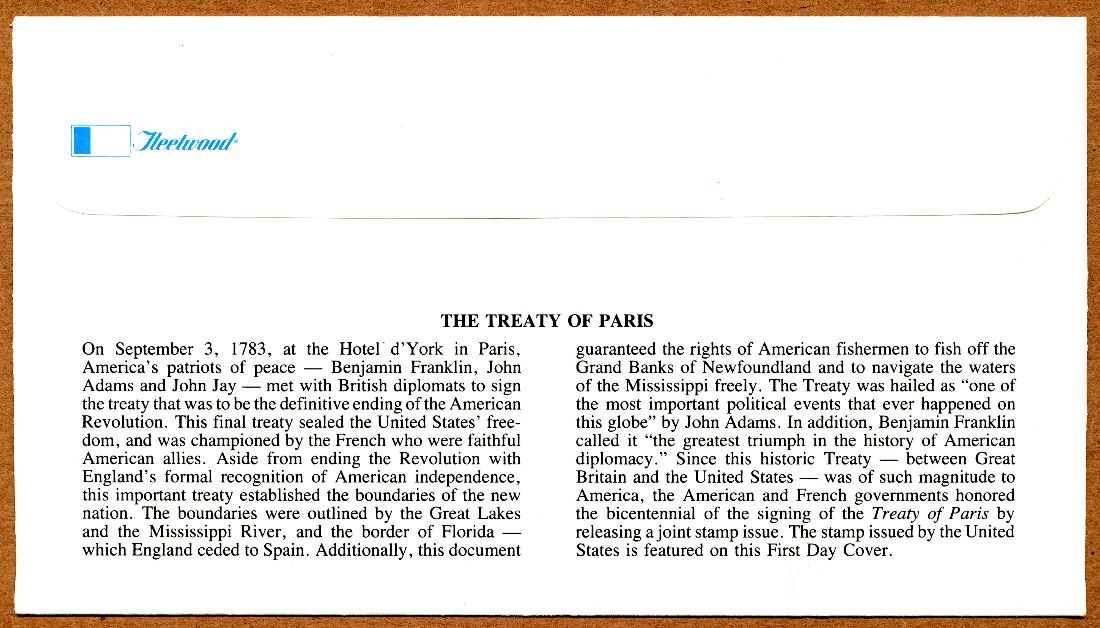
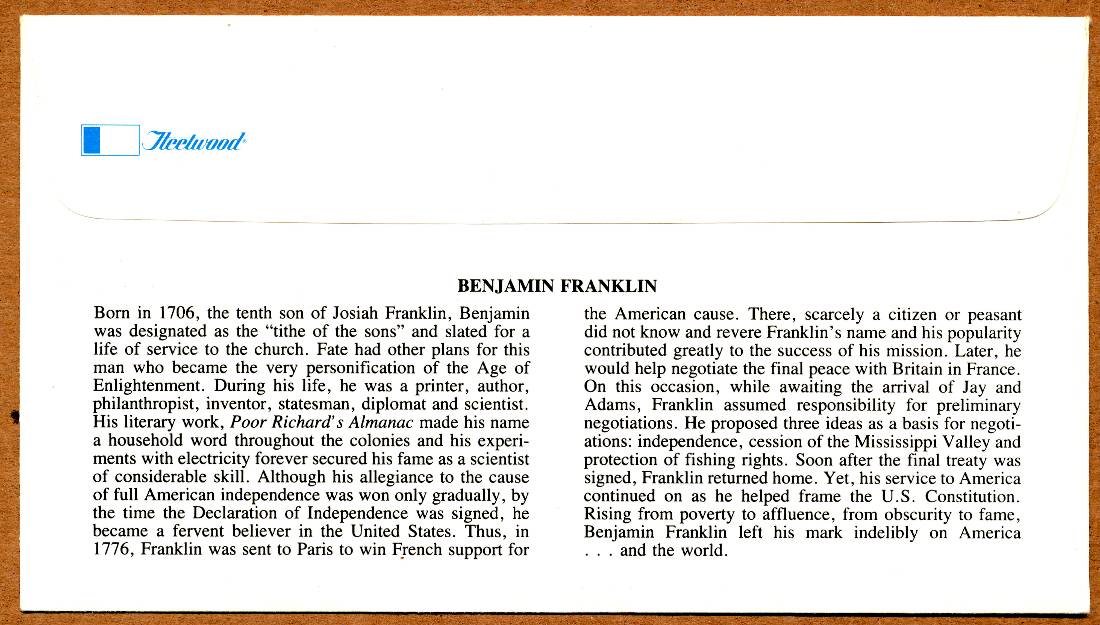
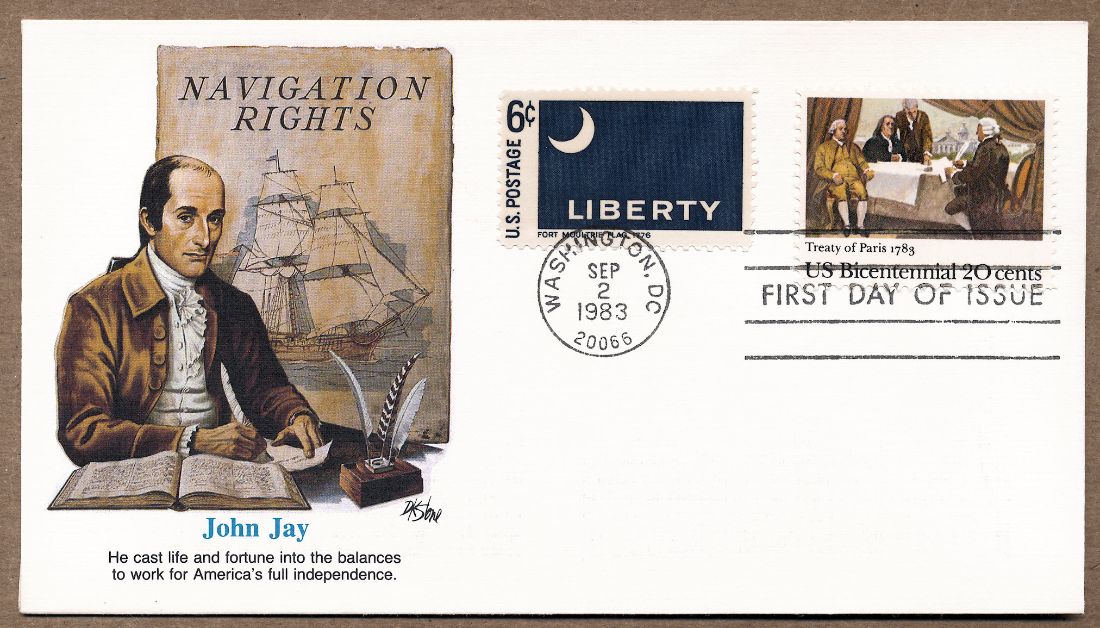
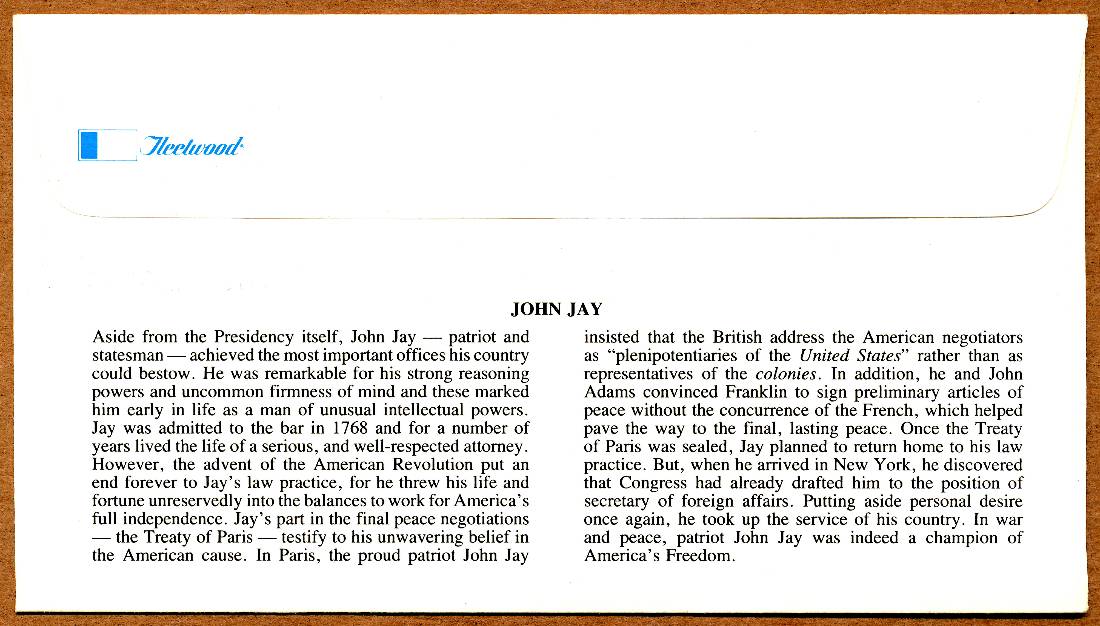
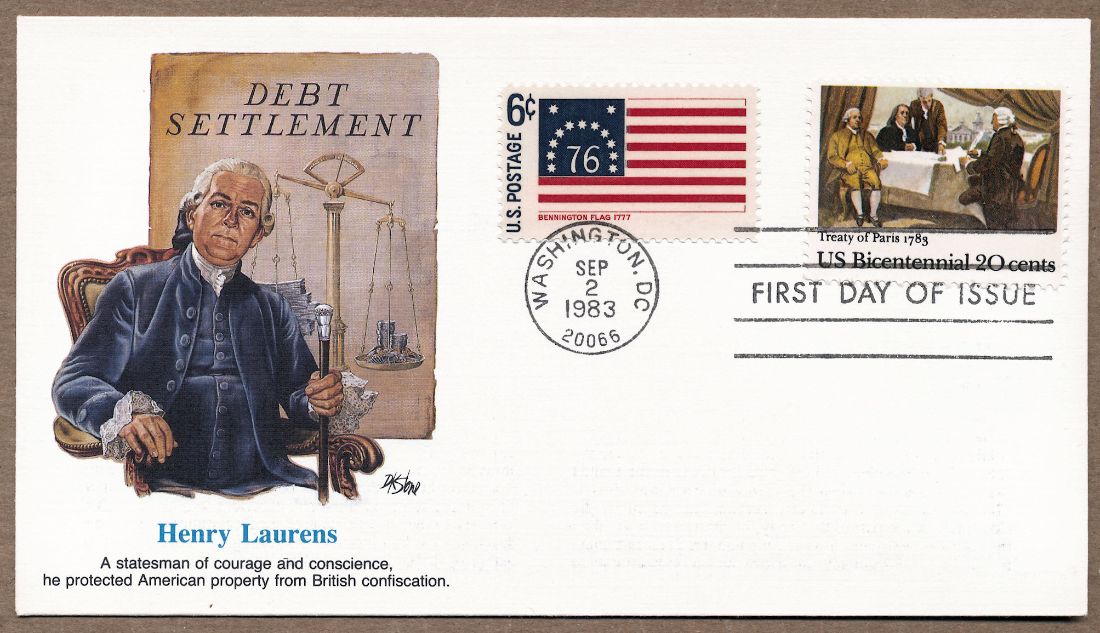
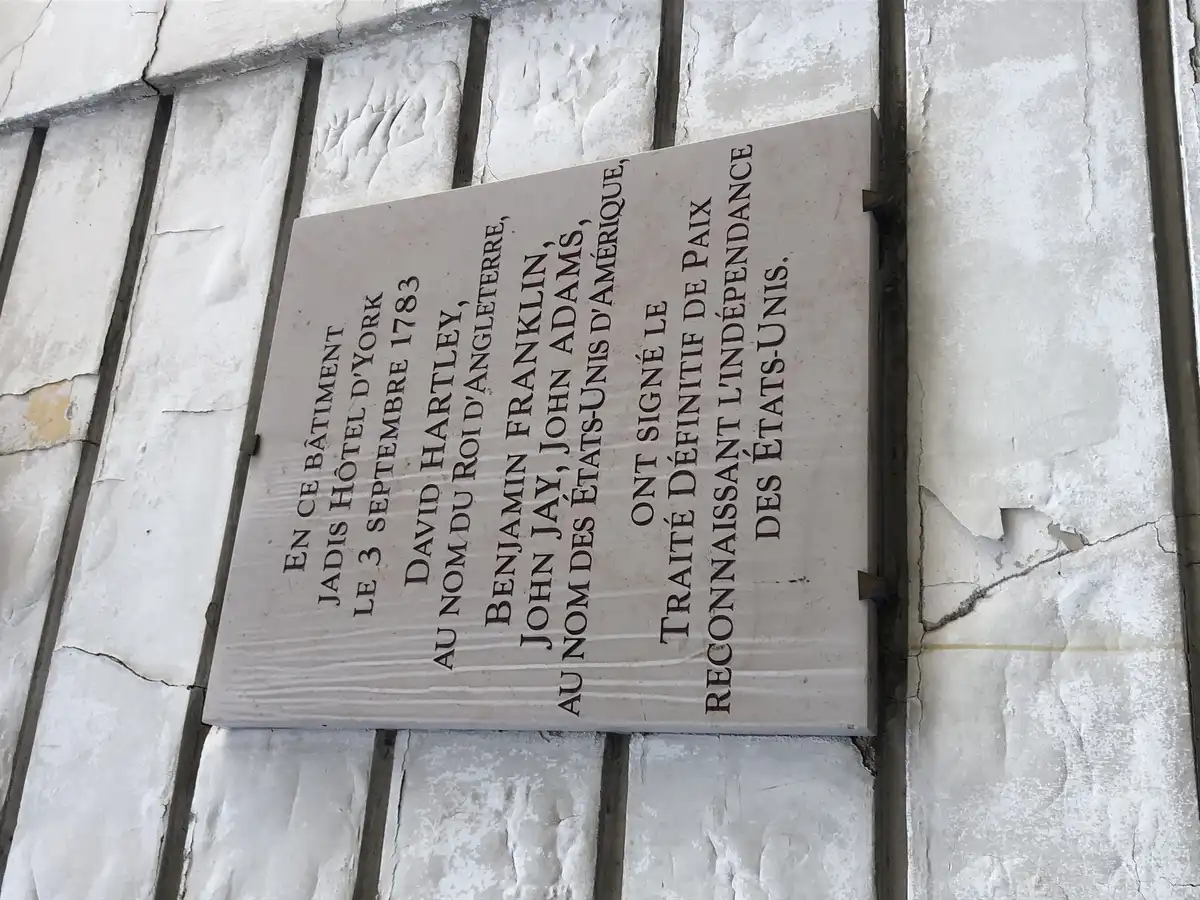
Another quick story of US history illustrated via philatelics...Though the War of the American Revolution effectively ended with the American (greatly aided by the French) victory at Yorktown on October 19, 1781, it was not until the final Treaty of Paris ("Treaty") was signed by the US and Great Britain on September 3, 1783 that the War had a formal and official ending - the Treaty represented the first time that Great Britain formally recognized the United States as an independent country.
(For the sake of formal accuracy, the final Treaty did not become completely official until it was ratified by the US Continental Congress on January 14, 1784 and by the British on April 9, 1784.)
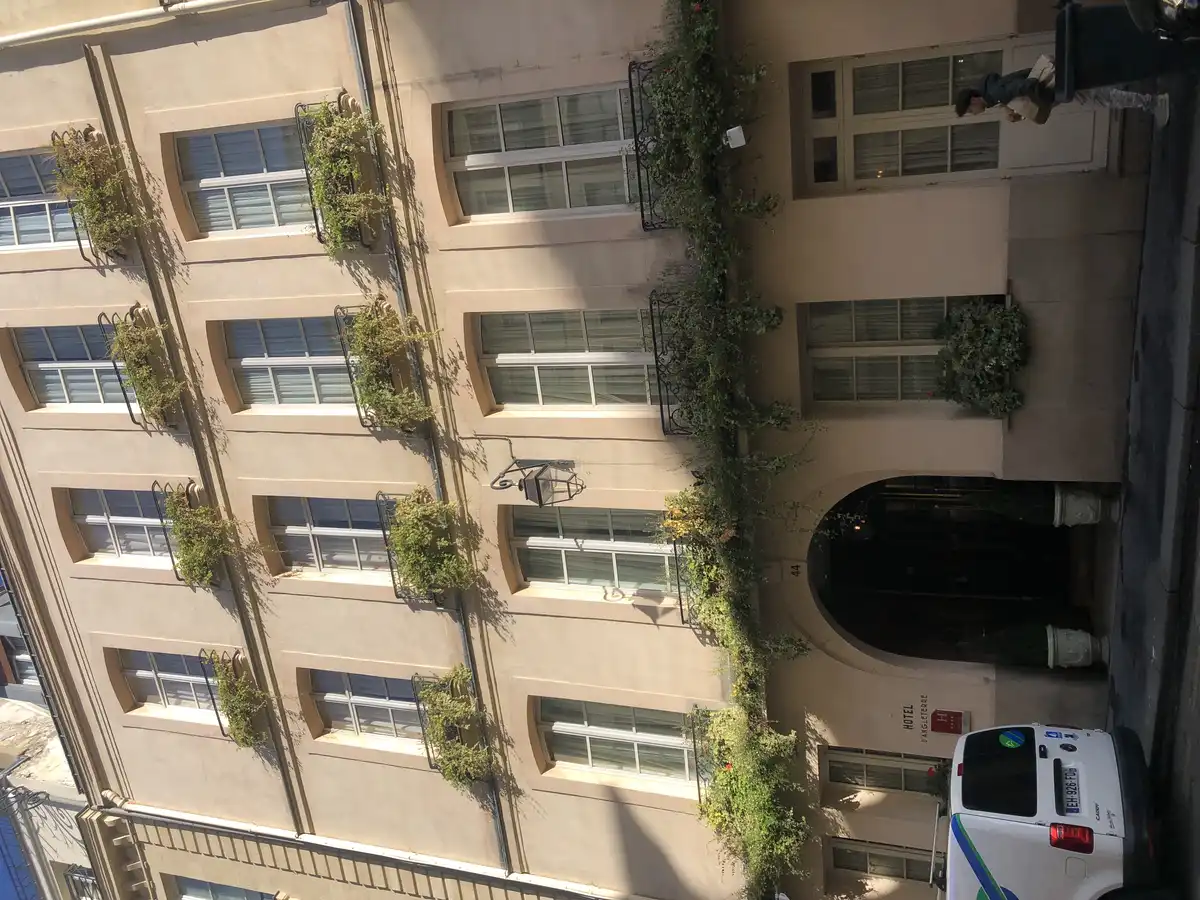
In 1782, Great Britain let it be known that it was interested in a negotiated peace with its American colonies. It believed the former colonies could become a valuable trading partner from which it would derive economic benefits without the cost of having to administer and defend them. Covert discussions began and negotiations took place in Paris, France. John Adams, Benjamin Franklin, John Jay and (in a minor role late in the process) Henry Laurens were the American negotiators; Richard Oswald, Esquire, was Great Britain's Commissioner and King George III's representative for the negotiations. A preliminary peace treaty was signed on November 30, 1782; its provisions were approved by the Continental Congress on April 15, 1783. The preliminary provisions were ultimately included in the final Treaty.
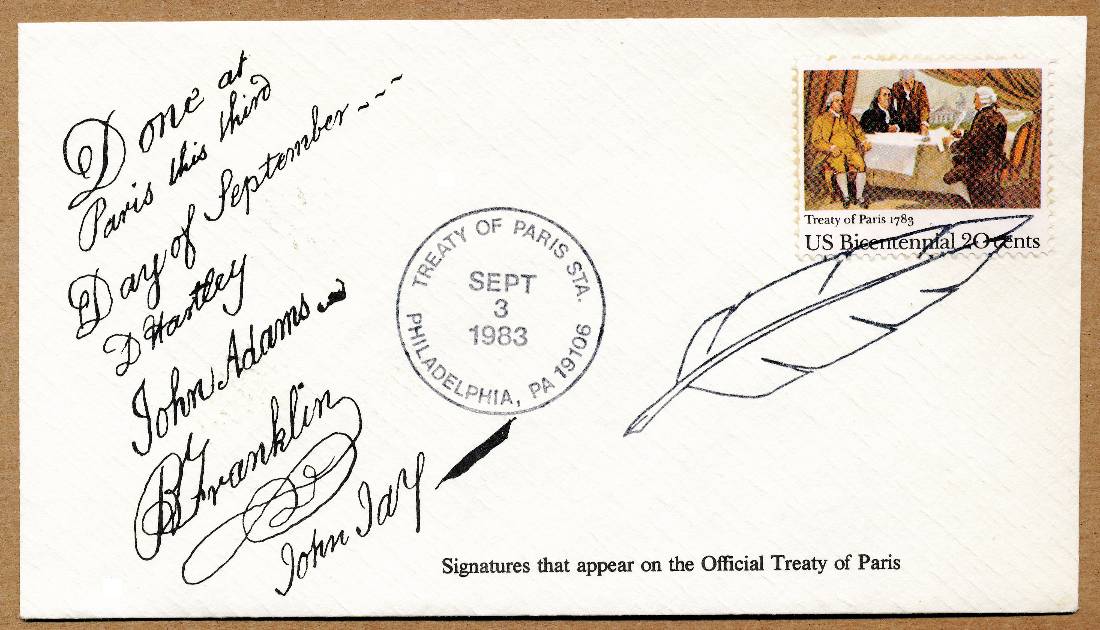
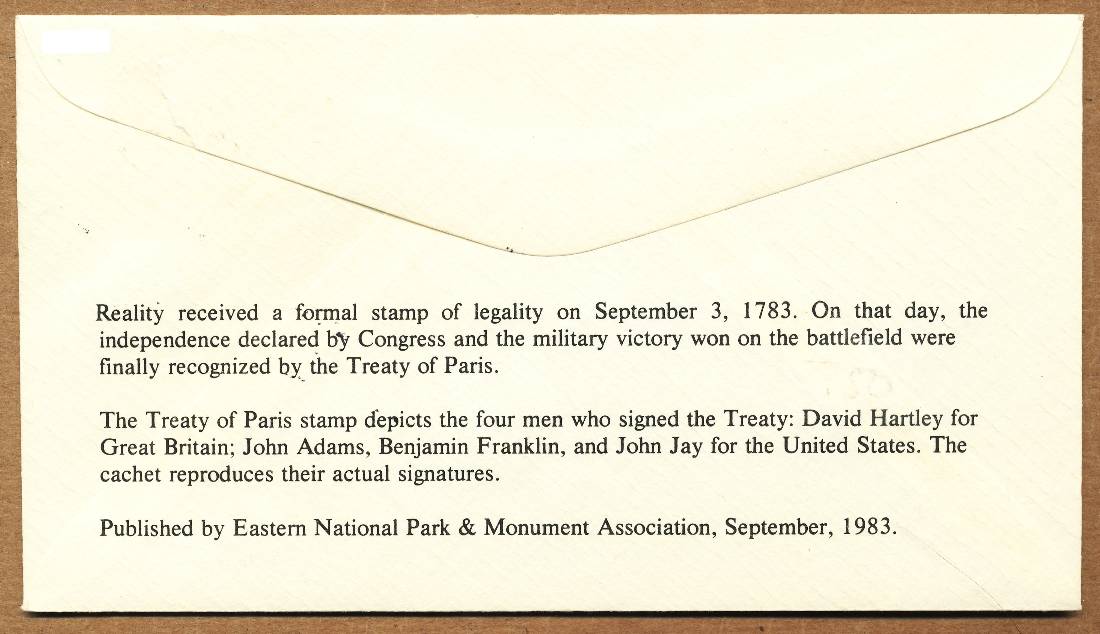
For the US, the 1783 Treaty was signed by John Adams, Benjamin Franklin and John Jay (the US negotiators signed in alphabetical order); Laurens was not present at the signing ceremony. For King George III and Great Britain, it was signed by David Hartley, a member of the British Parliament.
On a side note, Great Britain also signed peace treaties with France and Spain on the same day; it signed a preliminary treaty with the Netherlands the day before. Of course, each of these countries had aided the Americans in some form during their war against Britain and had been at war with Great Britain at the same time.
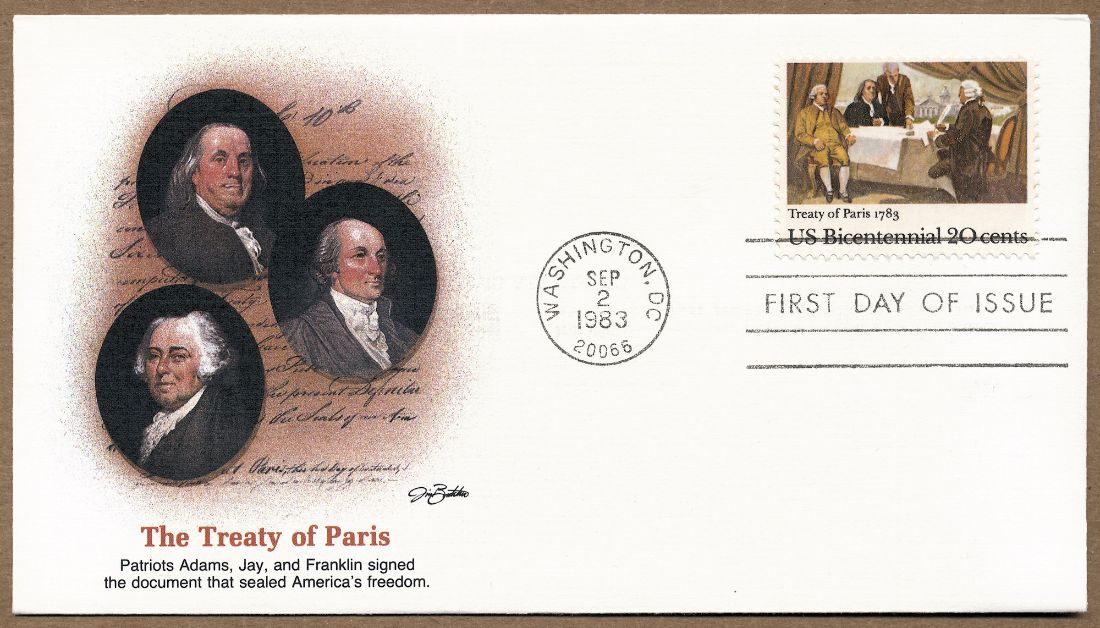
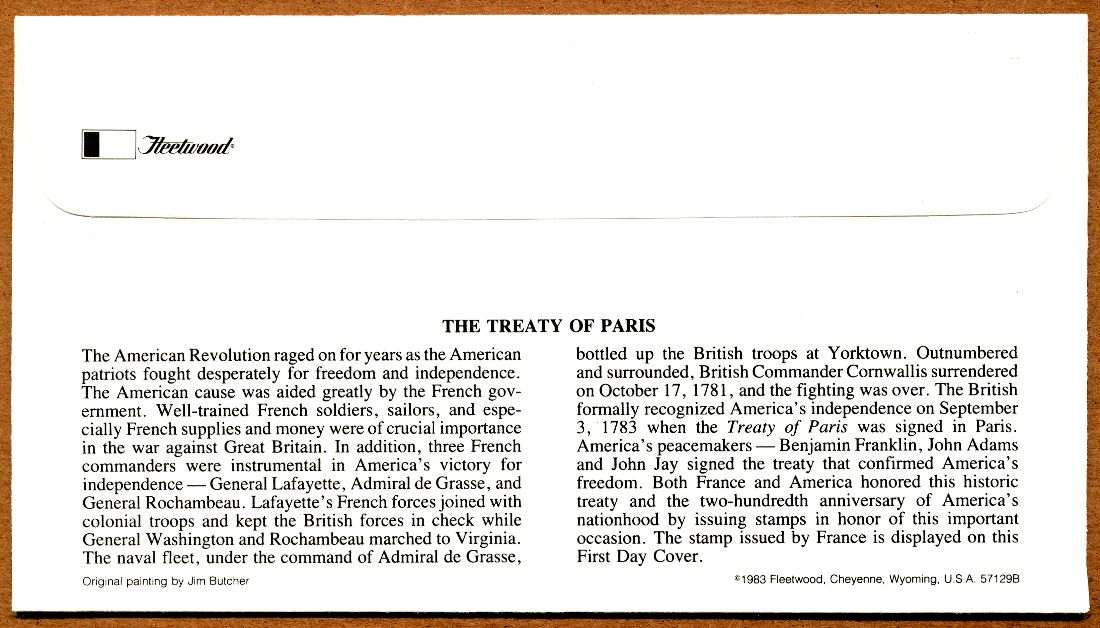
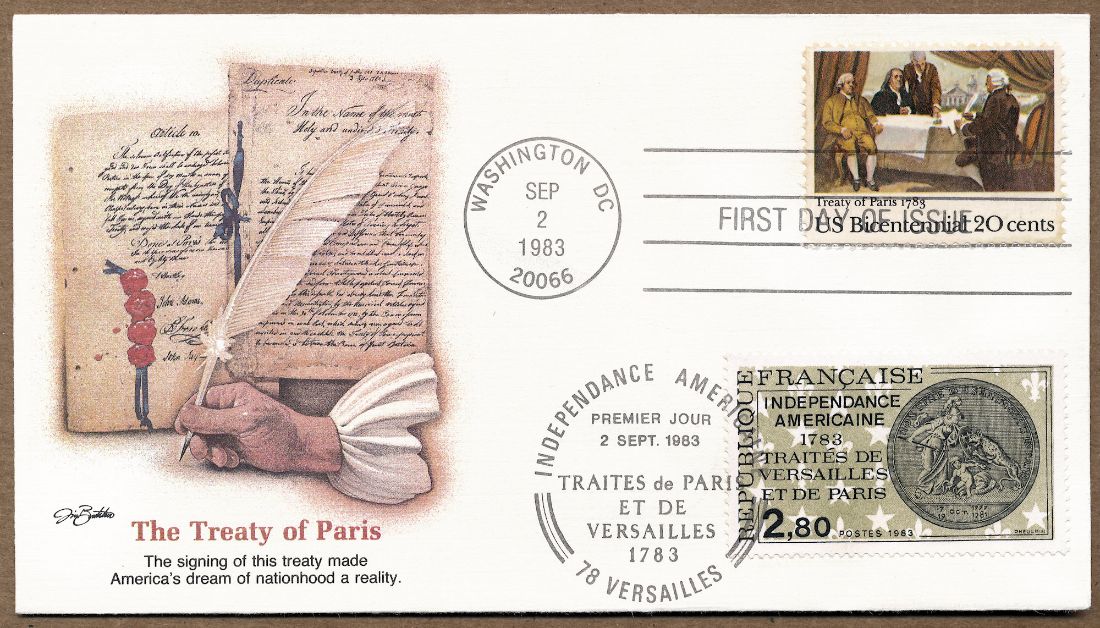
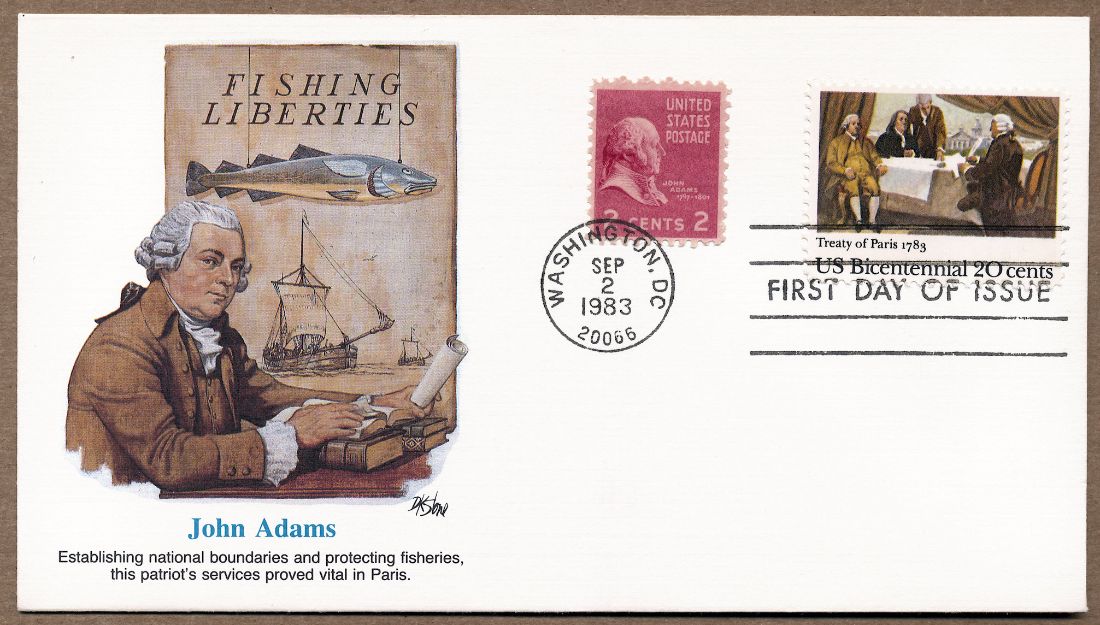
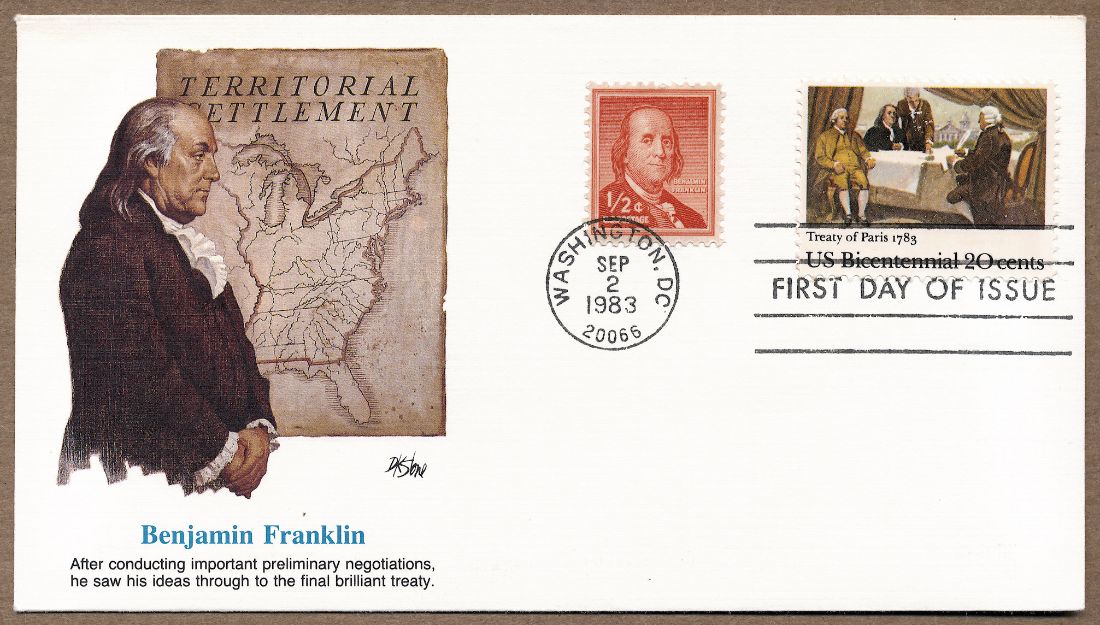
The USPS issued a Treaty of Paris stamp (Scott #2052) as part of its US Bicentennial series; the stamp was issued on Friday, September 2, 1983 in Washington, DC. (The USPS issued the stamp a day before the actual 200th anniversary of the treaty signing - maybe its staff didn't want to work on Saturday or maybe the USPS didn't want to pay overtime for a weekend ceremony!

)

The design of the US stamp was created by David Blossom; it is based on the unfinished portrait by Benjamin West (below). The formal title of West's painting is
American Commissioners of the Preliminary Peace Negotiations with Great Britain; it was painted in 1782, prior to the signing of the Treaty in Paris in September 1783. Legend has it that it was left unfinished because the British representatives did not agree to sit for the portrait. Blossom's stamp design removes Laurens and Franklin's grandson William Temple Franklin, repositions Jay from standing behind Franklin to his right to standing behind him at his left; West also added Hartley, the British negotiator. (See caption below portrait image.)
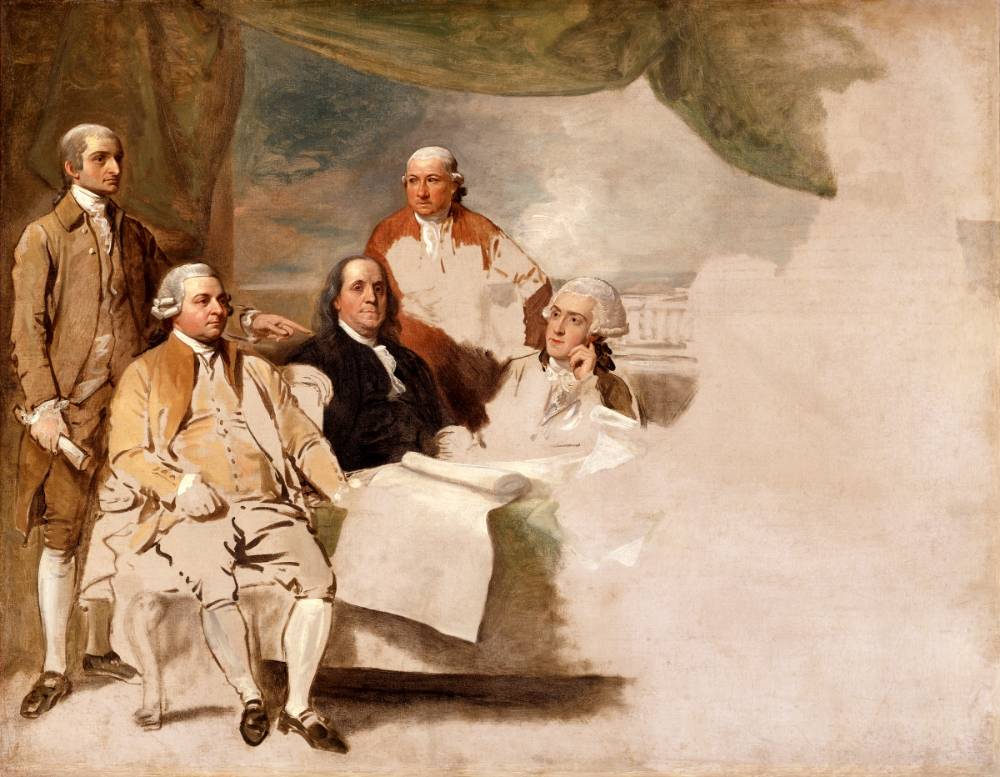 From left to right: John Jay, John Adams, Benjamin Franklin, Henry Laurens, and William Temple Franklin (the grandson of Benjamin, he served as the secretary for the American delegation). Public domain.
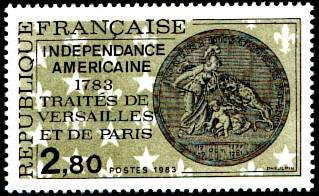
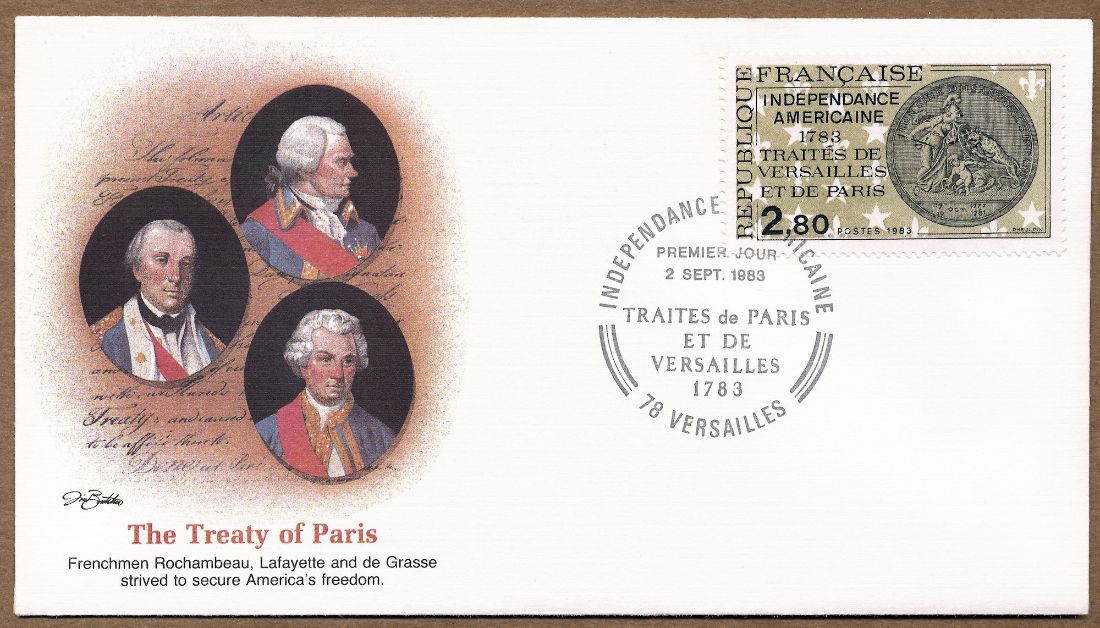
 The stamp was part of a "sort of" joint issue with France; the French stamp also had a first day of issue of September 2, 1983 at Versailles in Paris. The French stamp has a very different design vs. the US stamp, however, and it commemorates more than just the US-Great Britain treaty. More about this in a future post.
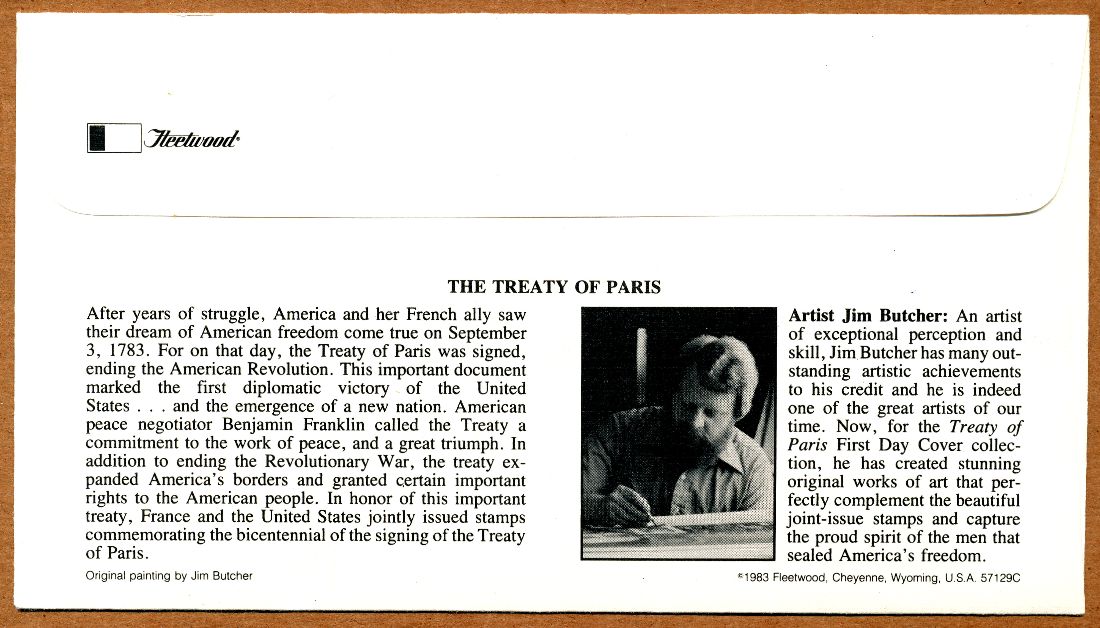
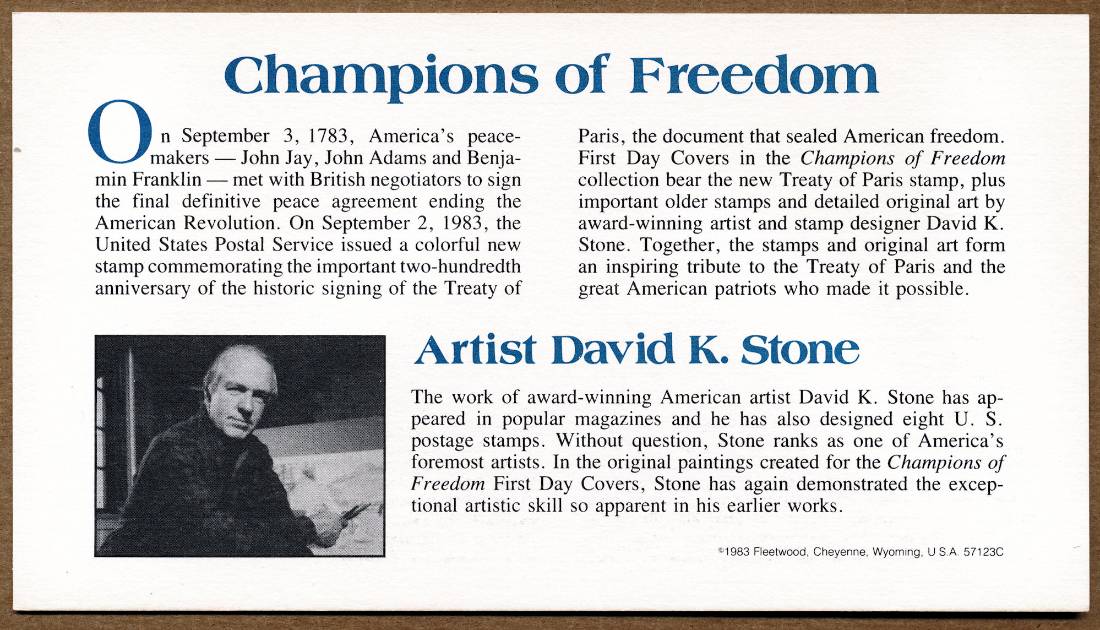
As I've done with previous joint issues I've presented, I'll begin with Fleetwood's standalone First Day Cover (FDC) for the US stamp. I'll follow this post with one on Fleetwood's joint issue FDC set, one on a set of combination covers it also issued and one on a philatelic-numismatic cover (PNC). I have one or two other related items that I'll likely also present to complete the thread.
The cachet on Fleetwood's standalone cover depicts John Jay, Benjamin Franklin and John Adams (from left to right, respectively) entering the site of treaty negotiations in Paris.





 Posted 06/18/2020 6:55 pm