| Author |
 Replies: 22 / Views: 1,926 Replies: 22 / Views: 1,926 |
|
Valued Member
148 Posts |
|
|
Can anyone can tell me the meaning and/or significance of this "19" cancel? 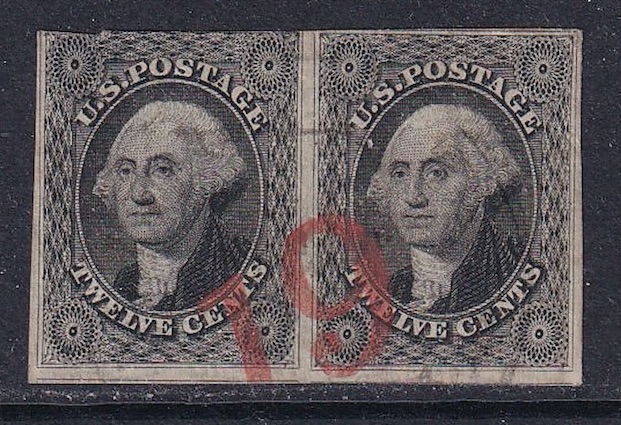 |
|
Send note to Staff
|
|
|
|
|
Pillar Of The Community
United States
3532 Posts |
|
|
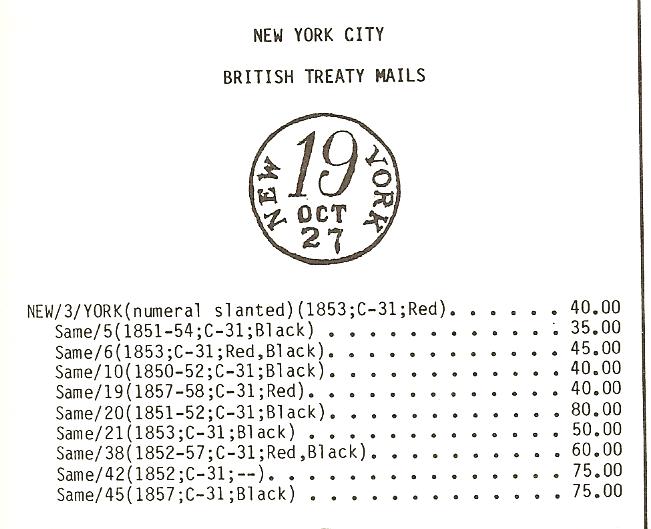
It's a 19c credit to Britain, for a pre-paid letter, sent under the US-British mail treaty.
for example: sent to Britain and pre-paid the 24c single rate. The US retained 5c for the domestic US mail carriage, per the treaty. If the letter was conveyed via a British owned packet, then Britain was entitled to 16c, and, additionally 3c for British internal transit, for a total of 19c credit. |
Send note to Staff 
|
|
|
Pillar Of The Community
United States
901 Posts |
|
|
Pillar Of The Community
United States
3532 Posts |
|
|
This is actually "not" that CDS cancel from the other thread.
This is a '19' struck by itself, with nothing else.
It does, however, have mostly the same meaning and use as the full dated CDS+19 cancel. |
|
Send note to Staff
|
|
|
Pillar Of The Community
United States
901 Posts |
|
|
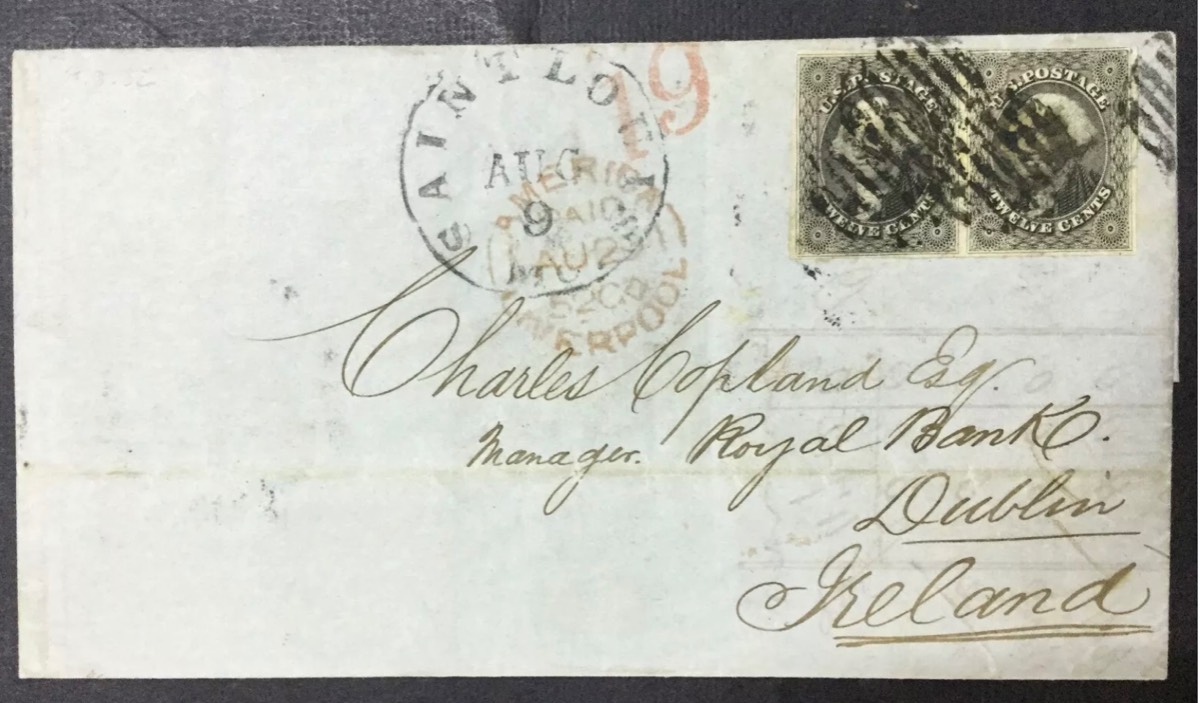
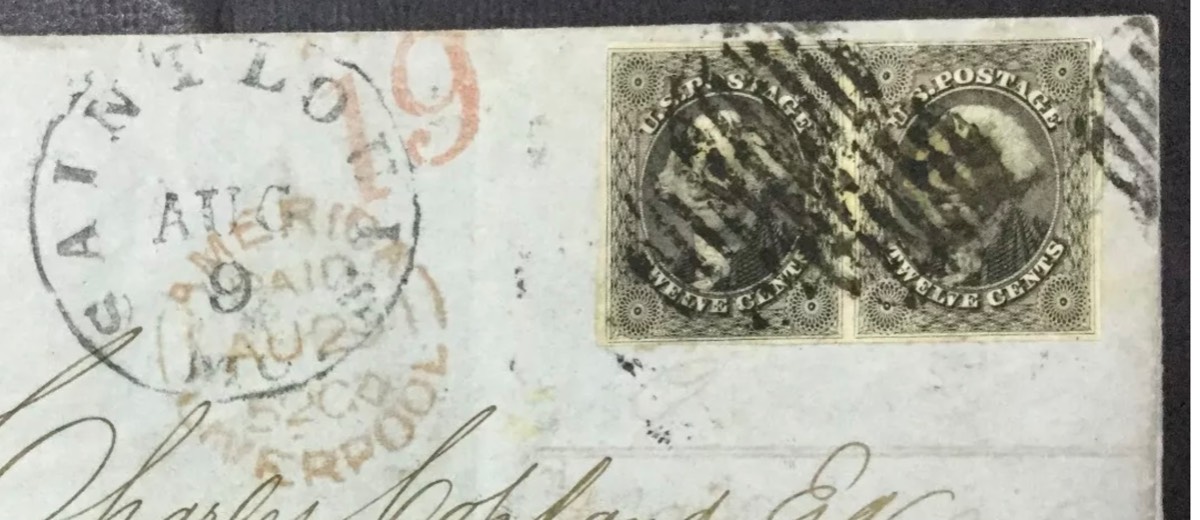
txstamps Looking at the stamps in the OP I can barely make out the cancel but do see one. I have a similar pair postmarked Augusta, GA in 1857. 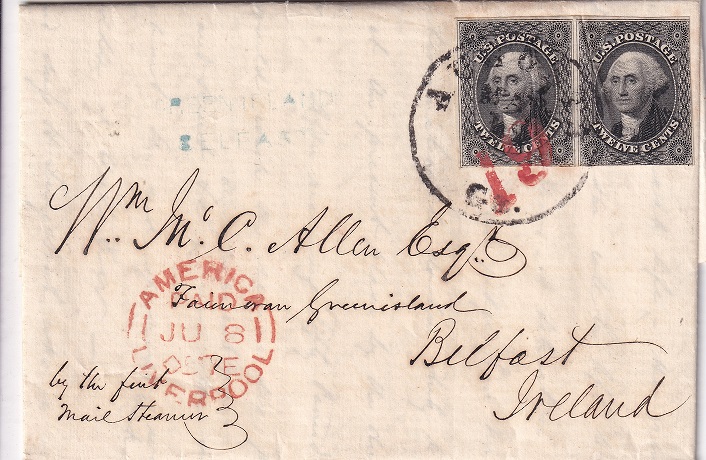 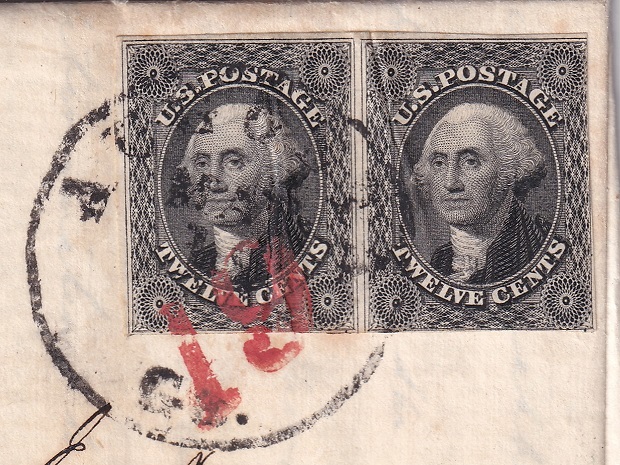 Would I be correct assuming the 19 was applied to the cover at the destination? |
|
Send note to Staff
|
|
|
Pillar Of The Community
United States
3532 Posts |
|
|
Valued Member
148 Posts |
|
|
Pillar Of The Community
United States
901 Posts |
|
|
Pillar Of The Community
725 Posts |
|
|
Pillar Of The Community
United States
752 Posts |
|
|
The thread points out the vast amount of cumulative knowledge and experience of forum members |
|
Send note to Staff
|
|
|
Pillar Of The Community
United States
3532 Posts |
|
|
stamps101 - your cover is somewhat interesting to me, although its a similar usage as the others. The deal with yours is its an 1852 usage. Many collectors wouldn't look at it much differently than the others .. but ...
If we are having a discussion about 1851 and 1857 issue stamps used on transatlantic covers, the frequency of finding these ramps up significantly (exponentially) over time during the 1850s.
Stamped 1851 and 1852 transatlantic usages are decidedly scarcer than later ones.
|
|
Send note to Staff
|
|
|
Pillar Of The Community
United States
1162 Posts |
|
|
I have one too, for which I have a question. First of all, please excuse and ignore the color - for some reason when I resize some of my stamp scans (to make them 'legal' size for SCF) that process makes the color all wonky. Here is my #17 on piece. I don't know how many #17's were originally in this strip. My question concerns the markings. It is marked with both a "19" and a "38" each of the same form. I am assuming the "38" represents a 2x rate for an overweight letter. But why the "19" also?? I would have much preferred a strip of 4, but all I got out of the deal was a single and a third. Anyway, can anyone comment on the different markings that seem to be in disagreement? 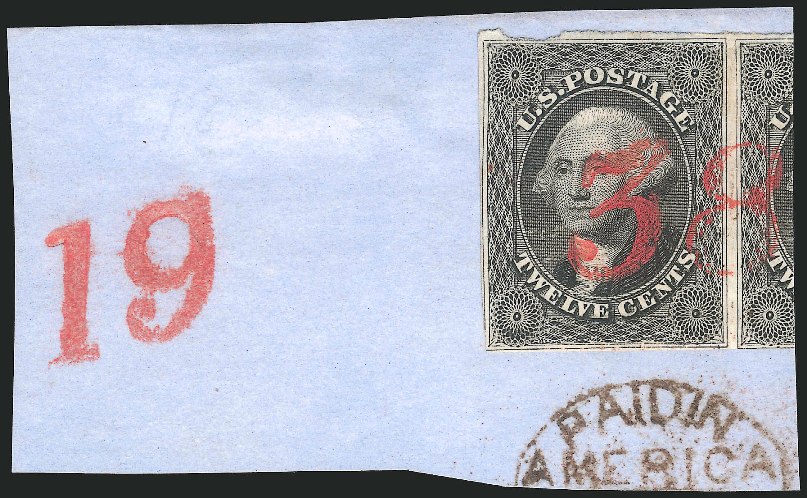 |
|
Send note to Staff
|
|
|
Pillar Of The Community
United States
3532 Posts |
|
|
It was re-rated. One of those markings was struck in error.
For example, initially assumed to be single rate, but discovered to be double, as you state. |
|
Send note to Staff
|
|
|
Pillar Of The Community
United States
925 Posts |
|
|
Pillar Of The Community
United States
3532 Posts |
|
|
Yes, that's correct, very often, even usually, obsolete or incorrect markings got scratched out.
I'm not 100% sure what else to make of this otherwise.
Obviously without a full cover, we can only speculate empirically.
Do you have some thoughts on other possibilities? |
|
Send note to Staff
|
|
|
Pillar Of The Community
United States
1162 Posts |
|
|
txstamp - I thought the same. But then I thought about what SPQR says. From an accounting POV, when the letter arrives in Europe and it is time for the USPO and the BPO to 'settle', which amount does the BPO 'credit'? I would assume that if the '38' were applied (and paid for) in the USA, then the BPO would simply pass the letter along to the recipient, rather than refund the difference to the USPO which didn't pay for the postage in the first place (the sender paid). OTOH, if it arrived in Europe as a 19-cent letter, was determined to be a 38-cent letter, wouldn't it be returned? Perhaps it would have been delivered with Postage Due - too bad for the recipient. In that case, wouldn't the '19' be crossed out and a 'Postage Due' stamped somewhere?
If the mistake was realized immediately (in the USA, whether overpaid or underpaid) wouldn't the incorrect amount be crossed out for clarity across the pond? If the mistake was realized across the pond, wouldn't the wrong amount be crossed out, as well, to reduce confusion upon delivery to the poor sap that has to pay Postage Due?
I got this in one of the Siegel sales of Saadi material. The description at the time didn't try to justify the 2 different amounts. Yet, other lots in the Saadi sales tended to have highly detailed descriptions. I wish this piece had been a full cover - it would have explained a lot! |
|
Send note to Staff
|
|
|
Replies: 22 / Views: 1,926 |
|



 Posted 09/11/2020 12:39 pm