| Author |
 Replies: 15 / Views: 2,604 Replies: 15 / Views: 2,604 |
|
|
Pillar Of The Community
United States
1170 Posts |
|
|
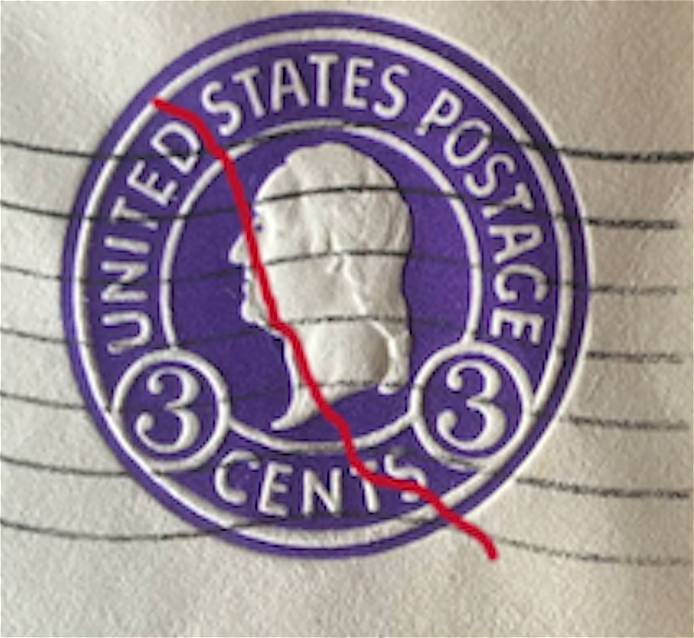
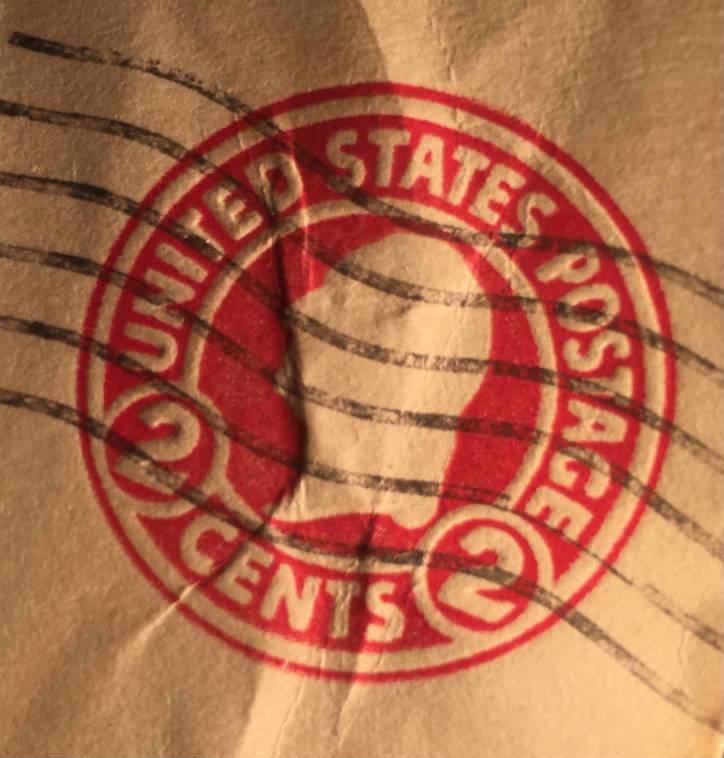
SO there seems to be a crack running from the "T" in cents through the face of George up into the frame by the "D" in united. Am I correct? Any idea which die this is? I think Die 7 head is 9mm and both numerals slant. The left more than the right. WMK 33   |
|
Send note to Staff
|
Michael Darabaris |
|
|
|
|
Bedrock Of The Community
12767 Posts |
|
|
Pillar Of The Community
United States
1170 Posts |
|
|
I just noticed it goes past the "t" in cents through "S" and out past the round frame. A long crease! |
Send note to Staff 
|
Michael Darabaris |
|
|
Pillar Of The Community
United States
1170 Posts |
|
|
You think it is a paper crease because there is no ink in the crack? |
|
Send note to Staff
|
Michael Darabaris |
|
|
Pillar Of The Community
United States
607 Posts |
|
|
Die 146(H)7 looks like a good choice.
Galloway is the EFO expert. Perhaps he will comment on the crack.
|
|
Send note to Staff
|
Bill Lehr
US Postal Stationery Specialist |
|
|
Pillar Of The Community
621 Posts |
|
|
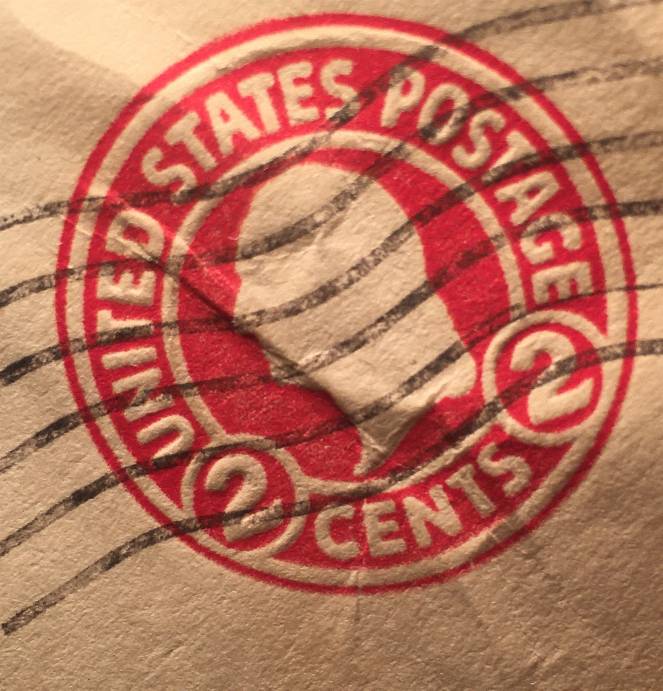
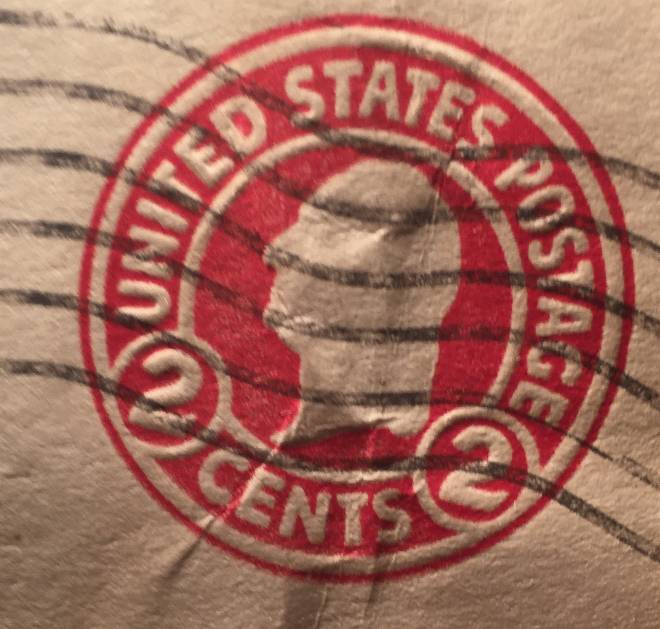
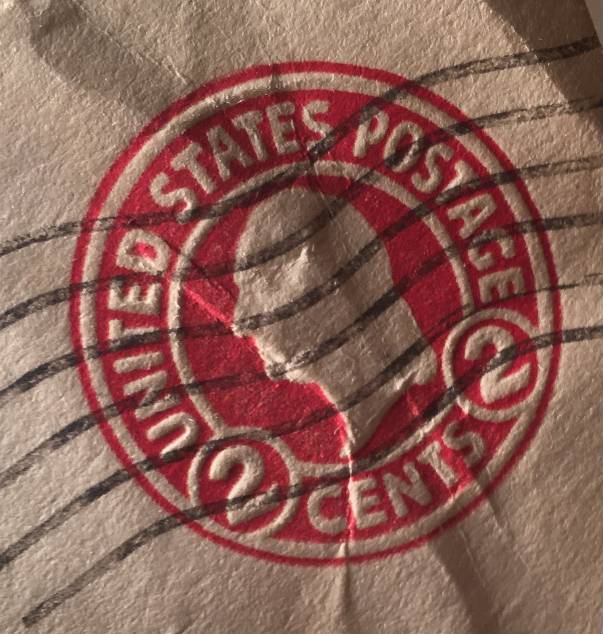
I call these guys die pinch creasesThey are found on early 20th century rotary press issues. As the envelope blank is fed through the press, there is a line of maximum pressure that is exerted on the die (running from top to bottom). As that line passes over the die, the paper is pushed into the cavity formed by the head, pulling the paper into the center. Then as that line of maximum pressure narrows and moves out the bottom of the embossing die, there is too much paper and it forms a crease. Flat plate issues have pressure applied uniformly all over the surface of the die during embossing. The heavier the paper, the less likely to have any creases. Not heavy paper:  The envelope contractor seems to have found a solution, as you don't see them much past the early circulars. |
|
Send note to Staff
|
|
|
Pillar Of The Community
United States
1170 Posts |
|
|
Thanks Thomas again! So what would a die crack look like on an embossed stamp? Just trying to find a way to identify clearly. |
|
Send note to Staff
|
Michael Darabaris |
|
|
Pillar Of The Community
United States
1170 Posts |
|
|
Pillar Of The Community
621 Posts |
|
|
The more I study the OP's U436e, the more I'm convinced it is not a die pinch crease, but some other artifact.
Is it for sale? |
|
Send note to Staff
|
|
|
Pillar Of The Community
United States
1170 Posts |
|
|
Pillar Of The Community
United States
1170 Posts |
|
|
Pillar Of The Community
621 Posts |
|
|
". . . So what would a die crack look like on an embossed stamp?"
Most stationery collectors agree that there is no such thing as a cracked die.
If there were such a thing, you would be able to find identical "cracks". I think "cracks" are like finger prints. Every one is different. |
|
Send note to Staff
|
|
|
Pillar Of The Community
United States
1170 Posts |
|
|
Maybe I am using the wrong term. The plate can't develop a crack that is repeatable? And that is what we are looking at? |
|
Send note to Staff
|
Michael Darabaris |
|
|
Pillar Of The Community
United States
607 Posts |
|
|
Stamped envelopes were printed from dies, not plates. If I remember correctly, a die crack would print in color, not be white. White line(s) as the result of a rotary press forcing the paper into a die is quite common and are considered to be a normal part of printing. The 2c that 3193zd posted is a true, pre printing paper fold and is a true EFO. A white line caused by a foreign object (hair, string, etc) getting between the ink and the subject, then falling off is considered to be a freak (or minor error) and is non repeatable (so I have been told). The halo or what looks like double printing on 19th century envelopes is also a printing artifact similar to the white line caused by forcing the paper into the die when printing (the die pinch crease). As Thomas pointed out "most stationery collectors agree that there is no such thing as a cracked die."
|
|
Send note to Staff
|
Bill Lehr
US Postal Stationery Specialist |
|
|
Pillar Of The Community
United States
1170 Posts |
|
|
Hi Bill, What you said is a little confusing to me."a die crack would print in color, not be white." then you quote Thomas; "As Thomas pointed out "most stationery collectors agree that there is no such thing as a cracked die." So if I had a stamped envelope with a jagged printed line that was not part of the normal printed design, what would you call it? Are saying stamped envelope dies don't crack. So thats why there can't be one? I don't think I have one. I just want to know so I am clear in my terminology. |
|
Send note to Staff
|
Michael Darabaris |
|
|
Pillar Of The Community
United States
1170 Posts |
|
|
I also understand that a stamp with an "inked crack" has been shown in the past to be a line of ink along side a paper crease. But is that always the case? |
|
Send note to Staff
|
Michael Darabaris |
|
| |
Replies: 15 / Views: 2,604 |
|




 Posted 01/10/2021 3:05 pm