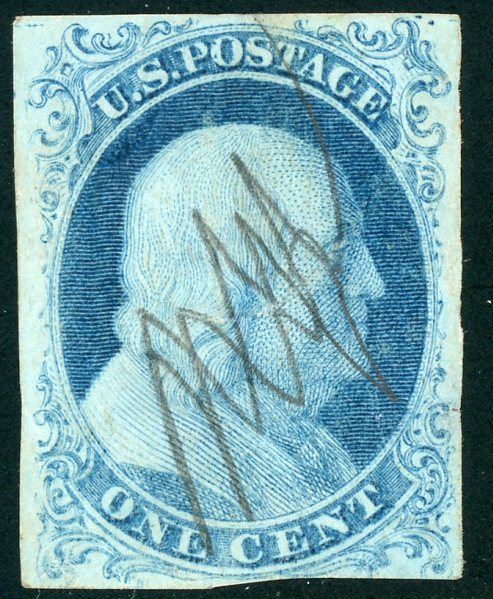
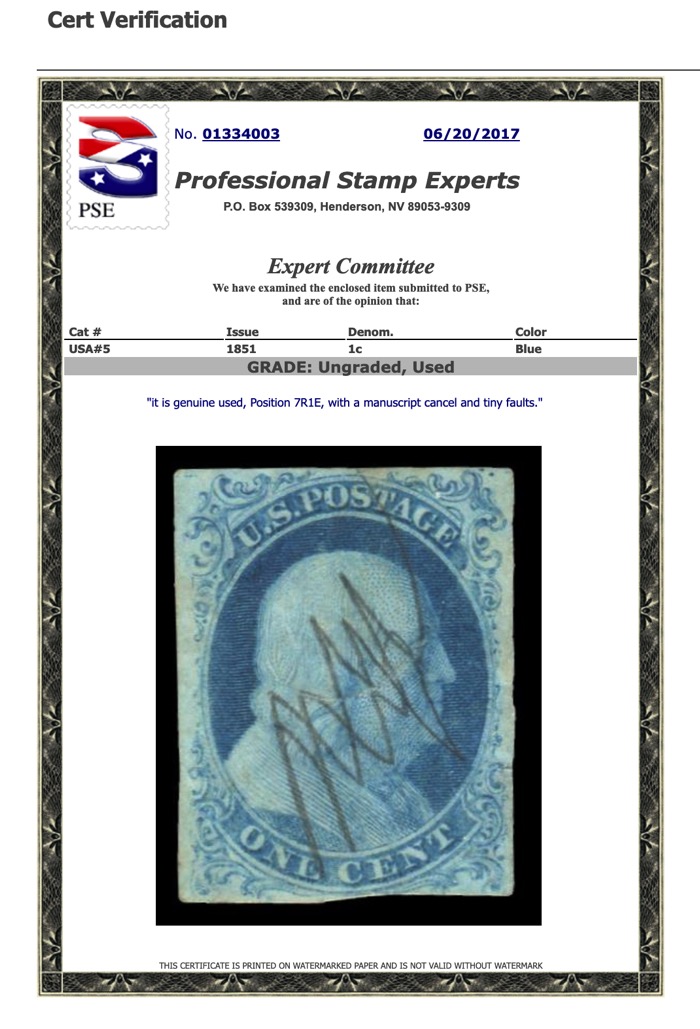
There are new finds of all kinds of things that occur either regularly or from time to time, depending on the item.
A friend of mine has found two #5's over time. One of those is likely in the census - I haven't checked, the other is probably not.
Quote:
census of those 5A's outside the Wagshal census
I'm assuming you mean #5 and not #5A, as I'm unaware of a published #5A census.
Regarding censuses in general, they are something that many specialists perform themselves on a regular basis for stamps, covers and varieties-thereof, that they collect.
This is also true for an expert trying to authenticate a stamp or cover - you want to go look for similar items that exist and make comparisons, to help validate the subject or condemn it. Also, as a buyer, I perform this process before purchasing almost any cover these days.
For example, I used to be an active collector of varieties of the 1c stamp, and to take censuses to the extreme, I would go count number of copies of a particular plate position on plate 3 that I could locate anywhere. This, in particular for notable varieties on plate 3, such as double transfers, plate cracks, imprints, centerline copies and multiples.
How does one do it? Understand your subject matter, obtain or get access to auction catalogs, exhibit photocopies, books and periodicals over time with articles about this, and just look. These days its a bit easier since so much is online.
Siegel may, internally, have a record of #5's post-Wagshal, since I believe that Scott published Jerry's census. You could ask them directly.
edit: a healthy philatelic library centered around what interests you is of significant help here for this. Online resources have improved a lot, but many older auction catalogs can still be difficult to locate online.





 Posted 02/16/2021 2:30 pm