| Author |
 Replies: 26 / Views: 2,159 Replies: 26 / Views: 2,159 |
|
|
|
Pillar Of The Community
3860 Posts |
|
|
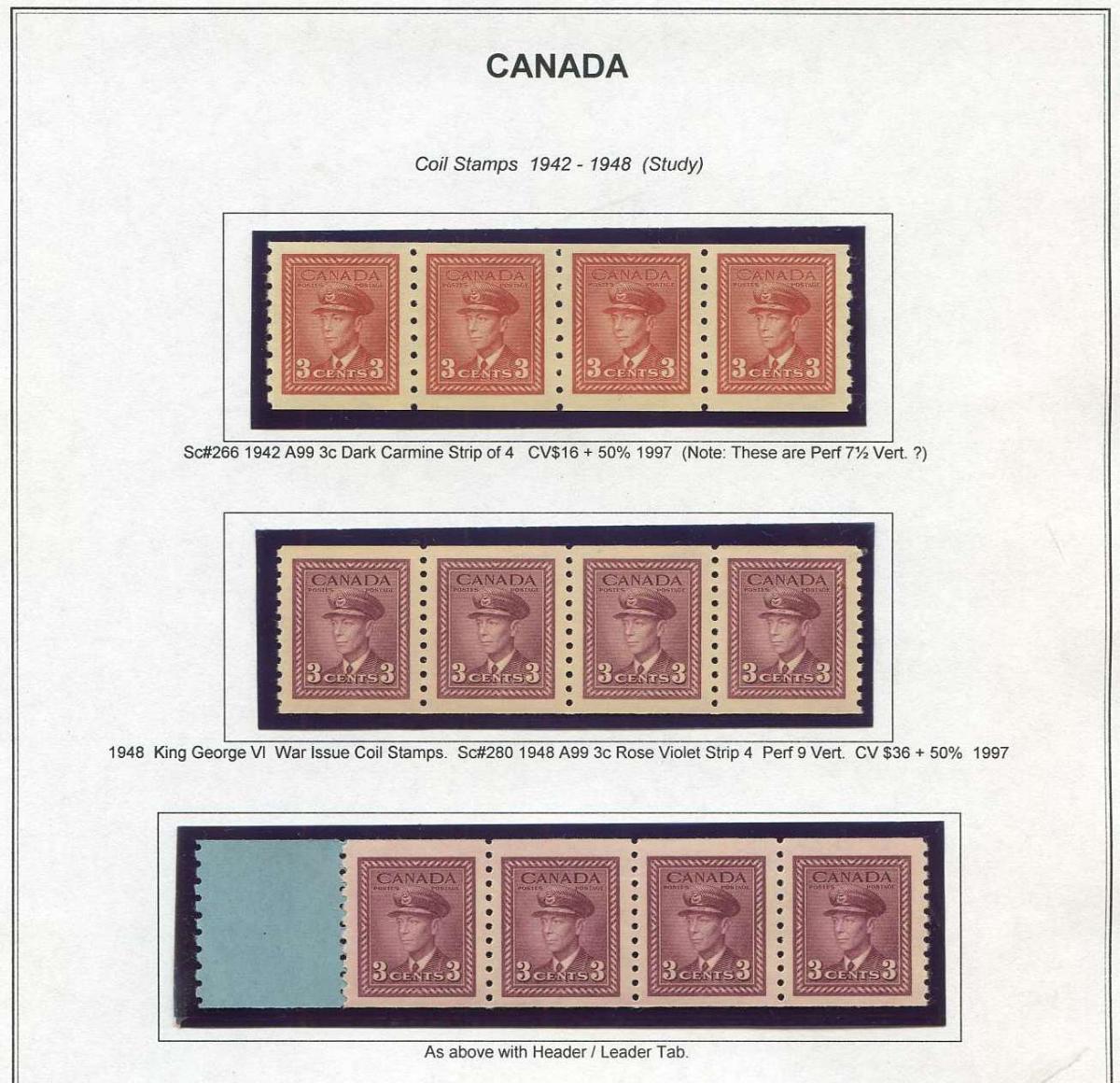
It looks like the positioning of each stamp subject on the stamp printing plate was not all on the same level across. |
Send note to Staff 
|
| Edited by jogil - 04/05/2021 08:01 am |
|
|
Rest in Peace
7742 Posts |
|
|
Paste up pair stamps does interfere with the alignment of stamps, but remember this when I was in high school being trained as a printer/graphic artist, aligning such small items as stamps on a plate is very hard to do...even when I was in the dark trying to align even bigger items it was a challenge. I don't think perfect aligning back then was as important as just getting the sheets printed and out the door to Canada Post. Robert |
|
Send note to Staff
|
|
|
Pillar Of The Community
Canada
1462 Posts |
|
|
Interesting - this made me look at my strip of 4 for Sc 129. First two perfs are in alignment, but a noticeable drop in the perfs in the 3rd position. Never noticed that before! ~Greg 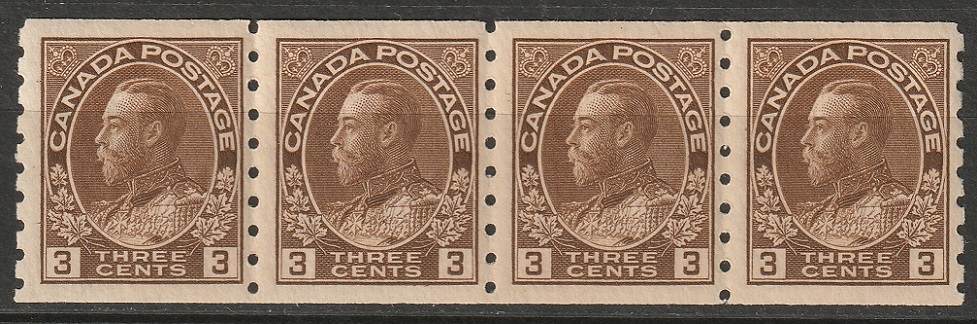 |
|
Send note to Staff
|
|
|
Pillar Of The Community
3860 Posts |
|
|
gmot: This unevenness is expected from coils from 1929 and earlier that were perforated using perforating wheels. However, this is not expected from coils from 1930 and later that were perforated using perforating bars. |
|
Send note to Staff
|
|
|
Pillar Of The Community
Canada
1462 Posts |
|
|
Bedrock Of The Community
Australia
38679 Posts |
|
|
Pillar Of The Community
3860 Posts |
|
|
Bedrock Of The Community
Australia
38679 Posts |
|
|
Valued Member
Canada
382 Posts |
|
|
There were NO jump strips in the Admiral period because the stamps were not printed on rotary presses. Coils were made by pasting sheets together (hence, paste-up pairs).
GJP |
|
Send note to Staff
|
|
|
Pillar Of The Community
3860 Posts |
|
|
CBN made some changes to how it printed coil stamps from 1935 to 1969 that resulted in printing jumps after each 25 (or 50) stamps in coil strips with rolls of 500 coil stamps. For dry printed coil stamps, a sheet-fed rotary press that used three printing plates was converted to a web-fed rotary press and only one or two printing plates were used together instead of three printing plates. First, one plate of 250 (25 x 10) was used. Also, one plate of 400 (25 x 16) was used. Later, it was one or two plates of 425 (25 x 17) that were used.
Since the printing press was originally built for using up to three printing plates and since these coil stamps were now being web roll rotary press printed by a continuous moving paper web after the press was converted to do this, there would be a blank wasted non-printed spot where there were no second and third printing plates or no third printing plate.
To deal with this, the paper web was stopped at the position where the no plate area started and then moved back, stopped and restarted where the plate rotated back to the position to continue printing. This was repeated. The jumps occurred due to the paper web having to stop, move back, stop and hold while waiting for the rotating printing plate to return back. |
|
Send note to Staff
|
| Edited by jogil - 07/15/2021 7:07 pm |
|
|
Pillar Of The Community
3860 Posts |
|
|
Also, one or two coil stamp printing plates of 450 (25 x 18) were later used. The printing press used had a maximum capacity of 1200 (60 length x 20 width) stamp subjects as originally with 3 old plates of 400 (20 x 20) stamp subjects. Since 25 subjects per new coil stamp printing plate lengths were used, the most that could be accommodated were 50 stamp subject lengths from two new coil stamp printing plates. |
|
Send note to Staff
|
| Edited by jogil - 07/17/2021 3:16 pm |
|
|
Replies: 26 / Views: 2,159 |
|




 Posted 04/05/2021 08:00 am