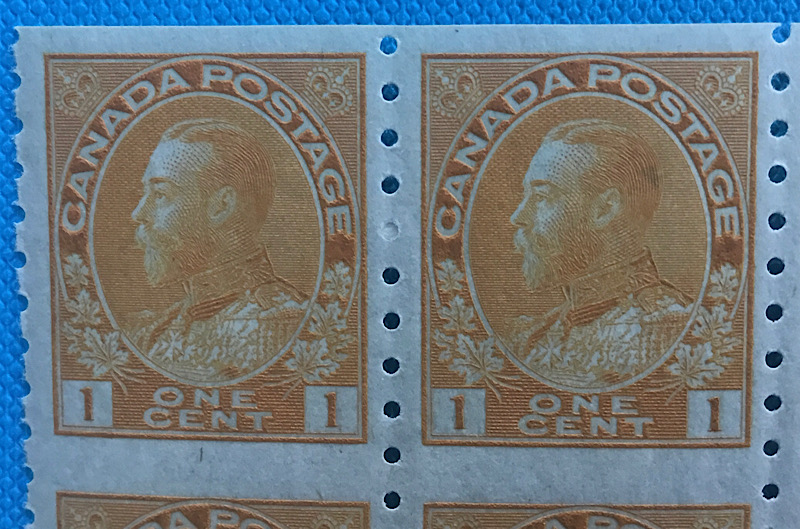
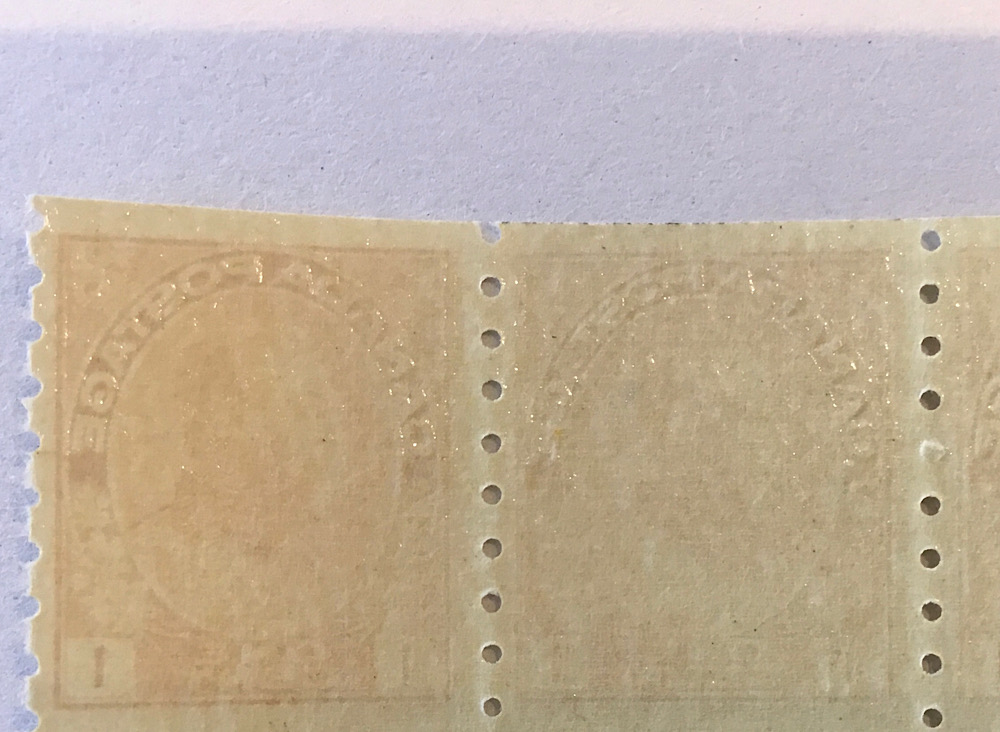
Just to conclude what BlackJag and Wert have stated previously.
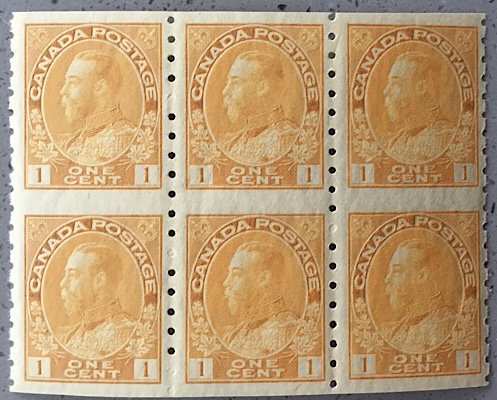
Rfw125 - You have a Scott 126a, Die II, block of 6. Unitrade only lists blocks of 4 and vertical pairs. Blocks of greater than 4 are more rare, so the price would be higher than the sum of a block of 4 and a vertical pair.
From information in Boggs, Marler and publications by Hans Reiche: These stamps were from printed sheets of 100 stamps that were perforated vertically with the intent of separating then horizontally to result in rolls (or now called coils). In 1923/4, Plates 11 and 12 incorporating Die I printing of 22x sheets (total 2,200 stamps) were 'rescued' prior to them being made into coils, with 2x sheets given as a favour to a "gentleman of considerable influence in Ottawa", and at the same time 20x sheets were set aside and later sold as a lot to another collector.
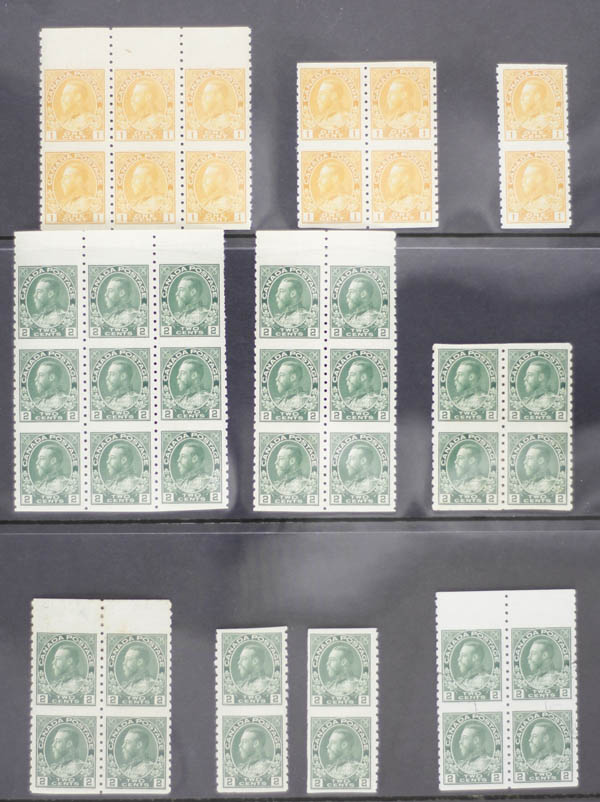
The issue of these stamps soon became known and led to objections from collectors. The Department decided to issue other part-perforate sheets. However, by this time Plates 11 and 12 were past their usage. So Plates 16 and 17, that incorporated Die II, were used and a total of 1,000 sheets of 100 were issued (total 100,000 stamps, or maximum 50,000 vertical pairs). These were issued as sheets and over time they have been broken up into 2x 4x 6x and other combinations. As Unitrade lists only 2x and 4x combinations, then collectors have broken apart larger combinations to reflect the listed prices.
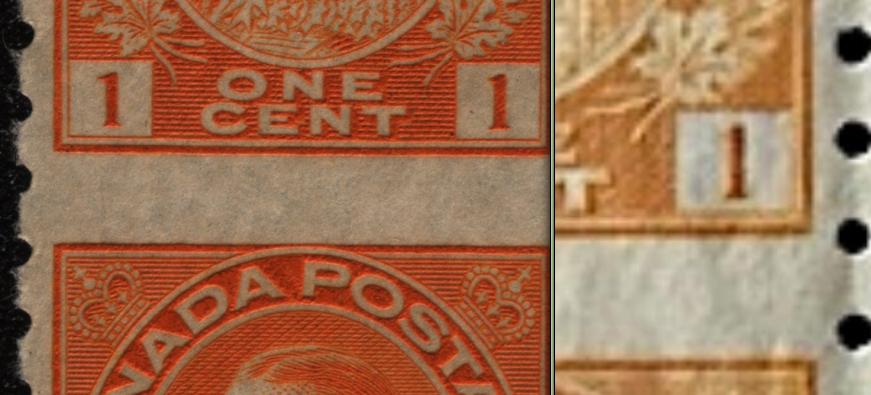
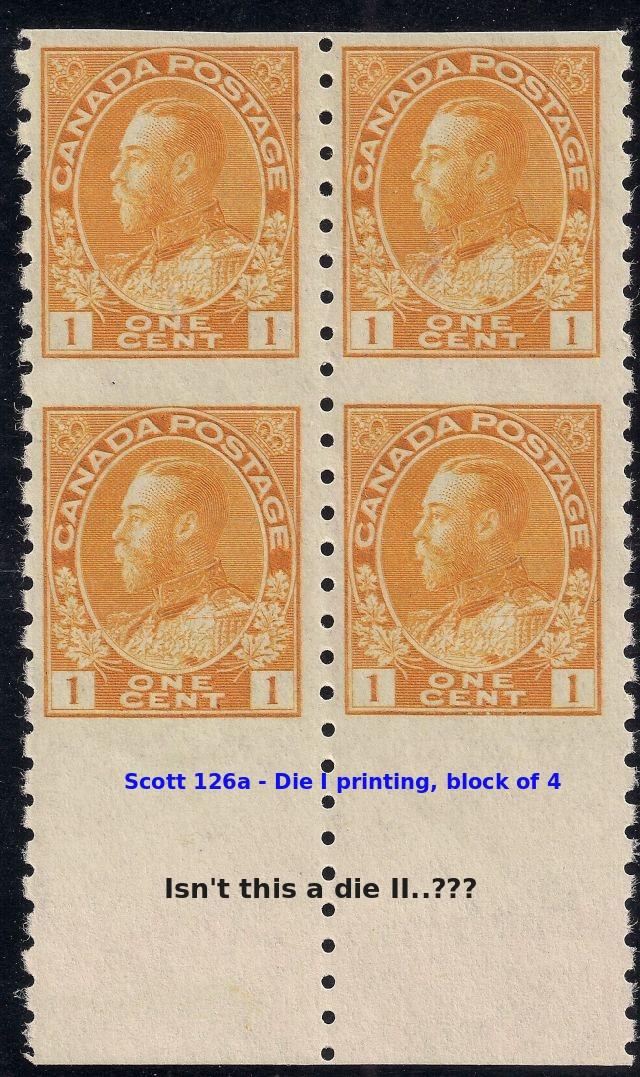
As there has only been 22x sheets of Die I and 1,000x sheets of Die II, there price for Die I is higher. The Die I plates included a gutter between the lower/upper panes whereas the Die II issue were cut into panes and thus removing the gutter prior their release.
This issuance for the 1 cent yellow is the same for the 2 cent green (Scott 128a) and the 3 cent red (Scott 130a).
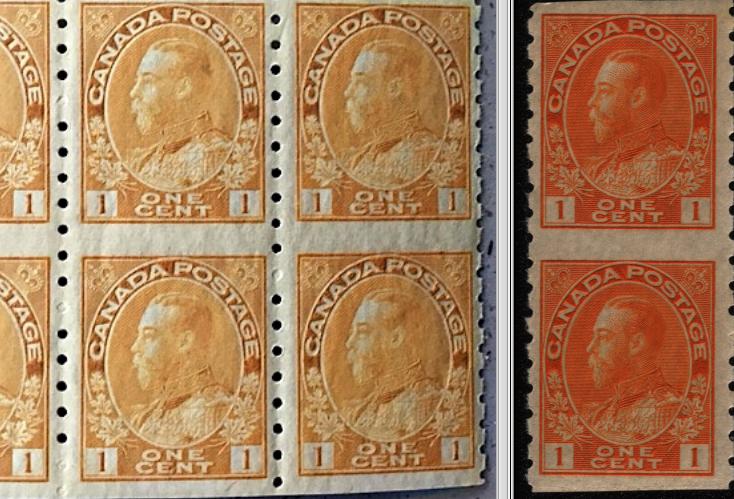
Scott 126ac - Die I printing, block of 4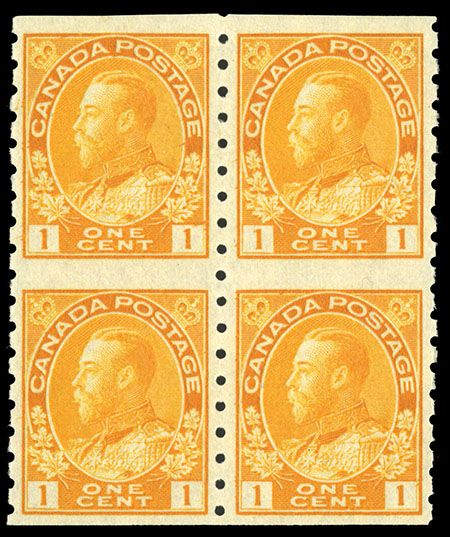 Scott 126a - Die II printing, block of 4
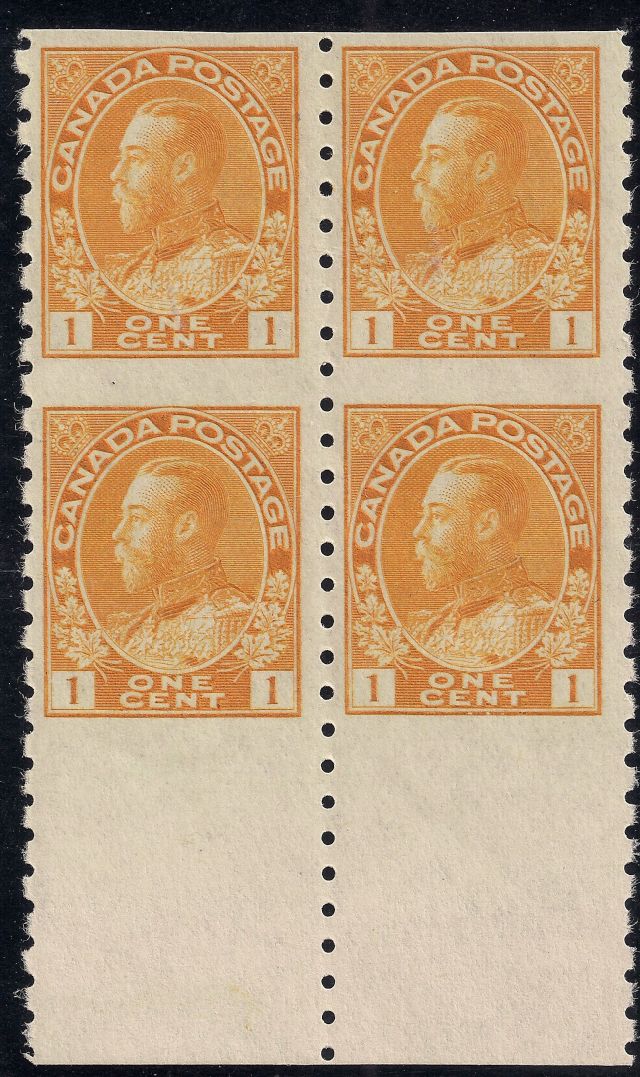 Scott 126aii - Die I printing, gutter block of 4





 Posted 05/06/2021 05:31 am