| Author |
 Replies: 17 / Views: 1,670 Replies: 17 / Views: 1,670 |
|
Pillar Of The Community
793 Posts |
|
|
|
I have A Scott 112 plus a stamp that was represented as a 112a which I take it is supposed to be on thin paper versus the thick paper for regular 112. Any Canadian experts out there who would know whether there is a procedure for confirming that it is a 112a other than strictly feel which, in my clumsy fingers, detects no difference between the two. Thank you in advance.
|
|
Send note to Staff
|
|
|
|
|
Pillar Of The Community
United States
1434 Posts |
|
|
Google gave me this answer from 2014, from "Ryan": Quote:
Here's an old copy of the Small Queens Newsletter that gives an outline of paper thickness as well as some different paper types. Check page 5 for the complete info.
Thin - .0020" - .0026"
Medium - .0027" - .0034"
Thick - .0035" - .0040"+
www.bnaps.org/hhl/newsletters/lsq/sq-1978-03-v003n01.pdf
The link is live: www.bnaps.org/hhl/newsletter...3-v003n01.pdf |
Send note to Staff 
|
| Edited by classic_paper - 07/02/2021 1:12 pm |
|
|
Pillar Of The Community
Canada
1462 Posts |
|
|
Certainly no expert, but I use feel to distinguish - my 112a has considerably more "give" then the 112s I have when flexing it gently. If you're not feeling any noticeable difference, it may not be thin paper. |
|
Send note to Staff
|
|
|
Rest in Peace
7742 Posts |
|
|
A few years ago I designed a book that was sound proof and held one stamp and used my AUDACITY program to show the thickness on a graph. I took a frequency reading of a normal thickness stamp as a reference against other graph readings...EXAMPLE below Robert 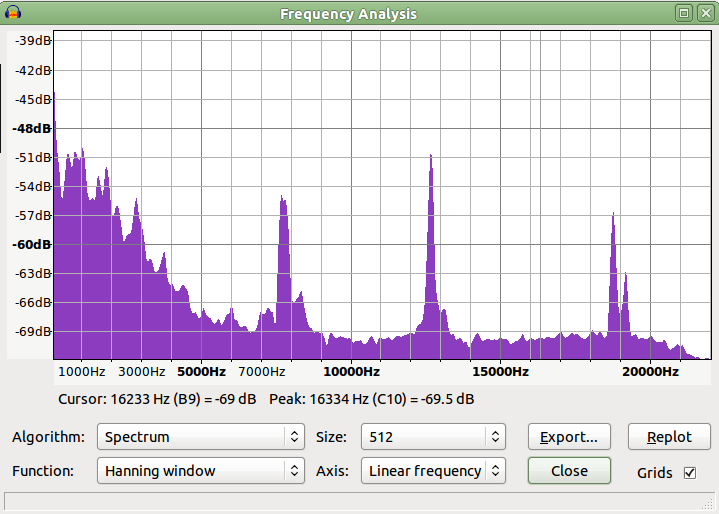 |
|
Send note to Staff
|
|
|
Pillar Of The Community
793 Posts |
|
|
classic_paper - thank you for the data. I tried searching, but didn't come up with anything.
gmot - thanks for the description - just didn't know whether the difference was great enough to detect by flexing. I don't feel any difference when I gently flex the stamps, so maybe I just have 2 112s. That's OK since the "112a" was just placed in that spot in an album which was part of a large collection I bought, so it's not that I paid some amount specifically for that stamp.
wert - that really looks cool, although I'm not sure I'm fully understanding what you're doing there. Is that type analysis available to others?
Thanks again, everyone. |
|
Send note to Staff
|
|
|
Rest in Peace
7742 Posts |
|
|
Oracle of Delphi I did it for coins first, but found out it could be adapted to stamps. Below is a very, very quick drawing of the box. The box in insulated to external noise..And the sound going in is a single click noise...Once I had a normal thickness, I could reference it against other stamps. I have to find time to complete...Some day Robert 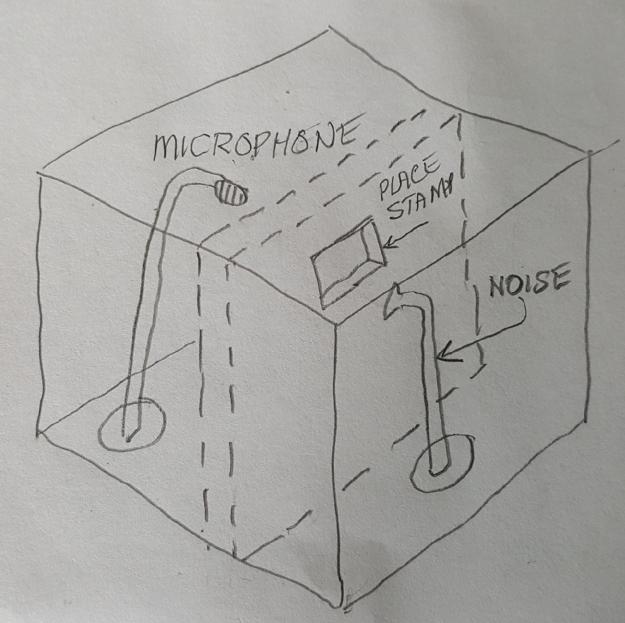 |
|
Send note to Staff
|
|
|
Moderator

United States
12330 Posts |
|
|
Rest in Peace
7742 Posts |
|
|
Don old buddy
You never stop amazing me with your replies.
That is so funny....haha...loved it.
Robert
|
|
Send note to Staff
|
|
|
Valued Member
Canada
123 Posts |
|
|
Hi Oracle, The 112a Admiral is easy to spot if you know what you are looking for. Below is a comparison between 2 wet printed 5-Cent Violet Admirals on normal paper, and 2 wet printed ones on thin paper. Because the paper is thin and the ink permeates the paper to a certain depth, if you look on the back, you will notice that the with the two stamps in the middle, you can see the violet ink showing through. Those are the thin ones (112a). On a black background, the mesh of the paper also easy to spot. In real terms, if you have a micrometer, it also shows a difference. All of these are mint stamps, so you have to take the gum into consideration, but the normal stamps measured 0.10 mm thickness, and both thin varieties measured 0.08 mm. I hope that this helps. 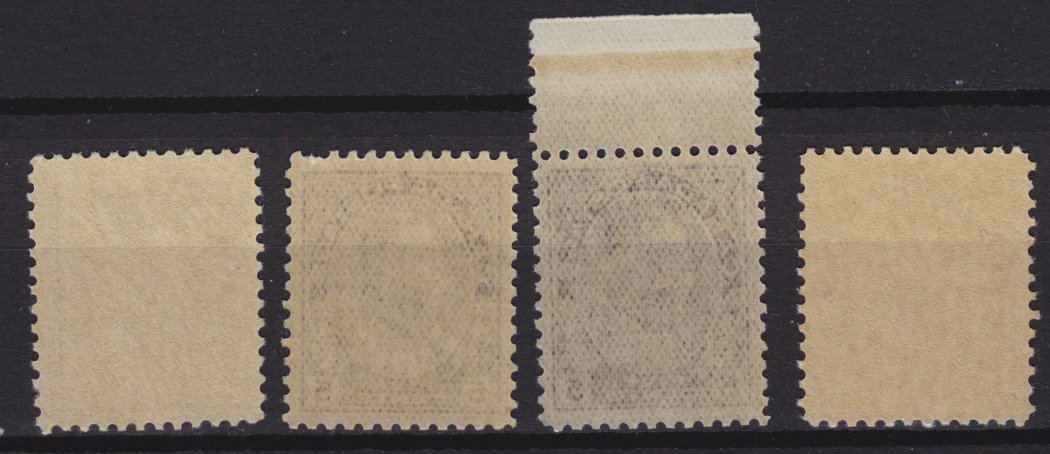 |
|
Send note to Staff
|
| Edited by Brad905 - 07/04/2021 01:19 am |
|
|
Valued Member
Canada
304 Posts |
|
|
Pillar Of The Community
793 Posts |
|
|
Thanks for the additional comments. Below is an image of the two stamps. As noted above, I feel little difference when I gently flex the two stamps. I am concluding that I just have two 112s but if anyone else has a different observation, that would be appreciated. PMStamp - what type of micrometer do you use, if I may ask? Thanks again. 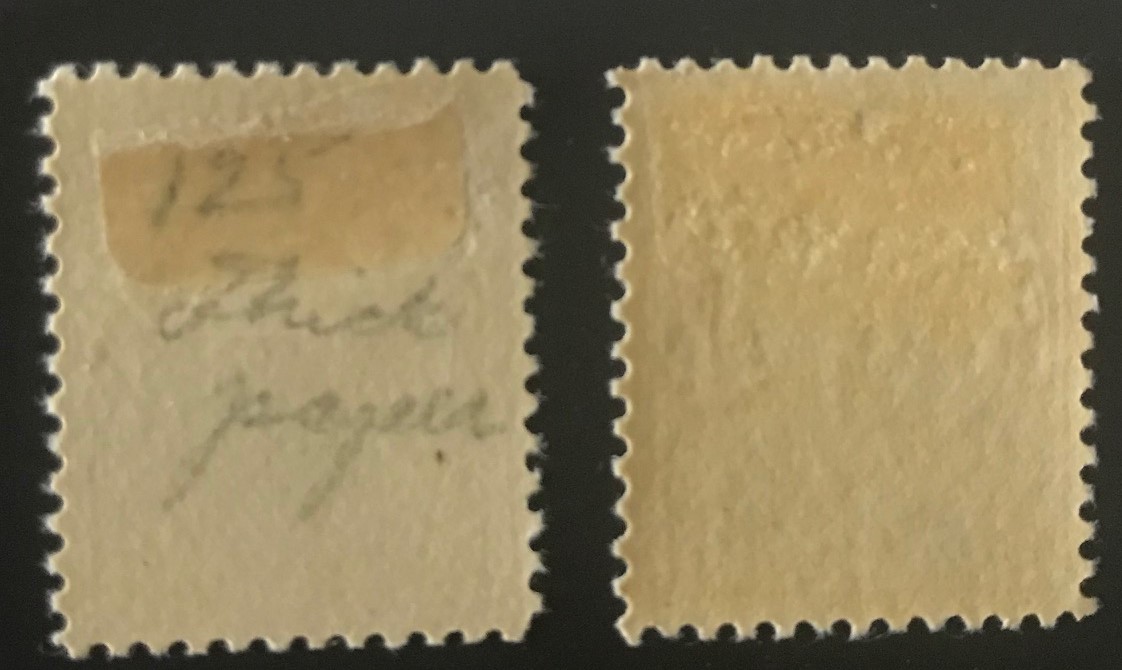 |
|
Send note to Staff
|
| Edited by Oracle of Delphi - 07/04/2021 1:50 pm |
|
|
Valued Member
Canada
123 Posts |
|
|
Hi Oracle,
In my opinion, both those stamps, assuming they are wet printed, are Unitrade # 112. Seems from the picture that the stamp on the left has a much thicker layer of gum, than the one on the right. It could of course just be an illusion from me scan or photo. But that's one reason why measuring the thickness of the paper with a micrometre, particularly in my case with mint stamps, is completely inaccurate way to determine if it is on thin paper.
I'm not sure if you noticed but I scanned my image at a very large scale. If you tap on it it should open up in a new window so that you can see a much better view of the aspects of the two different stamps.
All the best
Brad |
|
Send note to Staff
|
| Edited by Brad905 - 07/04/2021 3:03 pm |
|
|
Pillar Of The Community
3860 Posts |
|
|
Thin paper stamps can have to do with one being able to clearly see the mesh of the stamp's paper as Brad 905 has written and shown above. Most stamps were printed on unwatermarked, white wove paper of medium thickness. A distinctive type of paper, commonly called thin paper, although it has about same thickness as normal wove paper, but with a distinctive translucent mesh and lattice appearance from the back, was used briefly for some denominations in 1924. See: https://www.ottawaphilatelicsociety...e-of-canada/In 1924, the 2¢ green and the 5¢ violet Admiral stamps appeared on what is known as "thin paper". While this paper is not much thinner than the normal paper used on the Admirals, it is easily identified by its distinctive mesh. Mesh can be defined as the open spaces in a net or screen; or the threads, cords, etc. forming these openings. The paper is more translucent than normal, and when held up to a light, the thin spots in the mesh are easily seen as small points of light and the dark spaces between them form a diamond-shaped pattern. This diamond-shaped pattern is often visible on the backs of the stamps without any back lighting. See: https://bnaps.org/ore/VanSomeren-Ad...ps-Paper.htm |
|
Send note to Staff
|
| Edited by jogil - 07/04/2021 3:34 pm |
|
|
Moderator
United States
12330 Posts |
|
|
 Trying to gauge paper is subjective. I trained many QA folks in this process, inevitably if the person knew what the thickness was 'supposed to be' before measuring their results were influenced. Based upon my observations, I think this had to do with the bringing the instrument down to meet the paper and the force required. Do they just barely touch the surface or did they make 'firm' contact? At thousands of an inch this can be a large delta. Don |
|
Send note to Staff
|
|
|
Pillar Of The Community
Canada
1462 Posts |
|
|
Great info & links to educate folks on this interesting topic - I certainly learned something! |
|
Send note to Staff
|
|
|
Valued Member
Canada
304 Posts |
|
|
Oracle of Delphi, the device I bought for my other hobby is a "GlowGeek CD-6-150 Quality Electronic Digital Vernier Caliper" which I got on Amazon for around $30. |
|
Send note to Staff
|
|
|
Replies: 17 / Views: 1,670 |
|




 Posted 07/01/2021 9:38 pm