| Author |
 Replies: 77 / Views: 7,172 Replies: 77 / Views: 7,172 |
|
|
|
Pillar Of The Community
6363 Posts |
|
|
Gentlemen, the title is CORRECT as "Chymistry ...". I did not mistype it. It is a fairly common spelling of the times. My apologies for introducing a tangent. Sigh. |
Send note to Staff 
|
| Edited by John Becker - 11/04/2021 11:01 pm |
|
|
Bedrock Of The Community
Australia
38679 Posts |
|
|
Sighs not needed John,
I understood that.
I took it as meant to be lighthearted.
|
|
Send note to Staff
|
|
|
Pillar Of The Community
Australia
3297 Posts |
|
|
Quote:
I believe some are hesitant to record their knowledge because it is far, far easier to criticize the writings of others than to create original documents and publications of your own. It is frequently evident here. Egos get bruised. It often takes a thick skin to write - to overcome the lack of tact of some who revel in jumping on even the tiniest error. I agree John. Further, it can be intimidating to take on what could be considered the "establishment". There's a (usually correct) assumption that what's been in the catalogues for decades is above reproach. Astute readers will notice the differences in the New South Wales DLR entries in the current Gibbons catalogue compared to 4 years ago. |
|
Send note to Staff
|
|
|
Pillar Of The Community
United States
716 Posts |
|
|
Don and all,
This thread is one of the best reads I have seen on our stamp community to date. The desire to make money and satisfy personal ego are inhibitors to the open exchange of information in any advocation. I can justify both in a for profit setting where the name of the game is to out do the compentition; NOT in our hobby.
There was a great book written years ago titled "Chess for fun,Chess for blood". It treied to explain to the casual player they should not be too upset with the attitudes expressed by the most serious players.
Once your collecting activities croses the line between recreational pleasure and economic necessity to put bread on your table the fun rapidly disappears. |
|
Send note to Staff
|
| Edited by hoosierboy - 11/05/2021 4:00 pm |
|
|
Pillar Of The Community
Australia
3297 Posts |
|
|
Quote:
Once your collecting activities crosses the line between recreational pleasure and economic necessity to put bread on your table the fun rapidly disappears. In all my years in this wonderful hobby, this is one of the best sentences I've ever read. |
|
Send note to Staff
|
|
|
Valued Member
United States
469 Posts |
|
|
Nice post Hoosierboy. Succinct, well worded very nice. I have thought about this thread for the last day or so.
Why did Neinken give away the knowledge of a lifetime, and others hoard what they have gained? Dr. Chase stated that he wanted the following generation (s) to build upon what he had learned, and not have to relearn all that he had gained. A thought for our times maybe? Probably not.
Edit: I think of Mr. Neinken every time I open his book. Dr. Chase I see referenced all the time. Both have achieved immortality by sharing knowledge. |
|
Send note to Staff
|
| Edited by GMC89 - 11/05/2021 6:16 pm |
|
|
Bedrock Of The Community
12744 Posts |
|
|
I do not think that collecting for pleasure and benefitting financially from collecting are mutually exclusive. If you have to put bread on the table by engaging in philately out of necessity there are bigger issues at play. I dislike the prion of two ideas where it must be one or the other. That being said perhaps "fun" is not the driver for everyone. Different strokes....
I would wager that Scott Trepel, the Weill Brothers and so many others have/had their cake and eat/ate it too. Siegel is very free with their knowledge but do we know if all of their cards are on the table at any given time? Having a fiduciary responsibility does not negate enjoying what you do.
Just a thought. |
|
Send note to Staff
|
|
|
Pillar Of The Community

United States
943 Posts |
|
|
 While it may be important to understand why some philatelists (both stamp and postal history collectors) chose to hoard their knowledge, those of us who desire to share our knowledge should simply sit down and start doing it. Whether we write articles for a formal journal, write a summary of our research and distribute it informally and freely, or create an on-line presence, it's what we do ourselves that will make a difference in the long run. Since Don started this thread, I have hesitated to point out that Don has, via Stamp Smarter, created a number of collaborate projects such as described here during the 4-5 years I have known him. Several of these had their origin on this forum. These include the several plating projects, postmark/cancellation projects, registered cover projects and many literature projects. Some were the result of a body of knowledge being presented here in SCF in a thread or two, others by collectors who simply approached Don with an idea, and after some discussion and review, the project was implemented. Anyone on this forum can participate in these collaborative projects. Just volunteer!!  If the subject is not one of your major interests, make your information or scans available to the project sponsor, or to Don, and it will be added as time permits. If you have a project concept, consider establishing a connection with Don, and see if it is something that would be appropriate for Stamp Smarter. There has to be some selectively, as each project has a cost in time and effort, and this is a one-man show at present when it comes to implementation.  These collaborative projects will not cover every aspect of philately (yet  ), but it's a start, and there is very little bureaucracy involved to impede progress. Mike |
|
Send note to Staff
|
|
|
Valued Member
United Kingdom
439 Posts |
|
|
This is an interesting conversation. I suspect that Philately has far more niche and esoteric information than Old road vehicles, a lot of the information is of little interest to others in the hobby. I might find 5 minutes interest in information about plating early USA issues, but only as the information might transfer to some GB issue, even then I don't try plating material myself. A lot of our hard won information regarding stamps will bore the pants off other collectors, so we don't pass it on. At least thats my theory. Sure some hang onto information, but is this about few other people are interested ,even within the hobby or are they unwilling to share expertise because it reduces their own expert status? |
|
Send note to Staff
|
|
|
Bedrock Of The Community
12744 Posts |
|
|
Quote:
I believe some are hesitant to record their knowledge because it is far, far easier to criticize the writings of others than to create original documents and publications of your own. It is frequently evident here. Egos get bruised. It often takes a thick skin to write - to overcome the lack of tact of some who revel in jumping on even the tiniest error. Just saw this in action in another topic right now. John may have hit the proverbial nail on the head. |
|
Send note to Staff
|
|
|
Pillar Of The Community
6363 Posts |
|
|
LOL, I saw that thread!
One of the challenges of the threads here (and on other websites) is judging the quality of the posts. While there is often a crowd-sourcing effect to hone-in on the truth, posts don't often come with any indication of credentials. Most posters are hiding behind an anonymous username, most provide no information on their collecting strengths, years of collecting, writing or exhibiting experience, etc. The number of posts is not a good indication of the quality. Sometimes those who shout the longest and loudest win out, which may be me at times too! That is why I try to let the material do the talking by liberal posting of scans with my replies - and mostly stay away from these philosophical threads. I notice a number of posters here with hundreds (and thousands!) of posts on this board who *never* seem to share images from their own collection - even one within this thread!
Siegel/Trepel were mentioned above. I have accumulated the Siegel catalogs since before they were put online. I have over 800 of them. They are indeed a tremendous source of information which has taken many years and considerable staff cost to amass, but typically only for the higher end material. It's not the place for detailed information about 1 cent Prexies! |
|
Send note to Staff
|
|
|
Pillar Of The Community
United States
4458 Posts |
|
|
Quote:
Gentlemen, the title is CORRECT as "Chymistry ..." 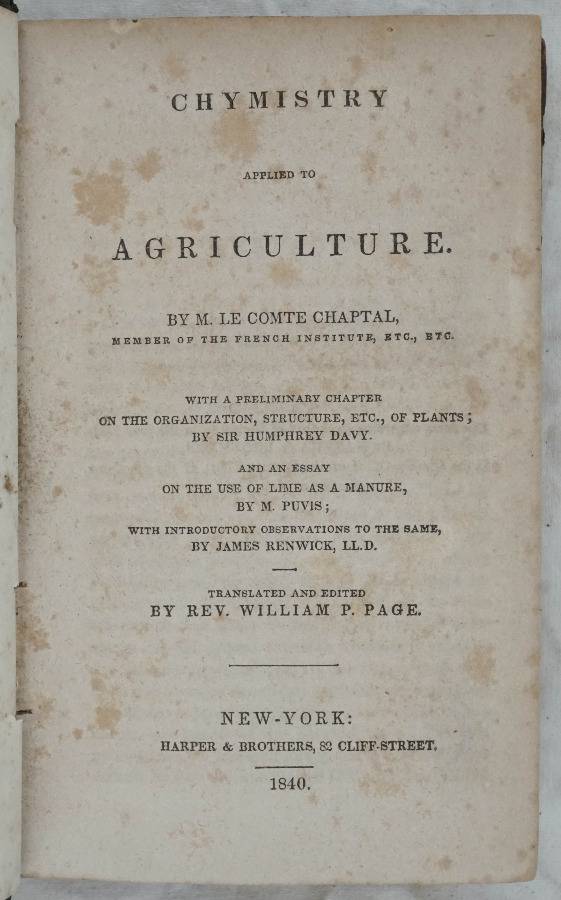 Quote:
My apologies for introducing a tangent. Sigh. Sadly John Becker, you did not introduce a tangent. As pointed out in earlier posts, the issue of why some, or many, perhaps do not share especially in published form is not wishing to be jumped upon for a mistake nor perceived mistake. Your "ERRA A" citation just illuminated and underscored the problem while remaining on point. |
|
Send note to Staff
|
|
|
Pillar Of The Community
6363 Posts |
|
|
Yes, that is the exact title page I have here. I thought of scanning it, but chose not to invest time in that direction. Thank you.
I will take a risk and introduce another tangent, which I think I have told before. The late postal historian Richard B. Graham, in trying to ascertain how many of a rare particular postmark existed would occasionally understate what he knew in his Linn's columns. Even when he knew of 2 or 3 or 4 marks, he might modestly say "the only one I am aware of" or "the only one I have a copy of", in order to get readers to write to him with their oneupsmanship. In that way he often found out about a few more copies that he otherwise would never have heard about. An intentional error to get feedback! |
|
Send note to Staff
|
|
|
Pillar Of The Community
United States
890 Posts |
|
|
Quote:
There was a great book written years ago titled "Chess for fun,Chess for blood". It treied to explain to the casual player they should not be too upset with the attitudes expressed by the most serious players. By Edward Lasker (not to be confused with Emanuel Lasker, the World Chess Champion). In the chess world, he is sometimes referred to as "Lasker the lesser." He founded the American Go Association, invented and patented the breast pump, and played a match with Frank Marshall for the US Championship in 1923, which he narrowly lost. He won the US Chess Open 5 times - a skilled player... Awarded the International Master title by FIDE in 1963 at the age of 77 (!) A very distant cousin to World Champion Emanuel Lasker. I've been involved in the chess world for about 50 years. There are some similarities with philately, particularly when it comes to the "casual" factor. Everyone, regardless of race, creed, economic background, or type of employment have something in common - their love of the game of Chess. This has a leveling effect socially. However, when you introduce serious competition into the equation, well, all bets are off. You have not experienced folks with issues (ego, elitism, snobbery, whatever you like to call it) until you have been a participant in or observed a serious chess tournament. In such a personal, individual contest - the ultimate goal is to destroy your opponent's ego to give you a competitive edge to win a game or match. This is ideally not accomplished verbally, or in an obvious way (which is not allowed by the rules - chess is a silent game for the most part). It is accomplished by intimidation by reputation, and by your ability to play good moves! Great chess players always milk their opening innovations, for example, for all they are worth - and keep their secrets close to the vest. Then later, once the secret is out, they share freely via books or articles. But the first priority is to get an edge in as many games as possible before antidotes are found. This is most difficult to do while playing a game, because the clock limits the time available to work things out. But in the information age, secrets do not stay secret for long. Snobbery in philately is a given. There are those who classify themselves as "serious" philatelists, and look down upon casual collectors with disdain or worse. But THAT experience (being on the receiving end, I mean) is nothing like having your ego destroyed in a serious game of chess, IMHO. Perhaps it could be said that when you enter "seriousness" into the equation, things change a bit. Whether that seriousness is economic or simply competition does not matter. That social equality of love of avocation becomes much more personal then, and personal failings rise to the surface more quickly. John |
|
Send note to Staff
|
| Edited by johnsim03 - 11/06/2021 04:21 am |
|
|
Pillar Of The Community
United States
571 Posts |
|
|
Replies: 77 / Views: 7,172 |
|




 Posted 11/04/2021 11:00 pm


