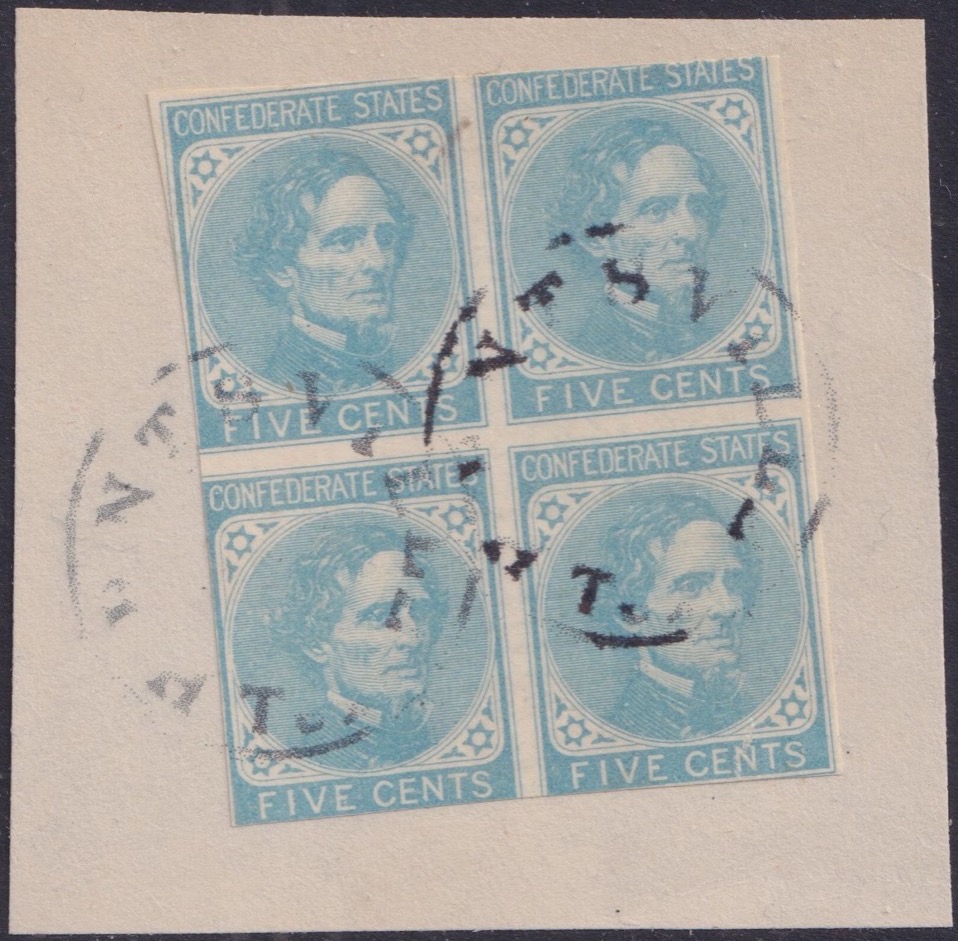
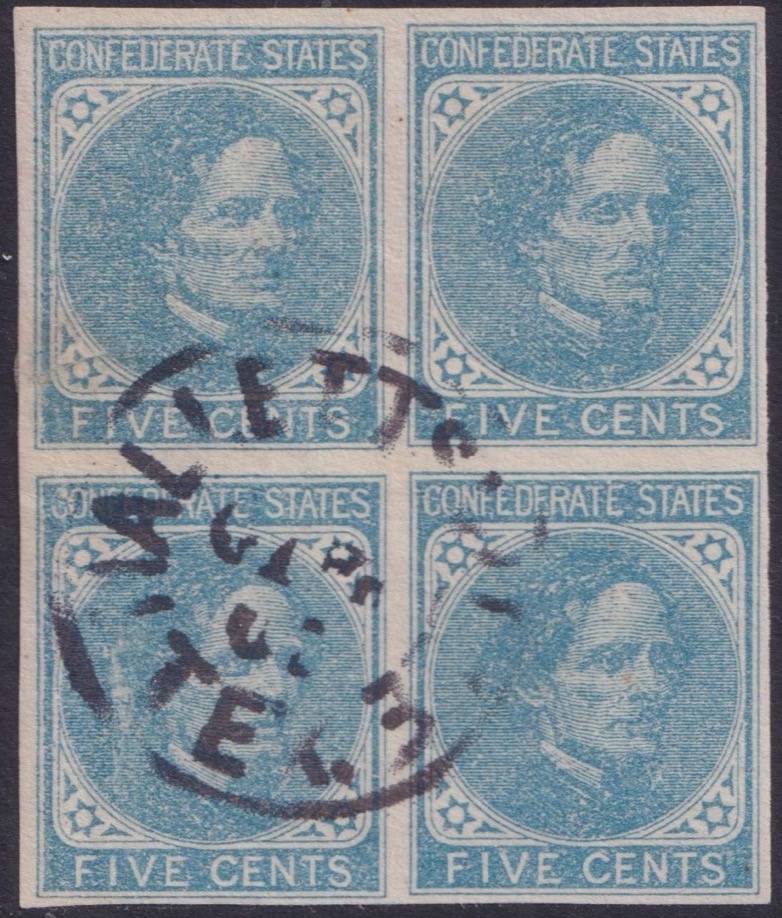
Both cancels are undoubtedly fake. Both look to be made of lampblack (carbon), probably mixed with small amounts of water. Printers ink and postmarking ink are made of (at least) lampblack and oil (usually linseed), so it covers the surfaces of cancel devices and prints on a stamp and cover. The cancels in the OP show powdery edges to the breaks, showing that no oil was in the mix.
The breaks are placed nonsensically. The rim breaks don't follow wear on the letters which are also oddly worn. If the clerk was abusing the device this much by breaking pieces off, they would have thrown it out long before. The cancel I'm used to seeing for Huntsville, Texas for the period is this one, which is clearly larger than the one on the OP block:
https://stampauctionnetwork.com/SR/sr7731.cfmSee lot 1617
Aside from the fake breaks in the impression of the Hallettsville cancel, take a look at this:
https://hrharmer.com/en/_auctions/&...28&lotno=63#click to expand and see the provisional and the postmark. Clearly, the postmark device was used to make the provisional stamp. The cancel on the block in the OP are certainly different in the weight of lettering, at minimum.
But take a look at the cancel on the OP block. What's that weird-looking date? It is the "10 PAID" cut up/damaged to obscure that portion. No, that wouldn't be used on stamps; it wasn't used on the cover as a CDS/dater. It appears the cancel used for the OP block was a device made using a photographic copy of the provisional with the thickness of all parts suggesting that it was blown up from a smaller image, as a guess from the Caspary sale catalog(?) or perhaps later.





 Posted 11/09/2021 6:11 pm