Stamp Community Family of Web Sites
Thousands of stamps, consistently graded, competitively priced and hundreds of in-depth blog posts to read


Stamp Community Forum
 
Username:
Password:
Save Password
Forgot your Password?

This page may contain links that result in small commissions to keep this free site up and running.

Welcome Guest! Registering and/or logging in will remove the anchor (bottom) ads. It's Free!

Scott #11 Advice On Type I V Type II And Dull Red V Orange Brown

 
To participate in the forum you must log in or register.
Author Previous TopicReplies: 4 / Views: 1,587Next Topic  
Valued Member
United States
14 Posts
Posted 03/17/2022   8:48 pm  Show Profile Bookmark this topic Add ScottZ to your friends list Get a Link to this Message
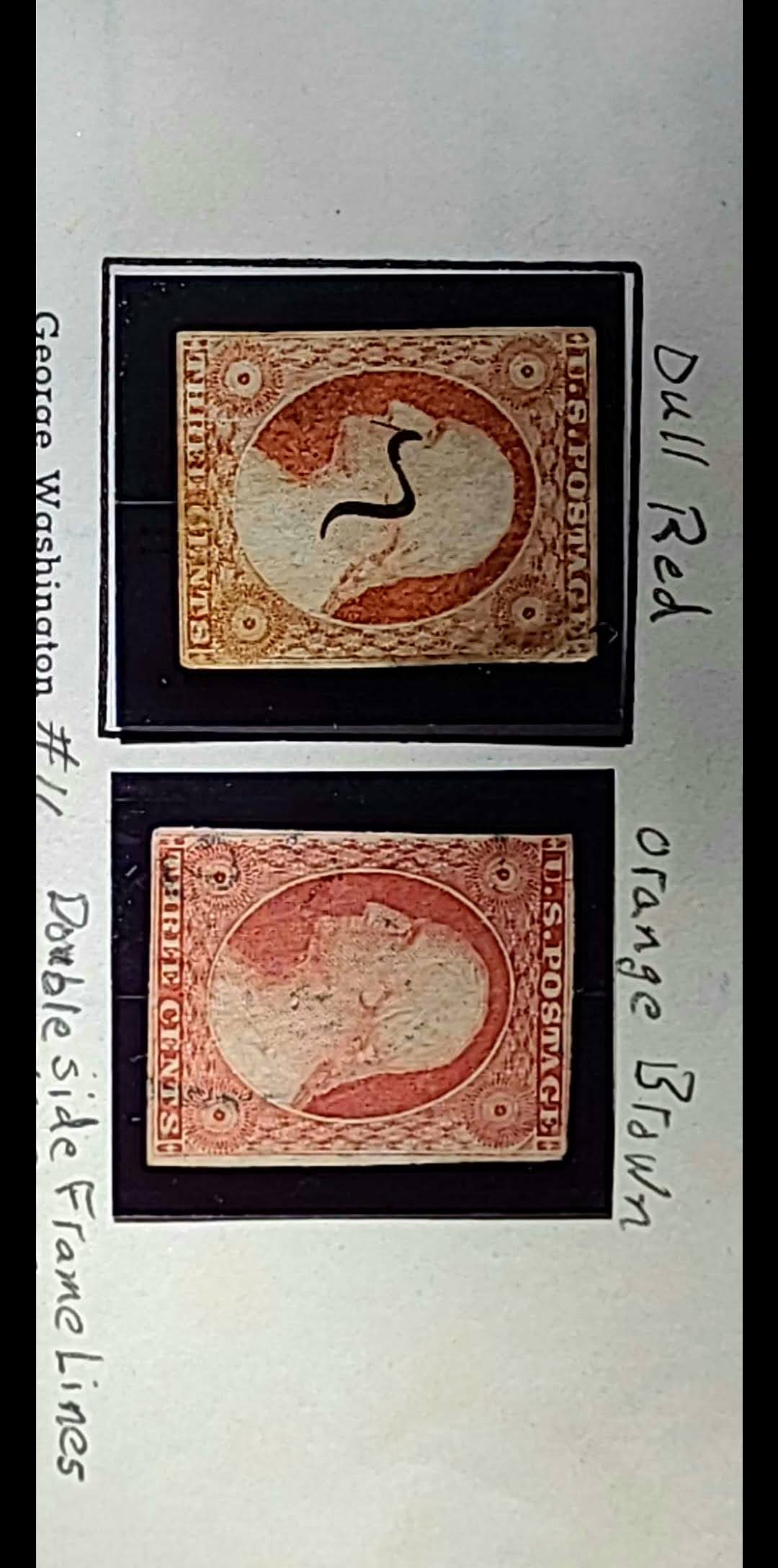
New here. Having problems with photo uploads so apologies in advance. Just got back into collecting after buying a collection online. Never had anything older than 1890s Franklins. Now I have at least 20 older than that and I'm THRILLED even though I'm learning they're common as dirt but they're so interesting. I've researched on Stampsmarter.org, Swedishtiger and a well illustrated article by Don Getzen of hamiltonphilatelic.org but I'm still not clear on the difference between Scott #11 Type I and Type II and Dull Red v Orange Brown. Suggestions? Have I correctly labeled these cigar box warriors?

Send note to Staff

Pillar Of The Community
United States
1807 Posts
Posted 03/18/2022   11:30 am  Show Profile Bookmark this reply Add dudley to your friends list  Get a Link to this Reply
Hello, Scott, and welcome to the forum. I'll jump in here, although there are many members of this forum with considerably more expertise than I on the 3-cent 1851 stamps.

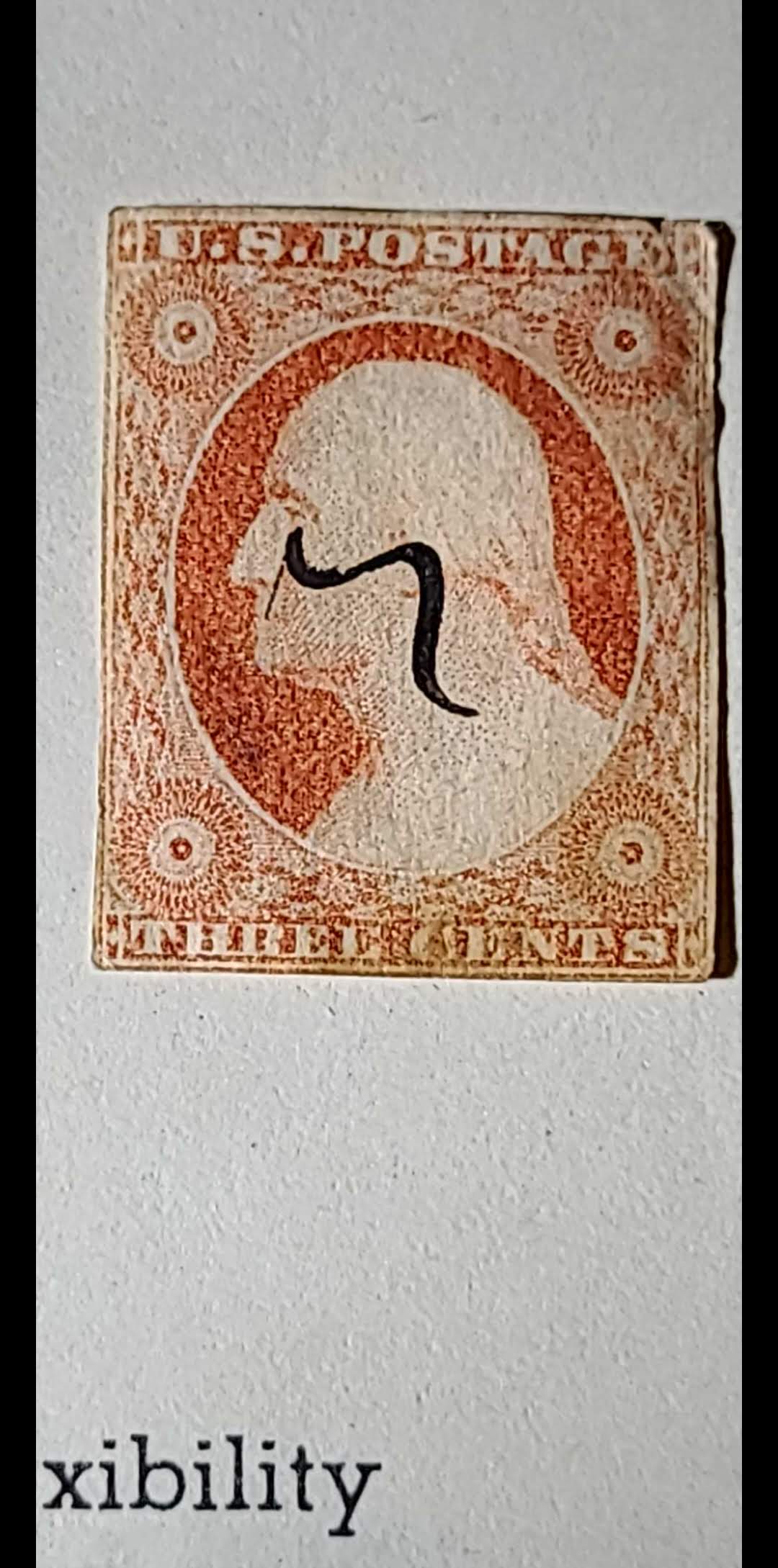
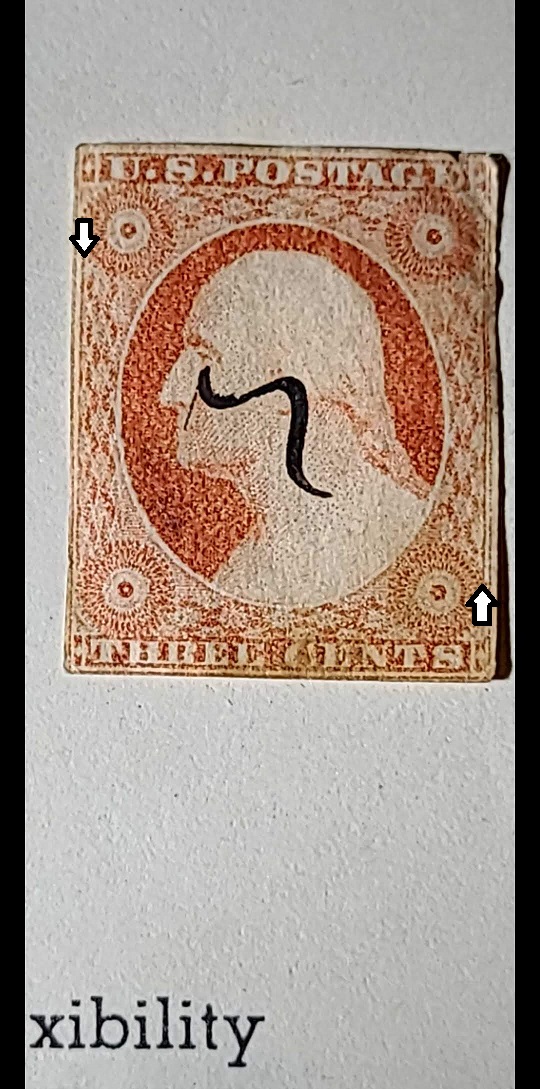
The difference between Scott #10/11 and #10A/11A, resp., is the presence (10A/11A), vs. absence (10/11) of inner frame lines. Of the two stamps you have pictured, the one with the squiggly manuscript cancel is clearly 11A, with inner frame lines (Type II). These are readily evident when present (see photo). The other stamp to my eye anyway doesn't appear to have inner frame lines, so looks to me like #11 (Type I).

The difference between Orange Brown stamps (#10/10A) and Dull Red (plus many other shades) stamps (#11/11A) is really more complex than simple color terminology. Colors can vary according to printing batch and, over the course of 170 years, exposure to environmental factors. One person's Orange Brown may be another person's Brown Orange. The difference between #10/10A and #11/11A is based on an actual and deliberately introduced difference in the chemical composition of the printing inks. The ink used for the early stamps (#10/10A) proved to be corrosive to the plates (due to iron content, if I recall correctly). The change in printing inks resulted in stamps that were less orange and more red in color. Although this distinction with some experience can be discerned with the naked eye in many cases, the only truly reliable way to identify #10/10A vs #11/11A is to determine what plate a given stamp came from. If you look in the Scott's US Specialized Catalog you'll see that #10/10A were produced only from certain plates, none of which also produced #11/11A. Neither of the stamps you have pictured here shows evidence of being Orange Brown, in my view.

I invite corrections/additions from the true 3-Cent experts.


Send note to Staff  Go to Top of Page
Valued Member
United States
14 Posts
Posted 03/18/2022   12:40 pm  Show Profile Bookmark this reply Add ScottZ to your friends list  Get a Link to this Reply
Thank you for the clarifications.The arrows confirmed what I was looking at. I look forward to learning more from this group.
Send note to Staff  Go to Top of Page
Pillar Of The Community
United States
606 Posts
Posted 03/18/2022   1:18 pm  Show Profile Bookmark this reply Add ioagoa to your friends list  Get a Link to this Reply
Hi ScottZ --

Welcome to the forum -- and I will say that having collected and specialized in the 1851 3-cent issue for many years -- that dudley did a very nice job of explaining and summarizing the differences in how to classify the stamp by Scott #.

You made reference in your original post to a presentation by Don Getzin -- which I had not seen before -- but just took a look now -- and I think Don did a great job of illustrating the differences as well. Link to Don's presentation for others who may not have seen it is here:

http://hamiltonphilatelic.org/prese...mpressed.pdf

There are other resources you can look at as well, including -- as dudley mentioned -- the Scott US Specialized catalogue.

Also, there is an "Easy ID" article for the 3c 1851 stamp on the StampSmarter website -- link is here:

https://stampsmarter.org/features/S...Plating.html

In any event, after all the dust settles and all the smoke clears -- the definition of the various Scott numbers for the 3-cent imperforate issue of 1851 boils down to two factors --

-- First -- the plate from which the stamp was printed

-- Second -- the presence -- or absence -- of recut inner lines.

Note that the color of the stamp is NOT a factor in determining the Scott catalog number.

Consequently, as dudley noted, the only 100% sure way to determine the Scott catalog number is to plate the stamp -- or at least be able to determine the plate from which the stamp was printed.

If you have not yet checked out StampPlating.com -- there is a tab that summarizes how to ID the various plates -- and a ton of other information about the stamp as well. Link is here:

http://stampplating.com/identify-plates

As an aside -- The plates that printed the #10 and 10A stamps were in use for only a very short time -- and the number of stamps printed from these plates pales in comparison to the plates that printed the #11 and #11A stamps -- which, generally speaking, drives the significant difference in Scott catalog value.

Again -- welcome to the forum.

Regards // ioagoa

Send note to Staff  Go to Top of Page
Valued Member
United States
14 Posts
Posted 03/18/2022   5:30 pm  Show Profile Bookmark this reply Add ScottZ to your friends list  Get a Link to this Reply
Super information and I'm sure the plating resources will be helpful in addressing that stack of Green Franklin's on my desk.
Thanks for the encouragement.
Send note to Staff  Go to Top of Page
  Previous TopicReplies: 4 / Views: 1,587Next Topic  
 
To participate in the forum you must log in or register.

Go to Top of Page

Disclaimer: While a tremendous amount of effort goes into ensuring the accuracy of the information contained in this site, Stamp Community assumes no liability for errors. Copyright 2005 - 2026 Stamp Community Family - All rights reserved worldwide. Use of any images or content on this website without prior written permission of Stamp Community or the original lender is strictly prohibited.
Privacy Policy / Terms of Use    Advertise Here
Stamp Community Forum © 2007 - 2026 Stamp Community Forums
It took 0.14 seconds to lick this stamp. Powered By: Snitz Forums 2000 Version 3.4.05