| Author |
 Replies: 19 / Views: 1,798 Replies: 19 / Views: 1,798 |
|
Valued Member
16 Posts |
|
|
|
Are plastic page holders safe to use?
I have an old book and the pages are attached to the binder and I wanted to put them in plastic page holders in a new binder.
|
|
Send note to Staff
|
|
|
|
|
Valued Member
United States
190 Posts |
|
|
Depends upon what type of plastic page holders you are referring to. Perhaps if you showed a picture they could possibly be identified. The most popular plastic pages are referred to as Vario pages (Vario is the manufacturer) and these are considered safe (archival quality). There are other manufacturers who also offer archival quality pages. Each should be investigated with care to establish their quality. |
Send note to Staff 
|
|
|
Pillar Of The Community
United Kingdom
8623 Posts |
|
|
"Vario" is actually just the name of a particular size of stockcard made by Lighthouse/Leuchtturm. It's not a manufacturer. |
|
Send note to Staff
|
|
|
Moderator

United States
12330 Posts |
|
|
I think the most important factor is a stable environment. Ideally a cool and dry storage environment (temperatures should be held at a constant 70°F with a relative humidity held between 30% and 50%). Having this kind of stable environment will go a long way in preventing problems.
Don
|
|
Send note to Staff
|
|
|
|
Pillar Of The Community
United States
7102 Posts |
|
|
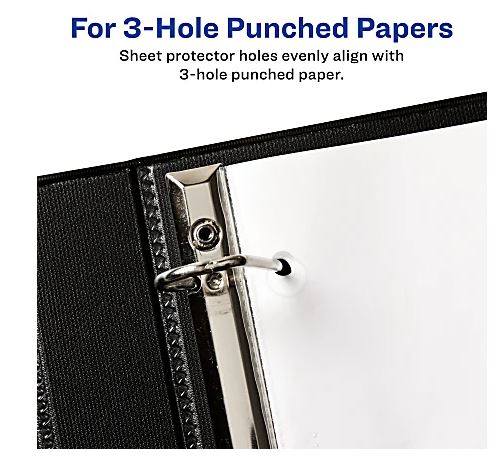
I assume you're talking about the page protectors that fit in a 3-ring binder and hold an 8.5x11 sheet of paper (or whatever the prevailing paper size is in your area, if you're not in the U.S).
Look at the package to see if they claim to be archival. Basically, I would not trust the no-name (i.e., really cheap) page protectors. Better ones should be fine.
I believe we have people here who are slipping "Steiner" pages into sheet protectors. |
|
Send note to Staff
|
|
|
Valued Member
16 Posts |
|
|
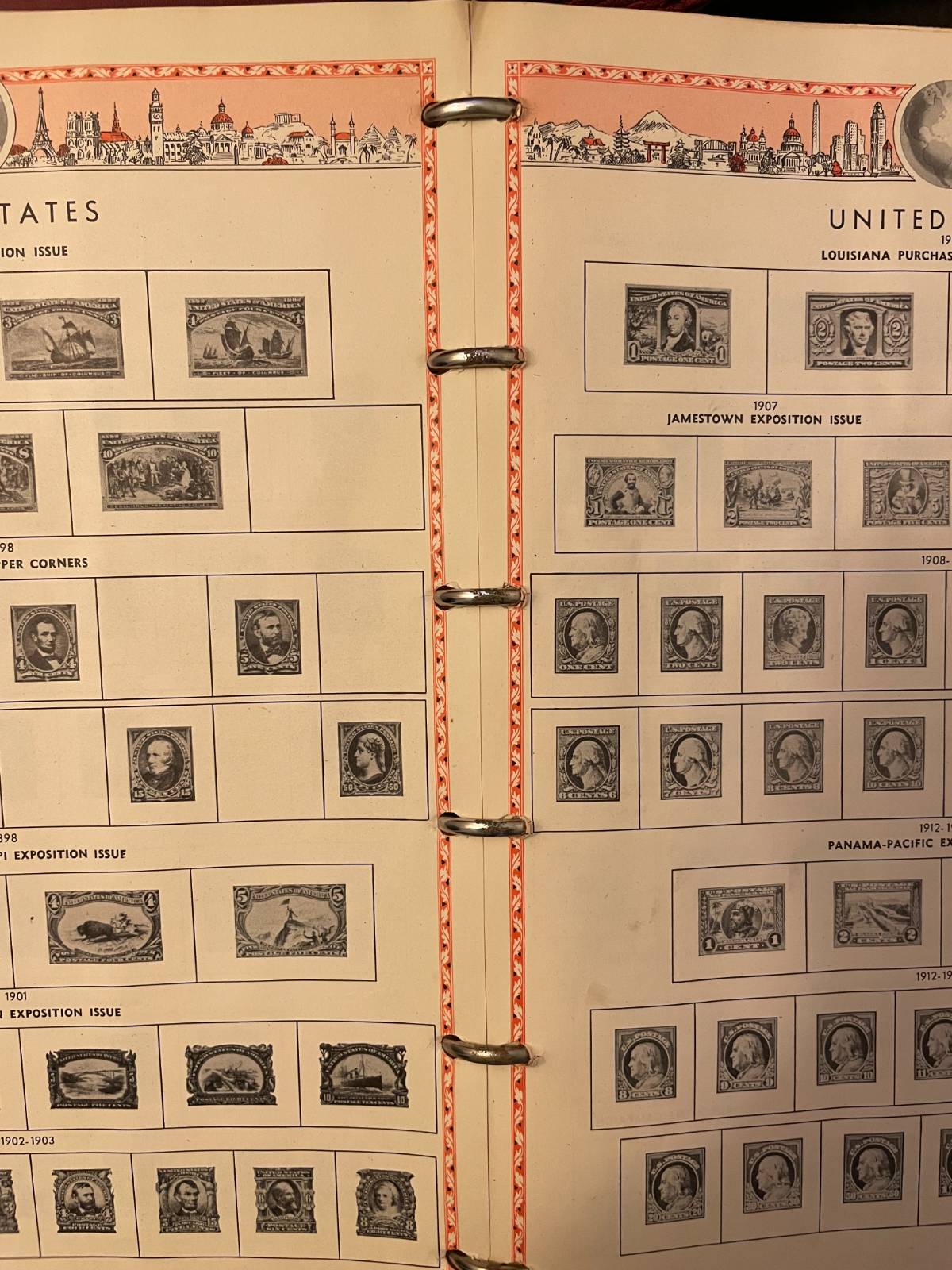 see how the pages are hole punched. I wanted to just take the whole page and put it in a plastic sheet to protect it. |
|
Send note to Staff
|
|
|
Moderator

United States
5106 Posts |
|
|
Archival sheet protectors should be OK for most stamps. However, there have been discussions on this forum that warn that trying to sell items in those sheet protectors is sometimes a problem because the buyers may want to take out and examine individual stamps for quality, gum, etc.
It's really up to you. |
|
Send note to Staff
|
|
|
Bedrock Of The Community
12689 Posts |
|
|
Quote:
see how the pages are hole punched I would note that if the idea is for the holes in the pages to align with the holes in the sheet protectors and then be placed back in the ring binder it likely will not happen that way. Most protectors have a reinforced edge, outside of the pocket portion, that has the holes. Enclosing the pages may not work well insofar as environmental issues either since the paper cannot breathe as before and moisture from humidity might become a problem. May I ask what the concern(s) and goal(s) is/are? |
|
Send note to Staff
|
|
|
Valued Member
16 Posts |
|
|
Quote:
Most protectors have a reinforced edge, outside of the pocket portion, that has the holes This is what I would prefer. Many of the pages are starting to rip along the rings. The book itself is kinda old and a bit damaged/clunky so I was hoping to used the reinforced edge holders to protect the whole page. |
|
Send note to Staff
|
|
|
Moderator
United States
12330 Posts |
|
|
Enclosing pages/stamps/covers creates a 'micro-climate' and limits the ability of the paper to 'breathe'. This can be an impact in EITHER direction; it can help in some environmental situations and/or make things worse in other environmental situations.
For the following examples assume that the pages/stamps/covers are enclosed. In the first situation the environment is mostly stable with occasional short duration fluctuations (i.e. the RH goes up for 12 hours every few weeks over a year). In this situation an enclosed 'micro-climate' will help by resisting the external and ephemeral environmental changes.
But in the second situation, the external environmental condition has more frequent poor conditions and the 'micro-climate' ends up retaining those lower quality conditions (i.e. the pages/stamps/covers sit at 60%-70% RH for longer periods of time because it cannot normalize with the improving external conditions.
This is why a stable environment is very important (perhaps paramount?); you can 'get away' with more.
Also note that no major archives or libraries use any kind of sheet protectors.
Don |
|
Send note to Staff
|
|
|
Valued Member
16 Posts |
|
|
Quote:
Also note that no major archives or libraries use any kind of sheet protectors That's really helpful thank you. Is there any reason to not put the pages in a new binder? |
|
Send note to Staff
|
|
|
Moderator
United States
12330 Posts |
|
|
Do not use binders which contain polyvinyl chloride (PVC), others should be ok.
Don |
|
Send note to Staff
|
|
|
Pillar Of The Community
United States
7102 Posts |
|
|
You can get mylar hole reinforcements that will "fix" the pulled holes. Not the cleanest look, but, if you can live with the look of them, that's all that matters.
I use full-length mylar reinforcement strips for ringed binders in another, non-stamp context, and I have them professionally applied by a print shop. That might be an option, but I wonder if the presence of the stamps would scare off a provider...? Ours are applied to featureless cardstock. |
|
Send note to Staff
|
|
|
Moderator
United States
5106 Posts |
|
|
Bedrock Of The Community
12689 Posts |
|
|
Valued Member
United States
190 Posts |
|
|
I think that Rogdcam has a real good point when he asked what your concern(s) and goal(s) is/are? Looking at the album pages that you provided at least these two appear to be intact and in decent condition. If you are looking at adding to the collection perhaps rehousing them makes sense. I have an album I inherited from my Grandfather. The album pages are deteriorating but I could never think about rehousing them just for sentimental reasons. |
|
Send note to Staff
|
|
|
Replies: 19 / Views: 1,798 |
|




 Posted 03/29/2022 5:31 pm