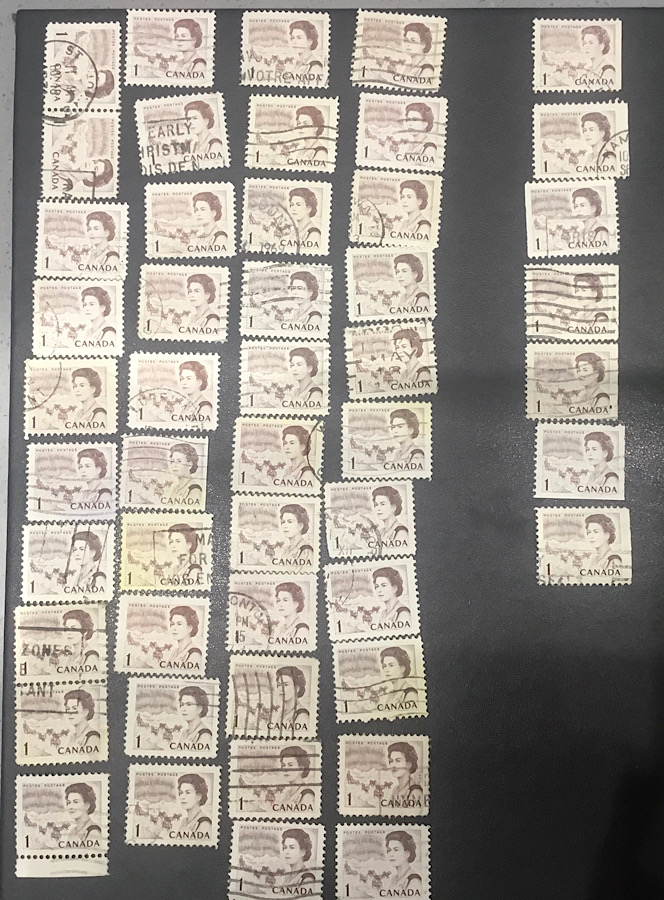
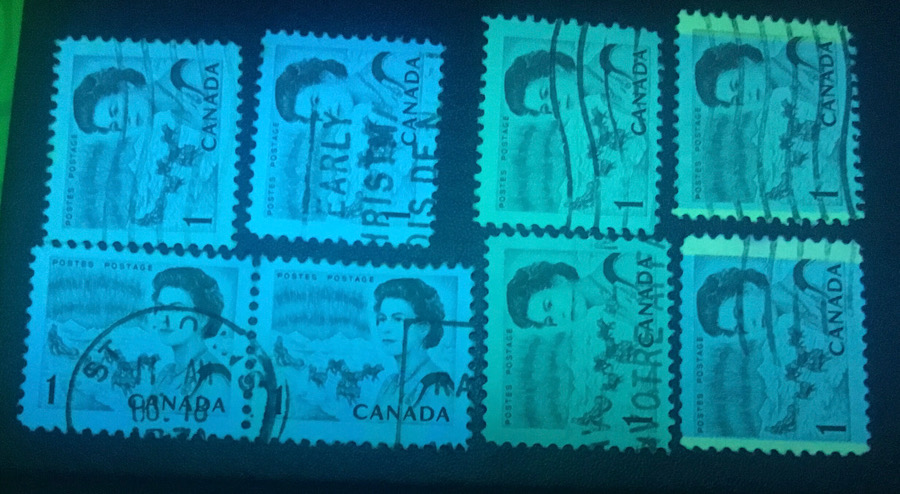
Hibrite paper came from a specific paper manufacturer. I cannot remember who at present but possibly a UK supplier. The other papers came from various producers as and when stock was available.
The non Hibrite fluorescent grades are caused by different amounts of optical brightener additives (OBAs) being added to the pulp at the paper making stage to correct the visual appearance of the finished paper
under daylight.
How much was added depended on the source material for the paper. The different grades of fluorescence you see under UV are just an accidental effect of the paper making process not the stamp printing process and was of no concern as far as the stamp printers were concerned they just wanted a visually white stock. The paper stock was never intended to be viewed under UV light.
I assume different paper manufacturers may have used slightly different OBAs. Another way of getting a whiter paper is to add a "bleach" such as sodium borohydride to the pulp to remove traces of colour. This is not fluorescent and may account for the non fluorescent paper.
The OBAs are similar chemically to dyes and are
water soluble. So you have to be careful in looking at soaked off used stamps as the soaking
MAY have changed the fluorescence from what it was in the mint stamp.
These brighteners are usually sulphonated stilbenes (if you are interested in the chemistry). There are a lot of web articles about them. A simple starting point is
https://en.wikipedia.org/wiki/Optical_brightenerAQ





 Posted 04/11/2022 2:51 pm