Just a calculated guess Tony.

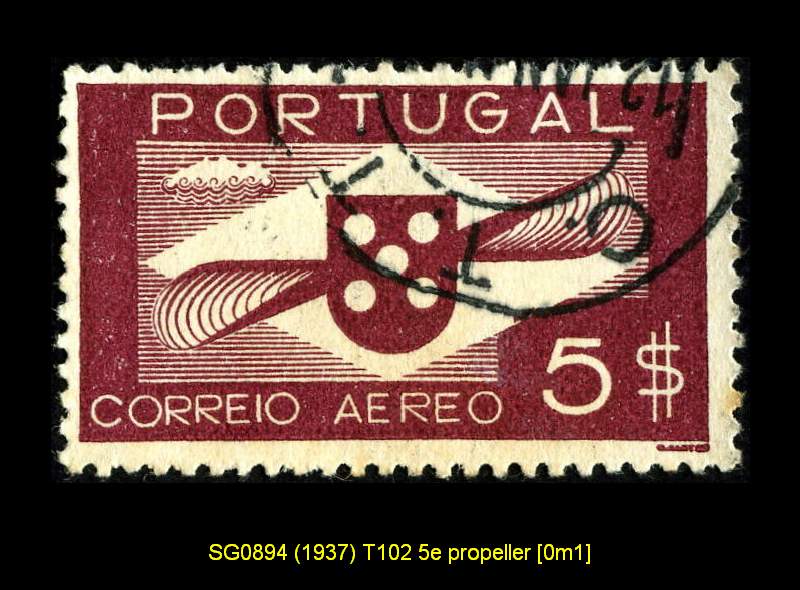
The 5 bezants or escutheons are shown consistantly on
Portuguese stamps.
The 5 "bezants" (or coins) (byzantium) originally signified
the ruler could issue coins as the head of a sovereign state.
Sometime later these were changed to escutcheons.
wiki
Escutcheons and bezants
After the official recognition of the Kingdom of Portugal as an independent country in 1143 (it had been declared in 1139), silver bezants were added to the Burgundian flag, symbolising coins and the right the monarch had to issue currency, as leader of a sovereign state. Eventually, and given the enormous dynamism of medieval heraldry, it is believed that the shield degraded and lost some elements in battle, eventually losing the cross format. This is how King Sancho I
inherited the shield from his father, Afonso Henriques, with no cross and five escutcheons (known in Portuguese as quinas), which stood where the silver bezants had been placed.
Later, the number of silver bezants in each escutcheon would be reduced from eleven to five by King Sebastian I, and modern explanations interpret them as the five wounds of Jesus Christ, although this is highly improbable.





 Posted 05/07/2010 8:25 pm