In 2024, FNMT – RCM dedicated its annual UNESCO World Heritage € 2 commemorative coin to the Alcázar Real de Sevilla. Seville is the largest city in and capital of the autonomy of Andalucia, that occupies the southern part of the Iberian Peninsula. In addition to this royal palace, UNESCO listed the cathedral of Seville with its tower known as "La Giralda," and the "archivo de Indias" as World Heritage.
The alcázar dates to the end of the Taifa of Seville or the beginning of the Almoravid rule at the end of the eleventh century. In the second half of the twelfth century, the Almohads reformed the old alcázar. After the Christian reconquest of Seville by Fernando III of Castile, in 1248, the alcázar served as residence for Kings of Castile, and, later, Spain. Over time, they built palaces in the prevailing architectural style.
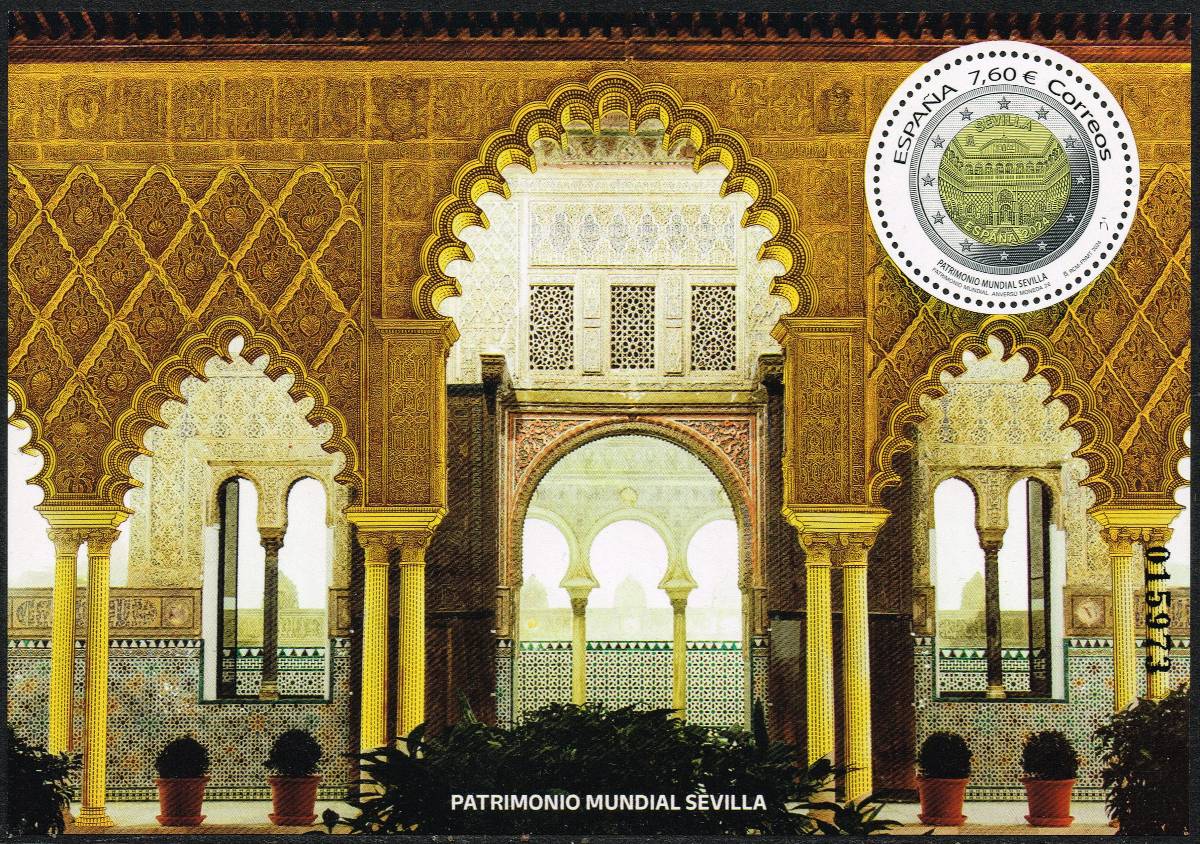
The miniature sheet reproduces one of the wings of the Patio de las Doncellas. This rectangular courtyard that is 21 metres long and 15 metres wide was part of the Mudéjar palace built for King Sancho I 'the Cruel' of Castile between 1356 and 1366. The stamp reproduces the obverse of the commemorative € 2 coin that depicts another wing of the Patio de las Doncellas. This, also, shows the Renaissance first floor
The miniature sheet was printed in offset with the stamp printed in offset and chalcography (intaglio) by the FNMT – RCM that also minted the commemorative coin.





 Posted 07/28/2025 2:53 pm


