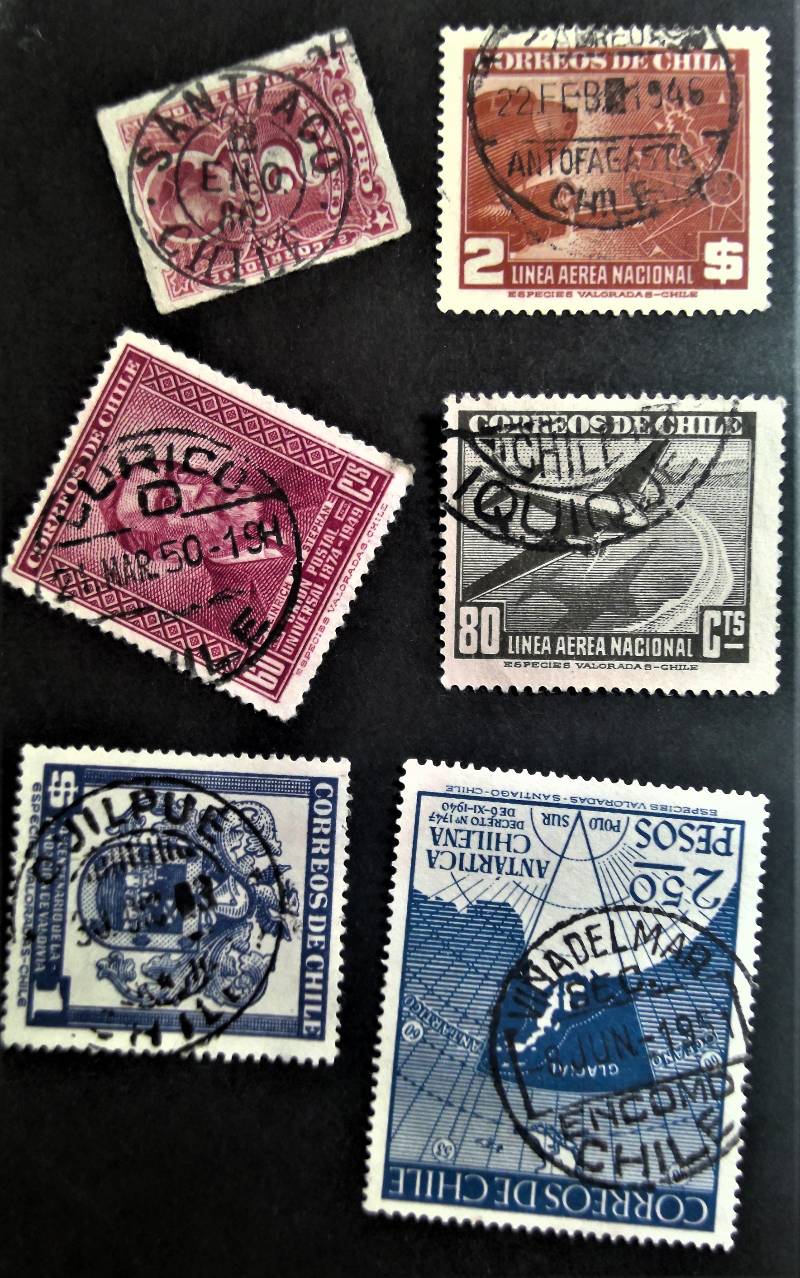
Hi EdziuMM,
Absolutely! I believe information should be shared, and can help stimulate interest in an area, especially when you know what is common and what is scarce. I think it's fun to find a scarce [sometimes valuable?] postmark in amongst the billions of "chaff" stamps in the world.
I think it's of value to determine scarcity of postmarks, as it gives a baseline for trading and selling (what will be hard to find and what will be easy to find), and makes the hobby stronger.
Yet, the information can difficult to track down, even when published. Language barriers, price barriers, availability barriers all cause issues. Pretty hard to find if it only ever existed on someone's personal website from 15 years ago, that can only be found through chains of old links on Internet Archive.

From what I've seen, Australia seems to have a pretty active postmark market, with prices to match. If only a fraction of that interest existed for the postmarks of other countries... (maybe it does, and I just am unaware).
With that in mind, I've been trying to slowly build my digital and physical library, so I know what to look out for.
I think it'd be great to have threads for countries, specifically on their postmarks (post offices lists, the types, scarcity, what parts of the postmark mean). A Primer on Postmarks, to spur interest and research into more specific directions.
Digital Post Office lists are a necessity, as they enable the determination of partial postmarks. Initial scarcity could be as simple as coming from someone's own collecting experience (example: "seems to me 75% of this country's postmarks are the capital, 20% are these regional capitals, and 5% are these villages, I never see Village A, B, and C). I'm pretty young, so I don't have the benefit of having collected for 10, 20, or 50 years, and the experience that comes along with that.
No one knows everything, but someone's opinion on scarcity is better than nothing, and can always be updated as new information comes out. I've been thinking about how one might be able to calculate a baseline scarcity rating using yearly revenues of post offices, length of time that a post office was active, and populations of towns using censuses. Finding that info can be difficult, but sometimes the documents have been digitized and exist online. I do think it'd be possibly though, using a spreadsheet, time, and some critical thinking on how to make it work. Digital documents and Google Translate definitely open up new avenues of information.

Maybe it's because I'm interested in Geography, but I care more about different places and they're names, and less about minute lettering differences (same post office name, but this "O" is shaped different, or this "A" is 1.5mm high, not 2mm... and the like).
To think that a stamp that I'm holding in my hand, came from some tiny village, thousands of miles away, and 100 years ago...a place that no longer exists, and this postmark may be one of the few physical remnants to remember it...Amazing! From a different era, an age of discovery and exploration, an age of conquest and revolutions, an age of empires...and this little stamp and postmark is a physical link to it. I find all that exciting!





 Posted 11/06/2022 02:11 am