See this thread for examples of Form 3548 as the mechanism to get the stamp sent in for postage:
https://goscf.com/t/65748&whichpage=1&In your examples, I doubt either was philatelic in intent:
#1: No postage paid, probably an accidental skip when the sender was stamping a pile of cards, apparently sealed thus 1st class, no return address: no choice but ask the recipient to pay to get their mail.
#2: not underpaid, but rather sent unsealed as single piece 3rd class. Not forwardable without repaying an additional 3rd class rate.
Here are some examples with dues, so not done with a Form 3548, thus there was apparently some difference in procedure depending on how far along the letter got in its journey before the due process started, etc. Bottom line, each due or forwarded piece should be evaluated on its own merits for the time period.
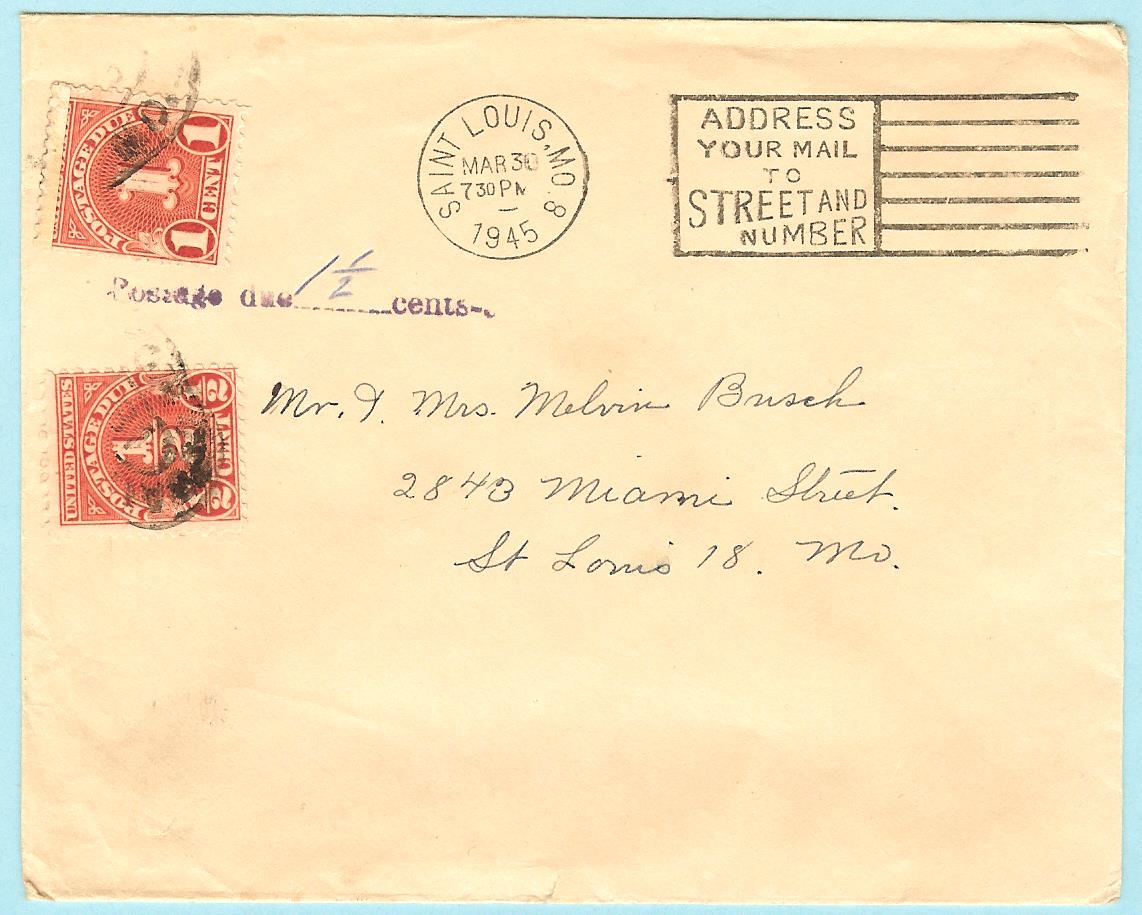
Totally unpaid unsealed 3rd class Christmas card. Nice use of half cent due stamp, J79.
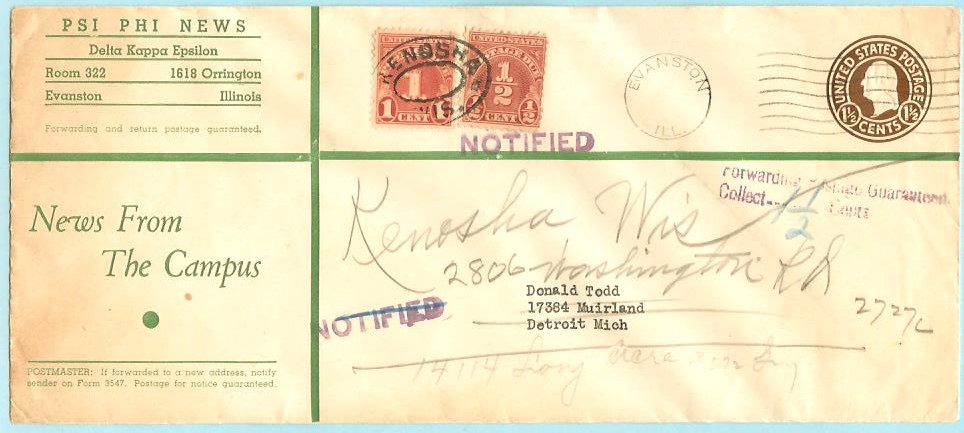
An uncommon "Forwarding Postage Guaranteed" marking, so it went on quickly rather than waiting for postage to be sent back. Another nice use of J79.
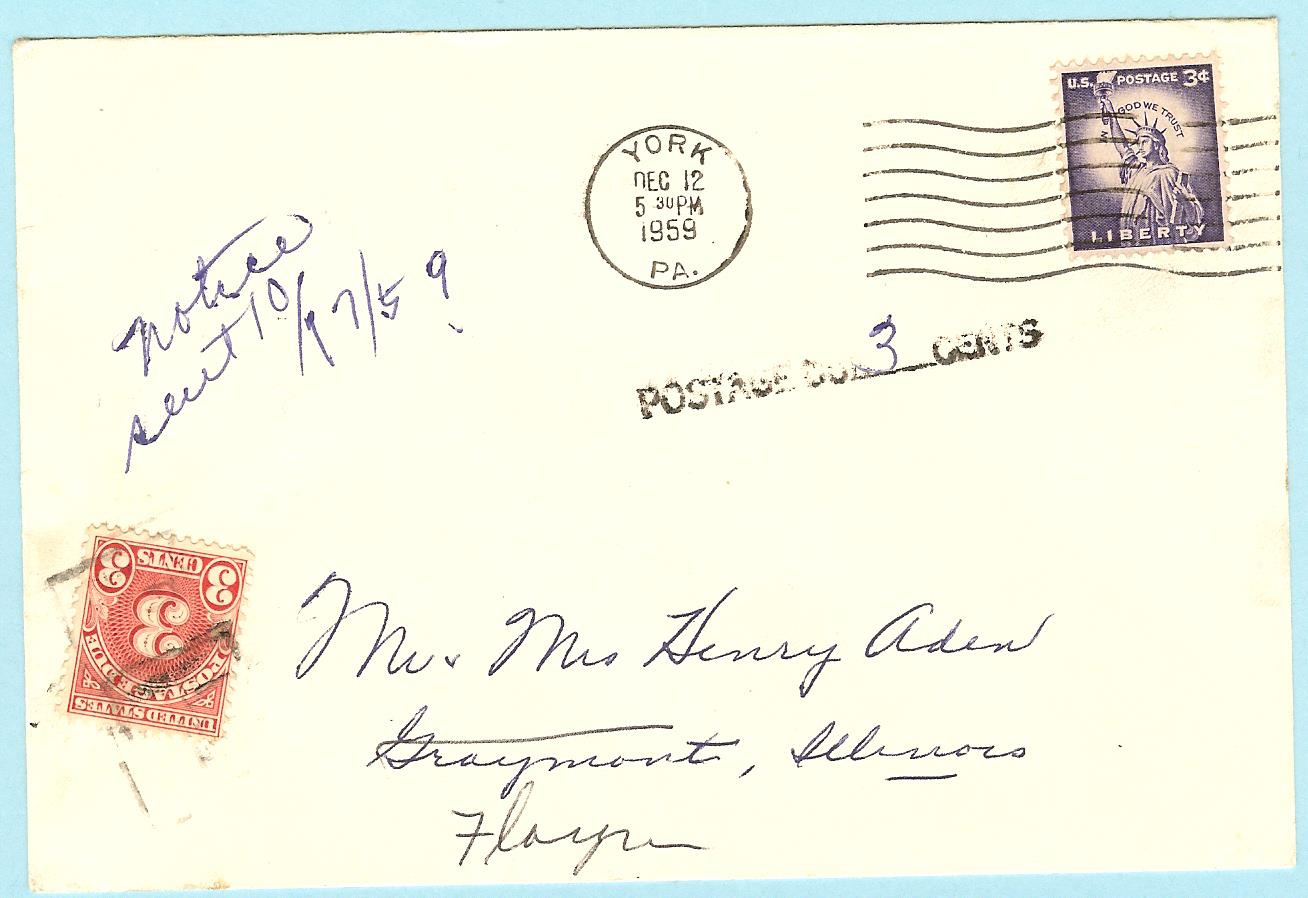
Unsealed Christmas card, sent as single piece 3rd class in 1959. The irony to this: The first class sealed letter rate at the time was 4 cents, 3rd class was 3 cents, but without free forwarding, thus the thrifty sender saved a cent, cost the recipient 3 cents forwarding, and the USPOD got 6 cents total instead of 4.
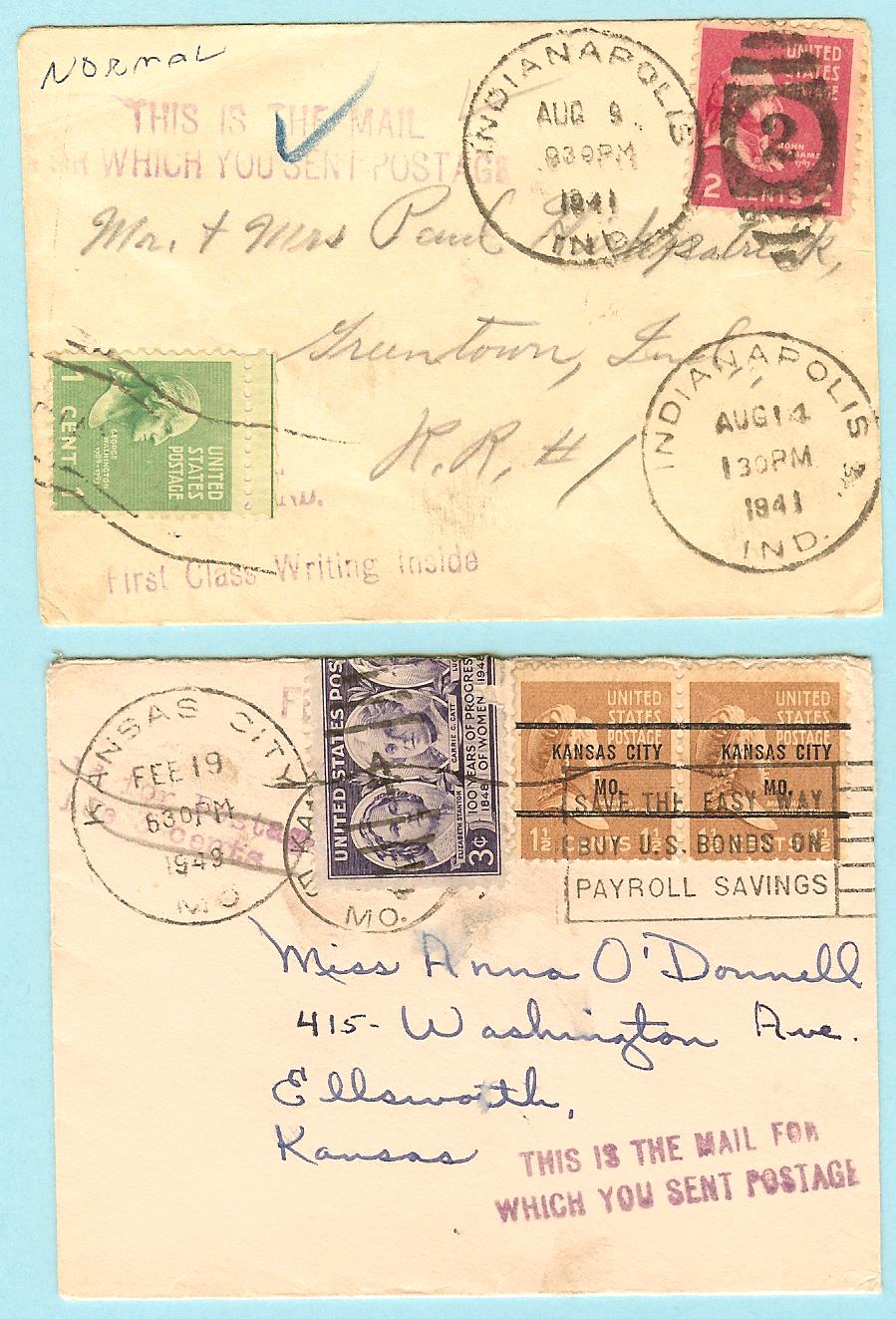
Back closer to the "held for postage" & "This is the mail for which you sent postage" markings, here are two examples I have shown before.
The first is an attempt at paying a 2 cent local letter rate in 1941 and having it caught for the inter-city 3 cent rate.
The second cover attempted to use a pair of precancels without a permit and was caught/rated as unpaid and the 3 cents collected from the recipient.





 Posted 12/26/2022 4:34 pm


