| Author |
 Replies: 16 / Views: 1,637 Replies: 16 / Views: 1,637 |
|
Pillar Of The Community
United States
1170 Posts |
|
|
I have a large roll of this stamp and I am trying to confirm it is large hole. Image of back side. 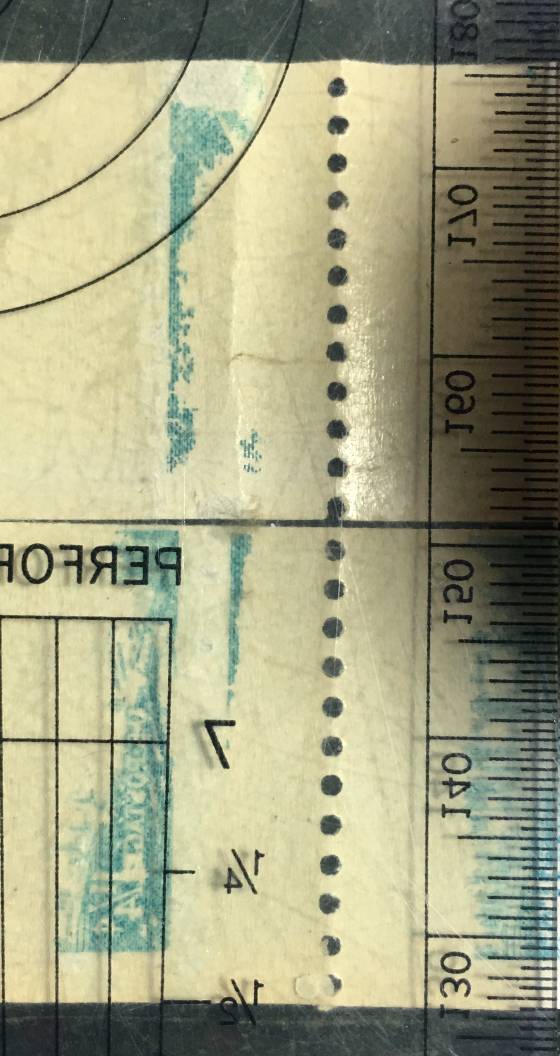 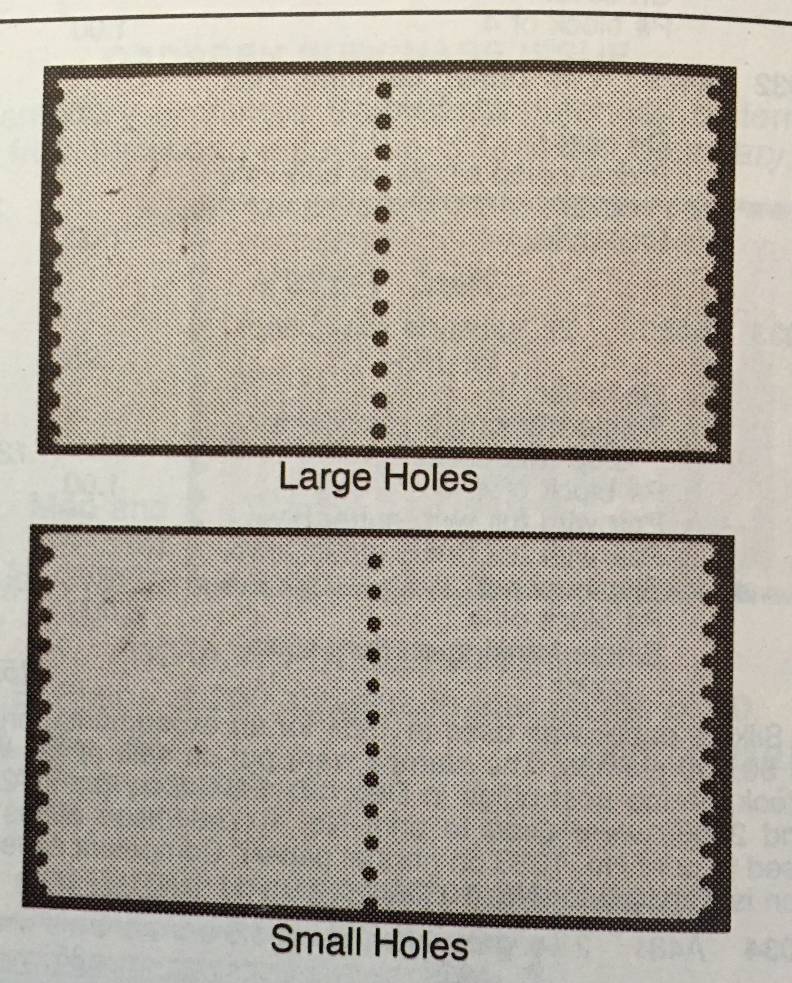 |
|
Send note to Staff
|
Michael Darabaris |
|
|
|
|
Pillar Of The Community
United States
8956 Posts |
|
|
I do not quite understand what is going on here. On the top picture the holes look the same size to me. On the bottom picture they are different. Are the two bottom strips not yours?
Peter |
Send note to Staff 
|
|
|
Pillar Of The Community
United States
1170 Posts |
|
|
Yes These are two separate strips. but I thought both had the same size holes. |
|
Send note to Staff
|
Michael Darabaris |
|
|
Bedrock Of The Community
12734 Posts |
|
|
Wouldn't Scott make life easier if they gave the diameter in mm of each hole type? |
|
Send note to Staff
|
|
|
Pillar Of The Community
United States
4450 Posts |
|
|
Quote:
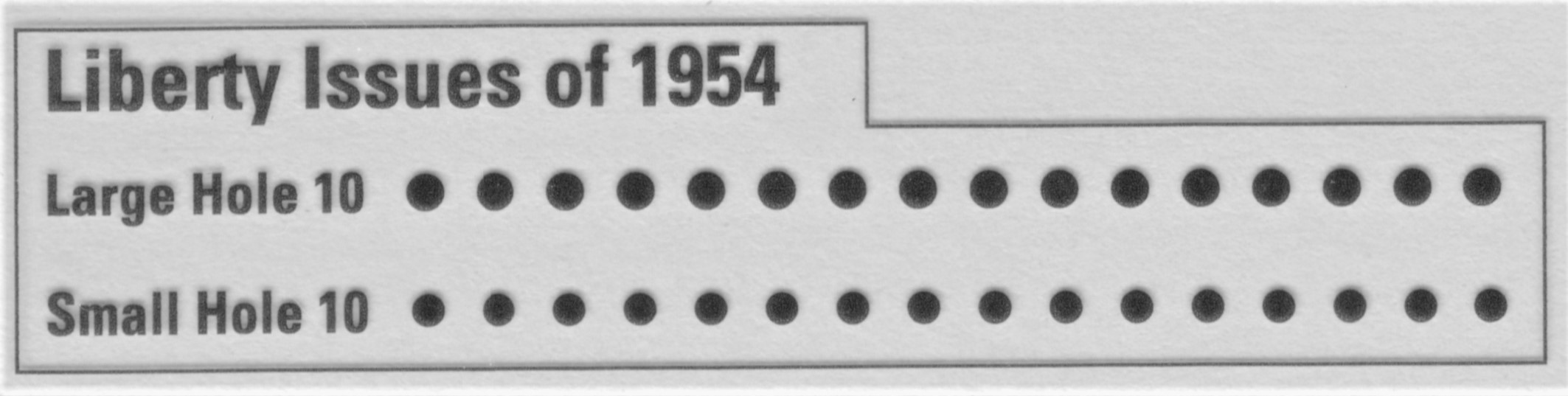
The new perforators associated with the Huck press used smaller pins resulting in holes measuring a nominal 0.037 inch in diameter. The holes are quite clean and are found on Huck press (dry printed) products. The old perforators associated with the Stickney press used larger pins resulting in holes measuring about 0.043 inch. The initial printings from the Huck press were configured to be compatible with the Stickney perforators resulting in large hole dry printing varieties. The wet printed coils from the Stickney press generally, but not always have large holes. Ken Lawrence discovered a Scott 496 strip of 5 with small holes measuring about 0.038 inch in diameter. Initially it was believed that the 3 cent small hole 1057c wet printing variety was somehow created using the Huck coiling equipment, but the discovery of the 1917 small hole 5 cent 496 variety has led to speculation that another perforator with smaller pins was available, but infrequently used. Now that the small hole 2 cent 1055d wet printing variety and a small hole 842 strip (not listed) have been certified, it is expected that other examples may be found. The most common so far is the Scott 496 small hole variety (not listed) where in excess of ten pairs have been found. The upper limit for wet printing small hole is 0.039 inch diameter which must measure top to bottom and match the curve of a round 0.038 inch target. Because of the paper and technology of the time, wet printing small holes are not as cleanly punched as the new small holes. Additional unpublished information may someday be published by Liberty Issue specialists.
Oddly enough, some early Washington/Franklin coils have larger holes, on the order of 0.045 inch in diameter. Because documentation is sketchy, the explanation for the few wet printing small hole varieties found so far is incomplete. It is not sufficient to postulate "pin wear" because the small hole pins are on the order of 25% smaller in area than the large hole pins. Ken Lawrence published an article a few years ago in the Scott Stamps Monthly magazine. It is still the best introduction. You are correct in noting that the paper between the holes is wider than the holes if small hole and not wider otherwise. Although 1 millimeter can be used as a go/no go criterion, measuring to the nearest 0.1 mm is not precise enough.
The key is the distance between the perforation holes. Get a copy of the common hole size (cheap stamp) cut it such that it is a template for comparing the paper size between the holes. Trying to measure actual sizes in fraction of a millimeter is not a activity with certainty in philately. The eye ball method will show the difference IF such difference exists. |
|
Send note to Staff
|
|
|
Bedrock Of The Community
12734 Posts |
|
|
Quote:
Trying to measure actual sizes in fraction of a millimeter is not a activity with certainty in philately. The difference between .038 and .043 inches is not a fraction of a millimeter but rather 1.27 millimeters. That should be very doable. |
|
Send note to Staff
|
|
|
Pillar Of The Community
United States
775 Posts |
|
|
Pillar Of The Community
United States
1115 Posts |
|
|
Moderator

United States
5106 Posts |
|
|
Bedrock Of The Community
12734 Posts |
|
|
Pillar Of The Community
United States
1115 Posts |
|
|
Another thing to note about the small hole vs. large hole is that for the small hole variey the space between the holes is larger than the hole diameter. This should be visibly apparent (but not a confirming attribute in itself). |
|
Send note to Staff
|
| Edited by orstampman - 02/18/2023 6:17 pm |
|
|
Pillar Of The Community
United States
4450 Posts |
|
|
O.043" - 0.038" = 0.005" read as five one thousandths of an inch. One inch has 25.4 mm, thus 1"/25.4 is 0.03937" Therefore one millimeter equals 0.03937 of an inch. As 0.005" is smaller than 0.03937 of an inch it is less than one millimeter or in other words it is a fraction of a millimeter, 0.1270002mm read as one hundred twenty seven thousandths of a millimeter and more commonly referred to as 127 microns in the International System of Units (SI) or as a micrometer or micrometre depending on which side of the pond you live. rodgcam and orstampman are wrong by a factor of 10 (one order of magnitude) and Germania is correct. 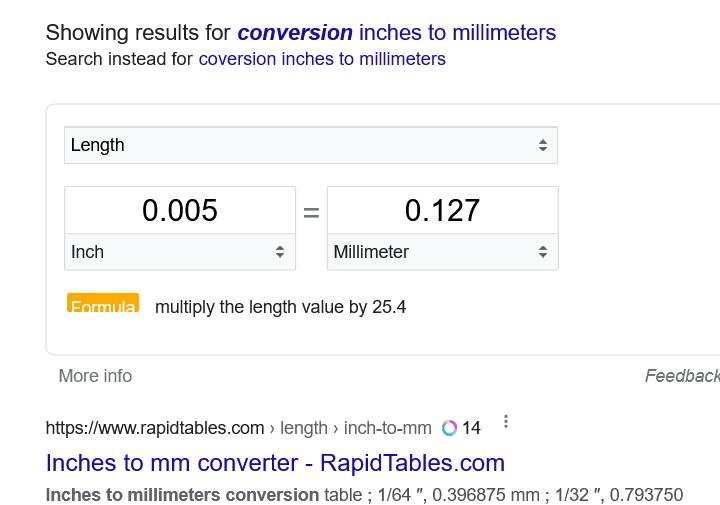 |
|
Send note to Staff
|
|
|
Pillar Of The Community
United States
4176 Posts |
|
|
Pillar Of The Community
United States
1115 Posts |
|
|
Pillar Of The Community
United States
1170 Posts |
|
|
So I have several coils and I finally took a photo of two that looked different and then enlarged the image so I could easily measure in MM . I was then able to determine large hole and small holes. I have a large roll of small holes and a few strips of large holes. The original images I had at the beginning of this post, I determined are large hole. Thanks Guys! |
|
Send note to Staff
|
Michael Darabaris |
|
|
Bedrock Of The Community
12734 Posts |
|
|
Replies: 16 / Views: 1,637 |
|




 Posted 02/18/2023 10:03 am