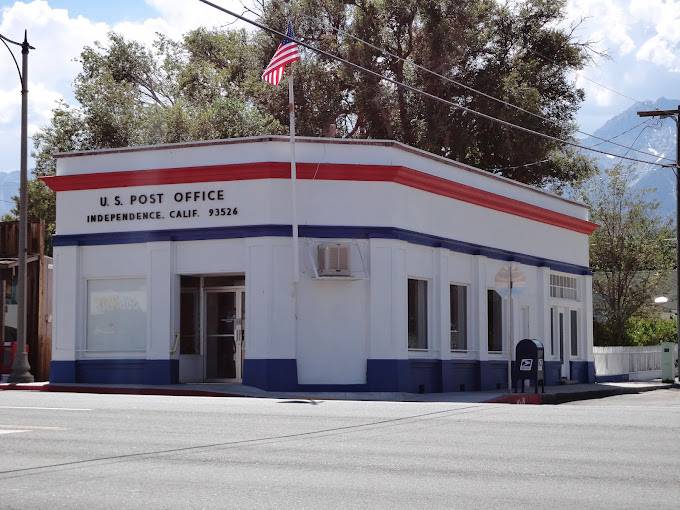
Here is the Independence Post Office with the "modern look" as noted by the zip code. Same building as in 1959:
First one must consider what 3 cents postage could pay for in 1959. There are two rates. The first is the single piece third class for two ounces or less for 3 cents. The letter was sealed as noted by the opening slit at the top and thus not third class. Even if it was sealed third class it would need to be rerated to the first class rate.
The second possible three cent rate is the local rate (AKA 'drop rate') but in 1959 correctly called the non-carrier office local (within the city/town/area) surface letter rate.
Here, in 1959 Independence, CA did not have city carriers, RFD carriers or routes nor any Star Route delivery boxes. Thus is is a "non-carrier office. The Office did have 288 post office boxes to serve the town and "Independence Region" which had a population of less than 600 folks in area in 1959. The population had been that low for decades if not a century. The Post Office was opened in 1866.
So the
non-carrier surface letter rate was 3 cents from August 1, 1958 through January 6, 1963 when it increased to four cents and ended on January 6, 1968.
Per Tony W. as stated in his 3rd edition of US Domestic Postal rates, post 1950 non-carrier are difficult items to locate and should be considered "Modern Gems of Philately." Only non-carrier local rate existed after March 25, 1944 when carrier office local discount rates stopped.
Now for every such usage, how many were mail unpaid with postage due collected, one in a hundred, one in a thousand, one in ten thousand? .
With postage due paying the 3 cents postage, the rarity becomes several or more orders of magnitude more scarceThis is the first one I have seen and recognized while collecting odd as well as scare postal usages for forty years. If I find another before I stop collecting, I will be shocked.
As noted before, the recipient was in High School in 1959. The mailing may have been a group mailing to high school students or friends and this was missed when being stamped. Since it ran through the automatic cancelling machine in the office without a stamp, it likely was an oversight in a group or letters. When being sorted for throwing to one of the 288 PO Boxes or General Delivery, the lack of stamp was notice as indicated by the "Postage Due 3 Cents" on the face. The sender was known as the return address was "P.O. Box 187" as per the manuscript return address.
In any case the letter needed three cents postage. Likely who ever showed up first, the sender or addressee paid the charge, due stamp affixed and cancelled with a clear boxed city cancel.
Interestingly it seems that a peer, first name "Pines," now as an adult, of the addressee still had P.O. Box 187 as of a newspaper report in 1969. I did not pay money to unlock Pines' last name.
This area, Independence and Inyo County are a rough and tumble location since their founding. To the west of Independence, elevation 3900 feet, you must rise an additional 10,000 feet to leave the county to the west while doing so by foot. To the east, one finds the place occupying nearly 50% of the county, a place called Death Valley National Park. That direction can be traverse by vehicle most of the time. Average rainfall in the town is 3.1 inches spread over four months with no average rain the other eight.
The mountains first brought settlers for mining in harsh weather conditions. To the east brought not much. In the middle, was the Owens Valley which drained south to Owens Lake. The water in the valley supported ranching and farming as well as people. However as the Los Angeles Water Agency slowly bought up water rights in the area to serve the thirst of the LA Basin, farming greatly diminished and Owens Lake dried up. It remains a locale in which pocket knives are common, including for letter opening and rifles were and are needed to protect life and property; not to mention the side arms of the local sheriffs and deputies many of whom were shot or shot and killed over the years.
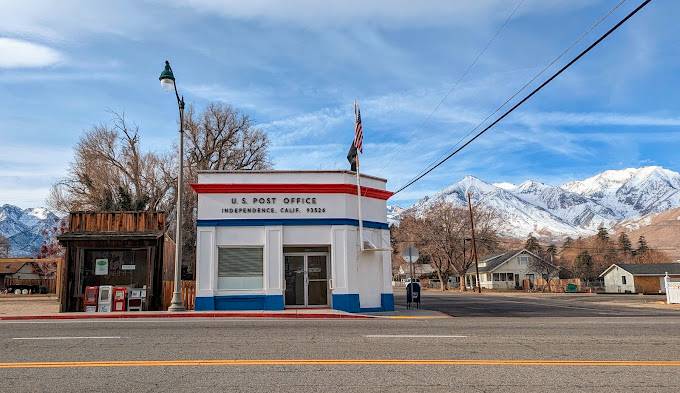
Here is a shot of the PO with the mountains in the background taken last winter (the view is much more snowy now):
A view west from downtown (less than 138 people per square mile):
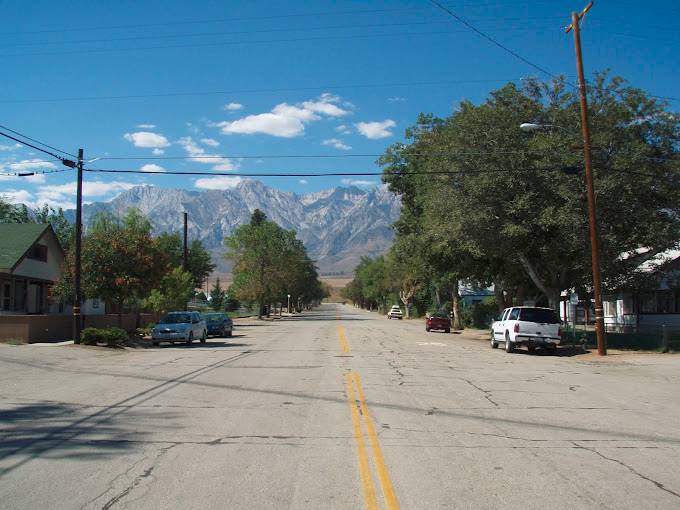
Now north from downtown (south looks the same except the PO would be on the left):
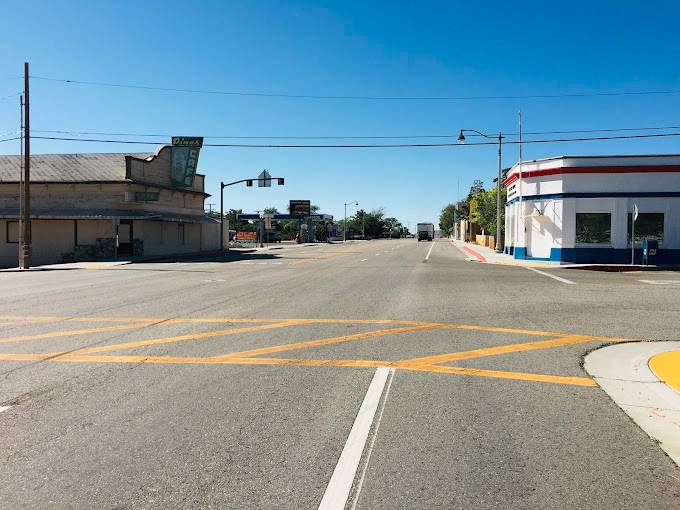
Part of Independence per the US Census folks but not where many live in the area (beware of cougars, coyotes, black bear and rattlesnakes):
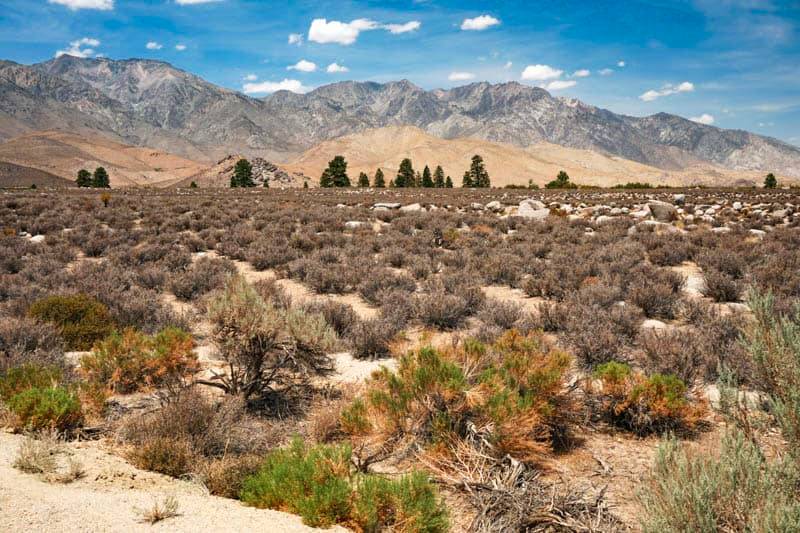
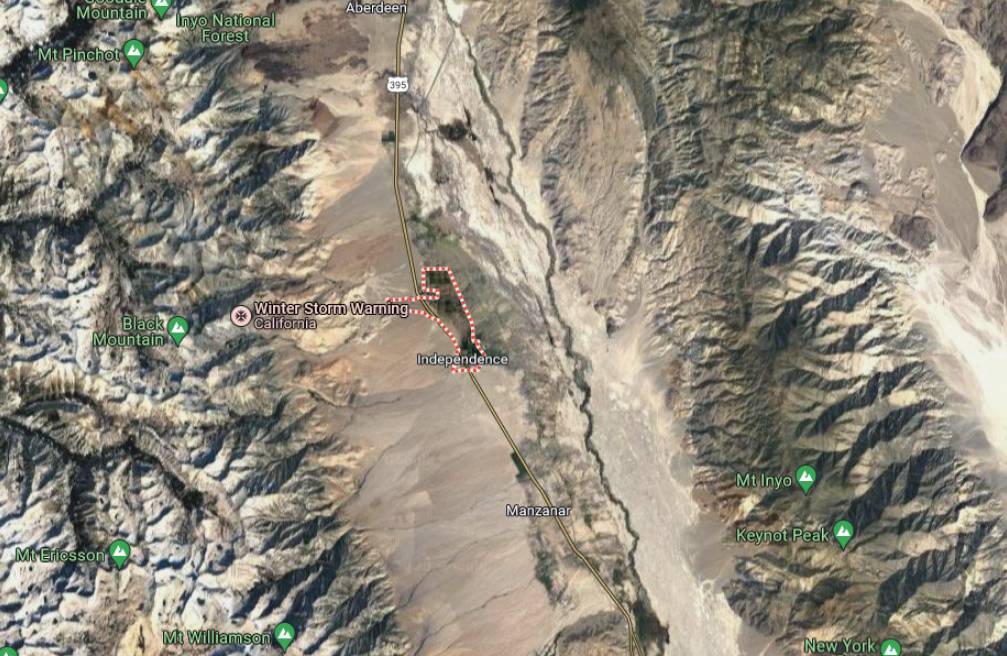
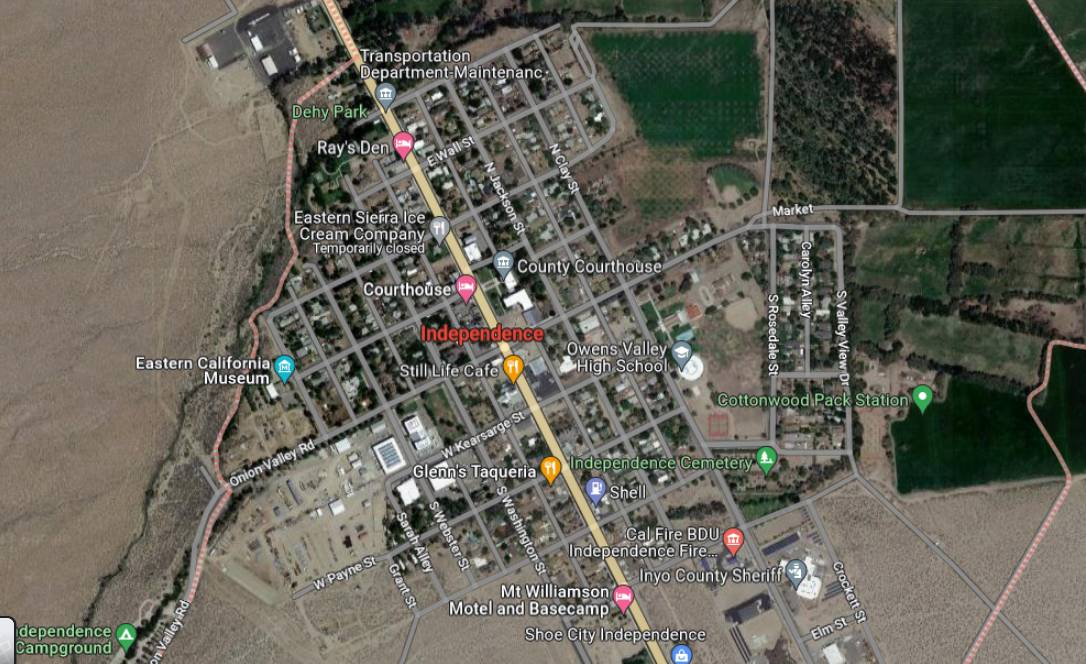
The above photo can be understood by these two images below. The first showing the outline of the "Independence Area" and the close up of the built up 'dense urban area:"
Last bit of trivia, there is no county in the entire United States with as of an great elevation change, on dry land, with in its boundaries, 14,505 to -282 feet. The only place that exceeds that with an 18,000 elevation change is in Alaska which does not have counties

. Without the dry land restriction Hawaii County, Hawaii could be in the running depending how far into the ocean the county lines run, if at all.





 Posted 03/10/2023 7:23 pm


