|
This page may contain links that result in small commissions to keep this free site up and running.

Welcome Guest! Registering and/or logging in will remove the anchor (bottom) ads. It's Free!
To participate in the forum you must log in or register.
| Author |
 Replies: 76 / Views: 4,889 Replies: 76 / Views: 4,889 |
|
|
|
Pillar Of The Community
United States
4465 Posts |
|
|
Quote:
Anyway, really cool cover now that I understand it. Even better is learning of the town of Independence. What a gem. A place I would LOVE to visit. Here is more information about the town: Quote:
Independence, CA : Where History Comes Alive
For years Independence has been considered by many travelers to be a place to pass by quickly on the way to greater destinations. But for those that take a moment to explore "Indy" and the surrounding area, a wealth of adventure, culture and history are soon revealed.
Independence is the county seat of Inyo County. Built in 1927, the magnificent Inyo County Courthouse sits grandly in the center of town, and is one of a select group of county courthouse listed on the National Register of Historic Places.
Independence boasts one of the best collections of historic buildings in Inyo County. The Edwards House on West Market Street was built in the early 1860s. The adobe portion is the oldest structure still standing in Inyo County. The "Commander's House" was originally built at nearby Fort Independence, also in the 1860s. Later chunks and portions of the original building were moved into town, and various additions and expansions were completed to create the two-story home that stands today.
Mary Austin lived in Independence for several years in a home on West Market Street and completed her book, Land of Little Rain, in this house in 1903. She went on to write dozens of novels and plays which earned her a well-deserved spot in the pre-WWII American literary scene. A California State historical marker in front of the private residence (not open to the public) describes her ties to the valley and town.
The Eastern California Museum, three blocks west of the courthouse, houses much of the region's rich history. The museum displays a diverse collection of artifacts, historic photographs, an extensive Native American basket collection, mining and farming equipment, the history of Los Angeles and its aqueduct in the Owens Valley, a local history research library, the Mary DeDecker native plant garden and a bookstore. The recently restored Southern Pacific Locomotive #18, the narrow-gauge Slim Princess, is also on exhibit at the museum.
The Mt Whitney Fish Hatchery lies just three miles north of town. At the time of its construction, Fish and Game Commissioner M. J. Connell instructed his team "to design a building that would match the mountains, would last forever, and would be a showplace for all time." The walls of the building are constructed using native granite collected within a quarter mile of the site. The massive walls are two to three feet thick.
Today the Hatchery and its beautiful grounds are operated and maintained by the non-profit Friends of the Mt Whitney Hatchery. The shady grounds and main pond are excellent for relaxing, a picnic, and fish viewing. Volunteers staff a gift shop and give tours inside the hatchery during the summer. This is an excellent place to stop and take a few minutes to enjoy the beauty and the history of the Eastern Sierra.
Independence is a great place to stop and spend a few hours or a few days. It has plenty of room for the soul to expand and the imagination to soar. From the clouds called the Sierra Wave to the brilliance of the night time stars, Independence is more than a rest stop. Independence is a place of quiet beauty that is rarely found, but can be greatly treasured. Come and discover for yourself the wonderful town of Independence.
It's how life should be. Much of Inyo County's human history is linked to Independence, the county seat since 1866.
Here you'll find attractions that tell the stories of discovery, determination, spirit, and survival in Inyo County.
Independence has been Inyo County's seat since the county's formation in 1866. The courthouse is the fourth in Inyo's history. The first collapsed in the 1872 earthquake, the second burned in 1892, the third was determined to be too small and was replaced in 1922 by the stately building we have today. The original town site was laid out by Thomas Edwards.
In contrast to the other towns in the Owens Valley, Highway 395 is not Main Street but Edwards Street. The Edwards House on West Market Street was built around the 1860s. The adobe portion is the oldest structure still standing in Inyo County. The Eastern California Museum, three blocks west of the courthouse, houses much of the region's history. The museum displays a large collection of artifacts, historic photographs, quality Native American basketry, extensive mining and farming equipment, the history of Los Angeles in the Owens Valley, a Manzanar artifact and photographic collection, a local history research library, the Mary DeDecker native plant garden, and a bookstore.
The "Commander's" House built between 1866 and 1869 was moved to its present location from Fort Independence. It is one of the last remaining examples of rural Victorian architecture in the Owens Valley. Dehy Park at the north end of town is a popular gathering place for summer community events. Independence Creek flows through and provides a cool place to relax. Children of all ages love the creek and play areas.
Visitors will also enjoy seeing The Slim Princess Engine No. 18. This narrow gauge locomotive ran on the Carson & Colorado line from Laws to Keeler until 1954. Mary Austin lived in Independence for several years in a home on West Market Street and completed her book, Land of Little Rain, in this house in 1903. A historical marker in front of the private residence (not open to the public) describes her ties to the valley and town.
The Mt. Whitney Fish Hatchery, a little over 3 miles northwest of Independence, is a wonderful place to visit. It is the favored site for high school graduation, summer weddings, and family picnics. Built in 1916 on land donated by the citizens of Independence, it was the second state hatchery built in California. For many years it has supplied trout eggs to other hatcheries in California and other western states. It is the only hatchery to produce golden trout, California's state fish.
Adventure awaits you east and west of Independence where camping, hiking, fishing, and hunting abound. Extensive hiking and backpacking trails go throughout the Sierra from trail heads at Onion Valley, Shephard Pass, and Baxter Pass. There are several camp – grounds between town and the trail heads and abundant trout fishing in the local creeks.
East of Independence the Owens River and off-channel lakes, ponds, and ditches offer warm water fishing opportunities for smallmouth bass, largemouth bass, bluegill, and catfish. Farther east, hiking and exploring opportunities exist in the historic mining areas of the Inyo Mountains. Wherever you go, north or south, east or west, be prepared for sudden weather changes. Let someone know where you are going, have plenty of water, and if your vehicle breaks down or gets stuck, stay with it.
One should never forget that Independence, CA was the first town to the north of Manzanar and closest at 6 miles; Lone Pine to the south was 10 miles. Manzanar: 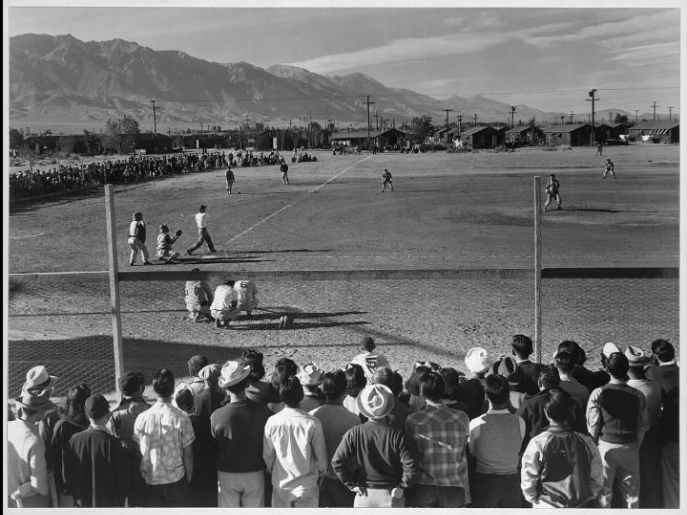 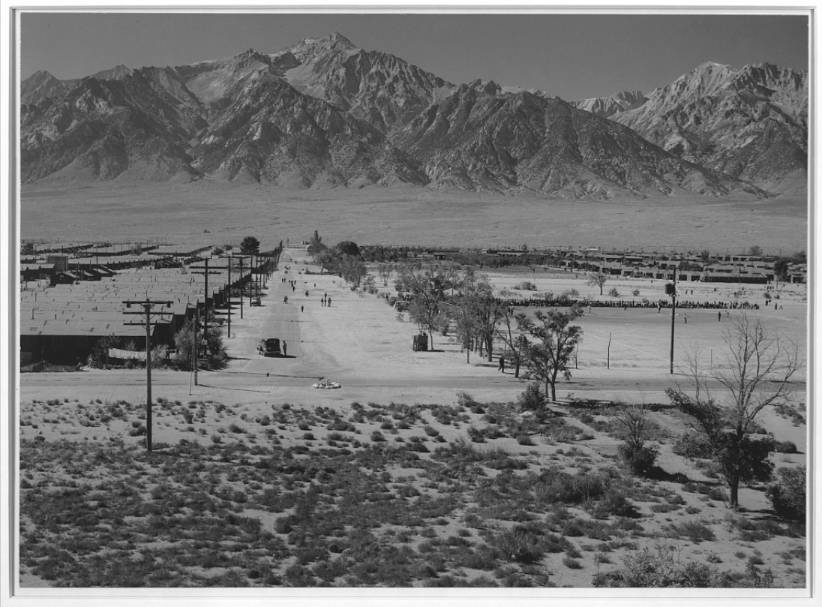 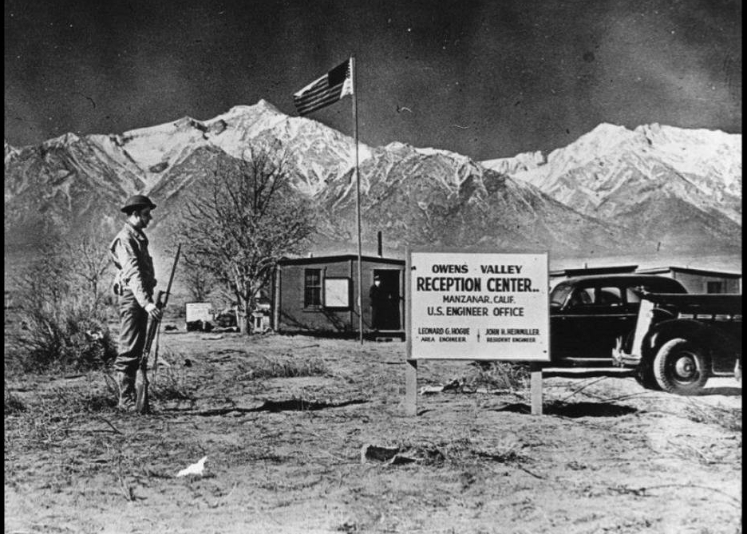 Speaking of Manzanar: Legend, coach and friend, Yosh Unchida, turned 103 with an early Saturday birthday party at San Jose State University, San Jose, CA. He taught and began being associated with the SJSU Judo program beginning in 1940 as a student (biology) and student-coach. After a break for WWII he returned in 1946 and completed his degree. But remained to coach the SJSU Judo program. The building he worked in and still visits was named Yosh Uchida Hall in his honor in 1997. That was also the building his family was processed through for relocation during WWII with Yosh being drafted and serving as an Army medic. He also bought a medical lab and ran that successfully until purchased by Unilab in 1989. Following that he focused on building up and strengthening the San Jose Japantown neighborhood, investing over eighty million dollars. |
Send note to Staff 
|
| Edited by Parcelpostguy - 03/13/2023 03:40 am |
|
|
Pillar Of The Community
United States
4465 Posts |
|
|
Quote:
Parcelpostguy, when you think about it, the chances are not negligible that your item's buyer does a little googling upon receipt of the item and finds this thread...you may get a second chance at this item, after all. Buyer did not Google to find the thread. Second chance for the cover looks dim near term. That said, I did hope to learn where the cover went and I did learn such via SCF messaging. My lips were promised to stay sealed regarding that information.  Quote:
So, out of curiosity what kind of monetary value would be placed upon the cover? As I mention I was willing to go three figures which is a minimum of $100 (it sold for $13ish with P&H.) Since I was addle-brained and forgot to make the final bid, I had not yet check with myself exactly what my three figure bid would have been. Value, now that's the rub. This is a rare item by any measure, but demand must be there as well. For a postage due postal history collector (especially an exhibitor) this can be a MUST buy when available. That can certainly run the price up. If the collector can be satisfied with any non-carrier office local rate paid by postage due, covers from the early 20th Century would be a bit more common (read less expensive) but post 1950 it is going to be expensive. The 31 days of the 5 cent (Plus a nickle) postage due penalty plus post due during July 1958 tend to trade in the three figure range when the seller and buyer understands the item. But even at that price there are not enough copies to go around. Yet this is a lower number of known covers. By my forty year chase, my count is now up to one plus a second solid maybe. |
|
Send note to Staff
|
|
|
Pillar Of The Community
United States
4465 Posts |
|
|
Quote:
the thread is going nowhere anyway - neither side can prove their theory The cover exists thus only one side needs to prove a theory. The existence of the cover is prima facie evidence that it went through the mails beginning Tuesday July 14, 1959, being fully handled in the proper manner. Has a sender and addressee, has proper postage for delivery collected in a proper manner, has two proper cancellations as applied by USPOD personnel. It is a commercial non-carrier office local surface letter with postage due collected. Regarding the regulations (PL&Rs) of an item such as this: A fully unpaid mail piece with a return address is discovered at the office of mailing. It would typically be marked "returned for postage" and returned to the sender A fully unpaid mail piece (also with the return address) is discovered at the destination post office. It is typically marked due and amount collected from the recipient. Here, in Independence, CA, the mailing and delivery office are the same. That is why I suggested the postmaster collected the three cents from the first person he saw be it the sender or the recipient (or his family) in order to more expeditiously move the mail. We cannot tell which paid. However if the addressee was approached for the three cents first and refused to pay, the letter would need to be marked, "Refused, return to sender" with three cents collected before it was handed back to the sender. Of course the sender could have been the person to slit open the envelope keeping it and then just hand delivering the contents to the addressee later. Nonetheless it remains a non-carrier local letter paid via postage due. |
|
Send note to Staff
|
|
|
Bedrock Of The Community
United States
10864 Posts |
|
|
None of which proves that it wasn't done deliberately by a collector just to get a postage due cover. |
|
Send note to Staff
|
|
|
Pillar Of The Community
United States
6469 Posts |
|
|
And you can't prove it was, just your personal skepticism.
So where does that leave us? |
|
Send note to Staff
|
|
|
|
Bedrock Of The Community
United States
10864 Posts |
|
|
I will give you a perfectly plausible reason, too. He might well have been a scout going for a merit badge. He needed a postage due cover, so he got one. No one at the time would have thought that wrong. |
|
Send note to Staff
|
|
|
Pillar Of The Community
United States
6469 Posts |
|
|
Bedrock Of The Community
United States
10864 Posts |
|
|
Why, that is just a possible a reason as someone missing a cover during a mass mailing. |
|
Send note to Staff
|
|
|
Valued Member
101 Posts |
|
|
I don't collect postage dues, but the discussion does show how nebulous some collecting areas are, which is interesting in and of itself.
It turns out that the BSA Stamp Collecting merit badge requirements do include exhibiting a postage due stamp (on cover is implied). From the 1959 edition of the Stamp Collecting pamphlet.
"4. Exhibit one stamp in each of the following classifications and explain the purpose of each: regular postage (40), commemorative (40), semi-postal (41 ), air mail (42), postage due (43), envelope (44), special delivery (44), precancel (45), and revenue (46)."
Even though, it does not prove the cover is philatelic.
Personally, I think Parcelpostguy has the stronger argument. But my opinion is irrelevant.
|
|
Send note to Staff
|
|
|
Bedrock Of The Community
12759 Posts |
|
|
Even IF the cover was part of a Boy Scout's quest, which is unprovable, it in no way diminishes the scarcity/rarity of it. I think it highly unlikely that a Boy Scout seeking a badge gave a hoot about the rate/postal system nuances involved. |
|
Send note to Staff
|
|
|
Bedrock Of The Community
United States
10864 Posts |
|
|
No one is debating that it is a very unusual and not at all common usage. And I don't think the rate itself has anything to do with the reason it was mailed. I just think that someone wanted a postage due cover, and created one in the only way they knew how. |
|
Send note to Staff
|
|
|
Valued Member
United States
470 Posts |
|
|
I could've done without the mystery and suspense, but that's OP's prerogative, and if they want to present their material that way, fine. I enjoyed learning about an aspect of philately I didn't know much about.
But I'm not sure how this thread got so rancorous. Neither side can prove/disprove philatelic intent, so for the purposes of this forum, who cares? Rog's point is a good one: it's a rarity either way. |
|
Send note to Staff
|
|
|
Pillar Of The Community
6364 Posts |
|
|
But all of these what-if "it's philatelic" scenarios are far less likely than a simple case of a letter getting mailed accidentally without a stamp. People just don't mail contrivances to get due mail - certainly not a 16-year old. Do we condemn a cover to the "philatelic" pile because of a 1% chance?
On the positive side, if I were ever on trial for murder, I would want revcollector on my jury because, despite any damning evidence against me, he would find some one in a million conspiracy theory that I was innocent or framed and vote for acquittal. You saved my life! |
|
Send note to Staff
|
|
|
Bedrock Of The Community
United States
10864 Posts |
|
|
Quote:
On the positive side, if I were ever on trial for murder, I would want revcollector on my jury because, despite any damning evidence against me, he would find some one in a million conspiracy theory that I was innocent or framed and vote for acquittal. You saved my life! Totally wrong, actually. |
|
Send note to Staff
|
|
|
Pillar Of The Community
United States
925 Posts |
|
|
It seem like people are assigning different burdens of proof to the cover. Does the cover need to "prove" that it was not philatelic, or does someone need to "prove" that it is philatelic. For 1st issue revenues, the burden is clearly on the stamp to "prove" that it was originally imperforate or part-perforate. There are all sorts of hypothetical arguments about why a genuine imperforate might be cut close, but if the stamp does not have margins (and color / paper / impression / etc.) to "prove" it was originally imperforate, we assume it is a cut-down perforate stamp. For postal history, I think the burden typically shifts to the collector to prove that the cover is bad rather than being on the cover to prove that it is good. |
|
Send note to Staff
|
|
|
Replies: 76 / Views: 4,889 |
|
|
To participate in the forum you must log in or register. | |
 Metropex Stamp Show: Roseville, Minnesota October 23-24 Weird Covers, 1885,1886, And 1982 For Users Of Two-Post Blue International Albums What Is Your Experience With Binders. New Member Posting Image Of Avatar, Front And Back Of U2 Cut Square, Market Value Or References? Working On An Offline Collection George Washington 3 Cent 1861 With Print On The Back Hello From The Netherlands - New Member Then And Now, From Old Postcards New Member Wanting To Add An Avatar Sparks Auction Fees? 163 VF Nyfm Vertically Ribbed 163 XF Quartered Cork, Labeled Jumbo 136 VF Quadruple Split H Grill Nashville Philatelic Society-Your Invitation To Our Auction Night Meeting Monday, October 26, 2026 Nashville Philatelic Society-Your Invitation To Our Meeting Monday, October 19, 2026 Christmas Around The World 2026 C.e. In The Large Queen Cancel A More Condensed Album Page Experiment. US Scott #3 Postmarked Or Fake? Linn's Is Back - The Newspaper Is Back In Print Lots Of 1867 Grills On Sale Ajman Michel 1292A (1294A?) International Postage Stamp Album, Junior Edition By Scott C. 1928 Need Help Finding Original Source Of This Patriotic "paste-On" Cutout It's Now Cheaper To Use Fedex Ground Than USPS Ground For Some Zip Codes Metropex Stamp Show: Roseville, Minnesota October 23-24 Weird Covers, 1885,1886, And 1982 For Users Of Two-Post Blue International Albums What Is Your Experience With Binders. New Member Posting Image Of Avatar, Front And Back Of U2 Cut Square, Market Value Or References? Working On An Offline Collection George Washington 3 Cent 1861 With Print On The Back Hello From The Netherlands - New Member Then And Now, From Old Postcards New Member Wanting To Add An Avatar Sparks Auction Fees? 163 VF Nyfm Vertically Ribbed 163 XF Quartered Cork, Labeled Jumbo 136 VF Quadruple Split H Grill Nashville Philatelic Society-Your Invitation To Our Auction Night Meeting Monday, October 26, 2026 Nashville Philatelic Society-Your Invitation To Our Meeting Monday, October 19, 2026 Christmas Around The World 2026 C.e. In The Large Queen Cancel A More Condensed Album Page Experiment. US Scott #3 Postmarked Or Fake? Linn's Is Back - The Newspaper Is Back In Print Lots Of 1867 Grills On Sale Ajman Michel 1292A (1294A?) International Postage Stamp Album, Junior Edition By Scott C. 1928 Need Help Finding Original Source Of This Patriotic "paste-On" Cutout It's Now Cheaper To Use Fedex Ground Than USPS Ground For Some Zip Codes
What Is The Strangest Or Most Unusual Stamp Material You Own? Weird Covers, 1885,1886, And 1982 Gems And Minerals Metropex Stamp Show: Roseville, Minnesota October 23-24 Working On An Offline Collection For Users Of Two-Post Blue International Albums What Is Your Experience With Binders. New Member Posting Image Of Avatar, Front And Back Of U2 Cut Square, Market Value Or References? Hello From The Netherlands - New Member Lakes, Marshes, Mangroves, And Wetlands On Stamps Show Your Film And Music Star Stamps Pushing 330,000 All Different Worldwide Stamps In One Collection . World Post Day And International Letter Writing Week The Albumeasy Examples Thread With Code What Did You Do Philatelically: Today Or Recently? Stamps On Stamps Big Top Philately Lighthouses On Stamps Happy Halloween 2018 International Postage Stamp Album, Junior Edition By Scott C. 1928 Odd Shapes On Stamps (Including Hexagons) Venues For Art And Culture: Museums, Theatres, Galleries, Concert Halls, Etc. US Slogan Cancels Christmas Around The World 2026 Science-Fiction/Fantasy Stamps George Washington 3 Cent 1861 With Print On The Back
Disclaimer: While a tremendous amount of effort goes into ensuring the accuracy of the information contained in this site, Stamp Community assumes no liability for errors. Copyright 2005 - 2026 Stamp Community Family - All rights reserved worldwide. Use of any images or content on this website without prior written permission of Stamp Community or the original lender is strictly prohibited.
Privacy Policy / Terms of Use Advertise Here |
| Stamp Community Forum |
© 2007 - 2026 Stamp Community Forums |
| It took 0.23 seconds to lick this stamp. |
 |
|
|
|


 Posted 03/13/2023 01:39 am





