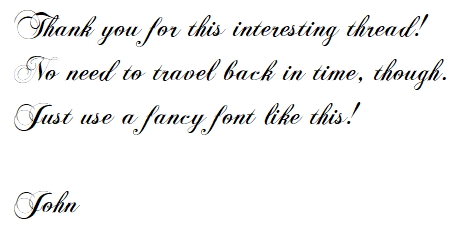
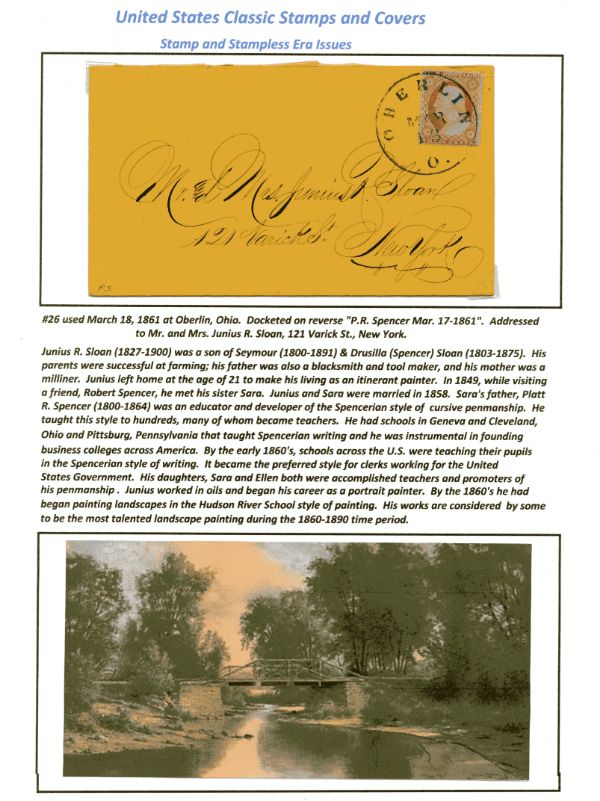
"Penmanship" My father, as a business major in college, had to take penmanship in the early 1950s.
City delivery: This will be a very much simplified reply. To paint with a very broad brush, if your letter did not have a street address on it, you had to go to the post office and pick it up, pay an extra carrier fee (and still needed an address), or have someone to pick it up for you, etc. The size of New York City tends to make it an exception to mail handling compared to average-America.
Jumping forward, 1863 is a turning point, note the "City Mail Delivery" centennial issue:
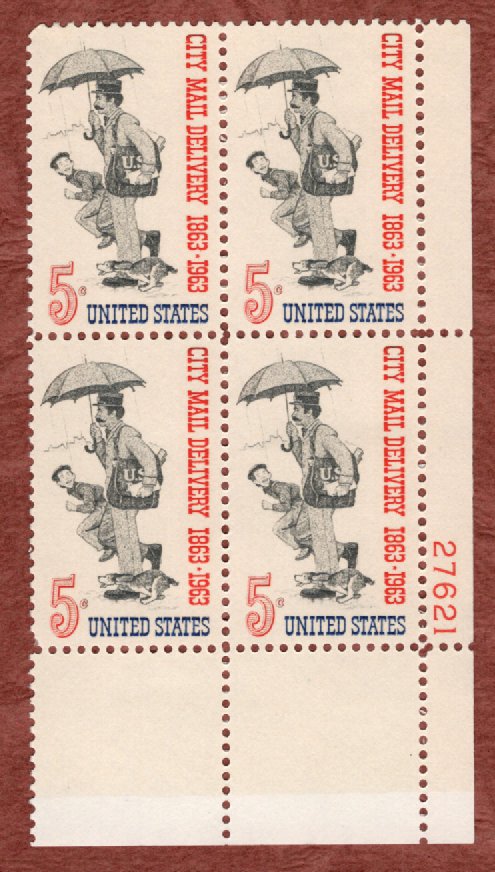
A bit misleading since it was not instantaneous. The USPOD started in only the largest cities, 49 of them in July 1863. The act of 1863 was only for cites of 50,000 or more. The requirements were gradually lowered. In 1873 to 20,000 population. In 1887 to 10,000 population and $10K in receipts.
Cities also had to have a regular plan of street and house numbering, typically the "Philadelphia Plan", street improvements, etc. This typically required some time to implement.
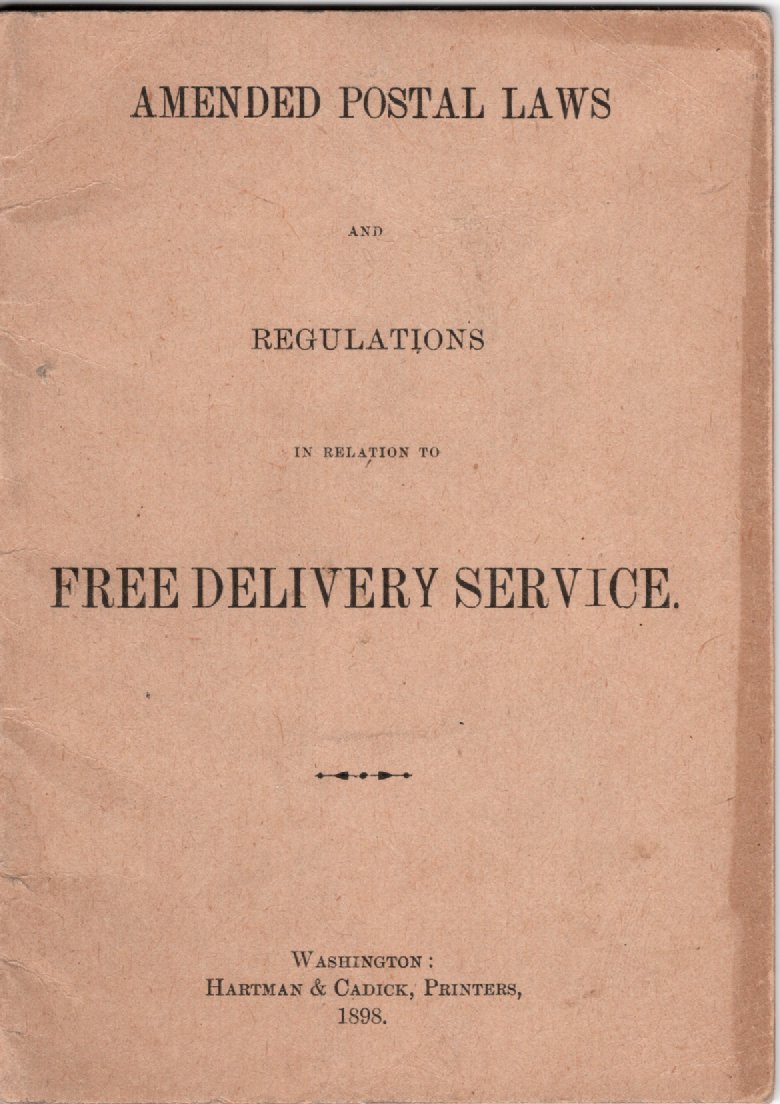
35 years after 1863, here are the first few pages of an 32-page booklet from 1898:
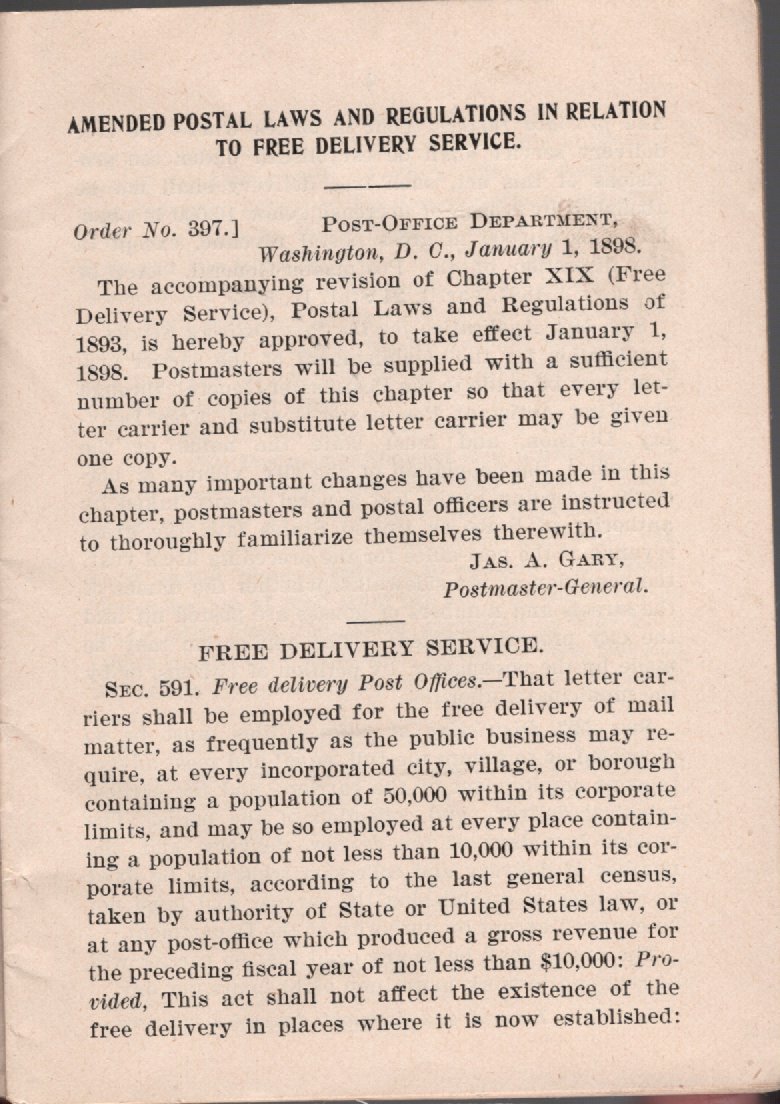
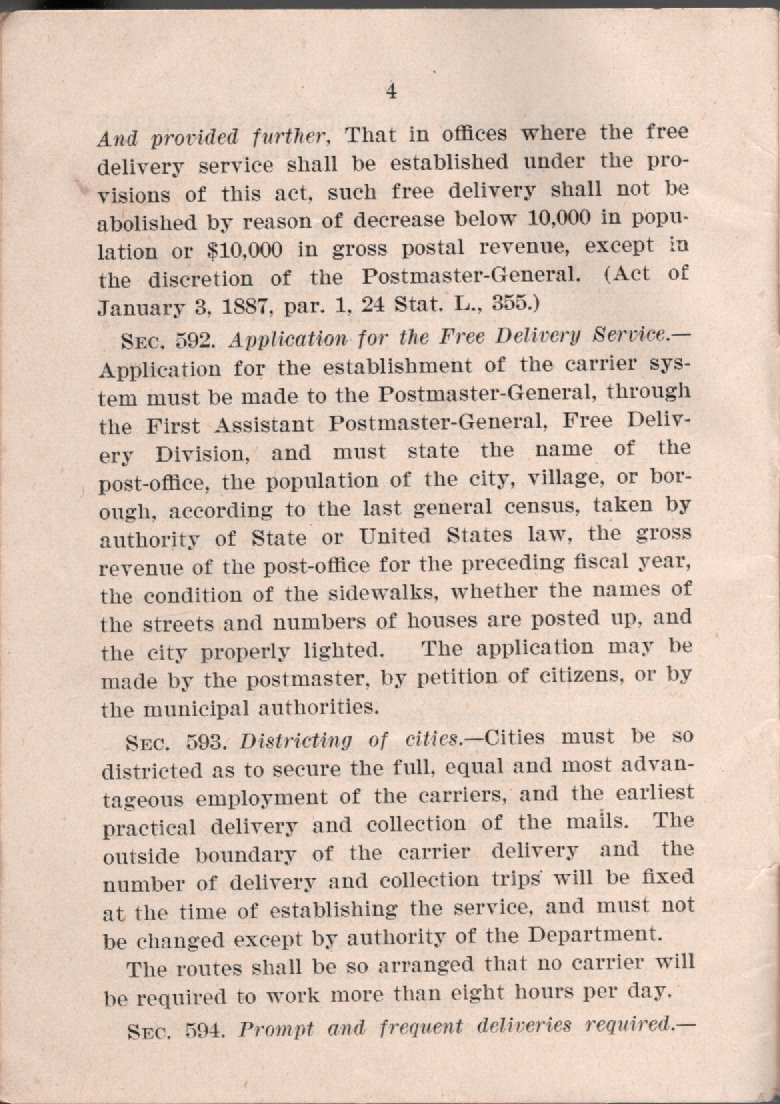
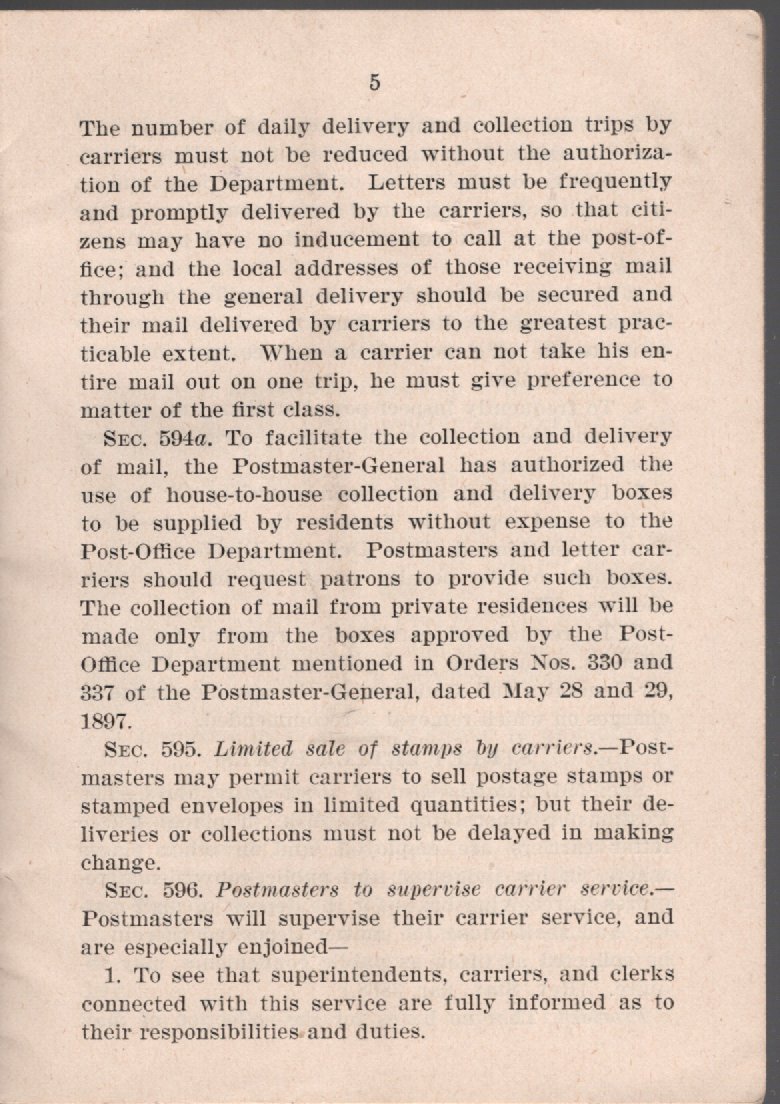
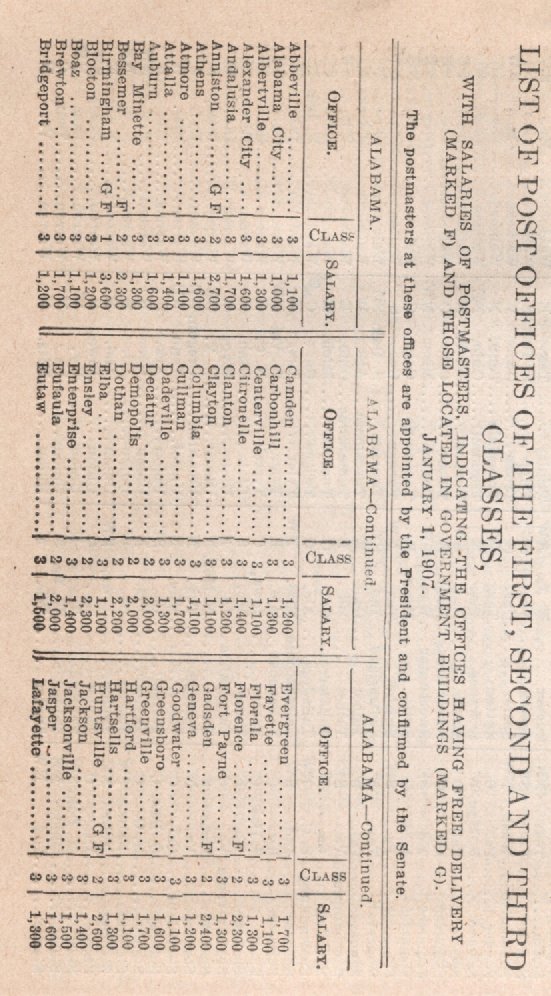
Bottom line, most post offices were in smaller towns and could NOT offer city delivery. Here is the header and top of the post office list from the January 1907 "Postal Guide". Note how few Alabama office are marked "F" for free delivery:
When a city got city delivery, they would often start using an auxiliary marking like: "Address your mail to street and number" or similar text. In this case Evansville, Indiana got city delivery on July 1, 1873, and used their message on a letter which was eventually advertised and unclaimed.
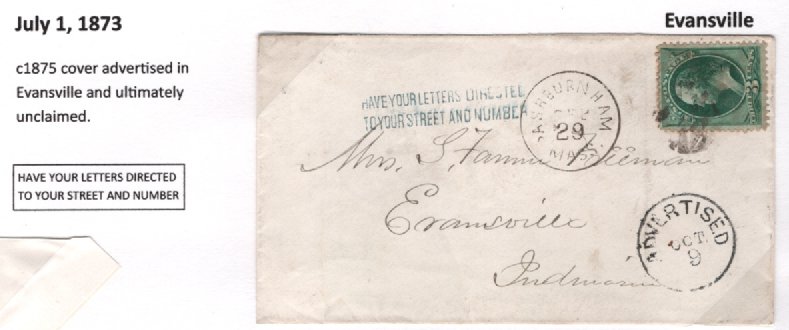
Some cities continued the promotion for decades as a reminder, including slogan machine cancels in some locations.
Like city delivery, rural free delivery took a while to roll-out, and one can find similar markings to more-fully address rfd mail.
One could write an entire book on the evolution of mail delivery.
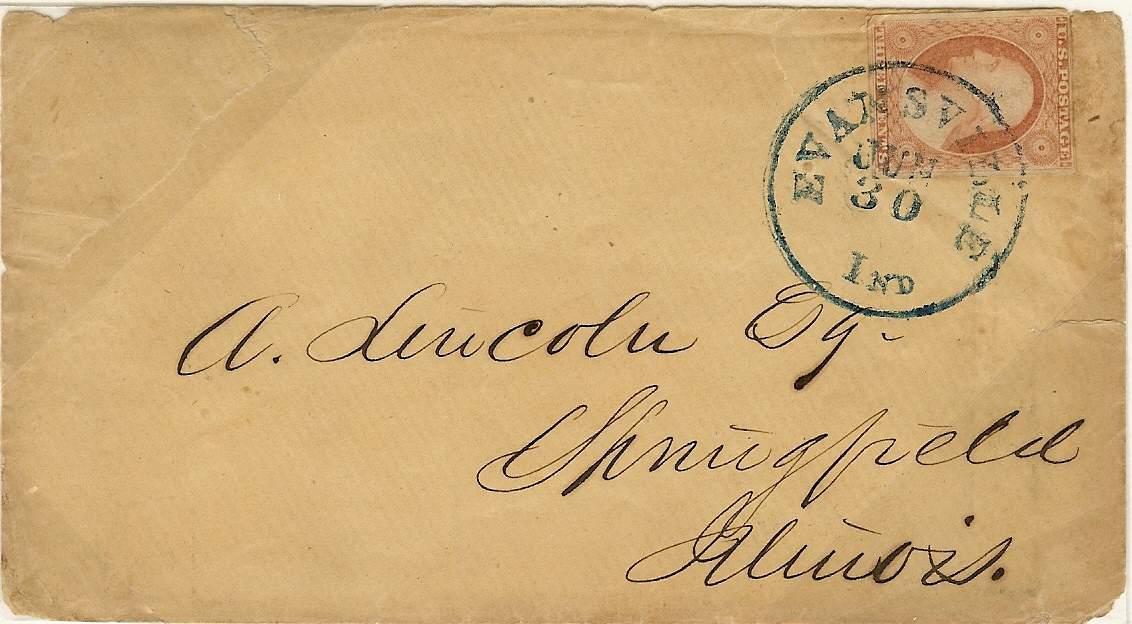
Abraham Lincoln had to pick up his own mail:





 Posted 03/11/2023 1:47 pm


 Me too, here in the US. I remember well the 3 lined papers. We were required to learn both printing and to write in cursive.
 Those who failed often became doctors and wrote prescriptions. Those who leaned well (and spent time as military code breakers) became pharmacists.
 I went on to study art, where I got extensive training in the more elaborate forms of hand-written characters.