Hi D. B. Ryan,
Short answer: Do not remove the stamps from anything. Leave everything as complete and original as possible.
Longer answer:
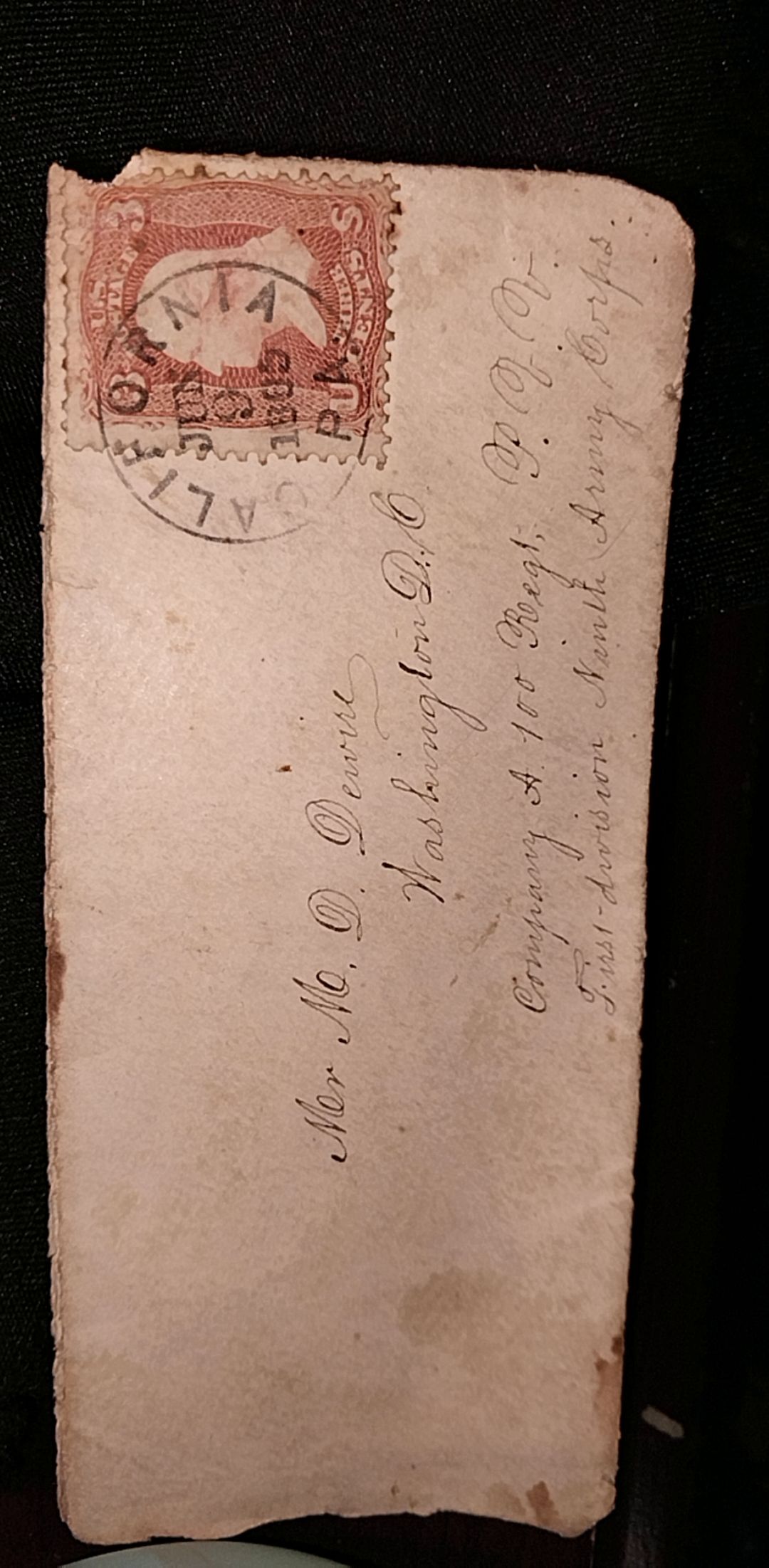
The stamp postmarked at California, PA is a Scott #65. (The "Scott" stamp catalogs are likely available in your local library.) This stamp was the workhorse stamp during the civil war and a few years after. There were hundreds of millions if not a billion or more printed. As a stamp, it has very modest value (i.e., less than $1). As "Antiques Roadshow" would put it, everything is "condition, condition condition" The stamp was mouse nibbles damaging the upper right corner making it worthless as a collectible.
On the plus side, the complete mail piece has more monetary value as a piece of "postal history", being addressed to a civil war soldier in the field. One can search "sold" prices (not the offering prices) on
ebay and see that these vary considerably (like $10-$100 and up) depending on the state/regiment, where they served, what battles, whether the addressee was later captured or wounded or killed, is there a letter enclosed (and whether it has good content), etc. In this case, this regiment was at The Wilderness, Spotsylvania, Siege of Petersburg, etc., and was sent to the soldier after the Grand Review in Washington, DC, but before the unit was mustered out. The staining, mouse nibbles and rough opening at the left end detract from its market value, BUT the overall value is in the mail piece as an entirety rather than the stamp - being in demand by postal historians, civil war buffs, local historians, etc., many who will overlook the imperfections to value the whole.
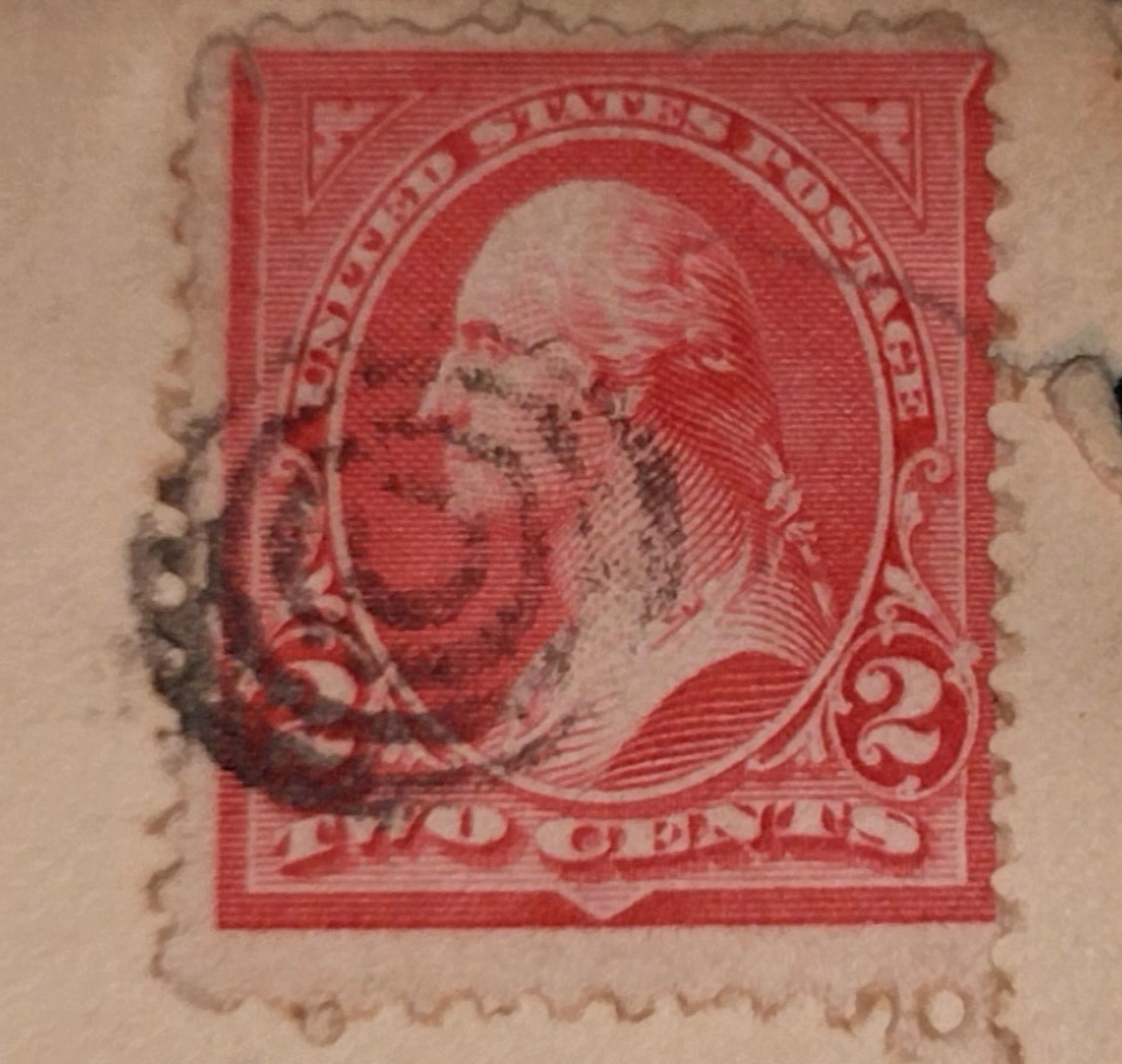
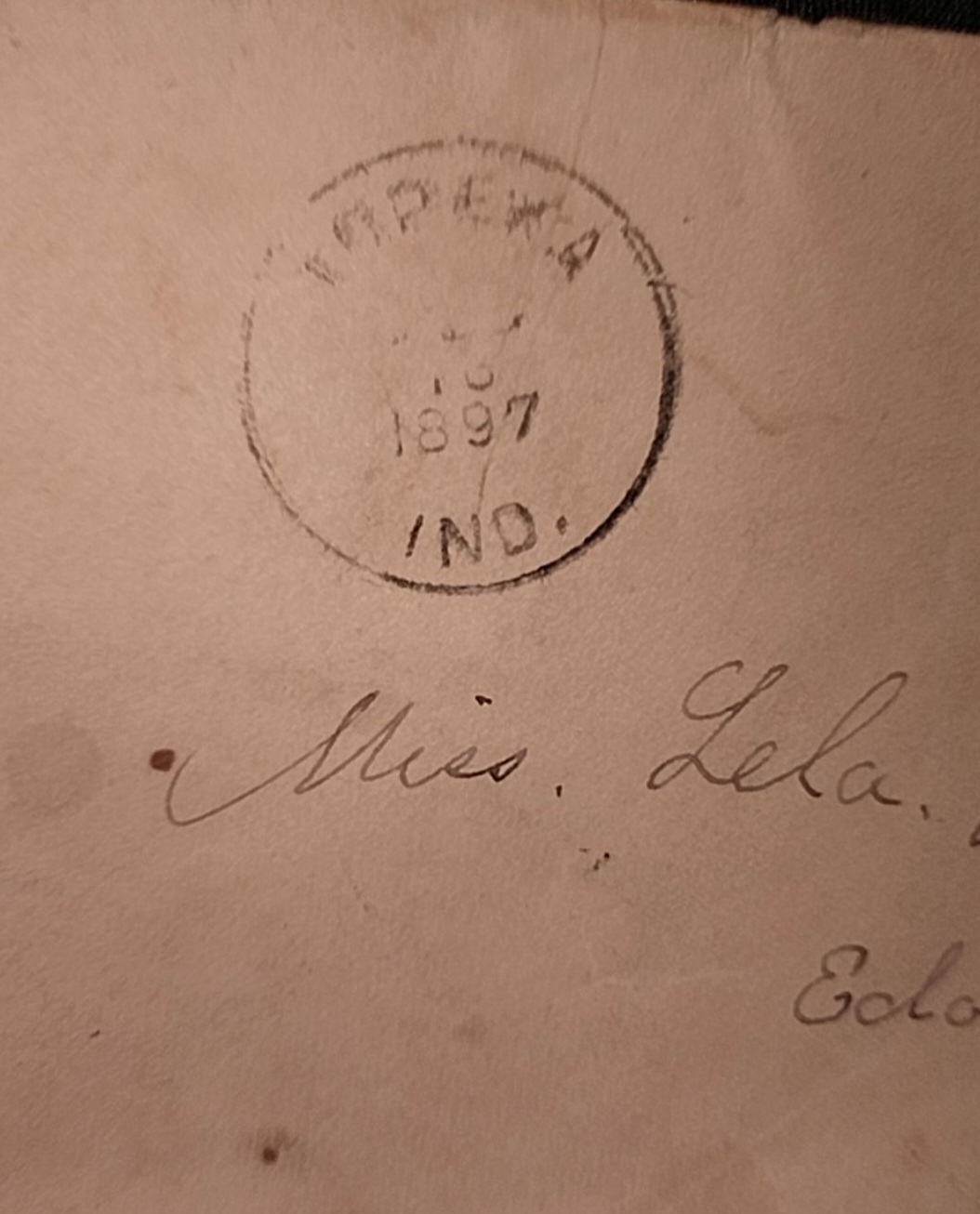
The second stamp used from Topeka, IN in 1897 is a similar situation, a common workhorse stamp of the era. Value for the stamp is essentially zero with the tear at the upper left corner. The entire mail piece would have "postal history" value, perhaps in the $1-$3 range, although hard to assess without seeing the entire item.





 Posted 03/12/2023 1:15 pm