"
Rabattfrimärken" or "
discount stamps" were issued by Sweden from 1979 to 1993 and were some sort of precursors to the "
brev" no value indication stamps. All of these stamps were printed in booklets of 20 stamps.
The 1979 to 1990 issues are all still valid as
discount stamps. The 1991 to 1993 issues were valid as
discount stamps until December 31, 1993. Since then they are only valid at their face value.
The first two issues (1979 to 1980) have the text "
inrikes post" ("
domestic mail") without any value indication. They are valid for a domestic letter weighing <=100g, which today is the 2nd weight class. Every Swedish household were eligible to buy two booklets of each issue at the price of 20 kronor a booklet.
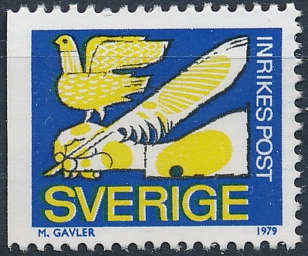
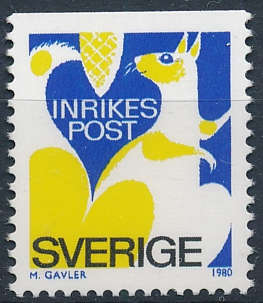
The next ten issues (1981 to 1990) have the text "
privatpost" ("
private mail") but also a face value, which was the price of buying the stamp.
One stamp is valid for a letter weighing <=100g to all of the Nordic countries, i.e. Sweden, Denmark, Finland, Norway and Iceland. Three stamps for a letter weighing <=250g, four stamps for a letter weighing <=500g and five stamps for a letter weighing <=1000g to the same countries.
Every Swedish household were eligible to buy two booklets of each of the 1981 to 1983 issues at face value. For the 1984 issue it was five booklets a household. For the 1985 to 1990 issues it was three booklets a household and five booklets for subscribers of philatelic products.
When
discount stamps are used as postage for letters to other destinations than the ones given discount, the stamps are only valid at their face value.
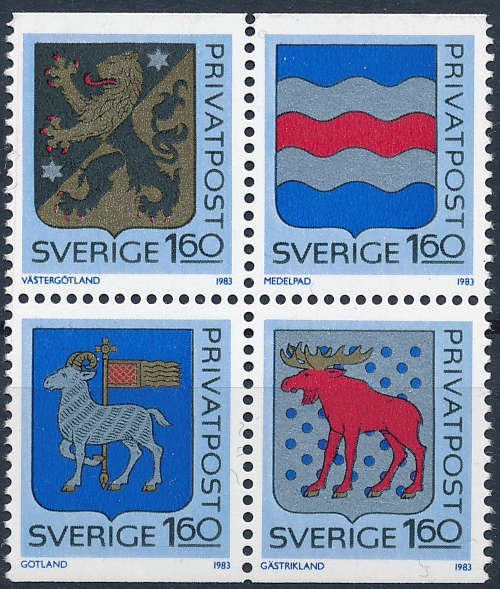
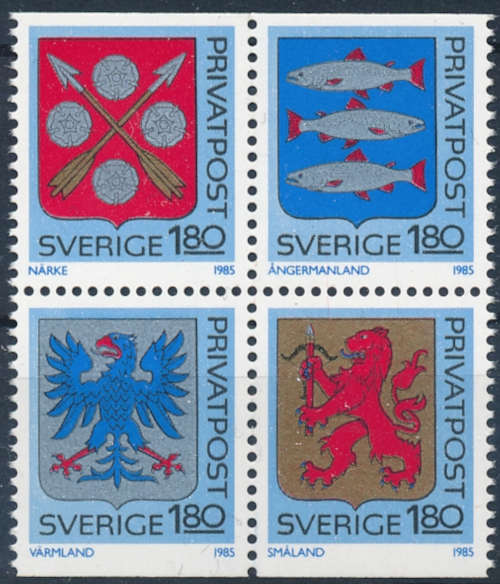
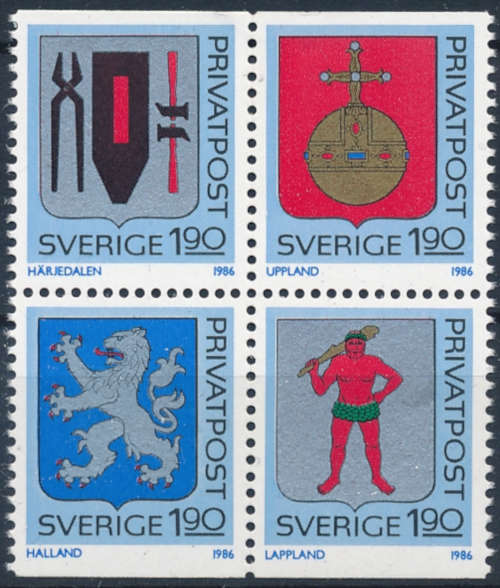
The 1981 to 1986 issues have heraldry as motif - the coat of arms of the Swedish historical landscapes.
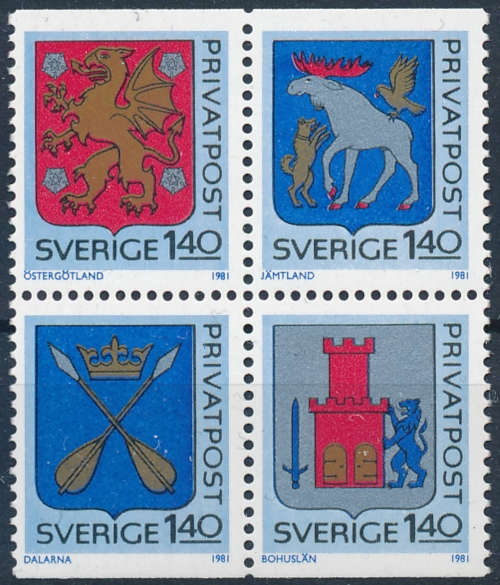
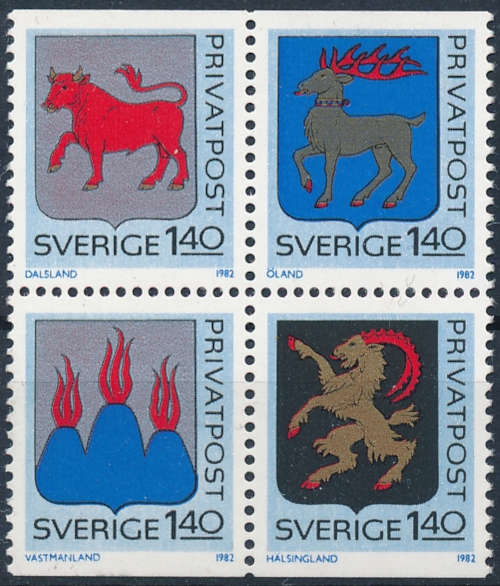

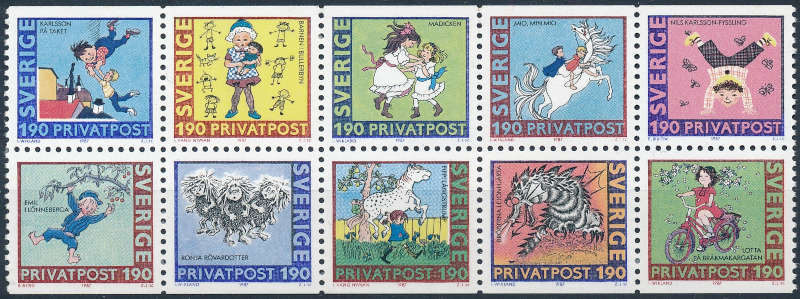
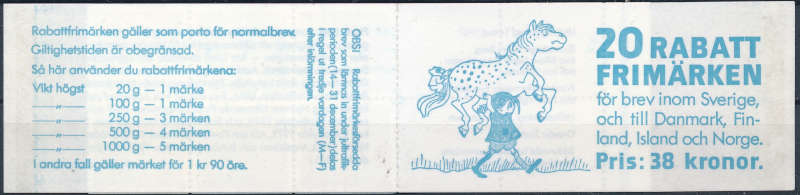
The 1987 issue depicts different tales and stories by Astrid Lindgren.
The 1988 issue depicts the Swedish midsummer (summer solstice) festival.
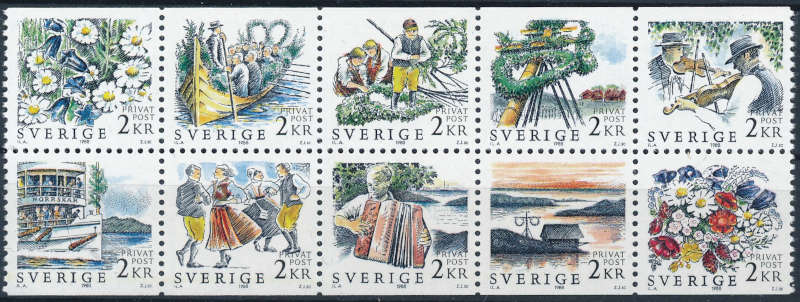
The 1989 issue depicts summer leisure.

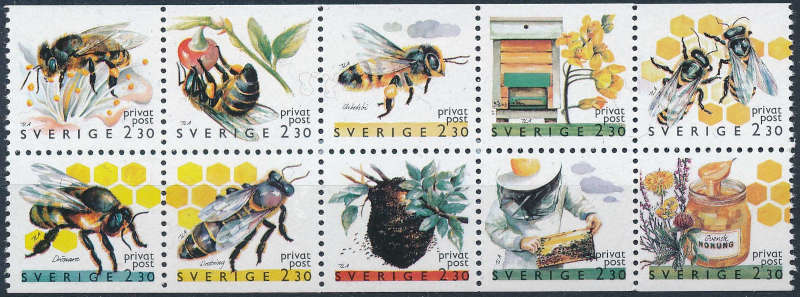
The 1990 issue depicts beekeping.
Booklet cover of the 1987 issue.





 Posted 06/10/2023 10:15 am


