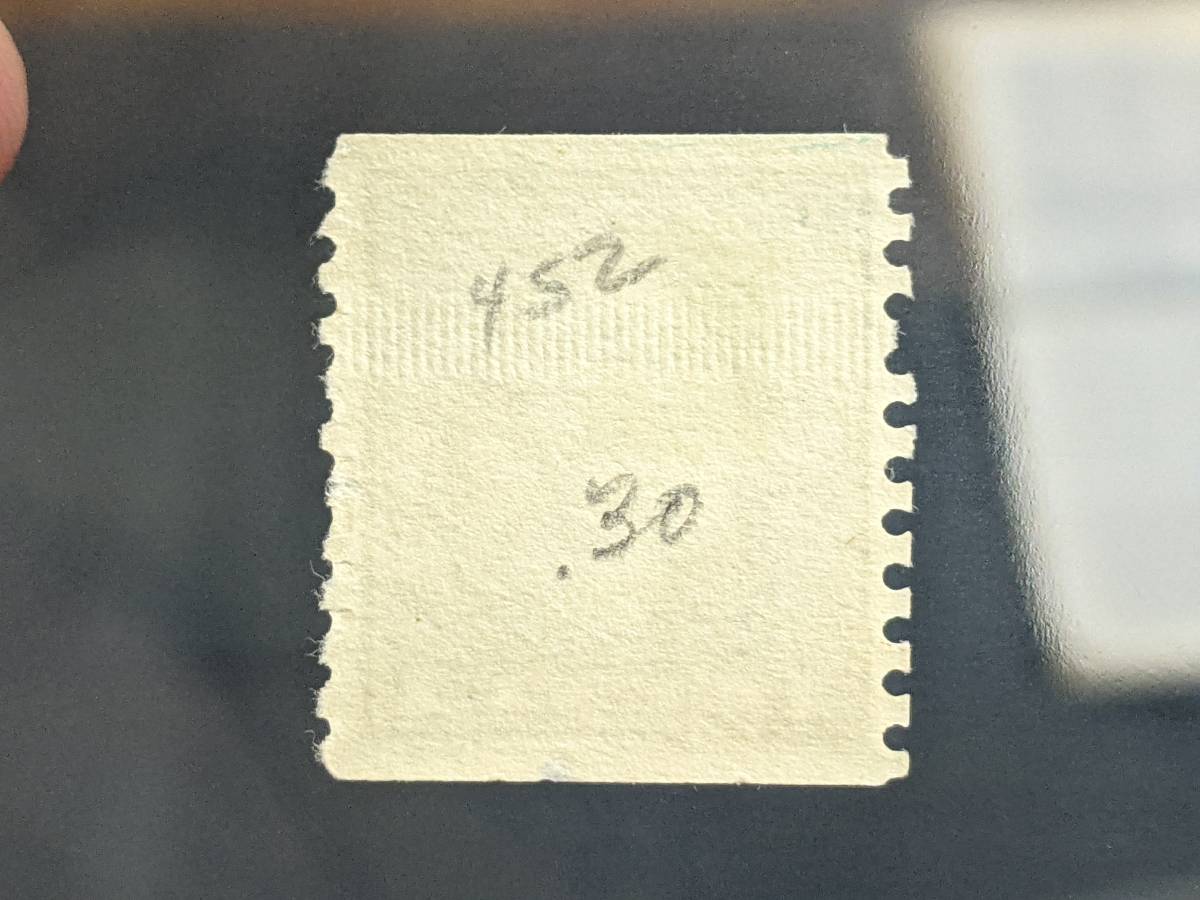
As Don noted, marks from vending machine (not an affixing machine). The topic has come up before with other illustrations. To cite one:
https://goscf.com/t/83223Add:
Lobbies in post offices, depots, hotels, etc., had
vending machines. Insert a nickel, turn the crank and get a strip of five 1-cent stamps. The crank advances the stamps with various internal gearing and rollers which create the indentations. The strip would be knife-cut at each end of the strip by the vending machine. Note the knife-cut at the left and natural tear at the right. Very common on 1 cent stamps as this matched the postcard rate. Less common on 2-cent stamps. Most stamp collectors would consider your stamp damaged, while specialists (perhaps read this as "postal historians") would consider these marks as evidence of the postal and vending technology of the times. The market price falls toward the "damaged" end of the spectrum.
As opposed to stamps which passed through an
affixing machine, which are typically knife-cut along both sets of perforations and won't show any roller indentations.





 Posted 06/17/2023 07:40 am