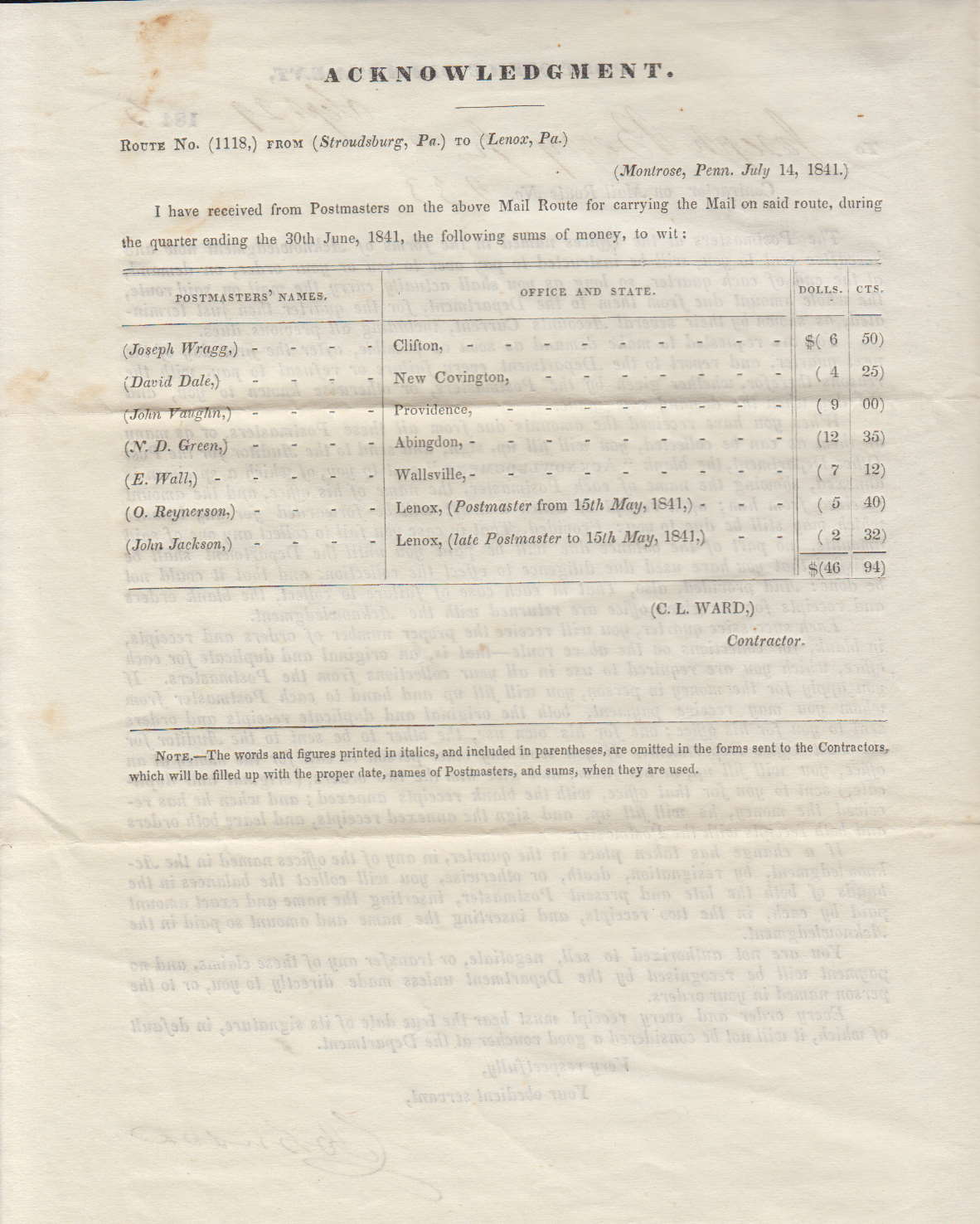
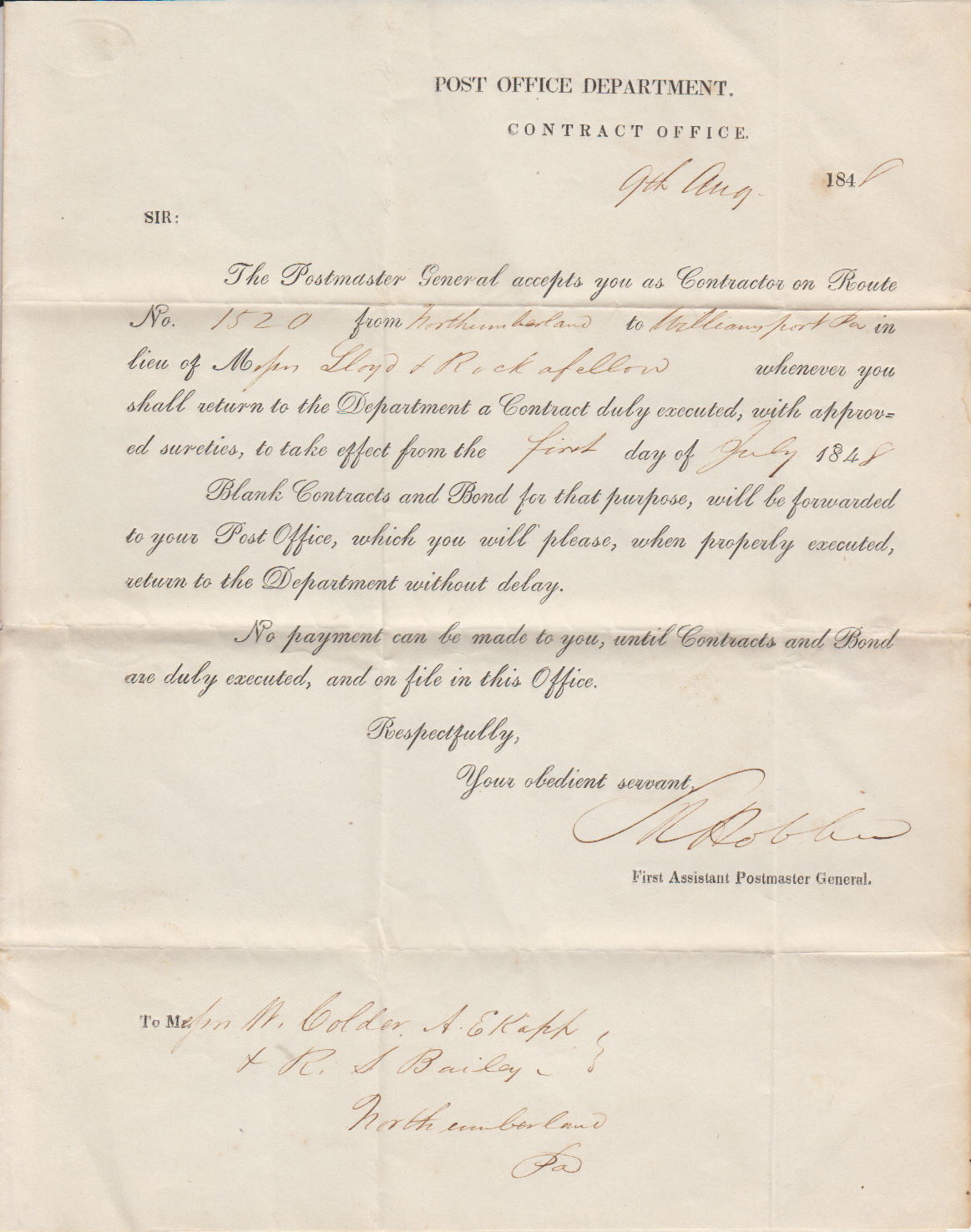
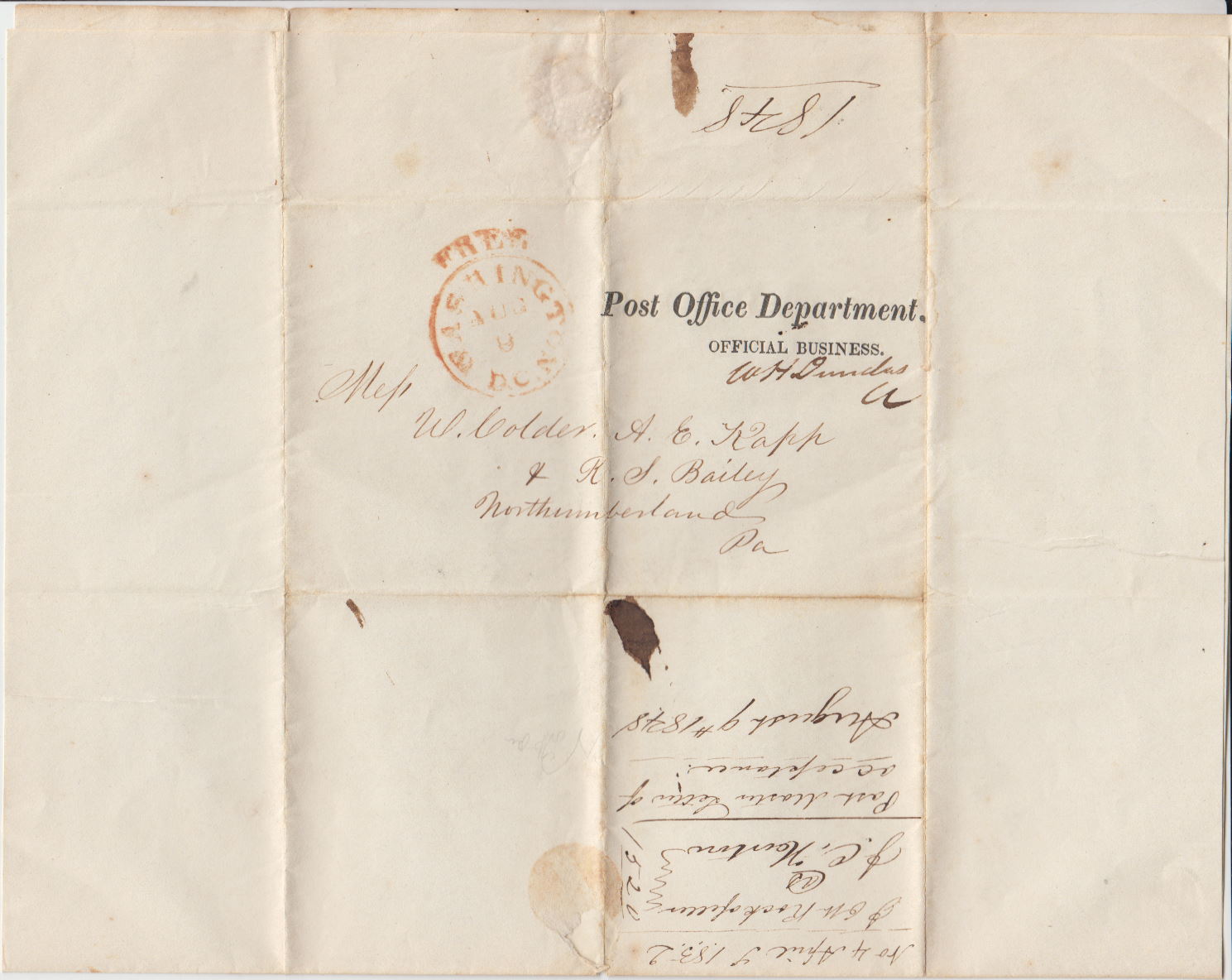
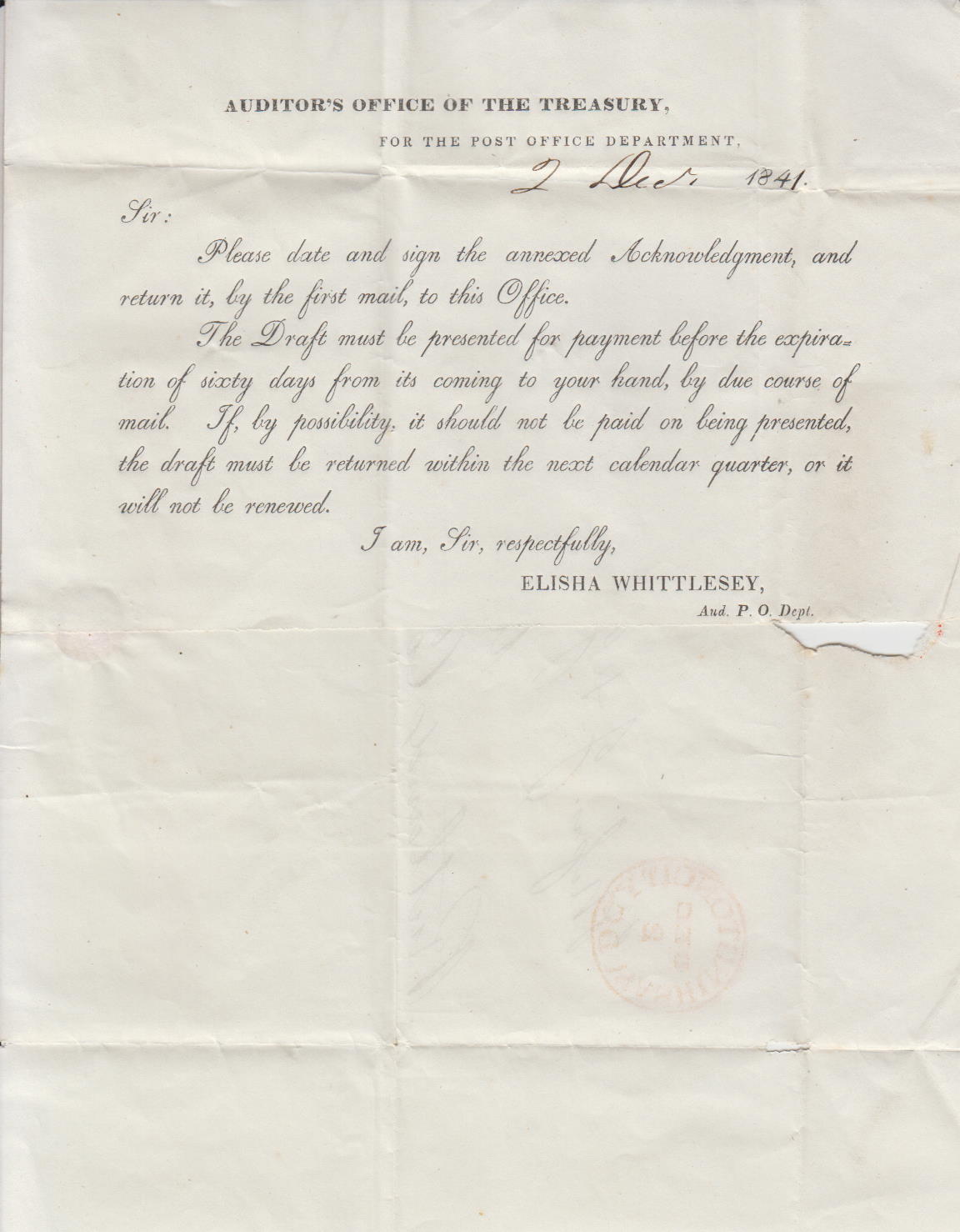
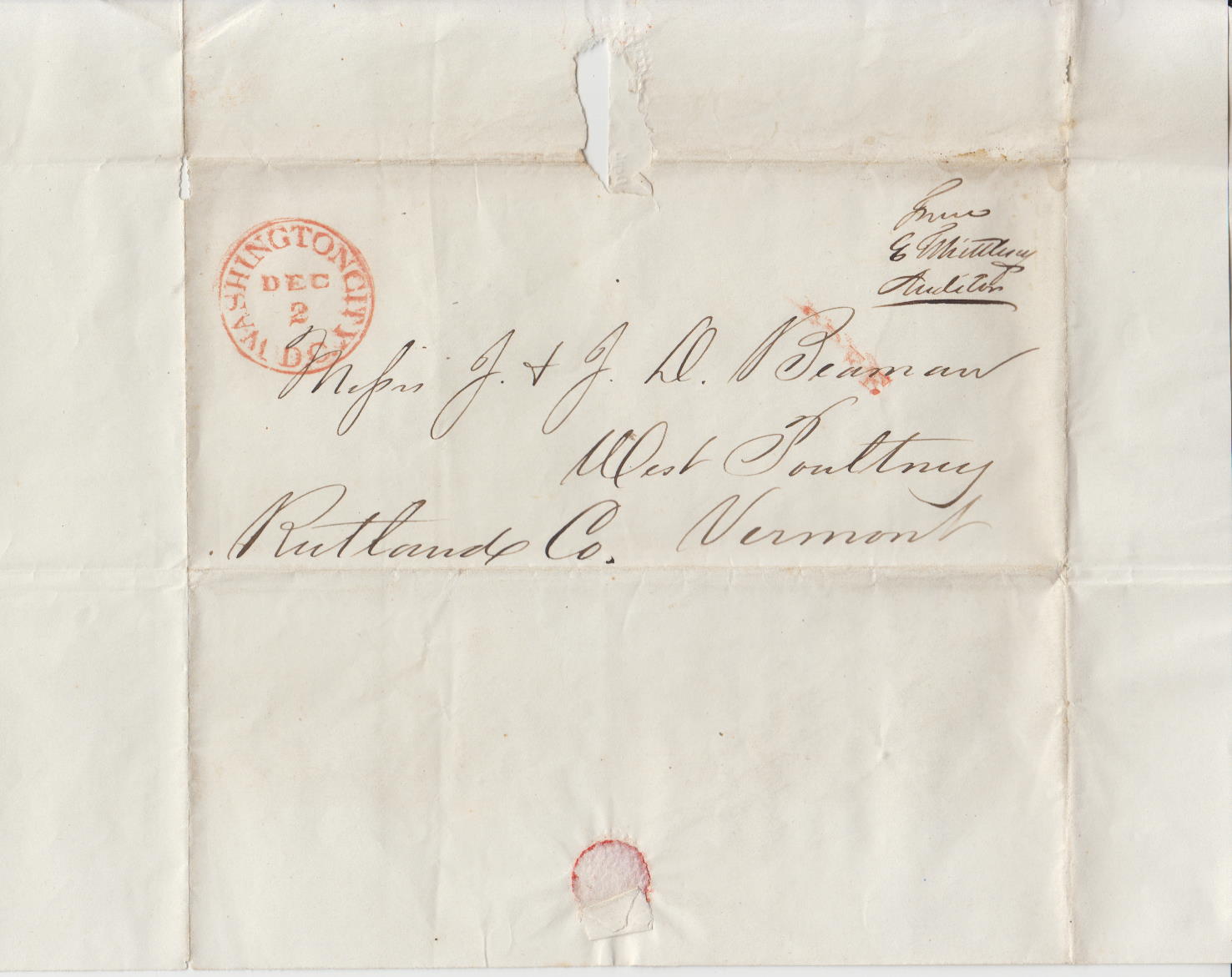
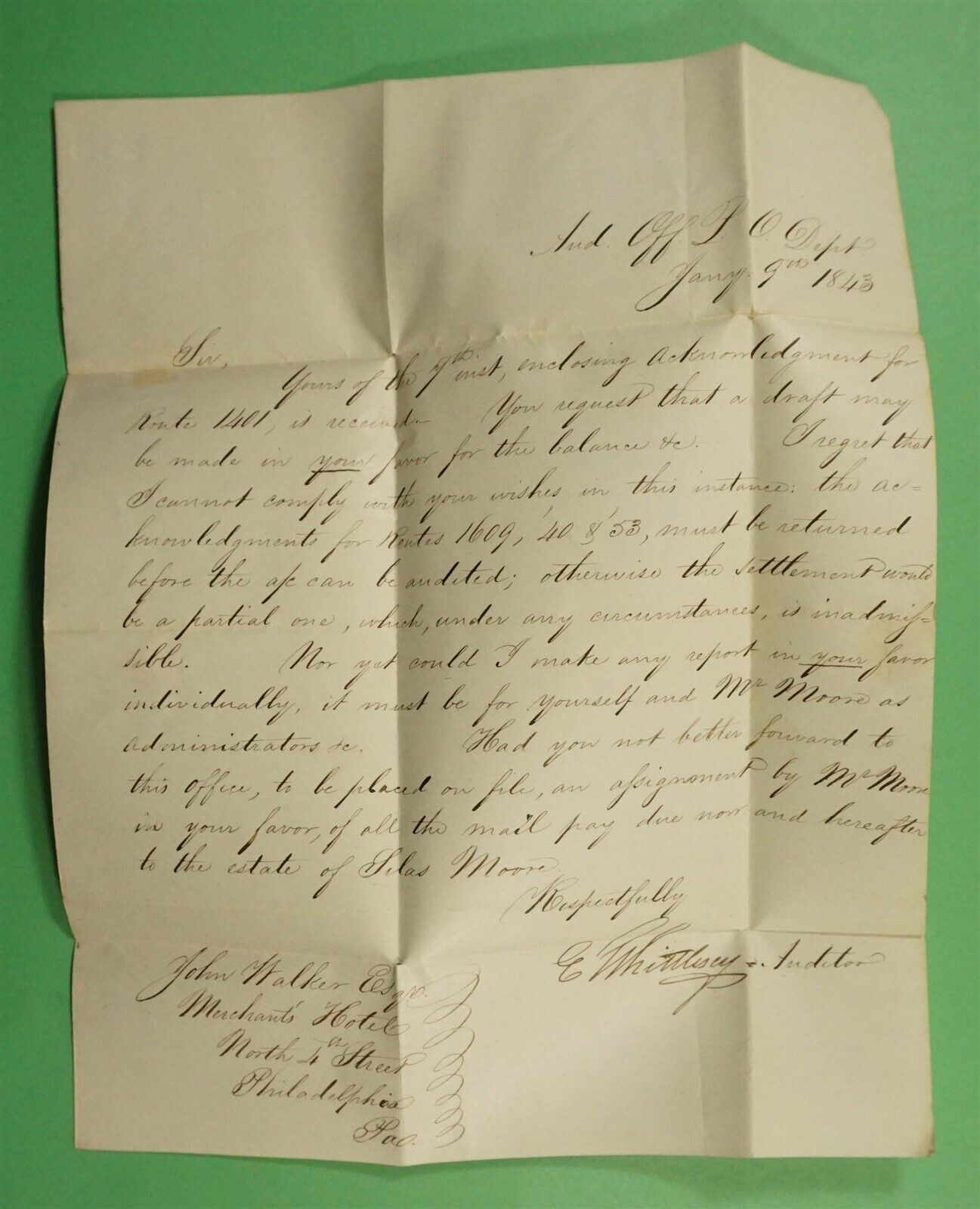
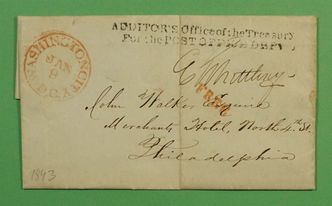
i have this letter from elista whittlesey, Sixth Auditor of the
Treasury to john walker esq
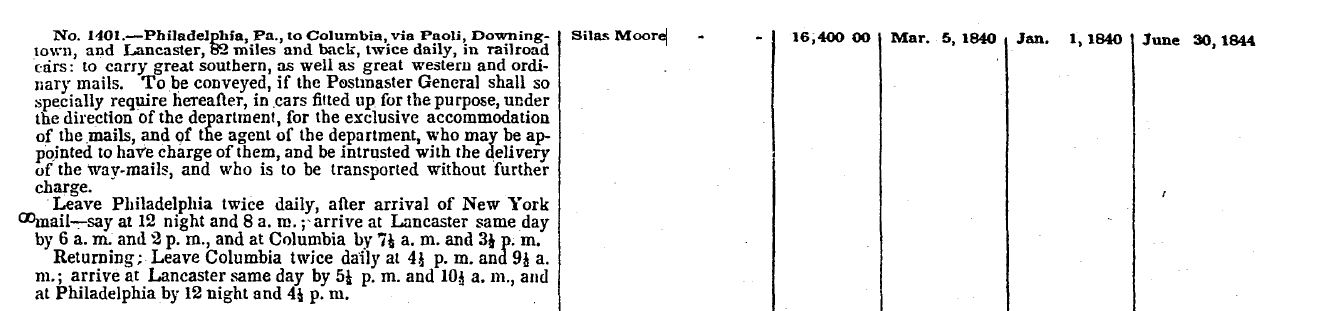
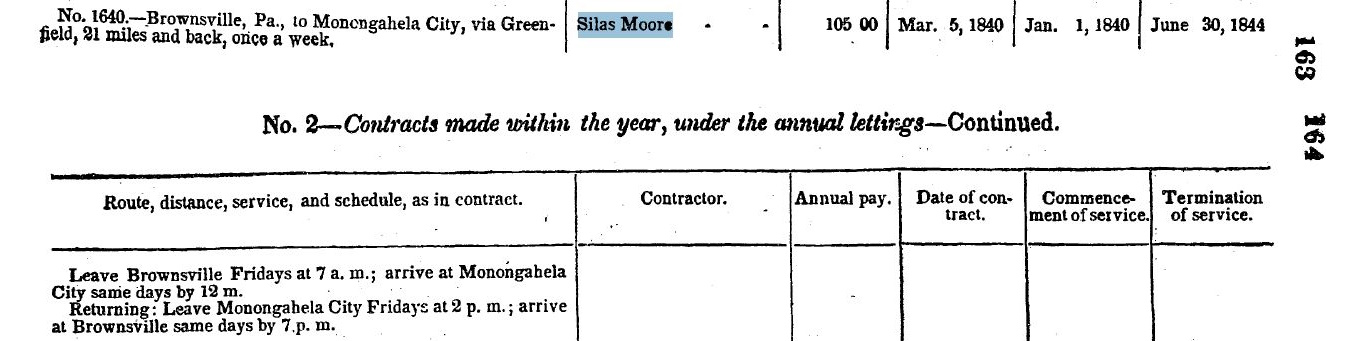
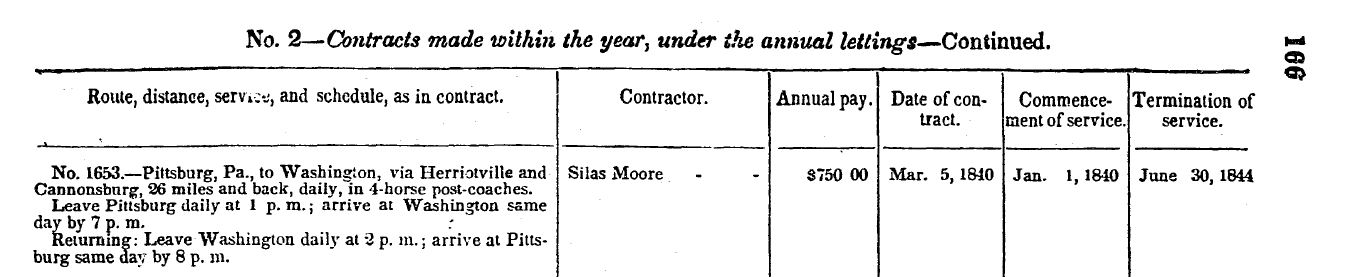
mentioning silas moore and routes 1401,1609,40,53 for witch payment is requested.
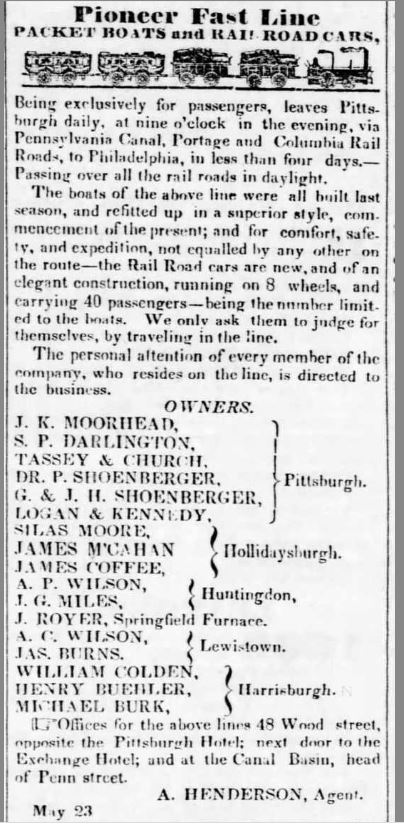
i am wondering if the combination of names and routes, and year 1843, makes that anyone understands what routes this is and potentially confirm who walker and moore are
Transcript of letter:
Sir,
Yours of the 7 th ???, enclosing acknowledgement for route 1401 is received. Your request that a draft
may be made in YOUR favour for the balance is to. I regret that that I cannot comply with your
wishes in this instance. The acknowledgements of routes 1609, 40 & 53 must be returned before the
XX can be audited; otherwise the settlement would be a partial one, witch, under any circumstances
is inadmissible. Nor yet could I make any report in your favour individually, it must be for yourself
and Mr Moore as administrators XX. Had you not better forward to this office, to be placed on file,
an afsignament by mr Moore in your favour, of all the mail pay due now and hereafter to the estate
of silas moore
Respectfully
E whittlesey, Auditor
Send by elista whittlesey:
Biography[edit]
Born in Washington, Connecticut, Whittlesey moved with his parents in early youth to Salisbury,
Connecticut. He attended the common schools at Danbury, and studied law there. He
was admitted to the bar of Fairfield County and practiced in Danbury and Fairfield County. He
also practiced in New Milford, Connecticut, in 1805. He moved to Canfield, Ohio, in 1806, where
he practiced law and taught school. He served as prosecuting attorney of Mahoning County. He
served as military and private secretary to Gen. William Henry Harrison and as brigade major in
the Army of the Northwest in the War of 1812. He served as member of the Ohio House of
Representatives in 1820 and 1821.
Whittlesey was elected to the Eighteenth through Twenty-second Congresses, elected as an Anti-
Masonic candidate to the Twenty-third Congress, and elected as a Whig to the Twenty-
fourth and Twenty-fifth Congresses and served from March 4, 1823, to July 9, 1838, when he
resigned. He was one of the founders of the Whig Party. He served as chairman of the
Committee on Claims (Twenty-first through Twenty-fifth Congresses). He was Sixth Auditor of the
Treasury from March 18, 1841, until December 18, 1843, [1] when he resigned and resumed the
practice of law in Canfield. He was appointed general agent of the Washington Monument
Association in 1847. He was appointed by President Zachary Taylor as First Comptroller of the
Treasury and served from May 31, 1849, to March 26, 1857, when he was removed by
President James Buchanan. [2] He was reappointed by President Abraham Lincoln April 10, 1861,
and served until his death in Washington, D.C., January 7, 1863. He was interred in the Canfield
Village Cemetery, Canfield, Ohio.
To john walker ????
Mentioning silas moore in letter, I think this one:
Silas Moore Stilwell, Sr. (June 6, 1800 – May 16, 1881) was an American lawyer and politician.
Biography[edit]
He was born on June 6, 1800, in New York City to Stephen Stilwell, who had fought in
the American Revolutionary War and opened a glass factory in 1804 in Woodstock, New York. [1]
Silas was educated at Woodstock Free Academy until 1812, then, after his father#39;s bankruptcy,
he went to New York City and began to work.
In 1814, he engaged in surveying in the west, and then settled in Tennessee. In 1822, he was a
member of the Tennessee House of Representatives. Afterwards he removed to Virginia, and
was Clerk of Tazewell County and a member of the Virginia House of Delegates. He was
admitted to the bar in 1824. [1]
He returned to New York in 1828, and was a member from New York County of the New York
State Assembly from 1830 to 1833. In 1830, he proposed "An act to abolish imprisonment for
debt and to punish fraudulent debtors" in the Assembly, which was enacted on April 26, 1831,
and became known as the Stilwell Act. [2]
In 1834, he ran for Lieutenant Governor of New York on the Whig ticket with William H. Seward,
but they were defeated. He was an alderman in New York City in 1835, and chosen chairman of
the Board of Aldermen. In this year, the political parties were equally divided, and as he had the
casting vote on all appointments he became popularly known as "King Caucus". He was acting
mayor at the time of the Great Fire of New York in 1835. [1]
He was married Caroline Norseworthy (1820-?) around 1840, and one of their children was Silas
Moore Stilwell, Jr. (1854–1891), a lawyer in New York City.
He was United States Marshal for the Southern District of New York during President John Tyler#39;s
administration from 1841 to 1845. At this time he was sent on a special mission to The Hague to
negotiate a loan for the U.S. government. At the end of his term he resumed the practice of law.
He was the author of the National Banking Act in 1863.
He wrote on questions of finance, many of his articles appeared in the New York Herald from
1860 to 1872, under the pen-name of "Jonathan Oldbuck". [1]
He died on May 16, 1881, in New York City. [2]





 Posted 07/24/2023 4:43 pm