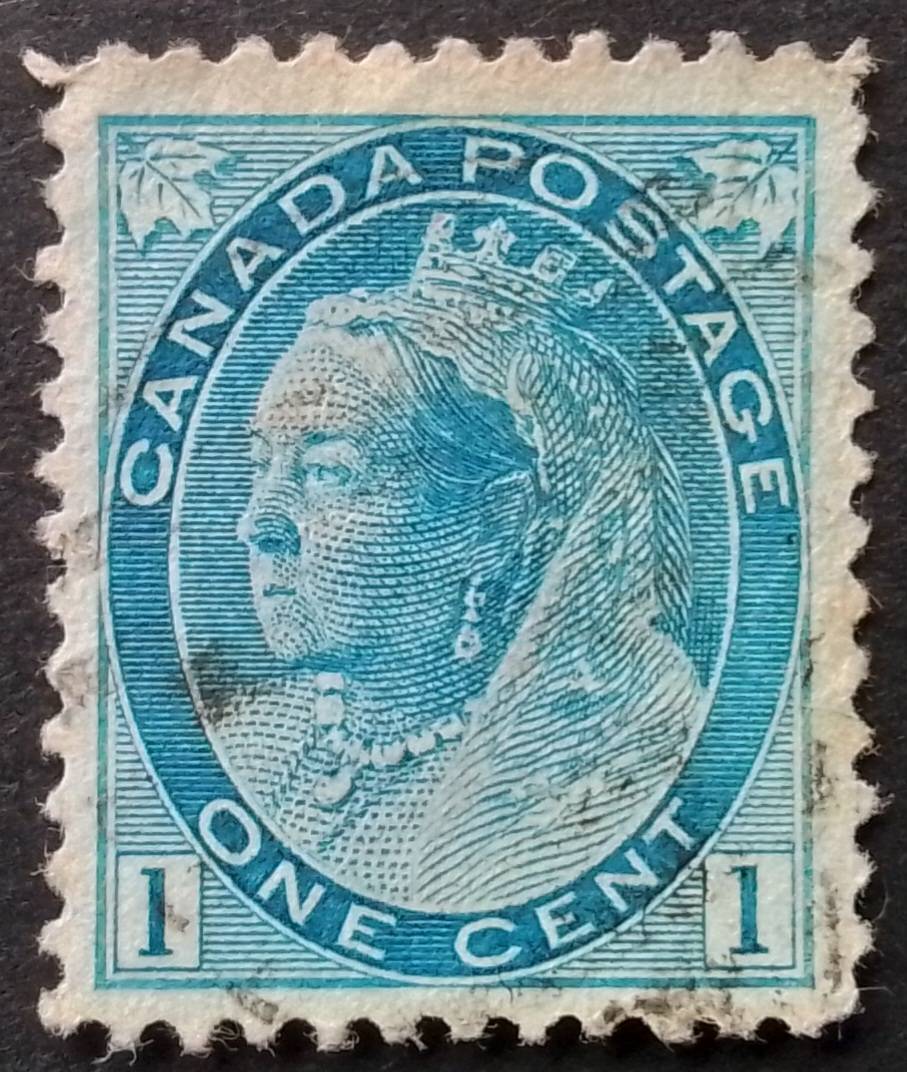
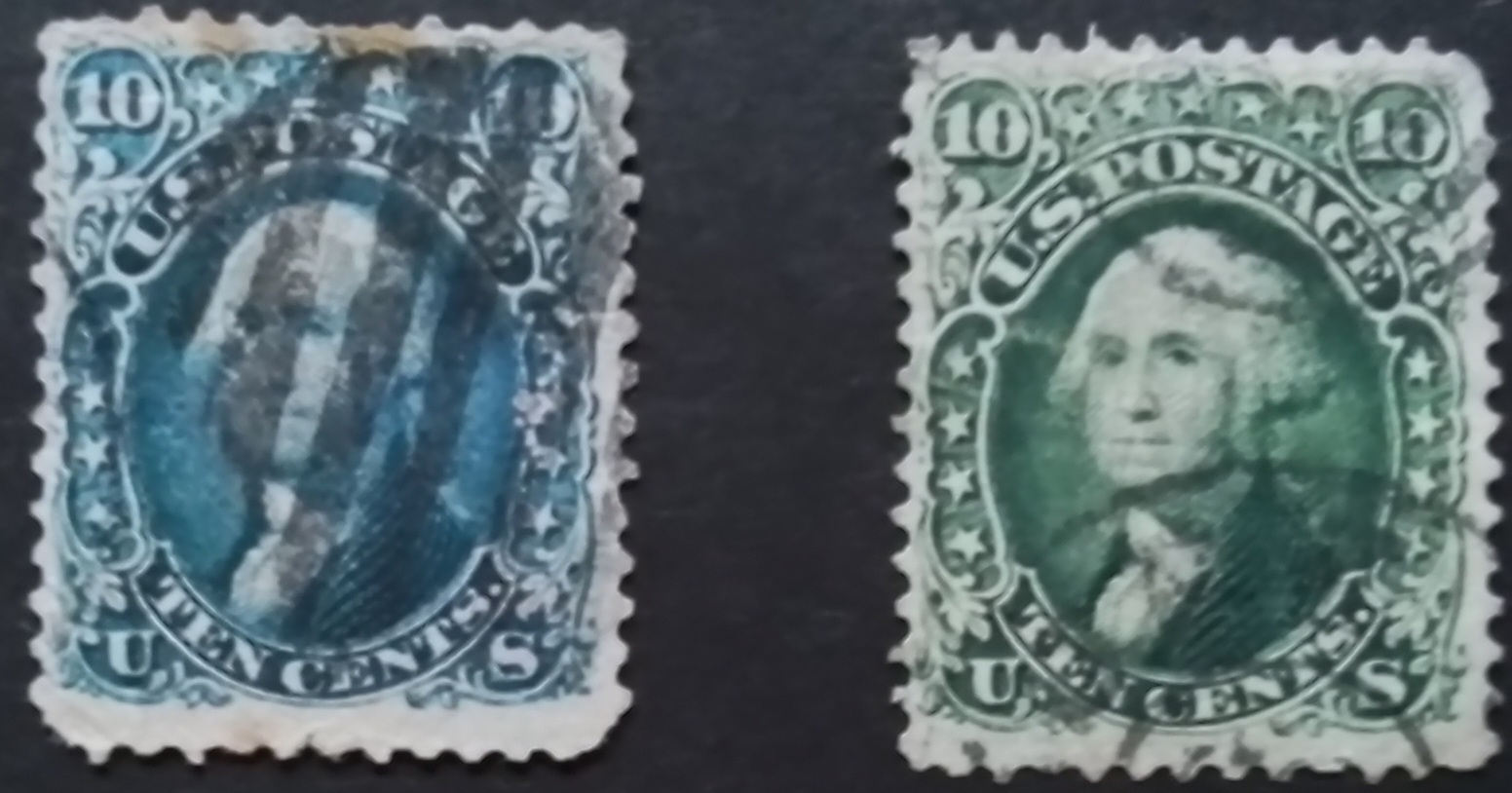
This appears to be exactly the same as the well known British "Blue" Victorian halfpenny stamp. In that case the yellow chromate pigment that was used to make the original green colour was changed twice. I cannot remember what chromate pigments were used but one was the highly toxic lead chromate. The second pignut was slightly water soluble and was only used for a few months
Soaking a stamp with this soluble yellow pigment dissolves it and gives the blue colour changeling.
I am sure you can find info on the web about this.
Thanks for the excellent explanation. What I find odd, however, is that this is the only stamp of this type that I have ever seen in 60 years of collecting. There should be more even if the pigment was used for only a few months or at least a published article in philatelic literature.
You can see the un-evenness of the color across the face of the stamp; a sure indication of a changeling. This is also a common changeling color fade, see other examples here https://stampsmarter.org/learning/A...gelings.html Don
Disclaimer: While a tremendous amount of effort goes into ensuring the accuracy of the information contained in this site, Stamp Community assumes no liability for errors. Copyright 2005 - 2026 Stamp Community Family - All rights reserved worldwide. Use of any images or content on this website without prior written permission of Stamp Community or the original lender is strictly prohibited. Privacy Policy / Terms of UseAdvertise Here





 Posted 08/30/2023 08:04 am