| Author |
 Replies: 61 / Views: 3,666 Replies: 61 / Views: 3,666 |
|
|
|
Pillar Of The Community
Netherlands
6638 Posts |
|
|
Quote:
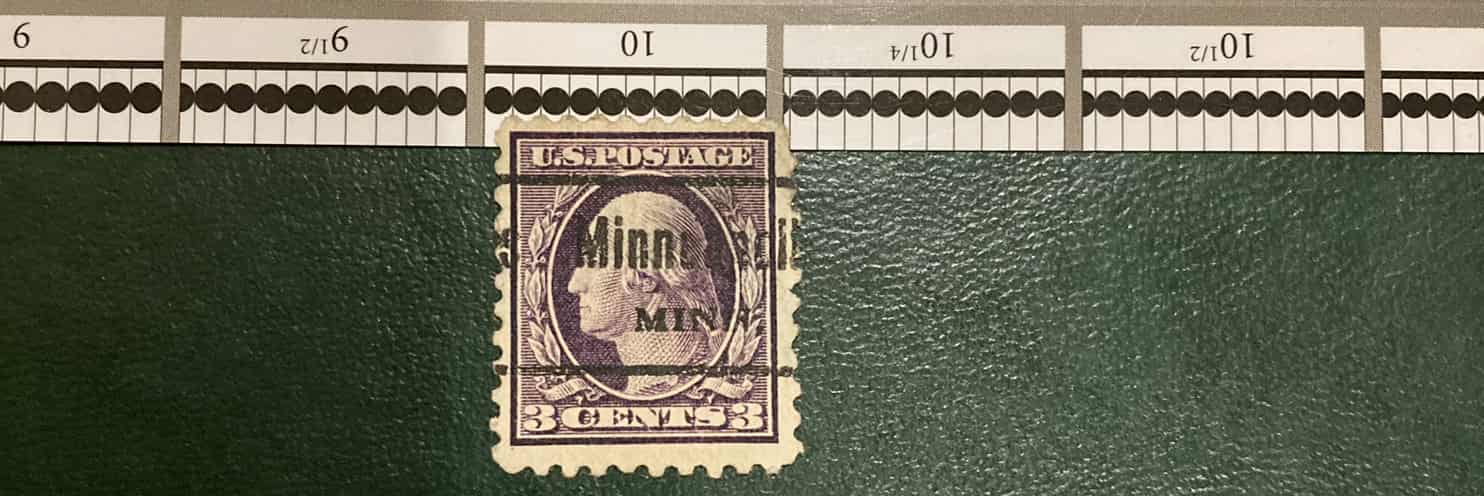
In the photo there are 10 perforations, 10 teeth. Stop counting! It is not relevant at all. You are using the perforation gauge correctly. Use only that. |
Send note to Staff 
|
| Edited by NSK - 10/07/2023 1:18 pm |
|
|
Pillar Of The Community
United States
1434 Posts |
|
|
Quote:
I always measure perforation first, the golden rule. Good! Quote:
In the photo there are 10 perforations, 10 teeth. This DOES NOT matter. It is NOT important, at all. |
|
Send note to Staff
|
|
|
Moderator

United States
5106 Posts |
|
|
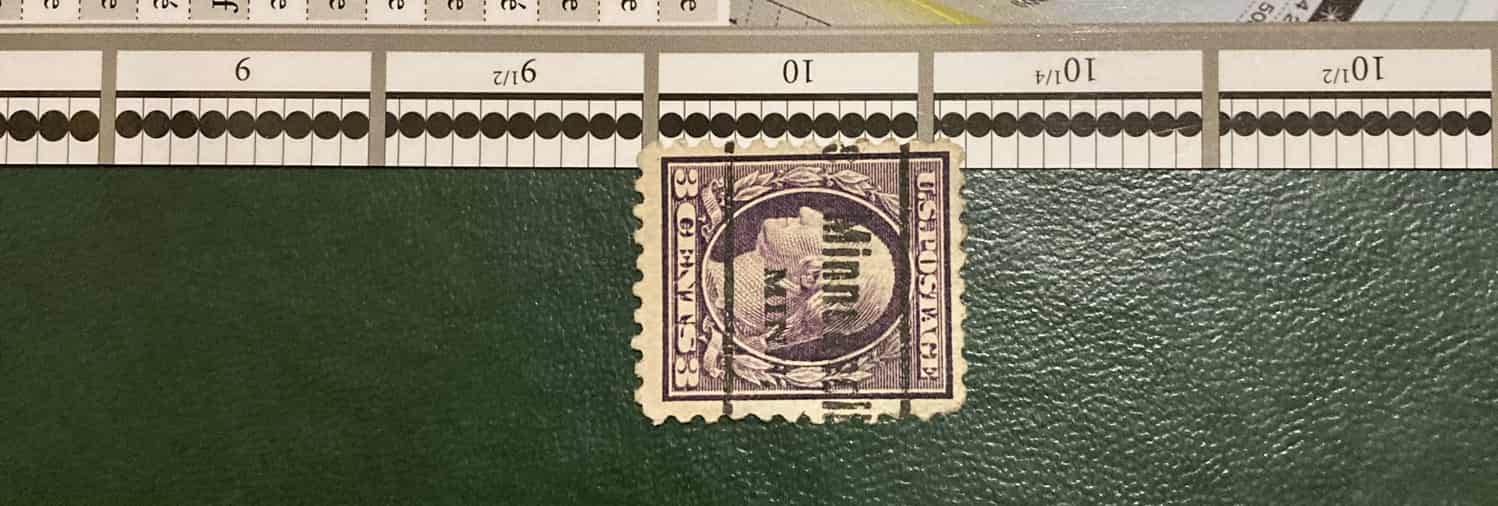
This use of a "gauge" appears to be done correctly, as the perf tips and holes match up well with the "gauge" underneath. Your other picture shows the perf tips aligning with the holes, which is OK, but not preferred. 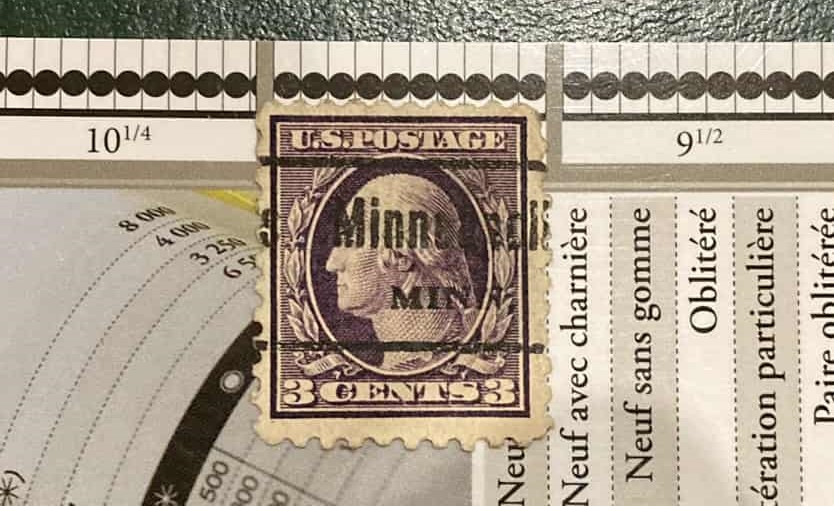 However, I am confused about a few things: 1 - Is this a picture of a gauge from a magazine or something? If so, it is not calibrated correctly and you need to buy a real gauge. 2 - Why does the left perforation say "10 1/4" and the right perforation say "9 1/2"? I am confused as to why we don't see "10 1/2" and "9 1/2". 3 - What is the actual number that you are hiding with your stamp? Is it "10" or is it something really strange like "9 5/8"? |
|
Send note to Staff
|
|
|
Pillar Of The Community
Netherlands
6638 Posts |
|
|
The definition of perforation gauge, i.e., the measure of perforations is: the number of perforation holes per two centimetres. This has been explained several times.
Take a ruler and measure the widths of the drawings of dots above each number on your perforation gauge (the measurement aid). This, likely is 2 centimetres for all blocks: the one that says9 1/2, 10, and 10 1/2. It has no relation to your stamp. You can use it when the stamp is 1 centimetre wide or high and when it is 2o kilometres wide or high.
Only the number below the dots is relevant. |
|
Send note to Staff
|
|
|
Valued Member
65 Posts |
|
|
Valued Member
Switzerland
496 Posts |
|
|
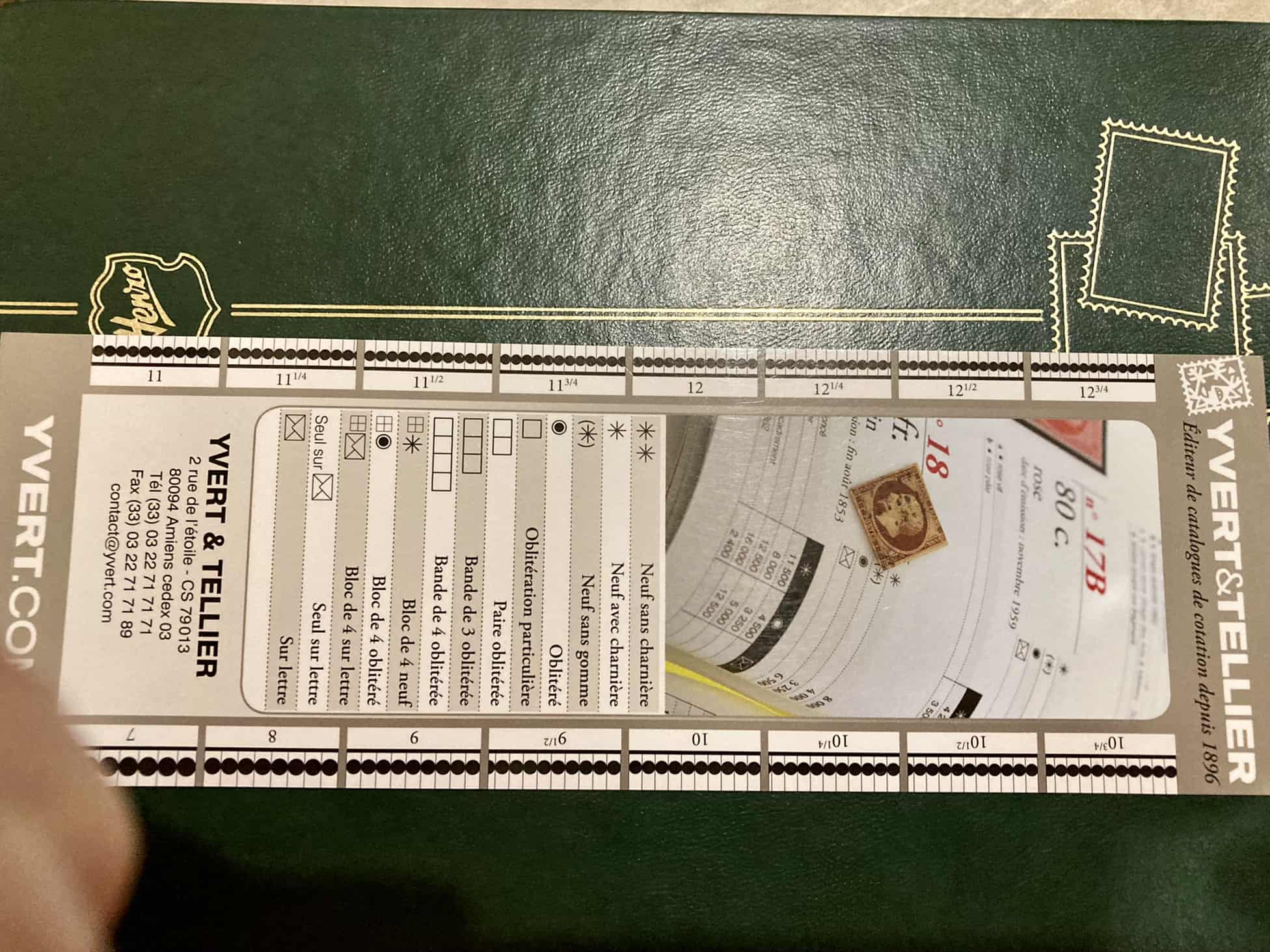
The Yvert & Tellier perforation gauge is geared to measure French stamps. Hence you see the odd steps not seen on US stamp gauges.
And Hunter123cc, for the one hundredth time:
When you have (correctly) measured the perforation with your Y&T perforation gauge, this is the END OF THE STORY as far as measuring perforations is concerned. It is completely, utterly irrelevant how many holes, tips or invisible fairies are visible on your stamp in its total width or height. |
|
Send note to Staff
|
|
|
Pillar Of The Community
Netherlands
6638 Posts |
|
|
No one has said it is not a 'perforated 10' stamp. You are using the perforation gauge correctly. What we have been telling you is to stop writing about the number of teeth and holes. Just that number on the gauge is relevant. |
|
Send note to Staff
|
|
|
Valued Member
65 Posts |
|
|
NSK please tell me.
Here, compare the stamps in the photo, all the stamps in the photo were issued in 1925, but if you look closely at the perforation on the stamps, you will notice that the perforation of the stamps is different, 2 stamps in 2 photos have clearly defined 10 teeth, and in the first photo the stamp has 11 teeth.
There is a similar 10 perforation with 10 teeth on stamp #562c, and only at the bottom.
Don't you think it's strange that the 10 stamps have different perforations?
I read that such a rare 10 perforation was on the very first 10c stamps; in total, about 10,000 stamps were perforated with 10 perforation with 10 teeth.
This type of perforation is still found on 4c Marta 1926 stamps.
If you look closely, the teeth on the stamps are different.
There is no brand 10 perforation with 10 teeth in the catalog. |
|
Send note to Staff
|
|
|
Valued Member
65 Posts |
|
|
NSK please tell me. Here, compare the stamps in the photo, all the stamps in the photo were issued in 1925, but if you look closely at the perforation on the stamps, you will notice that the perforation of the stamps is different, 2 stamps in 2 photos have clearly defined 10 teeth, and in the first photo the stamp has 11 teeth. There is a similar 10 perforation with 10 teeth on stamp #562c, and only at the bottom. Don't you think it's strange that the 10 stamps have different perforations? I read that such a rare 10 perforation was on the very first 10c stamps; in total, about 10,000 stamps were perforated with 10 perforation with 10 teeth. This type of perforation is still found on 4c Marta 1926 stamps. If you look closely, the teeth on the stamps are different. There is no brand 10 perforation with 10 teeth in the catalog. 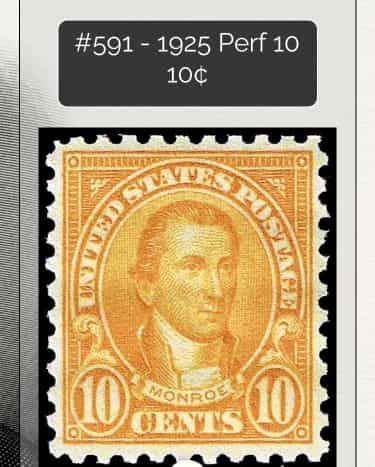 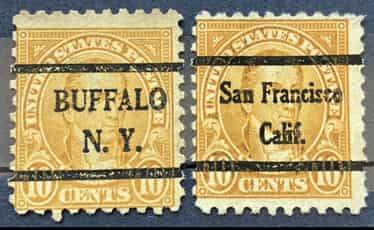 |
|
Send note to Staff
|
|
|
Bedrock Of The Community
12702 Posts |
|
|
What Hunter wants is for all of us to see it his way and agree that all of his stamps are indeed rare. Imagine the luck if finding dozens of rare stamps in one fell swoop. Congratulations!
PS: So, what is the end game here?
|
|
Send note to Staff
|
|
|
Valued Member
65 Posts |
|
|
rogdam
Show me somewhere such a brand with 10 perforations and 10 teeth, you won't find it. |
|
Send note to Staff
|
|
|
Pillar Of The Community
Netherlands
6638 Posts |
|
|
No, I do not. Drkohler already explained why this happens.
If they are bot "perforated 11', i.e., have 11 perforations per two centimetres, the stamps - except for the different pre-cancels - are exactly the same. This is very normal.
Also, The Swedish Tiger is not a catalogue. |
|
Send note to Staff
|
|
|
Valued Member
Switzerland
496 Posts |
|
|
Hunter123cc: Try to learn how line perforators work.
ALL the stamps you show have 11 perforations horizontally. The fact that you can only detect 10 (but cannot recognize the remnants of the 11th perforation tip) lies in the way a line perforator worked. Your stamps actually demonstrate how the vertical perforation operation did cut most/all of a corner perforation tip away.
Again: Try to learn how line perforators work. and what can happen when the vertical and horizontal holes don't line up in the corners (which they always don't do with line perforators). |
|
Send note to Staff
|
|
|
Pillar Of The Community
Netherlands
6638 Posts |
|
|
Quote:
rogdam
Show me somewhere such a brand with 10 perforations and 10 teeth, you won't find it. Look at the bottom of the plate block in this link. The left stamp, when torn from the block has 11 teeth and 10 holes. the right stamp will have 10 teeth and 9 holes. https://www.theswedishtiger.com/433-scotts.htmlQ.E.D.rogdcam is extremely experienced with US stamps. It is a very bad idea to challenge him in this manner. |
|
Send note to Staff
|
| Edited by NSK - 10/07/2023 3:37 pm |
|
|
Bedrock Of The Community
12702 Posts |
|
|
This is not about a language barrier. This is about either:
1) Someone playing with us
2) Being trolled
After endless comments from lifelong collectors regarding forgetting the number of teeth or holes that you count on your fingers and toes and embracing the concept of NUMBER OF PERFORATIONS PER 2CM OF DISTANCE MEASURED ON A PERFORATION GAUGE these posts go on ad nauseum with Hunter from Ukraine absolutely refusing to listen to any reason.
Whatever the motivation IMHO this really needs some closure sooner than later. Perfectly good internet molecules are being wasted. I am going to make a salad. |
|
Send note to Staff
|
|
|
Replies: 61 / Views: 3,666 |
|




 Posted 10/07/2023 1:17 pm