| Author |
 Replies: 13 / Views: 868 Replies: 13 / Views: 868 |
|
|
Valued Member
United States
81 Posts |
|
|
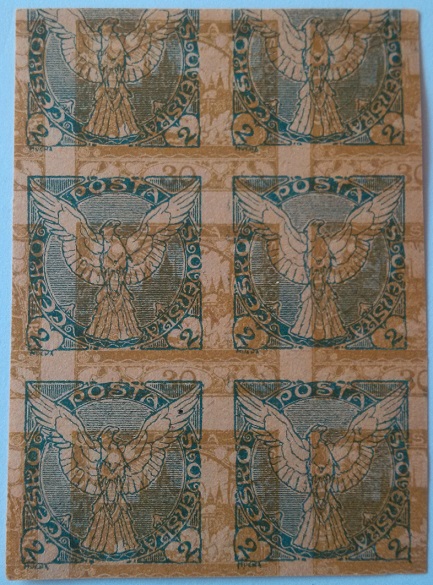
This appears to be printed in dark green rather than usual grey green on a brown paper, rather than the usual white paper; this brown paper seems to be somewhat thicker than the usual white paper, though I have no way of measuring the thickness. Then, the best I can tell, there are parts of an image of what appears to be Czechoslovakia #2 (yellow green) superimposed over the P1 design. At the bottom of the scan can be seen part of the top frame of the #2 design, and in the upper part of the scan can be seen part of the lower half of that design. The superimposed image is shifted to the right running off of the right margin. What happened to produce this, and why is the P1 printed on this unusual paper? 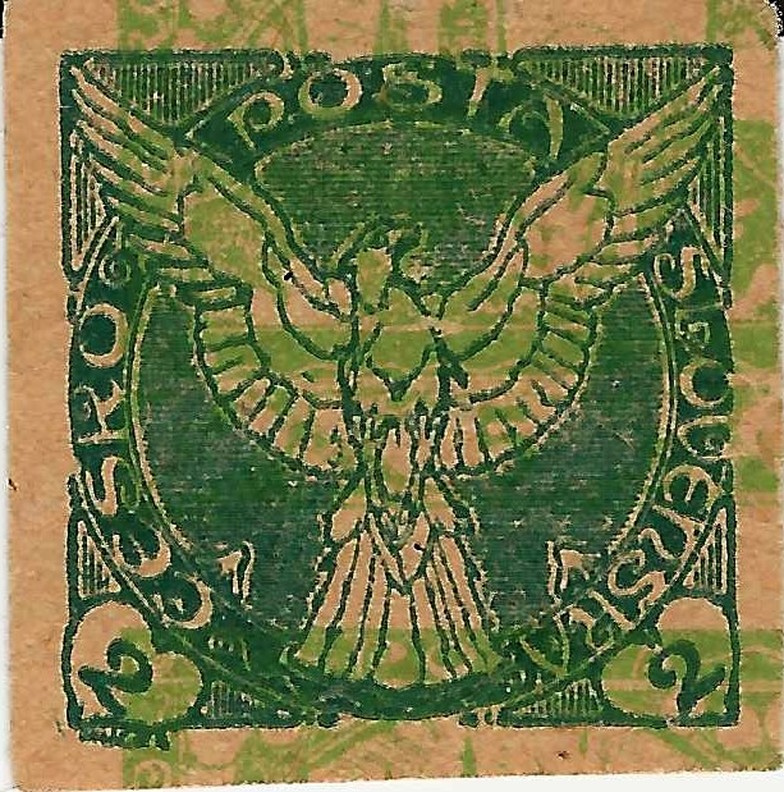 Edited to eliminate confusion of P1 and P2  edited again to correct color of #2 from "light green" to the correct "yellow green" |
|
Send note to Staff
|
| Edited by TNPhil - 10/19/2023 4:22 pm |
|
|
|
|
Bedrock Of The Community
12759 Posts |
|
|
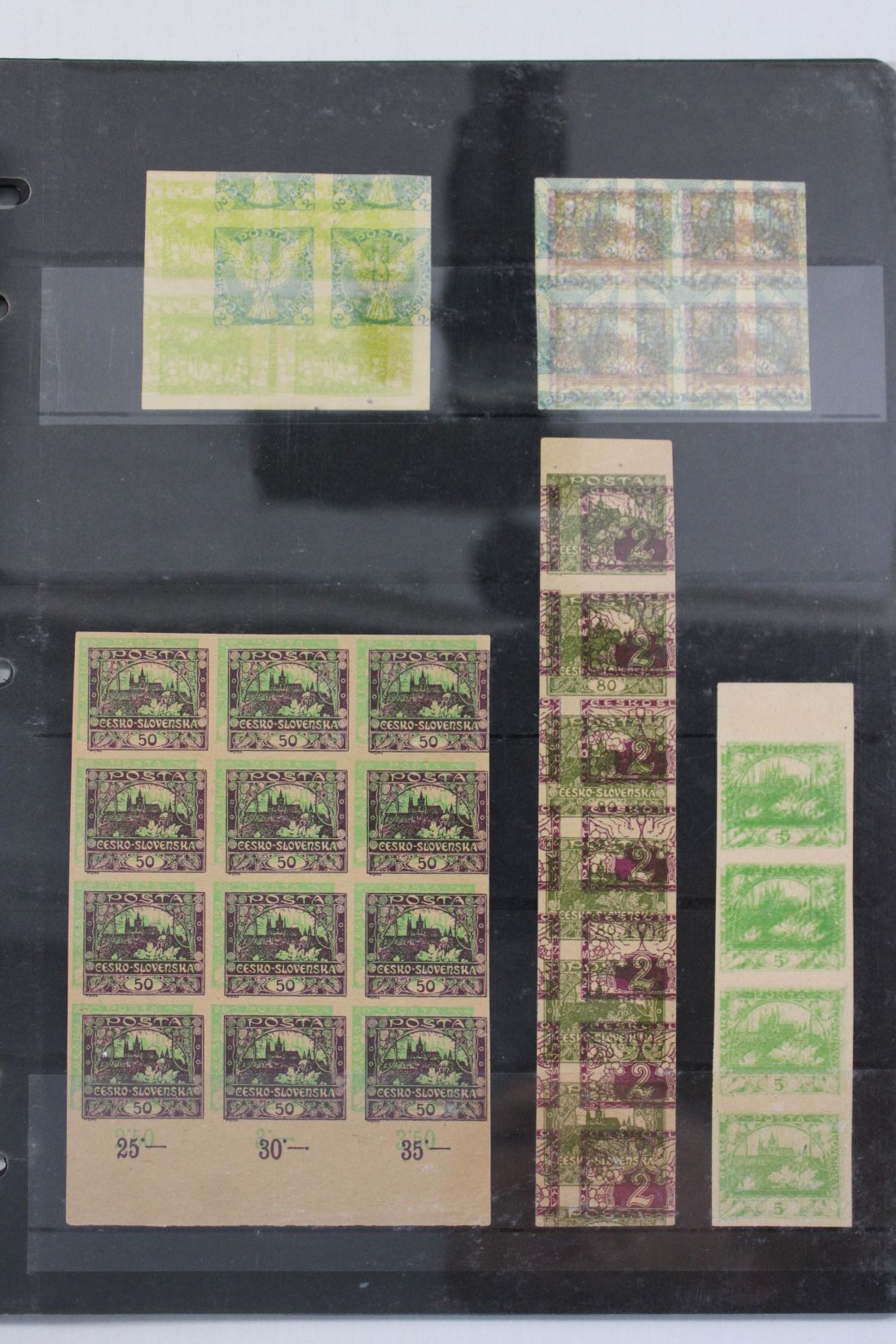
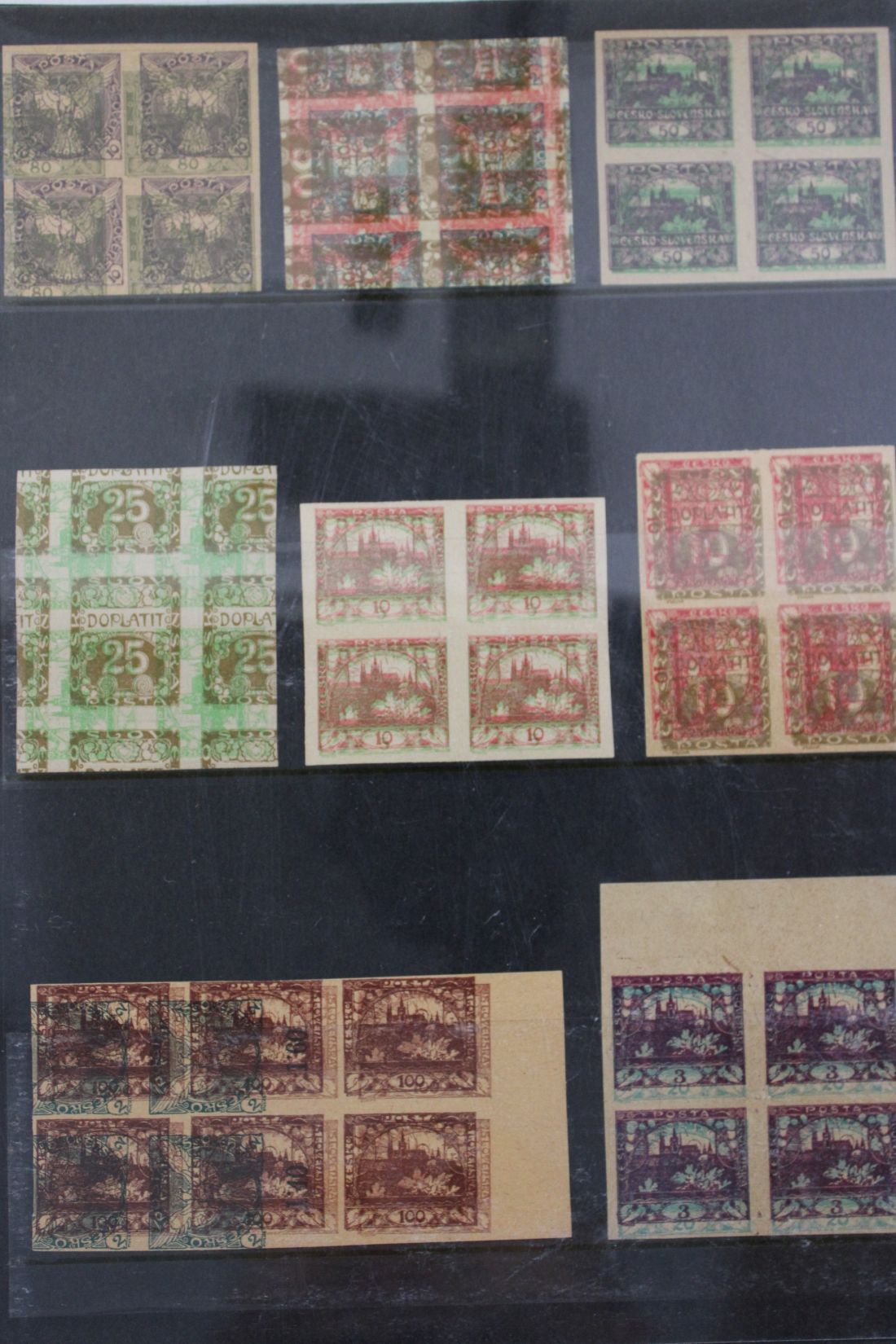
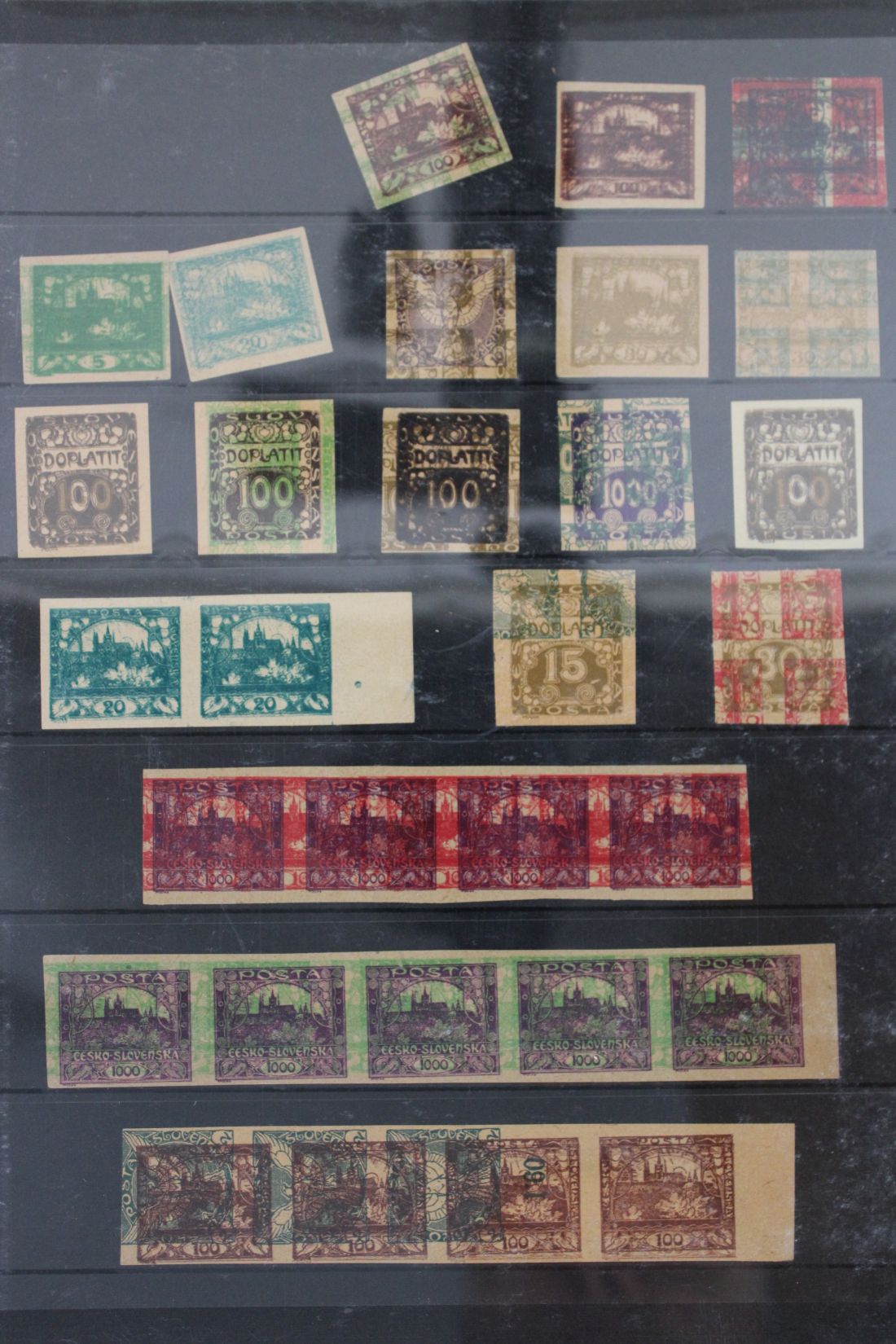
It looks like printer's waste. Russia is chock full of the exact same type of stuff. |
Send note to Staff 
|
|
|
Valued Member
United States
81 Posts |
|
|
Thanks for that insight rogdcam, maybe I'll mount it in my album as a curiosity. Did you ever keep any of it in your Russia collection? |
|
Send note to Staff
|
|
|
Bedrock Of The Community
12759 Posts |
|
|
Sure did! Quite a few that were multiple printed in all kinds of crazy configurations and even on both sides. The SPA sold these things in the 1920's in particular and they make cool ancillary material. I also found though that even this stuff was faked extensively back in the day. |
|
Send note to Staff
|
|
|
Pillar Of The Community
United States
1434 Posts |
|
|
Printers' waste, like Rod said. You can fill albums with different paper and color combinations, some collectors do. |
|
Send note to Staff
|
|
|
Valued Member
United States
81 Posts |
|
|
rogdcam and classic_paper Very interesting stuff! Thanks to both of you for your enlightening me on this, first time I've ever come across it. rodgcam: that's crazy, fake printer's waste, how in the world can you tell fake printer's waste from real printer's waste?  |
|
Send note to Staff
|
|
|
Bedrock Of The Community
12759 Posts |
|
|
The "fake" was material that didn't come out through the philatelic bureau. It doesn't mean it did not use the real plates etc. but rather the State did not sanction it and thus was fake in the eyes of expertizers such as Mikursky. Kind of funny actually. |
|
Send note to Staff
|
|
|
Pillar Of The Community
Canada
1462 Posts |
|
|
Printers waste in all kinds of interesting variations is commonly found for classic Spain too - known as maculatura. They were actually identified and priced by Galvez in his proofs & essay catalogue. Below a double inverted impression from 1882. 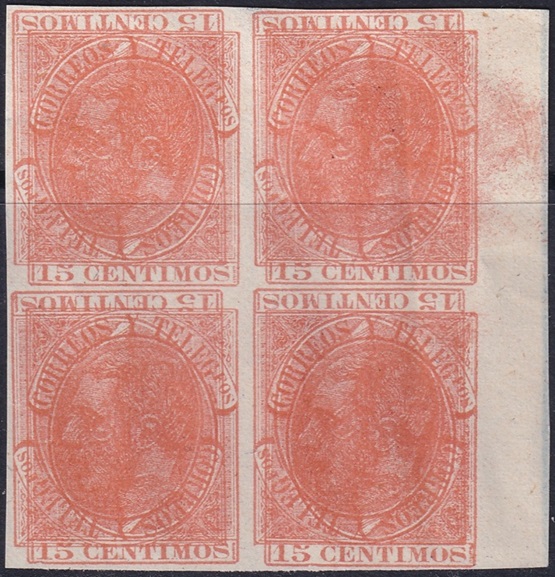 |
|
Send note to Staff
|
|
|
Bedrock Of The Community
12759 Posts |
|
|
Bedrock Of The Community
12759 Posts |
|
|
Valued Member
United States
81 Posts |
|
|
rodg Quote:
The "fake" was material that didn't come out through the philatelic bureau. It doesn't mean it did not use the real plates etc. but rather the State did not sanction it and thus was fake in the eyes of expertizers such as Mikursky. Kind of funny actually. Amazing! So if this stuff is released officially, does it also mean that some of it was/is intentionally produced by the government involved for sale to collectors, rather than just being a part of the processes of printing? Or would that be where the "unofficial" and thus "fake" releases come into play? Did Mikursky actually have reference data available to determine what was sold by the philatelic bureau and what wasn't? Thanks for posting additional examples from Czechoslovakia. Have saved for future reference. gmot - thanks to you also for the Spanish example. Looks like the world is awash in printer's waste  |
|
Send note to Staff
|
|
|
Valued Member
United States
81 Posts |
|
|
rodg
A couple more questions:
1. How did you include the printer's waste into your collection? As a separate facet of the collection in its own album, or inserted among the pages of the normal stamps? Or another way?
2. How does one put a price onto this kind of thing? Do catalogs exist for this stuff?
|
|
Send note to Staff
|
|
|
Bedrock Of The Community
12759 Posts |
|
|
Quote:
Did Mikursky actually have reference data available to determine what was sold by the philatelic bureau and what wasn't? It is an excellent question. I had a Russian stamp from the 20's that was triple printed out of alignment with one inverted. It had a backstamp from the Soviet Philatelic Bureau. When Raritan sold my Russia collection, they determined that it was "fake". Both the backstamp and the stamp itself were not "authentic". It remains a headscratcher to me. All that I can figure is that some folks have studied postal records and actually have a handle on what exactly was available on the market from the SPA and what was not. Without records I see no way to make a determination. Further muddying the waters is the fact that the original plates were used and possibly the real backstamp. That means that someone in the food chain had access to these things but did some side work. I think that the term "authentic" takes on a different meaning from what we commonly think of when it comes to these things. The ink was genuine as was the paper and design. Also, the backstamp. The authenticity is not there because there was no authorization. So, not fake, but fake. |
|
Send note to Staff
|
|
|
Pillar Of The Community
United States
8610 Posts |
|
|
Most of the "Printers Waste " is not sold by any organization or society . It is stolen waste from the trash container by low level employees going out the backdoor after the managers go home after the day . There are also stories of this waste is stolen at the recycle plant or just before it gets thrown into the incinerator.
Basically stolen waste from the printing plant ,which never made it to the postal service of the country . |
|
Send note to Staff
|
|
| |
Replies: 13 / Views: 868 |
|




 Posted 10/19/2023 4:10 pm