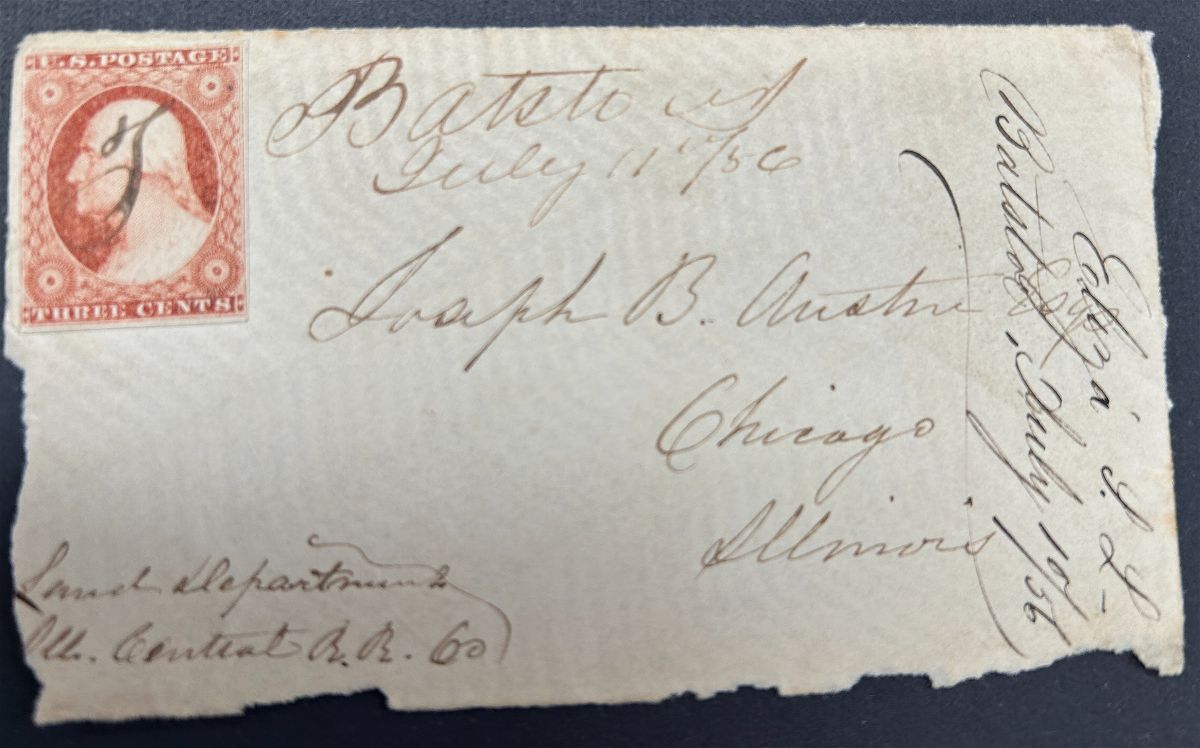
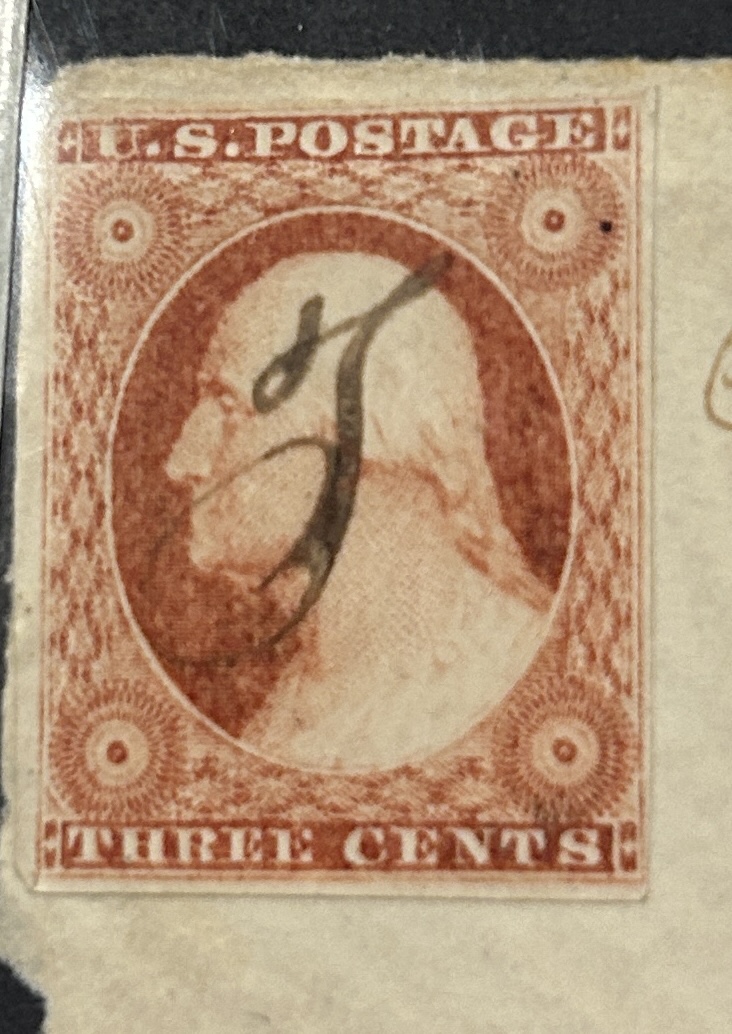
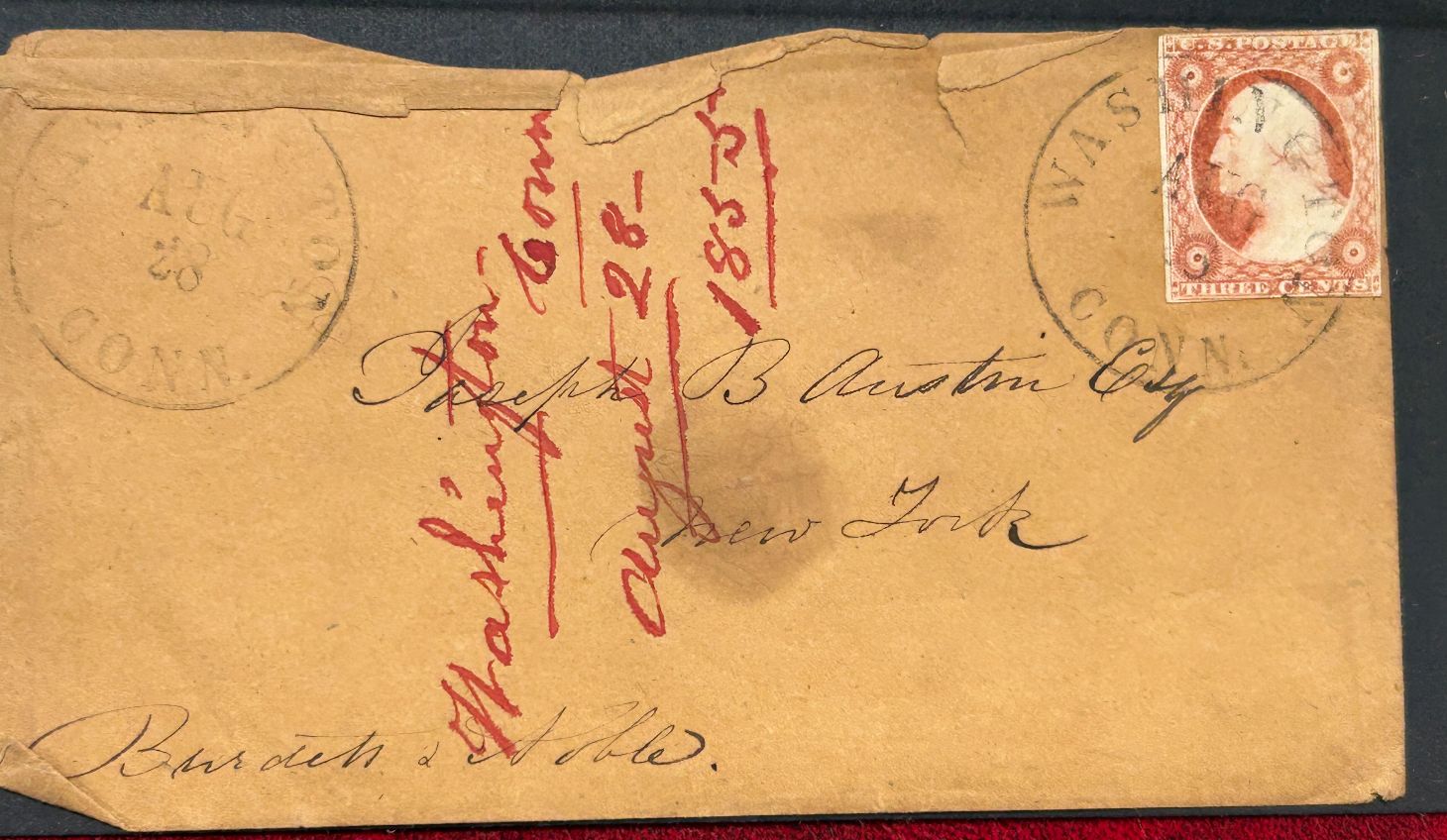
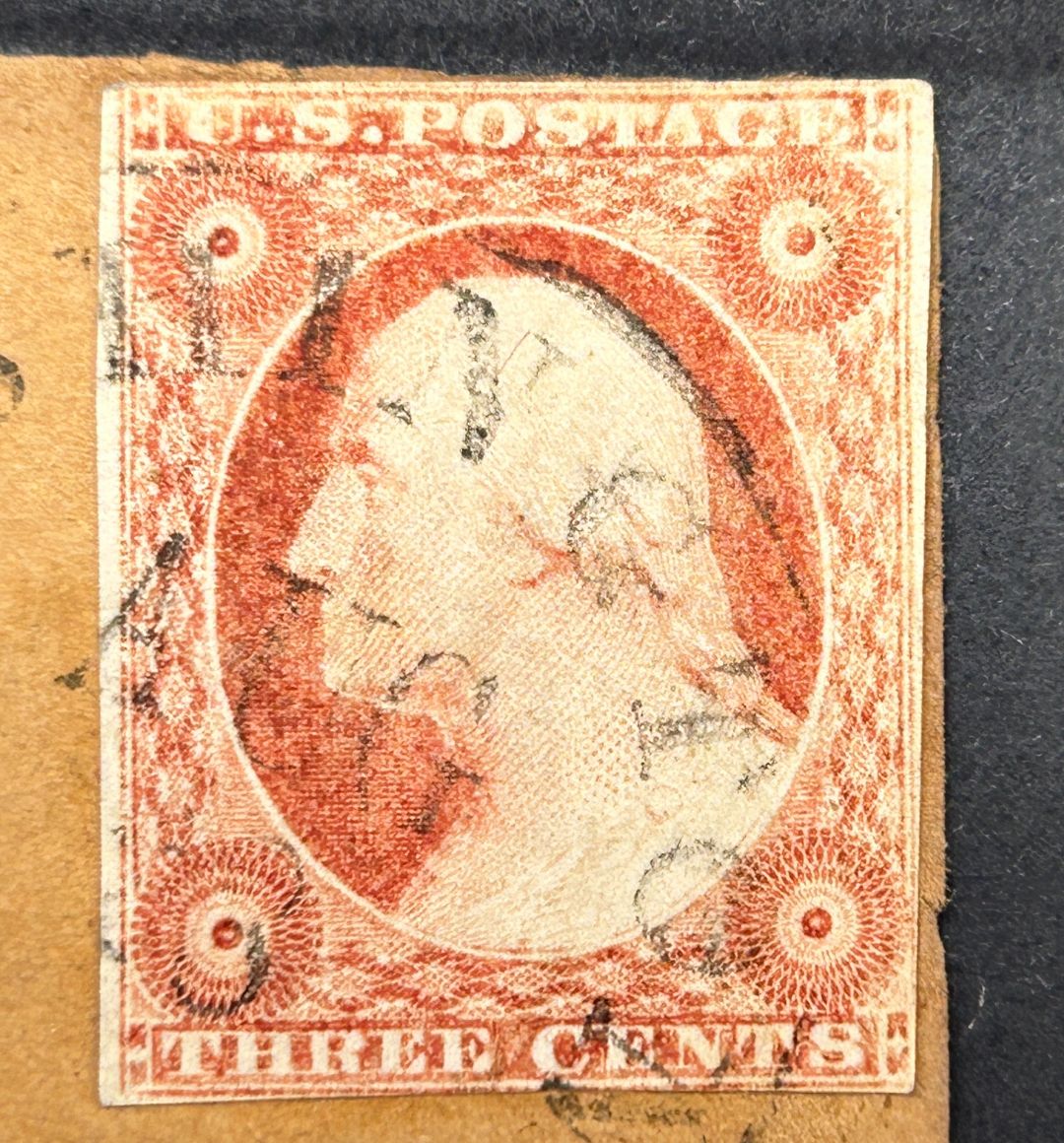
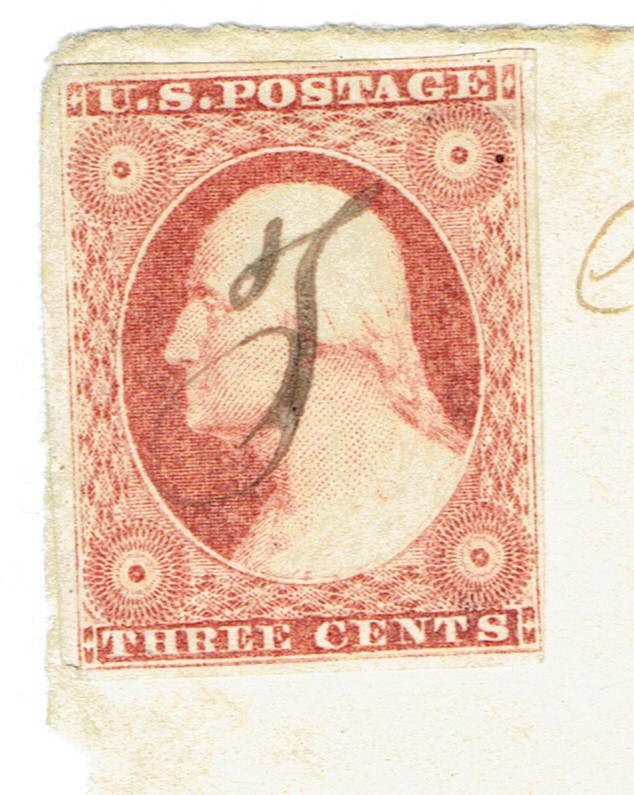
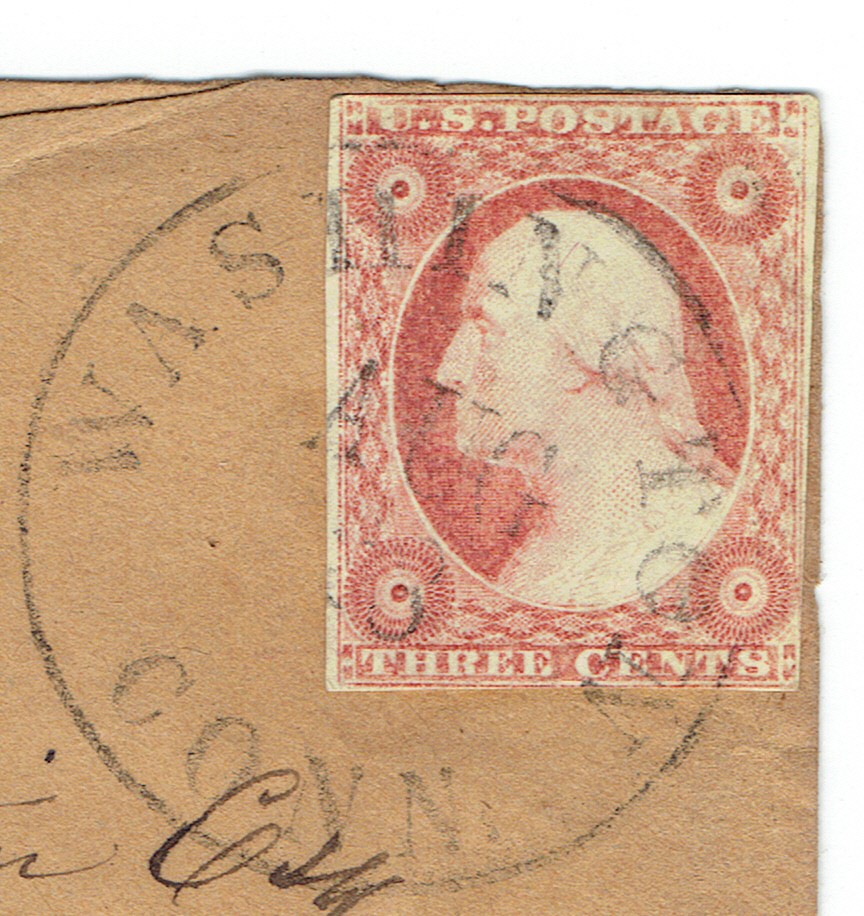
Hello. I am having trouble understanding whether these are Scott #10,#11. I guess based upon color and imperf these are just #10s and there are no type variations, are type I.
It is very unusual to see Scott #10 / 10A stamps used after mid-1852 -- not impossible -- but unusual -- and the farther out in time you go -- the less likely to find a #10 / 10A used so late. Again -- not impossible -- as we have seen such late usages upon occasion -- but they are few and far between.
Despite the poor scan quality -- I am confident that the stamp on your cover with the red docketing of August 28, 1855 -- is Scott #11A -- and based on the appearance of the gouge in the upper right diamond block, is from plate 1L.
The scan of your stamp with the manuscript cancel on the cover that is docketed July 11, 1856 is very fuzzy -- but the stamp appears to possibly have a lightly recut right inner line (??) -- which would make it a Scott #11A. If that be the case -- then it is most likely from plate 5L. On the other hand -- if neither inner line is recut, then the stamp is a Scott #11. Again -- the scan quality makes it difficult to tell.
If you could post better quality scans of the cropped stamps -- I could provide more information -- and could definitively tell you if the stamp with the manuscript cancel is a Scott # 11 or a Scott #11A.
In any event -- I am confident that neither of these stamps is a Scott #10 or 10A.
Regards // ioagoa
edited to clarify uncertainty as to recut inner lines on the stamp with the manuscript cancel due to poor scan quality.
Scanning isnt considered as something that contributes to fading? I just assumed it was bad and assume that by scan you mean a flatbed with a light that slides down the face.
Scanning is not considered as contributing to light fading for two primary reasons; 1 - A short duration to any light source is not an issue 2 - Scanner lighting contains little, if any, of the damaging UV wave lengths.
There is also little exposure to heat. Visible light can contribute to fading but UV and heat are the primary reasons. Don
YES -- by "scan" -- it is best to use a flat bed scanner -- preferably one that is made for scanning photographs -- or at least one with software where you can set the "mode" to photograph. Please scan at the highest resolution possible to maintain the file size within the SCF 300kb limit. Also -- no need to rescan the entire cover -- just cropped images of the stamps themselves.
I would not be worried about exposing your stamps to the very brief light source emitted by a scanner. On the other hand -- I would avoid prolonged exposure to sunlight.
Post up the scans and we should be able to definitively ID your stamps -- and if the scans are of sufficient quality -- both of these stamps should be platable as well.
Regards // ioagoa
edited to clarify that I was typing my post while Don posted his -- otherwise I would not have restated that scanning will not fade stamps.
Disclaimer: While a tremendous amount of effort goes into ensuring the accuracy of the information contained in this site, Stamp Community assumes no liability for errors. Copyright 2005 - 2026 Stamp Community Family - All rights reserved worldwide. Use of any images or content on this website without prior written permission of Stamp Community or the original lender is strictly prohibited. Privacy Policy / Terms of UseAdvertise Here





 Posted 11/09/2023 5:22 pm