IntroductionOn 16 January 1922, the provisional government of Ireland (Rialtas Sealada#263; na hÉirann) was established. It administered Southern Ireland until the Irish Free State was established on 6 December 1922. The British government formally transferred its power to the provisional government on 1 April 1922.
On 1 February 1922, the Postmaster-General of the provisional government called for designs of Irish stamps. The design and printing of Irish stamps would take time. The Postmaster-General, therefore, decided to overprint the British stamps of George V that were in use in Great Britain and Ireland with the words "Rialtas Sealada#263; na hÉirann 1922."
On 6 December 1922, when the Irish Free State was established, only the 2d "Map of Ireland" stamp was ready to be released to the public. A new overprinting of British stamps with the wording "Saorstát Éireann 1922" was approved on 5 December 1922. Over the course of 1923, new Irish permanent stamps replaced the overprinted British stamps.
The United Kingdom of Great Britain and Ireland had introduced postage due labels in 2014. On 14 April 1914, a Post Office circular announced the introduction of postage due labels on 20 April 1940. Postage due was collected on items of mail bearing insufficient prepaid postage. The surcharge was imposed at double the deficiency. Postage due labels to collect surcharges were affixed to the item of mail.
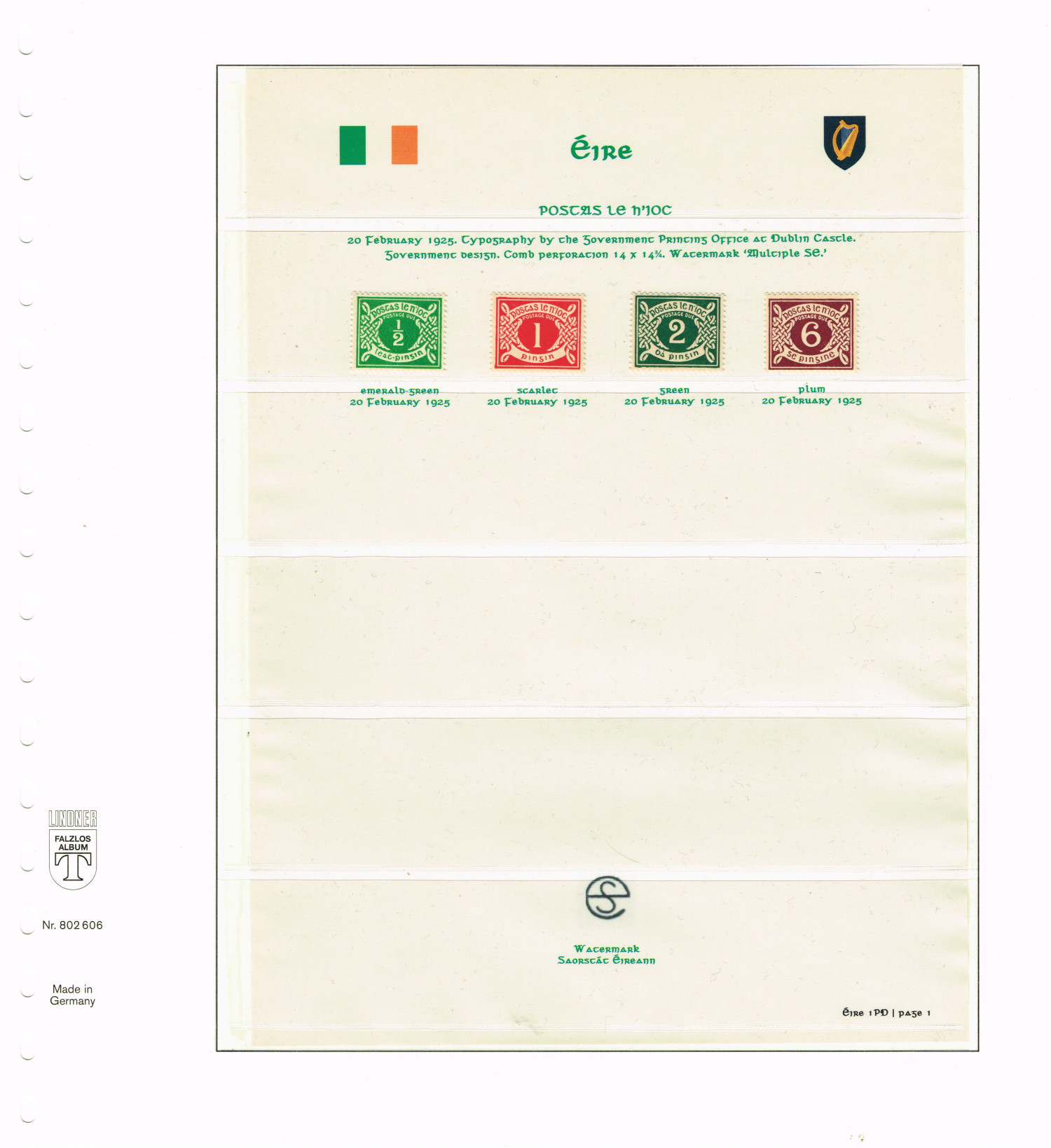
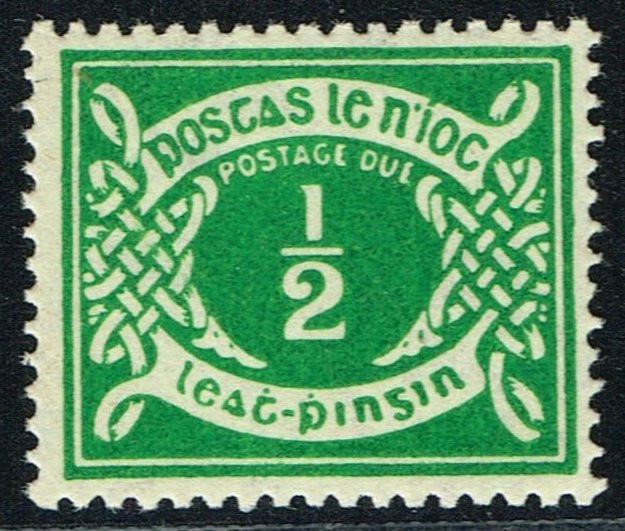
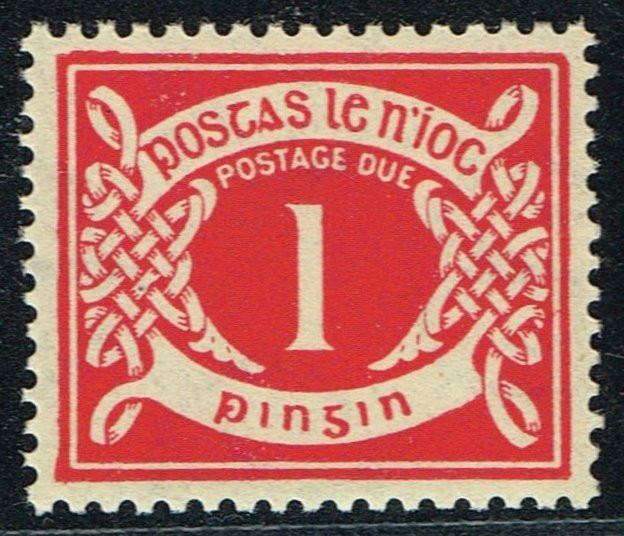
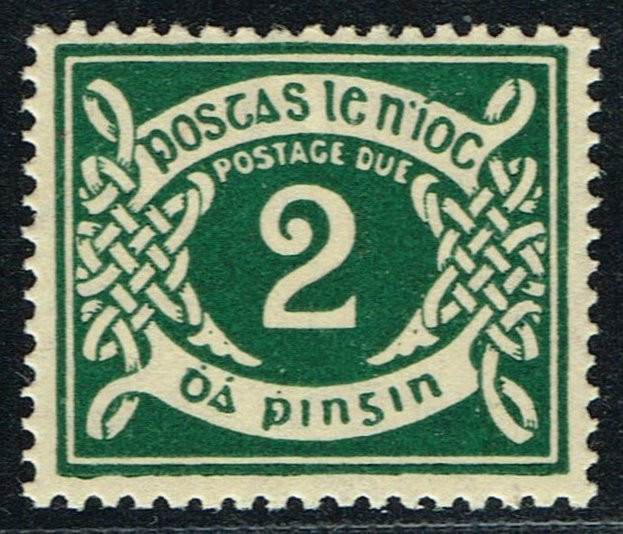
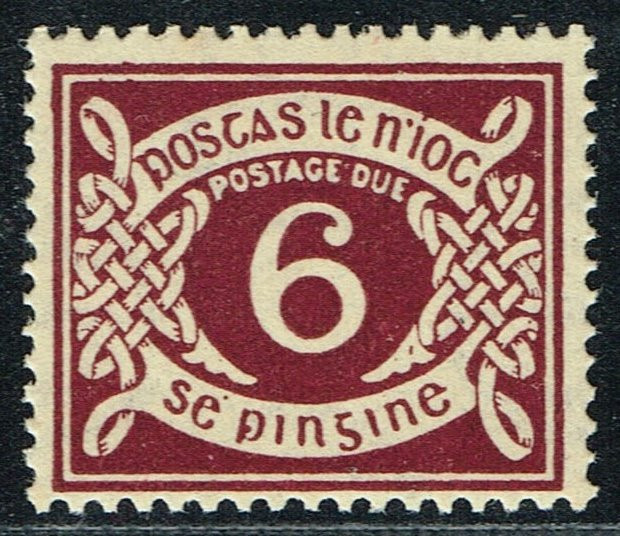
Ireland did not issue its own postage due labels until 20 February 1925. Until that time, the British postage due labels remained in use. Unlike postage stamps, these postage due labels were not overprinted.
 British postage due labels current in Ireland until 1925
The postage due labels issued in 1914 had the 'Royal Cypher' watermark. In 1924', before Ireland issued its own postage due labels, the 'Block Cypher' watermark replaced the 'Royal Cypher' watermark. Labels with both watermarks, therefore, were used before Ireland issued its own postage due labels on 20 February 1925.





 Posted 11/10/2023 10:27 am