|
This page may contain links that result in small commissions to keep this free site up and running.

Welcome Guest! Registering and/or logging in will remove the anchor (bottom) ads. It's Free!
To participate in the forum you must log in or register.
| Author |
 Replies: 34 / Views: 2,981 Replies: 34 / Views: 2,981 |
|
Valued Member
United States
181 Posts |
|
|
|
|
Pillar Of The Community
United States
4465 Posts |
|
|
Bedrock Of The Community
12778 Posts |
|
|
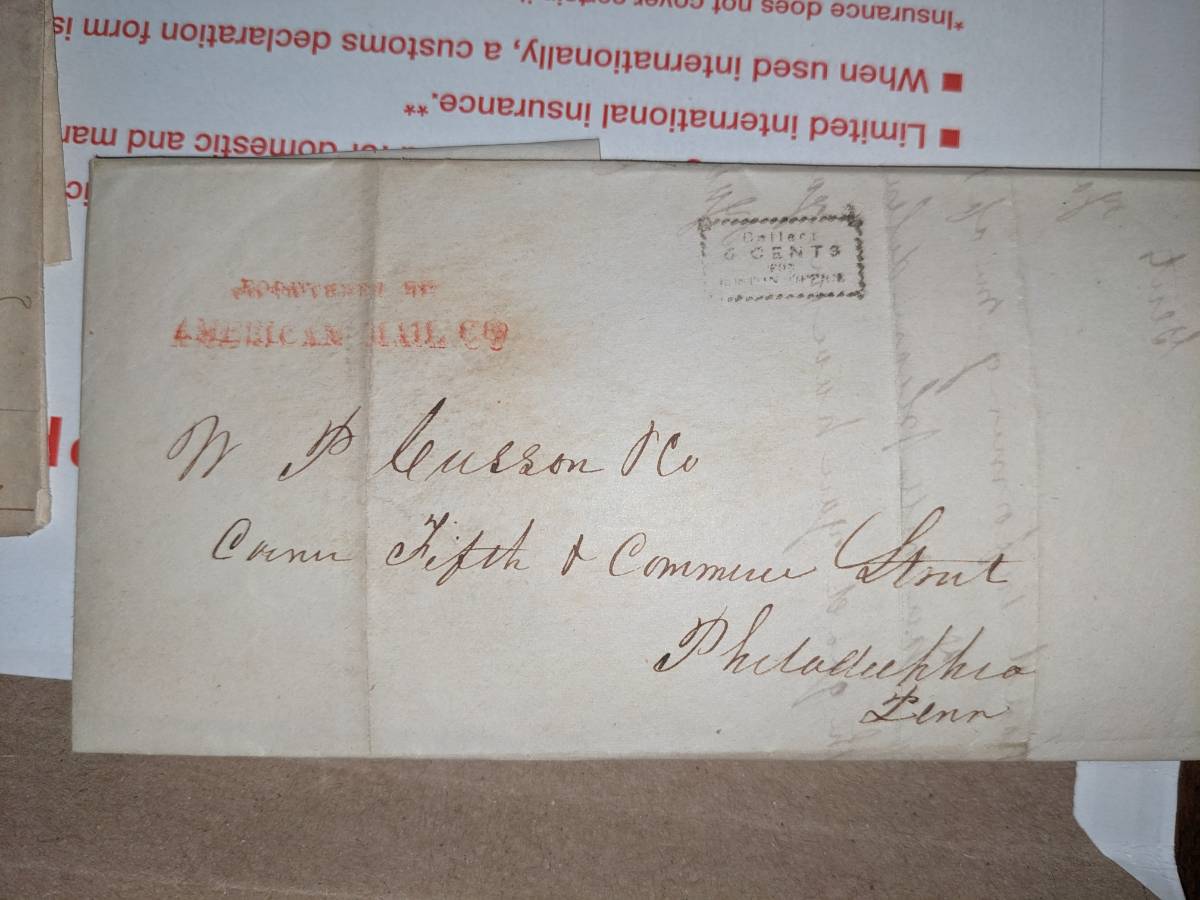
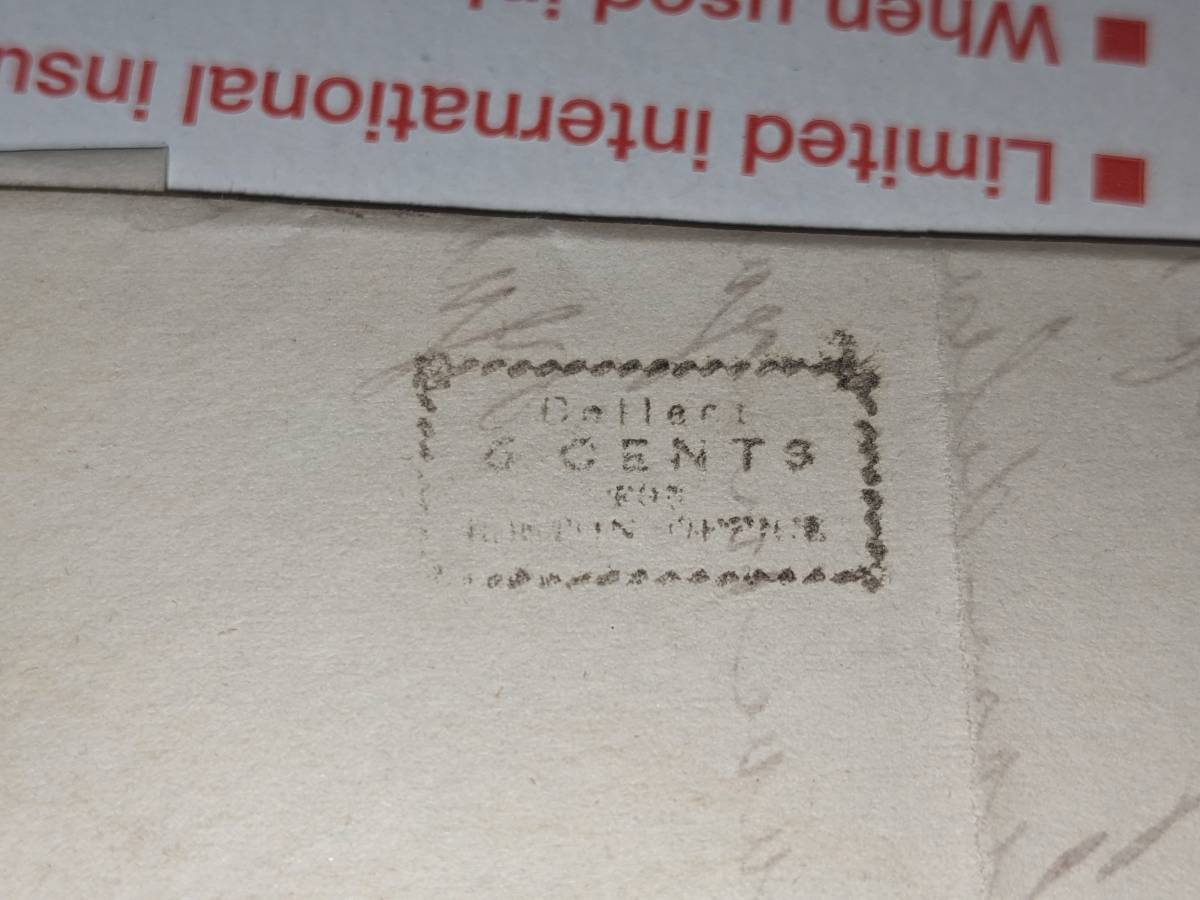
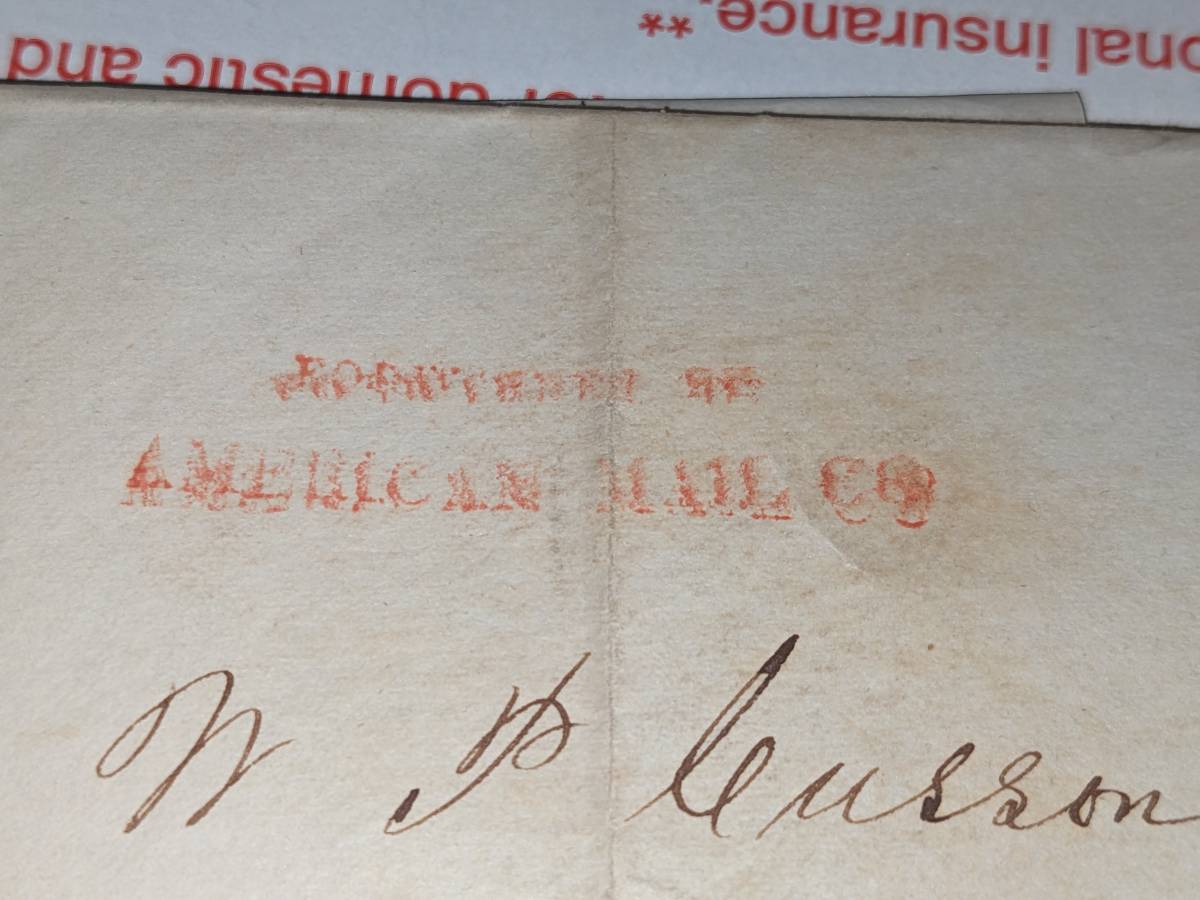
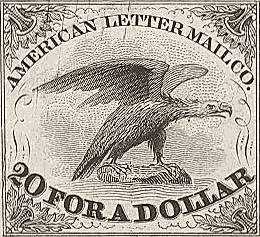
You were on the right track. It is indeed the American Letter Mail Company. Your piece is a head scratcher though. I have not seen the collect stamp in black and the cancel itself is usually oval with the full company name including "Letter" included. Someone else with more expertise will doubtless chime in. The collect box is also usually square rather than rectangular. |
Send note to Staff 
|
|
|
Pillar Of The Community
United States
4465 Posts |
|
|
Contemporary Writing on the subject by Mr Spooner himself (edit: to add date) in 1850: web.archive/web/20050405053823/http://www.lysanderspooner.org/WCROP.htmWhile long out of copyright, the link does not work from here as was noted below. So go to the Wikipedia page linked above, scroll down to the "External Links" and try the 4th one which reads, "Who Caused the Reduction of Postage? Ought He to be Paid? by Lysander Spooner." [ I have a complete copy of the text but the SCF software does not allow such a long single post. I may break it into the required number of pieces once I read it in its entirety and find it interesting enough for posting.] OR... Go here: http://www.lysanderspooner.org/photographyThen click on the 'Works' button at the bottom. This, "The Unconstitutionality of the Laws of Congress, Prohibiting Private Mails (1844)" will be the second entry on the works page. This is an earlier version of the 1850 publication. |
|
Send note to Staff
|
| Edited by Parcelpostguy - 11/26/2023 01:00 am |
|
|
Valued Member
United States
181 Posts |
|
|
Very interesting, for some reason none of the links are going through. I'll pull it up on my laptop in the am. Thanks everyone. I will update when I find out more. |
|
Send note to Staff
|
|
|
Pillar Of The Community
United States
4465 Posts |
|
|
Quote:
for some reason none of the links are going through. You are correct and I do not know why; BUT I rerouted you to one and added a link to an earlier version in my later post. I will now see what I can do about the links in the earlier post. The information from the links in the first post has been made available here in posts below. |
|
Send note to Staff
|
| Edited by Parcelpostguy - 11/26/2023 12:54 am |
|
|
Pillar Of The Community
United States
4465 Posts |
|
|
Quote:
'Father of 3-cent Stamp' Spooner fought Post Office
Linn's Weekly Stamp News, Feb.-March 1983.
The United States has a habit of commemorating firsts. We have had stamps honoring Benjamin Franklin, the first postmaster general; John Hanson, the first president of the United States under the Articles of Confederation; and George Washington, the first president of the United States under the Constitution. But the United States Post Office and the United States Postal Service have both failed to commemorate Lysander
Spooner, the first man in American history to do something about high postal rates and win.
Lysander Spooner was born in Athol, Mass., in 1808. As a young man he studied law, pamphleteered, and crusaded upon dozens of causes before he hit upon an adversary worthy of his mettle and training - the U.S. Post Office. He was so successful that he nearly put it out of business!
Like most of us today, the spiraling cost of postal rates in 1844 so irked Spooner that he began an extensive study of the situation, using his legal background. There was not questions that the rates were too high; it cost 18 3/4 cents to send a letter from Boston to New York, and 25 cents from Boston to Washington, D.C. At this time railway mail service was no better. A letter from Boston to Albany N.Y., written on a quarter-ounce of paper and carried on the Western Railroad at that time, cost two-thirds as much on a freight charge as carrying a barrel of flour the same distance. Spooner concluded that there were high costs and no services involved in such a system. He also discovered that the public was using quite a few methods to circumvent these high postage rates. But for the most part, they were failing in their efforts.
There was no federal monopoly on the mail service at this time. Spooner face a loud "hurrah" to those who were trying to outmaneuver the system, but he also say they were fighting a losing battle. With no other solution in sight, Spooner decided to compete with the U.S. Government! First of all, he could not see why the government should have monopoly on mail delivery. He knew that the Constitution ordered that Congress provide for mail delivery, and that Congress had done so with a U.S. Post Office Department. But Spooner's loophole was that the Constitution did not say that private citizens could not carry and deliver mail also. The battle was on!
Using this loophole as his main ammunition, he organized his own postal service and audaciously called it the American Letter Mail Company. The company offered to deliver letters, with no limit on weight, at reduced prices. Then he really tweaked the government's nose. He ran an advertisement on the front page of the New York Daily
Tribune with the following information:
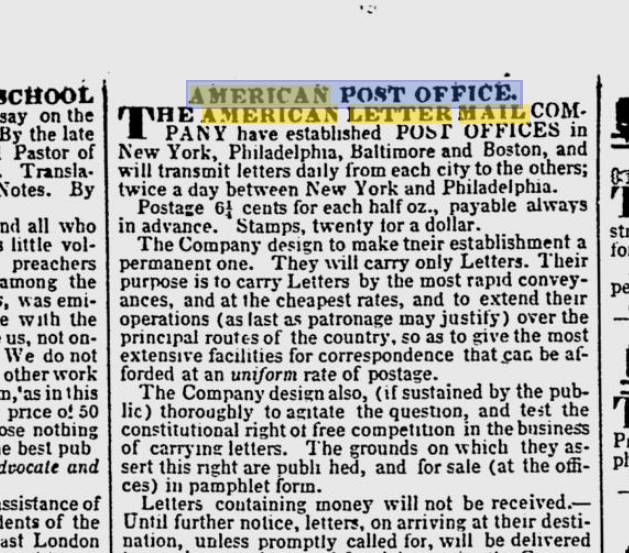
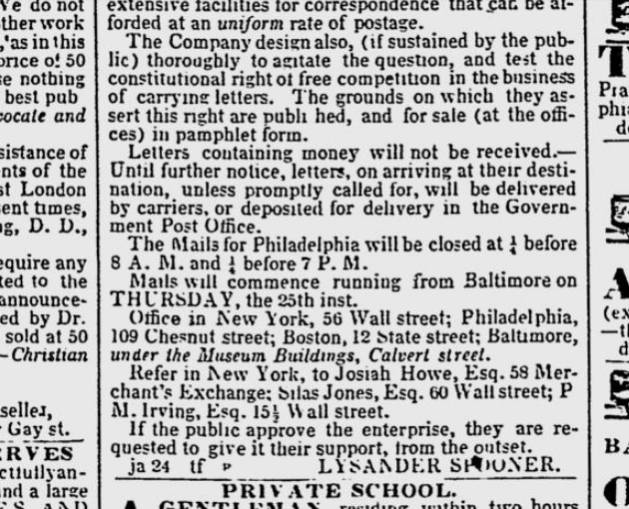
"AMERICAN POST OFFICE - The American Letter Mail company has established post offices in New York, Philadelphia, Baltimore and Boston, and will transmit letters daily from each city to the others - twice a day between New York and Philadelphia. Postage 6 1/4 cents per each half-ounce, payable in advance always. Stamps 20 for a dollar."
"Their purpose is to carry letters by the most rapid conveyances, and at the cheapest rates and to extend their operations (as fast as patronage will justify) over the principal routes of the country, so as to give the public the most extensive facilities for correspondence that can be afforded at a uniform rate."
"The Company design also (if sustained by the public) is to thoroughly agitate the questions, and to test the Constitutional right of the competition in the business of carrying letters - the grounds on which they assert this right are published and for sale at the post offices in pamphlet form."
The gauntlet was down. The public enthusiastically supported the venture of paying one-quarter to one-third the going government rate. But Congress was furious, and the Post Office Department set up a howl that echoed in the halls of Congress. All of the city of Washington was thoroughly enraged. Washington lawmakers had no intentions of sitting still for Lysander Spooner's shenanigans. The midnight oil was burnt as lawyers poured over their books. Soon, suits against Spooner and his associates began.
The U.S. gave railroad heads full warning that the government mail, a lucrative source of income, would be removed unless space and passage were denied to the private letter carriers. Round one was won by the government when one of Spooner's agents was found guilty of transporting letters in a railway car over a post road of the U.S. He was fined. But Spooner won round two when the judge advised the jury that owners of conveyances were not liable under law if, unknown to the owners, a letter carrier brought mail on board a train or steamboat.
Spooner also won round three. A "not guilty" verdict was sustained by he U.S. District Court! The court expressed doubt that the U.S. had the right to monopolize transportation of mail. This was tantamount to a commendation for Lysander Spooner's theories. It was a low blow for the Post Office. It sought further legal means to stop Spooner and his trouble-making company. More court reversals followed. At last, the postmaster general finally felt that he had to bow to the issue and went before Congress for the authority
to lower postal rates.
In March 1845, a reduction in postal rates was authorized to be put into effect in July. Letters weighing less than half and ounce were to be sent for any distance less than 300 miles for a mere 5 cents, instead of 18 3/4 cents or 25 cents. Rates for newspapers were reevaluated. They could now be sent free for any distance up to a 30-mile radius of the
place of publication. But Spooner was not through fighting. He felt that he and his company were doing a lot of good for the country, and his counteraction caused even a greater concern to his opponents. He lowered his rates! So the battle of laws and loopholes continued. The end result was that in 1851 Congress again had to lower the postal rates to a uniform 3 cents. It simultaneously enacted a law to protect the government's monopoly on the distribution of mail.
Threat of jail and other measures had not dampened or fazed Spooner's zeal in the fight. This move by Congress forced him into defeat. His battle ended, and he disbanded his famous company. But he gained the title of the Father of the Three-cent Stamp.
Sooner died in 1887, his death barely noted by a public which daily benefited from the fruits of his labor. But it is not too late. We have a new series of Prominent Americans being issued by the USPS. What more fitting tribute could we give to this courageous man than to issue the 3 cents stamp in this series to honor Lysander Spooner |
|
Send note to Staff
|
|
|
Pillar Of The Community
United States
4465 Posts |
|
|
Quote:
Stamp-ing Around, by J.R. Greene
Athol Daily News, May 4 & 10, 1977
This week a two part survey will begin on Lysander Spooner, the postal service he founded, and the stamps it produced. While Spooner is best known for his writings on civil liberty, the postal service run by this Athol native should be of some interest to the readers of this column.
Lysander Spooner was born on a farm off Petersham road in Athol in 1808, and spent the first 25 years of his life in this town. He moved to Worcester in 1833, and later to Boston. Spooner became a lawyer, and from this stemmed his interest in the legality of government interference in business and the economy. One of the most hared symbols of government to Spooner was the postal department with its high rates and inefficiency.
Arguing that while the Constitution stated that Congress could "carry the mail," this did not prevent others from doing so, Spooner started hte American Letter Mail Company in 1844. Initially, the service ran between Boston and New York, but it was later extended to Philadelphia and Baltimore. The fee for delivering a letter between any of these points was five cents. The government rate between Boston and New York was 18 3/4 cents!
Although this was not the first private mail service, it ws the first interstate one, thus bringing the wrath of congress upon Spooner. The immediate success of the new service brought a number from the government. Threats of a jail sentence caused Spooner to reluctantly fold up his business after only a few months, but he made his point.
While the American Letter Company lasted, it issued two stamps, with two varieties of each. Both of these stamps pictured the bald eagle, and both were without perforations, as the latter did not appear until a dozen years later. (Continued next column)
May 10, 1977
Last week a brief survey of the American Letter Mail Co. was featured in this column. This private service was operated by Athol native Lysander Spooner in 1844. Spooner issued two stamps during the life of the service, both for five cents. The designs of the stamps will be discussed this week.
The first variety was an imperforate stamp with a square frame enclosing a circular vignette. An eagle about to take off is the central scene of the stamp. The company name was at the top of the stamp, while "20 for a dollar" was inscribed at the bottom. The color was black, and both thick and thin paper were used, creating two major varieties.
Spooner's second stamp was somewhat simpler in design, having no denomination printed on it. A different eagle, resembling those appearing on silver coinage of the day, was surrounded by a circular frame in a square. The company was split between the top and bottom of the circular frame. Blue and black printings were made on gray paper.
Many unsold remainders of the stamps apparently were saved after the suppression of the post because one variety lists for as little as $2 in that condition. As with most local stamps, there are worth the most when on a genuinely used cover. Whatever their monetary value may be these stamps represent Athol's greatest contribution to philathropy. |
|
Send note to Staff
|
|
|
Pillar Of The Community
United States
4465 Posts |
|
|
Quote:
Spooner vs. U.S. Postal System by Lucille J. Goodyear
American Legion Magazine, January 1981
There didn't seem to be any way to lick the high cost of postage until Lysander Spooner came to the rescue
Since 1971, the cost of sending a letter has gone up 150 percent. Out mail service seems slower each day. And, there appears to be no feasible solution or alternative in sight. Like the weather, everyone talks and complains about the high postal rates and apparently slower service, but no one knows what to do about them.
Perhaps we need another Lysander Spooner. Lysander who? The Lysander Spooner, a fiercely independent New Englander who went to battle and brought about a change in the postal system. He could also be called the "Father of the three-cent stamp."
Born on a farm in Athol, MA, in 1808, young Spooner studied law, pamphleteered and crusaded for dozens of causes before hitting upon an adversary worthy of his mettle: The United States Post Office, and he almost put it out of business!
By 1844, the spiraling postal rates had so irked Spooner that he began an extensive study of the situation. There was no question that rates were much too high. It cost 18 3/4 cents to send a letter from Boston to New York and 25 cents to send on all the way to Washington DC. A letter sent from Boston to Albany, NY written on a 1/4-ounce sheet of paper and carried by the Western Railroad, cost 2/3 as much as the freight charge for carrying a barrel of flour the same distance. Spooner's summation of his study was succinct: high cost and no service.
People were trying numerous means to circumvent high postage rates and, for the most part, were failing. To those who tried to out-maneuver the Post Office, Spooner gave a loud "hurrah," but he could see that they were fighting a losing battle. With no other solution in sight, he decided to go into competition with the U.S. Government.
To begin with, Spooner couldn't understand why the Post Office should have a monopoly on mail delivery. He was schooled enough in law, however, to know that the Constitution ordered Congress to provide for mail delivery and it had done so with a postal department. But the wily Spooner found a loophole - the Constitution did not declare that a private citizen could not do likewise.
Spooner squared off for battle! With the loopholes his main ammunition, he organized his own postal service and audaciously named it "The American Letter Mail Company." The company offered to deliver letters, with no limit on weight at reduced rates. He even ran an ad on the front page of the "New York Daily Tribune" with the following information: "AMERICAN POST OFFICE - The American Letter Mail Company has established post offices in New York, Philadelphia, Baltimore and Boston, and will deliver letter daily from each city to the others - twice a day between New York and Philadelphia. Postage 6 1/4 cents per each half-ounce, payable in advance always. Stamps 20 for a dollar. Their purpose it to carry letters by the most rapid conveyances, and at the cheapest rates and to extend their operations (as fast as patronage will justify) over the principal routes of the country, so as to give the public the most extensive facilities for correspondence that can be afforded at a uniform rate.
"The Company design also (if sustained by the public) is to thoroughly agitates the questions, and test the Constitutional right of the competition in the business of carrying letters - the ground on which they assert this right are published and for sale at the post offices in pamphlet form."
The public enthusiastically approved the venture. Congress, however, was sputtering and the Postal Department was howling - all of Washington was enraged. How dare Spooner do this?; How dare he so openly flout the Constitution? Government postal revenues took a nose dive while "The American Letter Mail Company" went merrily on its way picking up the postal business everywhere.
Washington lawmakers had no intention of sitting still for any "that Spooner's shenanigans." The midnight oil burned as attorneys pored over their books. Soon, the suits against Spooner and his cohorts began. Railroad heads were given full warning that government mails would be removed unless space and passage were refused to private letter carriers. It was "round one" for the government when an agent of Spooner's company was found guilty and fined for transporting letters in a railroad car over a postroad of the United States.
The "round two" went to Spooner when a U.S. District Judge advised a jury that owners of conveyances were not liable under law if, unknown to the owners, a letter carrier brought mail aboard a train of steamboat. The "not guilty" verdict was sustained by the U.S. Circuit Court which expressed doubt that the U.S. had the right to monopolize the transportation of mail. This was tantamount to a commendation of Spooner's theories.
For the postal officials it was a low blow and they sought further legal means to put an end to Spooner and his trouble-making company. More court reversals followed. Finally, the Postmaster General felt he had to bow to the issues and went before Congress to plead for the authority to lower postal rates.
In March, 1845, a reduction of postal rates was approved and put into effect that July. Letters weighing less than a half ounce could be sent any distance under 300 miles for five cents. Even the rates for newspapers were reevaluated and changed so they could be mailed without charge within a 30-mile radius.
Spooner, feeling that his efforts and his company were doing a great deal of good for the citizens of the land, wasn't through fighting. His counteraction caused even greater consternation to his opponents - he lowered his rates. So the battle of law and loopholes continued.
In 1851, Congress again lowered rates and simultaneously enacted a law to protect the government's monopoly on the distribution of mail. Whereas threats of jail had not fazed or dampened Spooner's zeal in the fight, the latter move by Congress forced him into defeat.
Later that year, Congress lowered the postal rate to three cents for delivery anywhere in the country. In 1958, it had climbed to four cents and has not stopped climbing since.
As for Spooner, his great battle had ended and his company was disbanded. He died in 1887, his death barely noticed by the public. No one seemed to remember the man who had been able to show everyone what old-fashioned courage and enterprise, plus competition, could do to change things. He had proven that a cheaper and more efficient postal service was possible.
Perhaps this country would welcome a revival of the Lysander Spooner's spirit in more areas than one! |
|
Send note to Staff
|
|
|
Pillar Of The Community
United States
4465 Posts |
|
|
Valued Member
United States
181 Posts |
|
|
I found this gentlemans "the Farrell Collection" large write up on pennypost. He does not have the collect 6 cents stamp but the second cover has the same red hand stamp, deciphered as "Forwarded by American Mail Company" 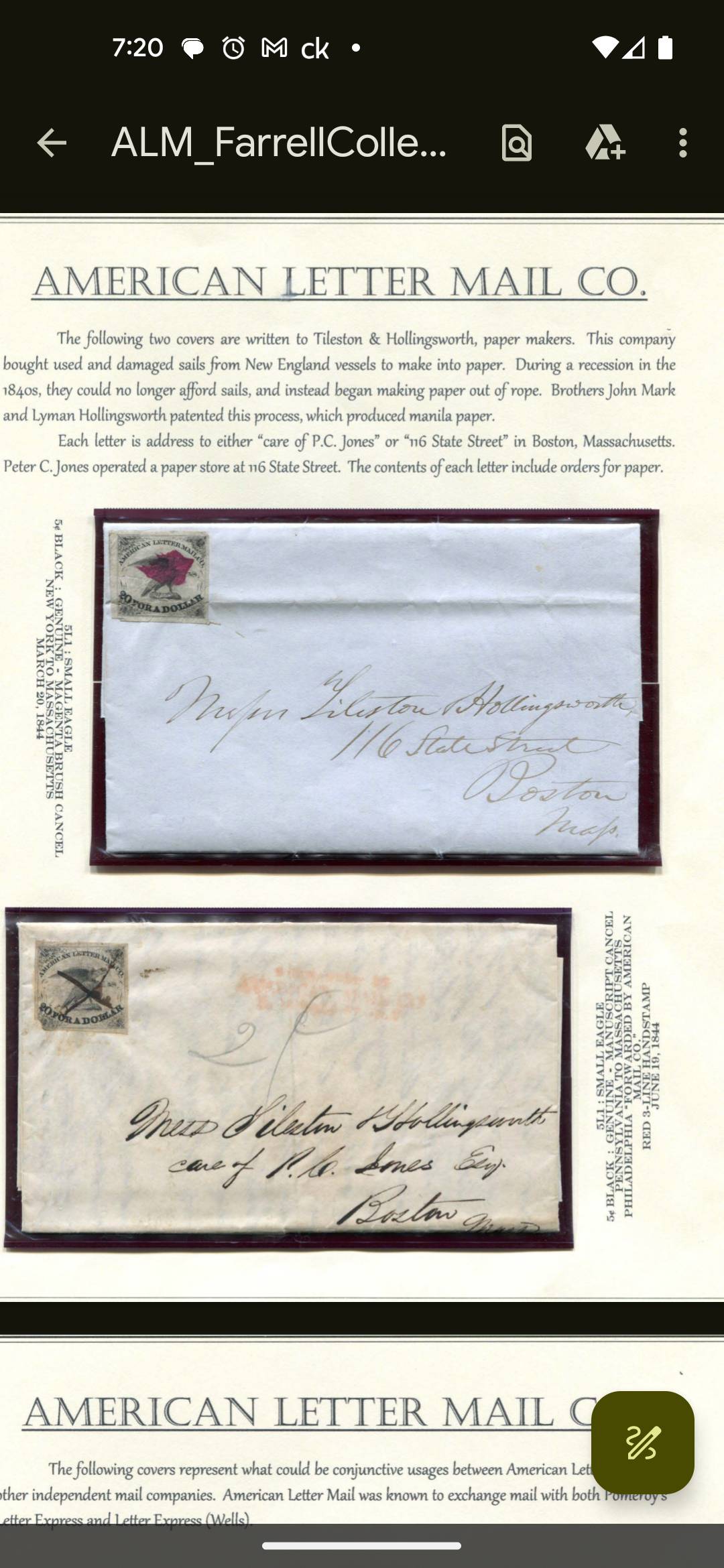 |
|
Send note to Staff
|
|
|
Bedrock Of The Community
12778 Posts |
|
|
Pillar Of The Community
United States
4465 Posts |
|
|
The first lot which comes up in rogdcam's link has a similar forwarding and collect 6 cents marking. |
|
Send note to Staff
|
|
|
Pillar Of The Community
United States
3532 Posts |
|
|
The forwarding handstamp in red is ALM-BOS-F15 in John Bowman's census. It is from Boston and he only records 1 example, used May 6, 1844. That cover also shows a red collect marking, but not this one.
I do not see this specific collect marking recorded, although it appears some collect markings were struck in black, although most appear to have been red. I see another cover with a different black Philadelphia collect, so I'm going to speculate that this is probably an unrecorded black Philadelphia collect. |
|
Send note to Staff
|
|
|
Pillar Of The Community
United States
3532 Posts |
|
|
The other possibility for the Philadelphia collect, I suppose might be that its a conjunctive use, and that belongs to a different express.
I saw some similar but not exact matches from other expresses. Maybe a bit more study could reveal if its a known collect from a different company. Conjunctive uses are nice if proven. |
|
Send note to Staff
|
|
|
Valued Member
United States
181 Posts |
|
|
The closest match I found so far is the Mac and Co Dispatch. Different words but very similar frame. 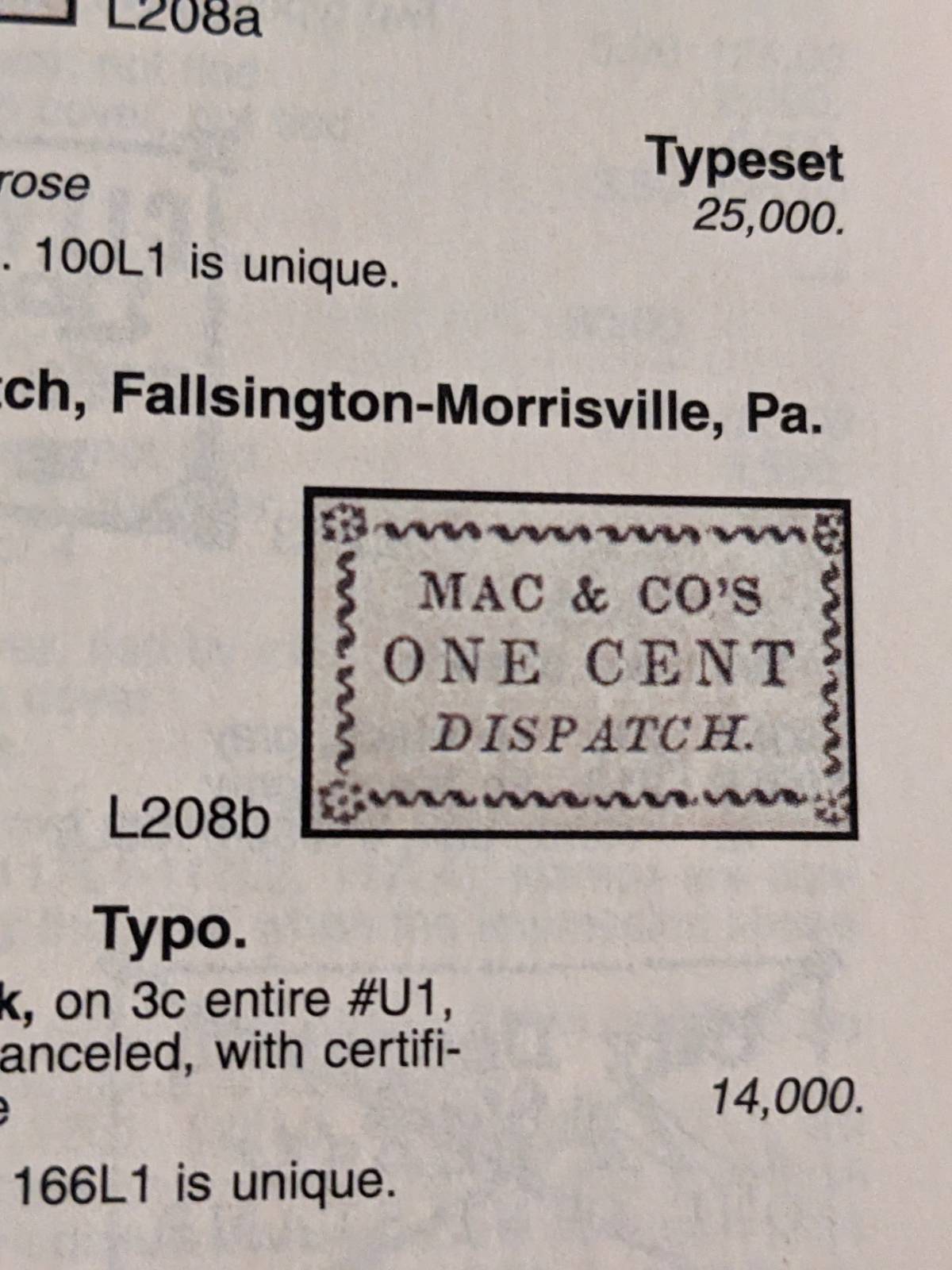 |
|
Send note to Staff
|
|
|
Replies: 34 / Views: 2,981 |
|
|
To participate in the forum you must log in or register. | |
Disclaimer: While a tremendous amount of effort goes into ensuring the accuracy of the information contained in this site, Stamp Community assumes no liability for errors. Copyright 2005 - 2026 Stamp Community Family - All rights reserved worldwide. Use of any images or content on this website without prior written permission of Stamp Community or the original lender is strictly prohibited.
Privacy Policy / Terms of Use Advertise Here |
| Stamp Community Forum |
© 2007 - 2026 Stamp Community Forums |
| It took 0.31 seconds to lick this stamp. |
 |
|
|
|


 Posted 11/25/2023 7:05 pm