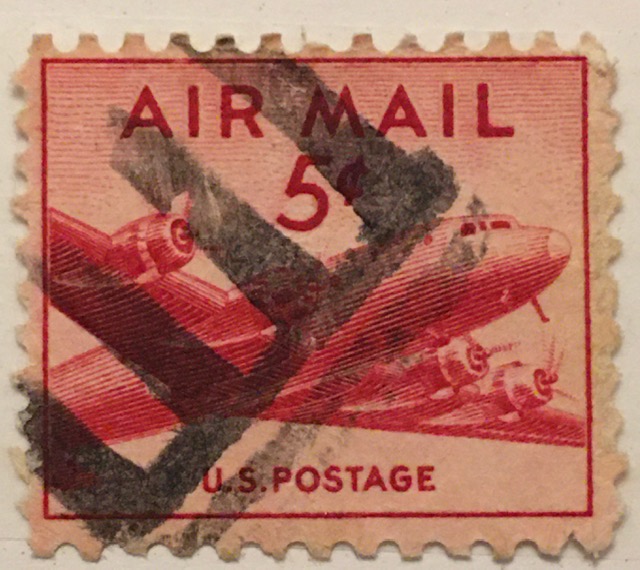
Short answer: I would say "No." There is no way to "prove" the point of origin of the cancel on your stamp, whether domestic or military.
A much longer answer: Keep in mind that C33 was issued in March 1947. The airmail rate was 5 cents per ounce in the U.S. and territories from Oct 1, 1946 through the end of 1948. This stamp received extensive use both domestically and by military personnel stationed at bases and ships throughout the world.
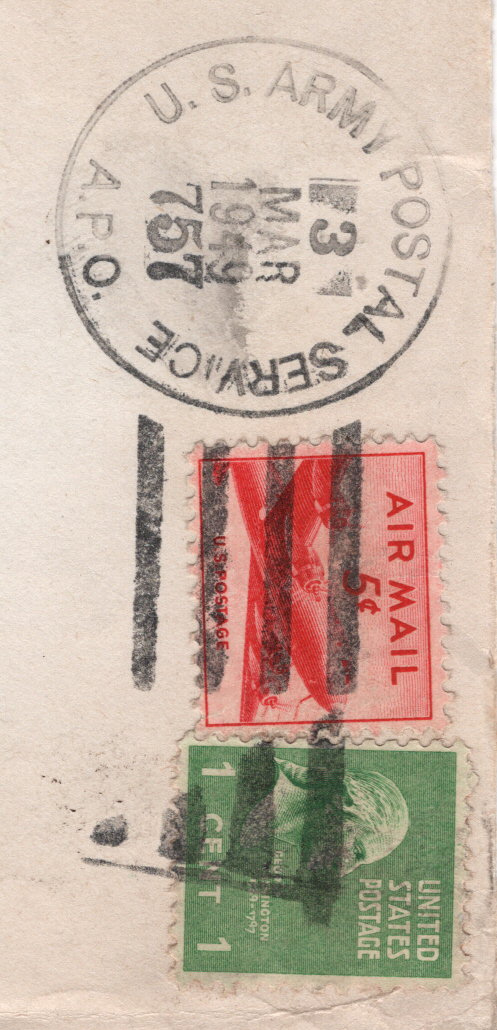
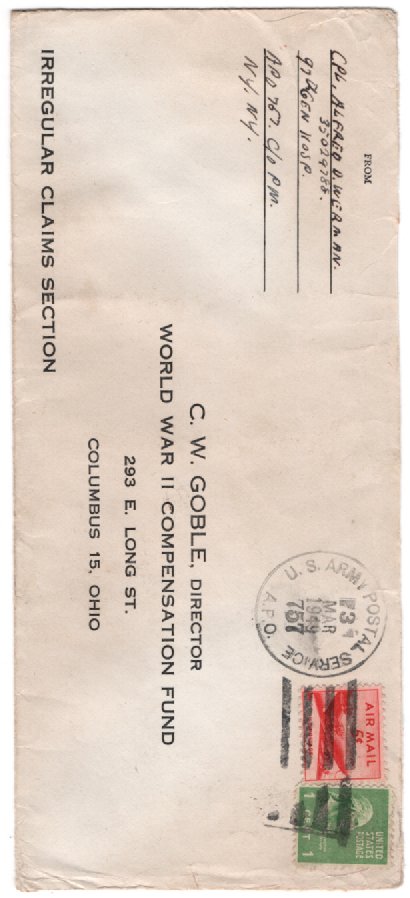
Your cancel is the "killer" end of a typical 4-bar handstamp used at most 4th class post offices in the U.S. and, yes, at many military installations. Often when a clerk needed an extra strike to cancel all the stamps on an envelope, yet wanted only one impression of the town/date portion, they slightly tilted the handstamp horizontally and thus made an impression of only the ends of the bars on the extra stamps and (unintentionally) made an impression of a wee bit of the edge of the block of the wood base of the cancel. This extra impression would differ to some extent depending on the construction of the handstamps, its wear over time, and the user's motion. Here is an example showing that scenario, which yes, is from an A.P.O., but could just as easily been from any of thousands of smaller domestic post offices.
Here is a rough diagram of a handstamp. As the device is inked it will press into the inkpad and often pick up ink along the edges of the block (marked in blue and red) and on which the rubber cancel is mounted.
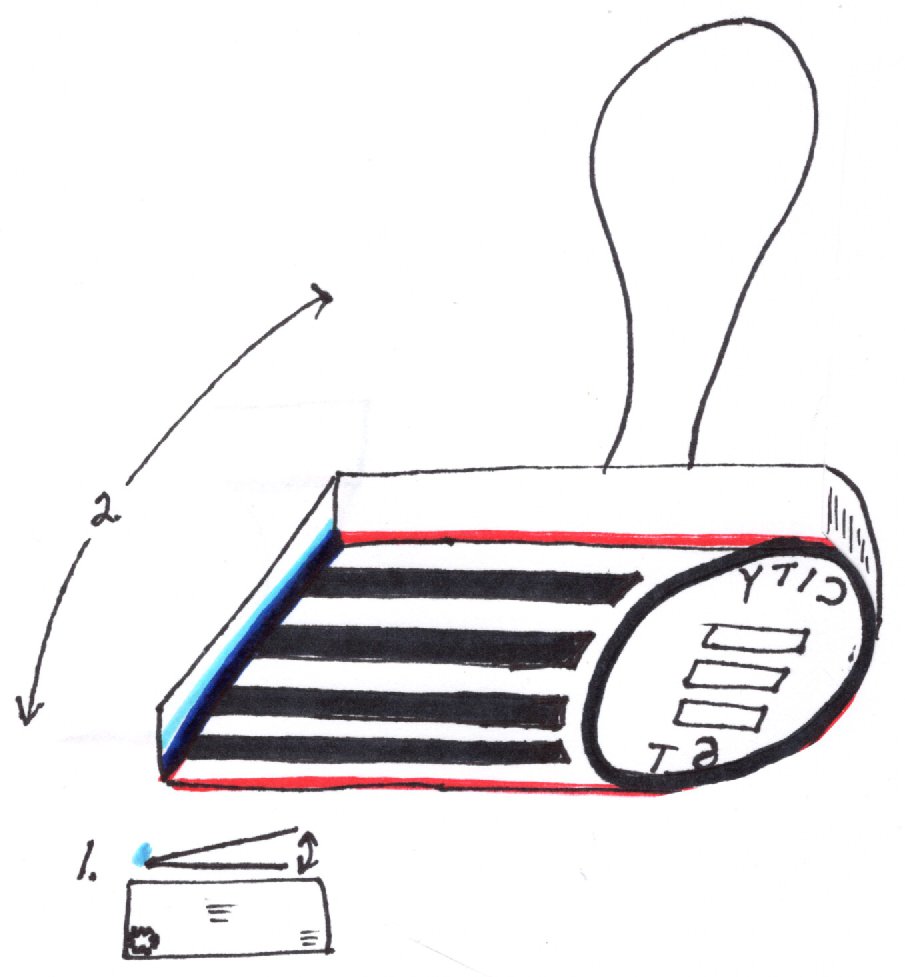
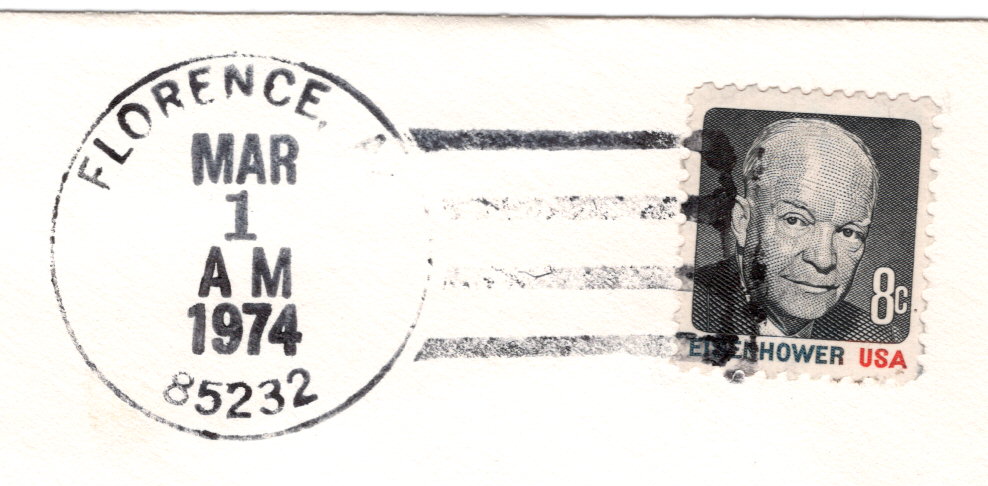
Inset 1 shows that when tilted at an angle or rocked a bit horizontally during the strike, it may imprint ink picked up by the edge marked in blue. Here is a domestic example:
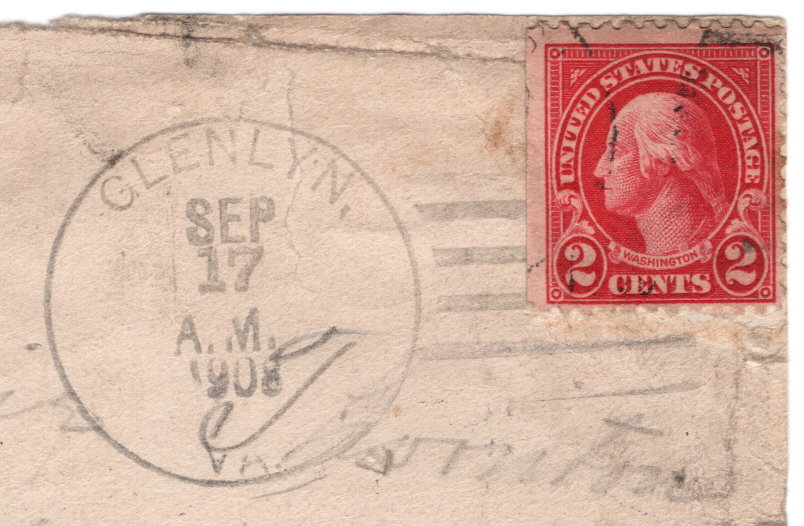
Another similar anomoly occurs when the handstamp is rocked vertically during the strike and the extra ink along the edges marked in red transfers to the mail piece giving the impression of 1 or 2 extra bars: Although not a very good example, here is a Glenlyn, VA impression showing two additional faint pseudo bars made by a vertical rocking motion as illustrated as "2" above::
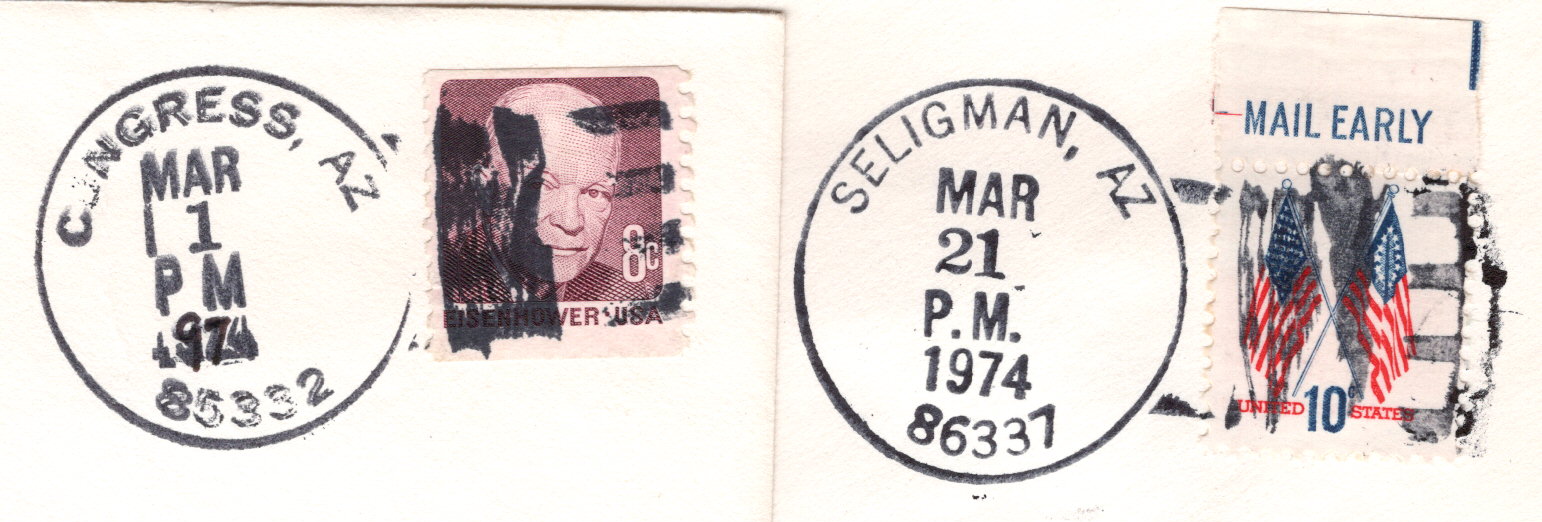
And yet another cause of vertical bars running across the 4 bars can occur when the rubber of the 4 bars becomes loose and the clerk uses a rubber band to hold the bars in place on the base-plate of the cancel, but I don't believe your stamp shows this second cause. Here is two typical examples:
My apologies for the lenghty answer, but it needed several visuals.





 Posted 12/31/2023 11:34 pm