| Author |
 Replies: 14 / Views: 2,212 Replies: 14 / Views: 2,212 |
|
|
Valued Member
United States
108 Posts |
|
|
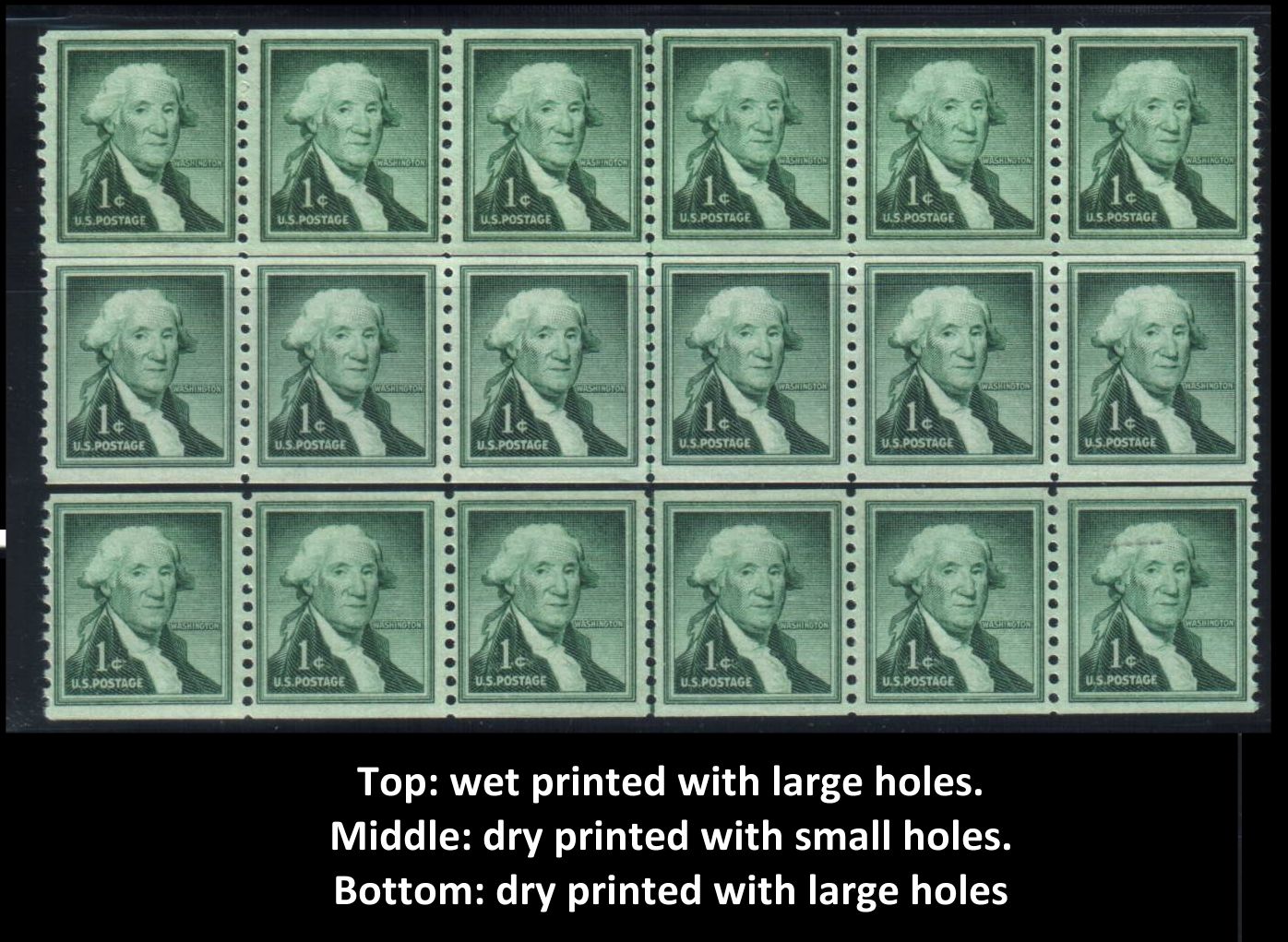
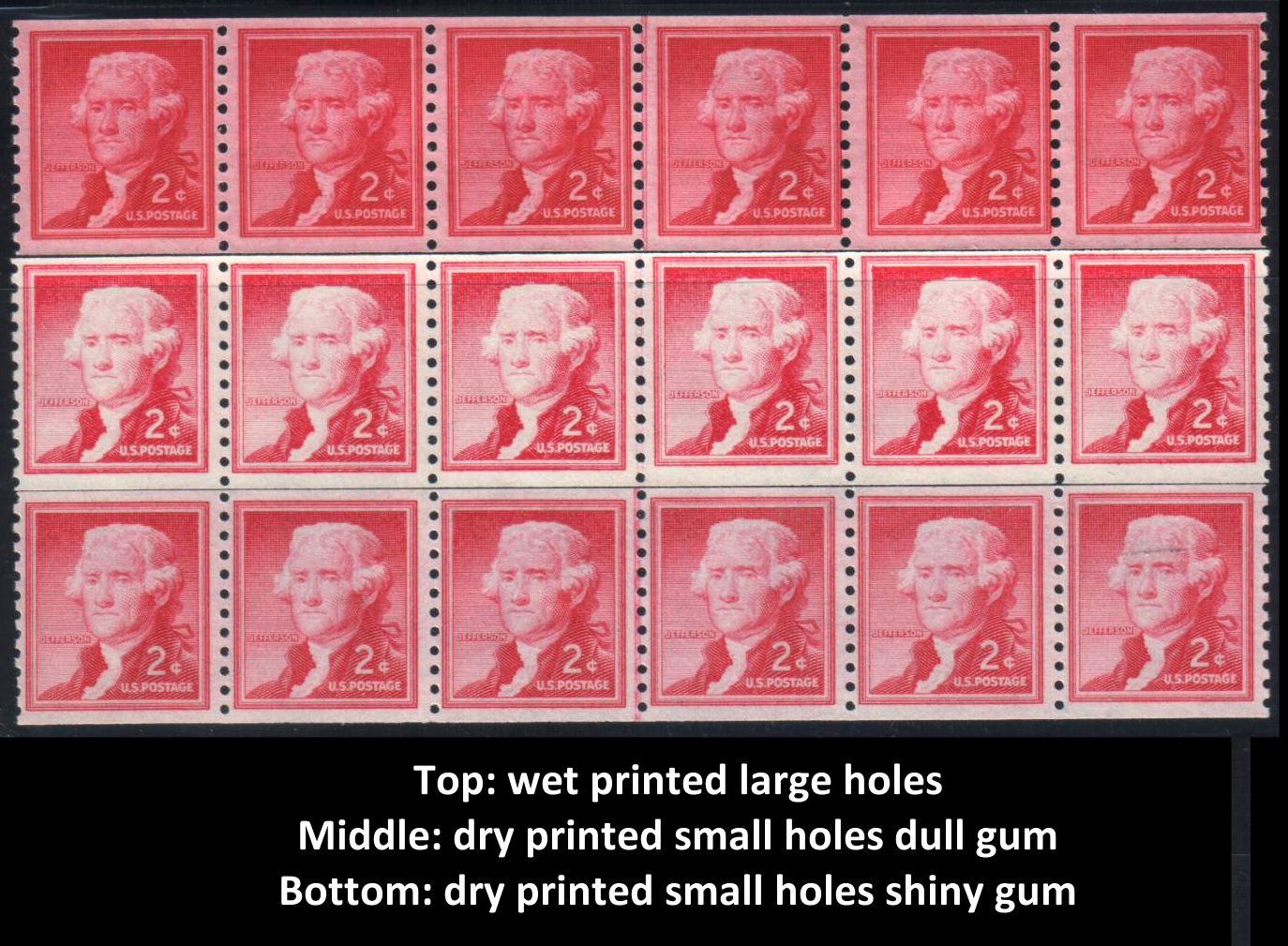
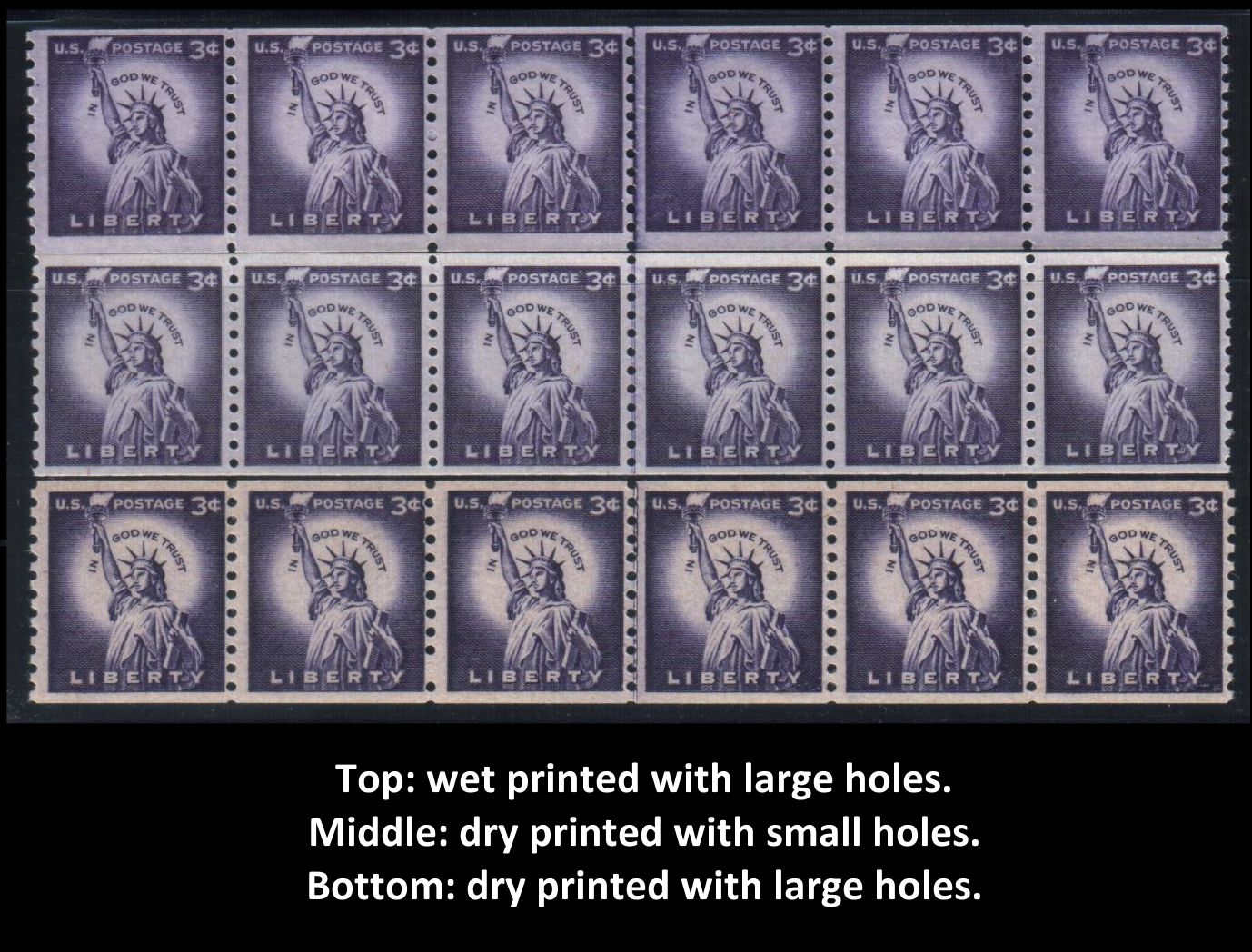
Is it really obvious to the eye? I have not gone down this path yet. Thanks!  |
|
Send note to Staff
|
|
|
|
|
Pillar Of The Community

United States
1498 Posts |
|
|
It ain't obvious to me. But my eyes aren't young any more. Discerning between large & small holes has always been difficult for me. What I ended up doing is scanning a coil pair into my computer and then comparing it to a scan of a known small/large hole pair. Then I measure the distance between the holes. With the pairs blown up to about a height of 120mm on the computer screen, there will be about a 1mm difference between the 2 distances with said distances being in the 5 to 7 mm range. The larger distance will be for the small hole pair ... the smaller for a large hole pair.
Added: I would guess that your example is a small hole pair. In my experience, the hole diameter and the distance between holes is just about equal for a large hole pair. |
Send note to Staff 
|
| Edited by JLLebbert - 01/14/2024 5:37 pm |
|
|
Valued Member
United States
108 Posts |
|
|
Thanks! That's a good start for me. I am going to really dig into this series and try to isolate every stamp in the series. |
|
Send note to Staff
|
|
|
Pillar Of The Community
6363 Posts |
|
|
And as you dig, there are several varieties which come only 1 way, so you can easily be guaranteed of having examples of both hole sizes.
Additionally, the Linn's Multi-Gauge contains an overlay. |
|
Send note to Staff
|
|
|
Valued Member
United Kingdom
439 Posts |
|
|
What are large and small holes? Istarted collecting US stamps a few years back and haven't heard of this variation. I take it you don't mean the perforation pitch as measured with a perforation gage. |
|
Send note to Staff
|
|
|
Valued Member
United States
192 Posts |
|
|
Pillar Of The Community
United States
4182 Posts |
|
|
Noo - it refers to the size of the holes between the perfs (it has nothing to do with the perf gauge). |
|
Send note to Staff
|
|
|
Moderator

United States
12330 Posts |
|
|
Pillar Of The Community
United States
1170 Posts |
|
|
So what I have noticed also is the large holes tend to wander, not a perfect straight line and the holes are not a crisp as the small hole. |
|
Send note to Staff
|
Michael Darabaris |
|
|
Valued Member
United States
14 Posts |
|
|
The above visuals are helpful. I only have singles so far, no connected pairs. Is it safe to use the guideline of "the hole diameter and the distance between holes is just about equal for a large hole pair" or is there a better way? |
|
Send note to Staff
|
|
|
Pillar Of The Community
6363 Posts |
|
|
Nothng beats having actual examples in-hand to study. Everyone who is interested in these should obtain a pair or two of each and stucy them directly. |
|
Send note to Staff
|
|
|
Bedrock Of The Community
United States
10862 Posts |
|
|
Quote:
Nothing beats having actual examples in-hand to study. Everyone who is interested in these should obtain a pair or two of each and study them directly. That is good advice for almost any area of philately one wishes to collect. |
|
Send note to Staff
|
|
|
Valued Member
66 Posts |
|
|
Here are pics of the 4c 1058 and TD96 the test stamp for this issue, large holes are on the top, small holes on the bottom. I usually find it easier to identify these from the back against a black background. 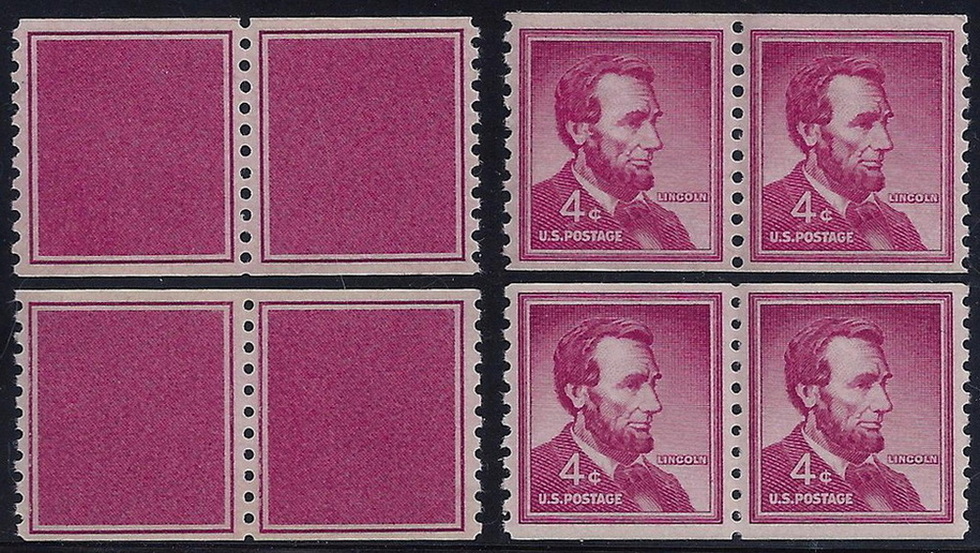 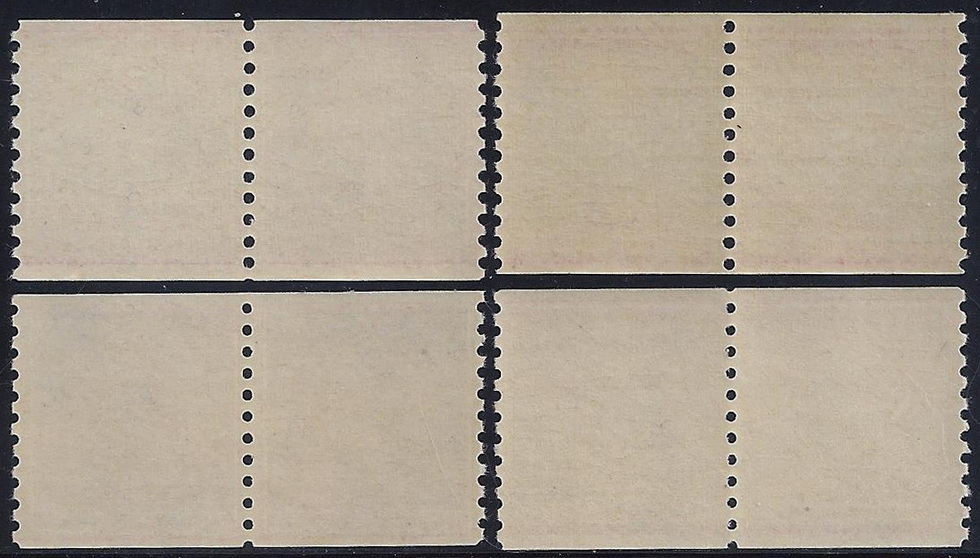 |
|
Send note to Staff
|
|
|
Valued Member
United Kingdom
439 Posts |
|
|
Thank you everyone for your answers, I will start looking even more closely at my US stamps. |
|
Send note to Staff
|
|
|
Valued Member
United States
154 Posts |
|
|
I'm surprised everyone's leaving the domain as "U S Stamps." Well, it used to be, it was a matter only for the Liberty Series coils (1954-1973)... which went wholesale overhaul from one coiling operation moving to another operation type, hence large holes to small holes. Almost "all" coils in that series affected, there might be an exception or two but can't think off memory (Scott specialized catalog lists them).
Years later hobby wise, it was found that a few Presidential series coils (1938 start) were small-hole made, in era when only large holes were supposedly made. Then a few years ago a few Washington-Franklin series also found with small holes. So don't go wandering thru all other coil issues just to check for small vs. large! I'd say, Liberty series coils 99+%, Presidential series coils < 1%, W-F series <.0001% or close. |
|
Send note to Staff
|
|
| |
Replies: 14 / Views: 2,212 |
|



 Posted 01/14/2024 5:12 pm