| Author |
 Replies: 16 / Views: 1,346 Replies: 16 / Views: 1,346 |
|
Pillar Of The Community
United States
1170 Posts |
|
|
|
I have questions for someone knowledgeable in this field. Or someone who worked for USPS and processed these items back in the day?
|
|
Send note to Staff
|
Michael Darabaris |
|
|
|
|
Moderator
1589 Posts |
|
|
Not that I know of. Others may know something I do not. But since first flight covers are airmail covers, you might find the American Air Mail Society relevant. There may be exceptions, but many first flight covers will be on C.A.M. and F.A.M. routes and AAMS publishes an extensive multivolume catalog of all things relating to airmail, including C.A.M. and F.A.M. flights. If I knew more specifically what your questions was, I could perhaps see if it is something that the American Air Mail Catalog (a multivolume set) could answer. |
Send note to Staff 
|
| Edited by blcjr - 01/31/2024 2:31 pm |
|
|
Pillar Of The Community
United States
1170 Posts |
|
|
Hi blcjr! Thanks. Its not about a cover. Its about the cacheting process and what the procedure is on the first flight day at the sending post office. |
|
Send note to Staff
|
Michael Darabaris |
|
|
Pillar Of The Community
United States
4474 Posts |
|
|
Quote:
Its about the cacheting process and what the procedure is on the first flight day at the sending post office Can you be more specific? Cachet application was not just one design or maker exclusively. As to Postal Procedures that too could vary by office and nature of flight. With first flights with multiple lags, each office was a first flight origination office except for the final office. Again a more specific question would be helpful. For example on one multi-stop first flight, USA to Europe, via Canada, one of the intermediate stops was changed as the original chosen stop had a post office too small to handle the covers within the time required. So only the first flight stopped there and all other flights went through the original airport as planned. |
|
Send note to Staff
|
|
|
Pillar Of The Community
United States
1170 Posts |
|
|
Hi Parcelpostguy. I had this on a previous thread but either I don't grasp what the forum is saying or I missed something. So I was hoping to find someone who knows the process. Again I don't have a cover I just am trying to understand what the procedure is when a new air route opens up. How does the post office handle the mail for that flight. Does all the mail destined for that location now go on the new flight? If so, I assume some of the letters where business or personal related not expecting to be on a special flight. Do they also get the cachet? Or does the post office setup a special first day flight only for philatelic covers to be flown and all the other mail still goes the old route whether by boat, land or 2 air routes, etc? Then after that first day all mail goes on that fight. Am I making sense? |
|
Send note to Staff
|
Michael Darabaris |
|
|
Pillar Of The Community
United States
4194 Posts |
|
|
If there is a Flight Cub, you wouldn't know because the first rule of the Flight Club is you don't talk about the Flight Club |
|
Send note to Staff
|
|
|
Pillar Of The Community
United States
1170 Posts |
|
|
Pillar Of The Community
United States
4474 Posts |
|
|
Pillar Of The Community
United States
4474 Posts |
|
|
Senders of mail, non-philatelic, generally just mail their mail. If they want airmail and pay for it the the cost of airmail, the the USPOD sends the mail matter the quickest route available (at times this is by train). It is not consistent with the USPOD service to just hold mail. However, senders can and do place instruction on airmail matter, often to specify the routing they want the letter to take. This is especially true during disruptive periods such as war time. They may also specify "night service" meaning a flight which takes place at night. So in answer to your question, yes commercial mail can be placed on first flights if in its normal postal movement it is in the correct place at the correct time and has the necessary destination.
Philatelic mail is prepared, identified and held until the first flight, even if that flight is delayed.
Now I own a Airmail Postal Card, UXC1, which was used by the postmaster to send count information on the number of and types of mail sent on a first flight, all with FF Cachets. The postal card which was to convey information and was not expected to fly on the first flight was placed on the first flight as the Postmaster had time to supply (fill out) the information on the postal card then have it included as "normal commercial mail" on the first flight with no other marking except the postmark. In other words, no FF cachet. So yes FF can include "normal" commercial mail.
|
|
Send note to Staff
|
|
|
Pillar Of The Community
United States
1170 Posts |
|
|
Okay we are getting very close!
"So in answer to your question, yes commercial mail can be placed on first flights if in its normal postal movement it is in the correct place at the correct time and has the necessary destination."
So then would that mail get a cachet? Or any other markings to note that it went on that flight? |
|
Send note to Staff
|
Michael Darabaris |
|
|
Pillar Of The Community
United States
4474 Posts |
|
|
Quote:
So then would that mail get a cachet? There is no reason to expect such as they are applied by request. Quote:
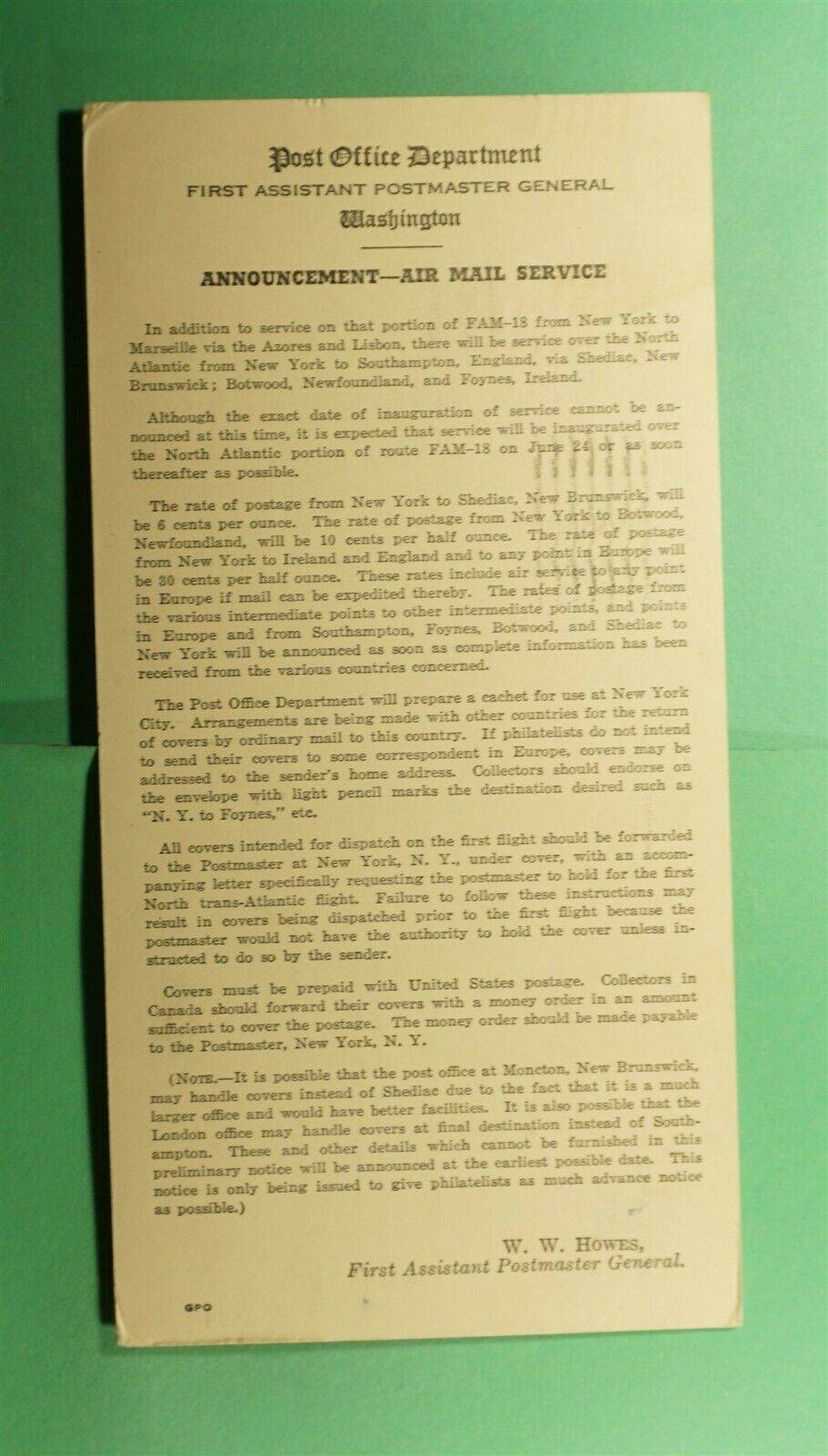
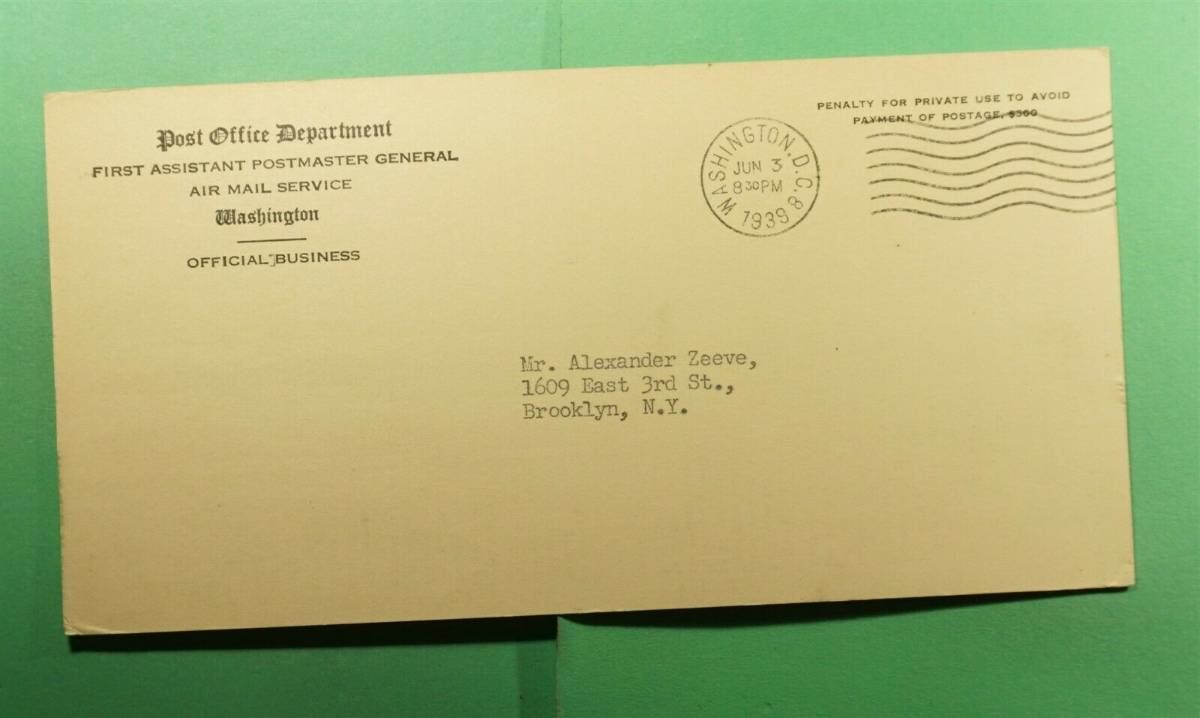
Or any other markings to note that it went on that flight? The postmarks, transit markings or destination markings could tie the item into the flight. That is in addition to the correct postage and airmail marking. In the postal card example I gave above, the purpose for the information was publication of the information in association with the American Air Mail Society. No request for cachet was made nor a cachet expected and none was applied, rather it was the written statement of the Postmaster which indicated the inclusion on the flight as well as the postmark being the same as for the items with a cachet. Edit: Using the informational USPOD card posted above, the last thing a commercial mailer who's mail made the first flight would be for it to be returned to this country (and the sender) by ordinary mail. Additionally the card also indicates "...[a] Postmaster" does not have the authority to hold/delay mail without a sender's instruction. That is noted to underscore my right time, right place and right destination comment. |
|
Send note to Staff
|
| Edited by Parcelpostguy - 02/01/2024 9:26 pm |
|
|
Pillar Of The Community
United States
1170 Posts |
|
|
Great. This is what I thought. I assumed regular mail would be on this flight as well as the cacheted. What I wasn't sure about was if all would receive the cachet. Another poster said all mail on a first flight would be cacheted. So we could have this piece of mail out there but it would be difficult to find. Thanks! |
|
Send note to Staff
|
Michael Darabaris |
|
|
Pillar Of The Community
6366 Posts |
|
|
You seem to be asking a general one-size-fits-all question, when I think you actually have a specific cover you are asking about again, which has been discussed at length in two previous threads. https://goscf.com/t/83111https://goscf.com/t/85765I provided the philatelic announcement instruction card for your specific flight in the seond thread and Parcelpostguy provided a similar card for another flight earlier here. If the question is "Does every piece of mail on every first flight get a cachet, whether philatelic or commercial?" Logically, the answer must be "It depends." The challenge with a one-size-fits-all answer is that each first flight is somewhat different and each city has somewhat different postal operations for manpower and facilities. The history of flight contracts spans many decades, and flights can be domestic or foreign, truly new flights or just extensions/rearrangements of previous routes, coincident with new rate schedules (or not), at cities with differing airport mail facilities (Is this the only flight from a city or one of many? Is there a dedicated postal clerk at the airport or just one who drives out once or twice per day to meet the few planes?), the timing of connecting routes by air/rail/vehicle, etc, etc. Clearly and logically, the vast majority of philatelic mail sent in advance will get all of its souvenir markings, and the commercial mail from that day would not. Yes, an occasional piece of philatelic mail may get skipped. No clerk is 100% perfect. But let's invent a domestic example ... of a flight schedule from St Louis to Denver, which later adds a stopover in Omaha. The flight change is noted to the postal/philatelic world via the Postal Bulletin. Collectors send in their covers, which get all the special marks. Would one expect sacks/bundles of the regular daily airmail collected in St Louis and normally carried on that route to get any special marking? I would suggest "absolutely not", and that the clerks would not divert/delay any normal commercial mail. They would certainly not open sacks/bundles just arriving on other flight connections from the east just to apply cachets for this changed flight-leg. It is possible in some unusual cases (if convenient and timely), that some commercial mail mailed in the origin city receive a cachet, but that would be a case by case occurrence. Additionally, the majority of the general public would not know (or care about) the transportation details of most of their mail. They just know whether it got there or not. Yes, some collector-created mail can "look" very non-philatelic or commercial. In the case of your San Francisco to Philippines cover, the consensus is clear that you have a philatelic cover. Yet, you seem to want more, which I don't think anyone can provide with 100% certainty. Sorry, but there are no clerks alive who handled this 1940 cover who could detail any specifics. |
|
Send note to Staff
|
|
|
Pillar Of The Community
United States
1170 Posts |
|
|
Hi John, No I do not have a cover. But the possibility is out there! Its just that the scenario came up during the topic discussion and I wanted to know what the possibility was. Yes I understand one size doesn't fit all. It just made sense that there could be non cacheted covers on those flights and some replies in my previous post stated that they all were cacheted. I just wanted to understand the process so I could make a knowledgable conclusion. I feel confident that this post answered my questions. Thanks again both of you! |
|
Send note to Staff
|
Michael Darabaris |
|
|
Pillar Of The Community
6366 Posts |
|
|
These flights often had 1000s of pieces of mail. Even if the intent was that every piece get a cachet, there is always the possibility of a "skip". There is seldom 100% in postal history. Anyone who says "all" is likely to be proven incorrect by that one rare exception that slipped through the cracks.
If one wants to find scarse airmail covers, then chase those carried on the second flight, which nobody cared about. |
|
Send note to Staff
|
|
|
Pillar Of The Community
United States
1170 Posts |
|
|
Thanks John, It just made sense to me that these flights were created to fill a business need. Then there should be business covers on these first flights. If mail was going to this location before the first flight then I would assume there was some that day as well. I just wanted to know if they all got cacheted that day. |
|
Send note to Staff
|
Michael Darabaris |
|
|
Replies: 16 / Views: 1,346 |
|




 Posted 01/31/2024 12:28 pm