Hi, although I am not an expert in german inflation stamps, I have been long obsessed with its fascinating history since I was spending my childhood in Hamburg, (West) Germany in the 1960s and 70s.
As mentioned by NSK, the challenge in collecting used Inflation stamps is to find one with a genuine cancellation. There even is a specialized list of forged cancellations on Inflation stamps, issued by INFLA Berlin, which is an excellent reference to grasp how frequently one can encounter a forged cancellation.
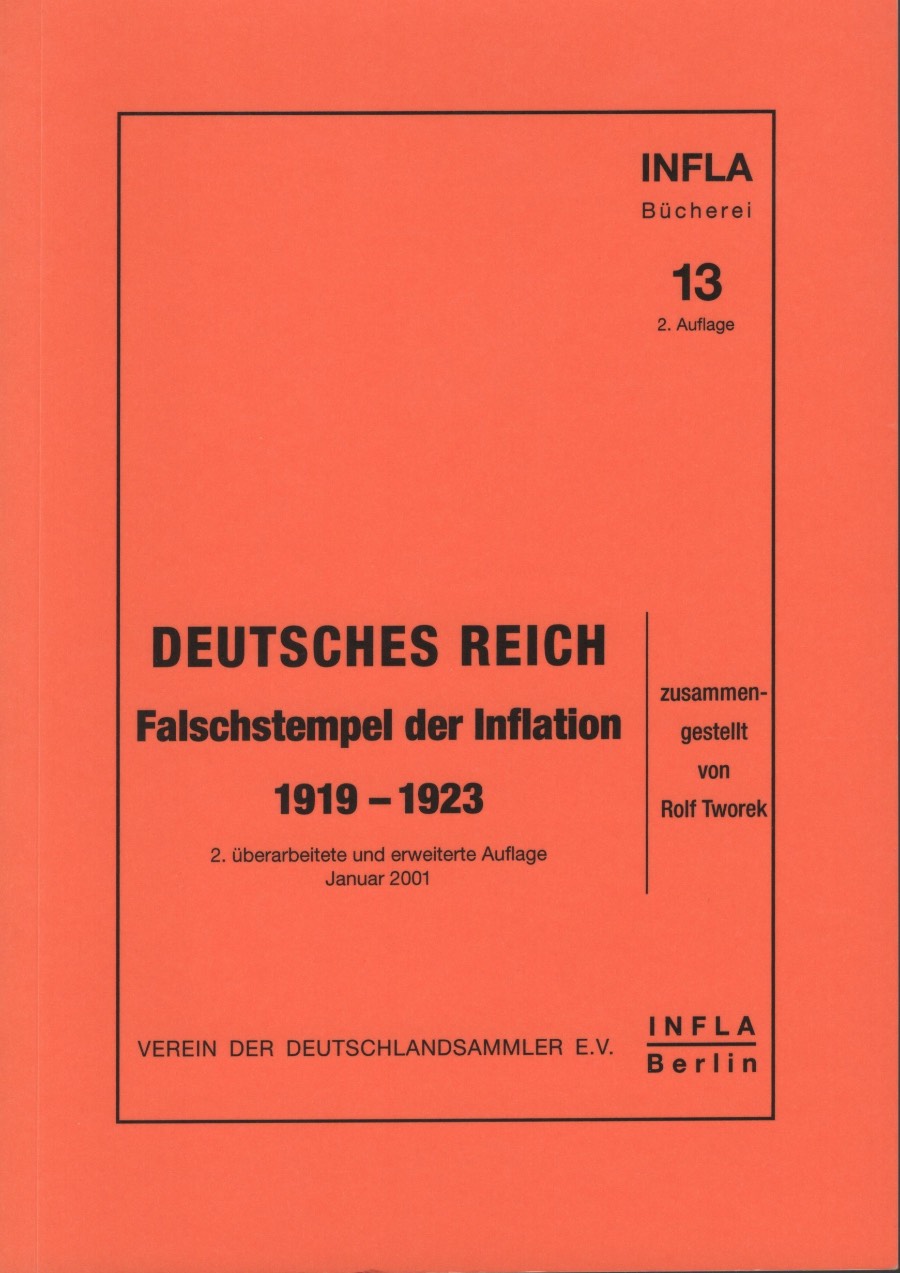
Another trick is to understand the extremely frequent and complex transition of the postal rate periods - called as "Portoperiode" - which sometimes have lasted only for a couple of days.
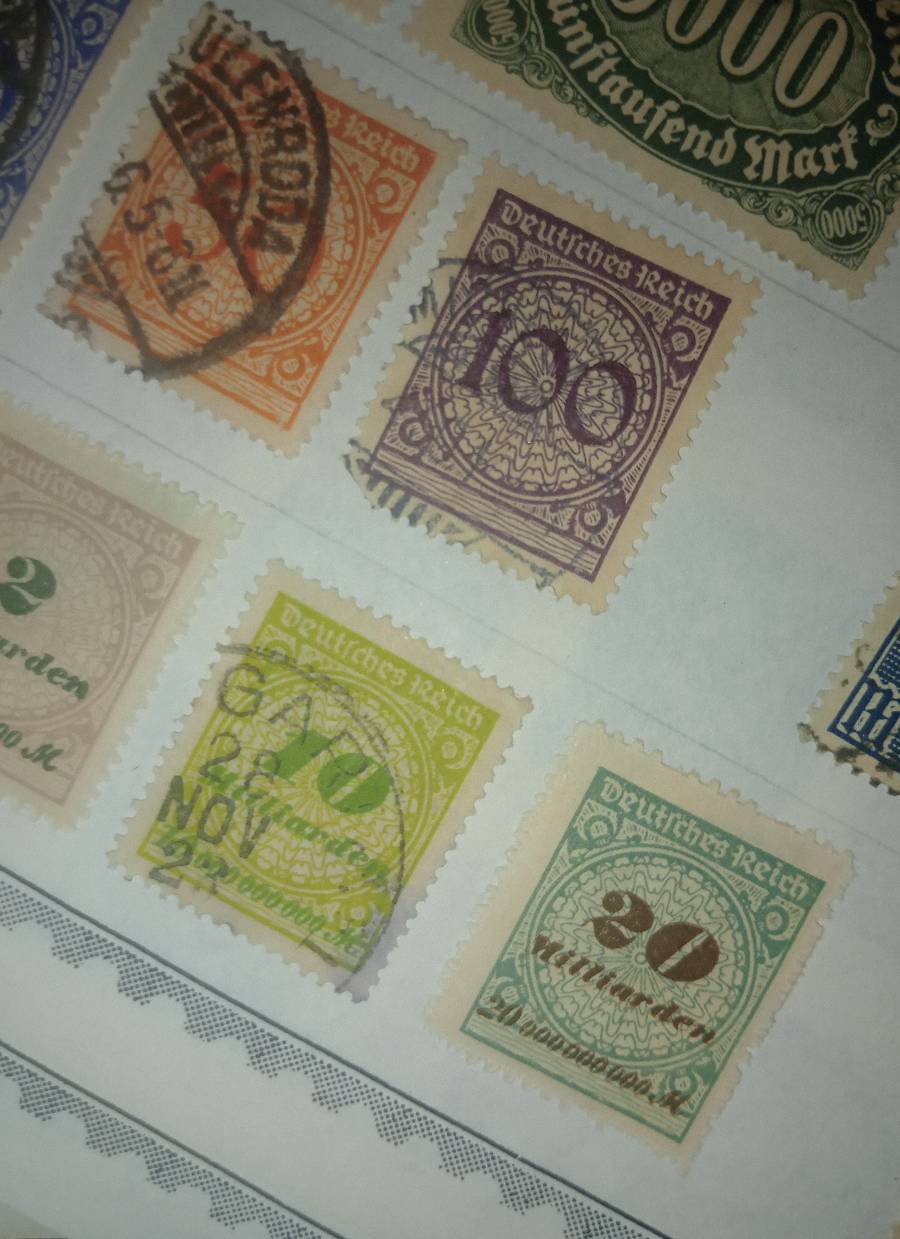
As for your 10 Milliarden stamp, the datestamp could be read as "...GART 28 NOV 23". This date, November 28, 1923, corresponds to Portoperiode 26, which lasted for only 5 days (e.g. from 26 to 30 November 1923). Representative postal rate was 40 Milliarden Mark for long-distance (Fernverkehr) postcard and for near-distance (Ortsverkehr) letters, 80 Milliarden Mark for long-distance letters, and so on. So theoretically your 10 Millarden Mark stamp, if genuine, should have been associated with a couple of other stamps to pay the required postage fee.
The whereabouts of "...GART" is unclear; it could be Stuttgart, and if so, the bad thing is it is listed in the aforementioned forged cancellation book - therefore there is a chance that it might be a forgery (of course it could be genuine).
So, I cannot judge either this is genuine or not, and this is the real trick for non-expert collector including myself...
To show the trickiness, here is an example of the 10 Milliarden Mark stamp used on cover from the same postage rate period (dated 27 Nov 1923):
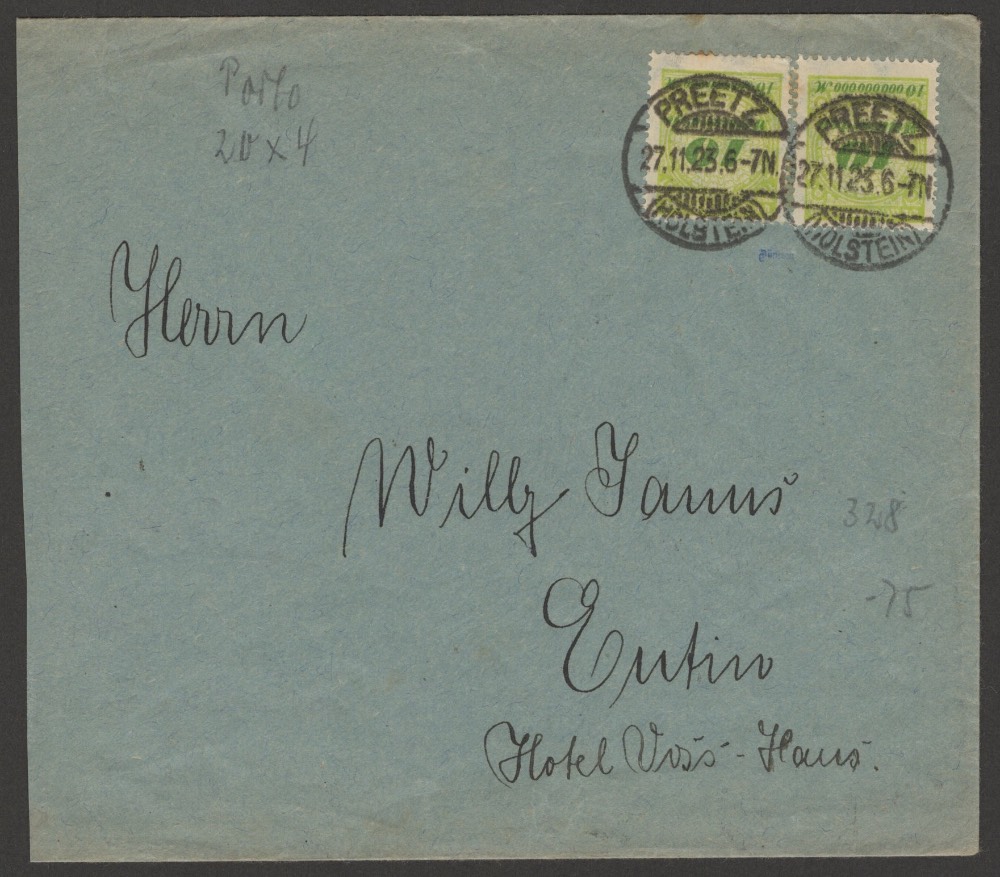
This looks nice, but the postal rate of 20 Milliarden Mark seems to not fit any plausible usage, and the "PREETZ / HOLSTEIN" comb-type cancel is listed in the INFLA Berlin forged cancel book. So I am pretty sure that this is a forged cover.
And to close this rather long post, I'd like to show an interesting material, which I have posted in another thread a long time ago which I can't recall - a sheet of paper with lots of inflation stamps, cancelled.
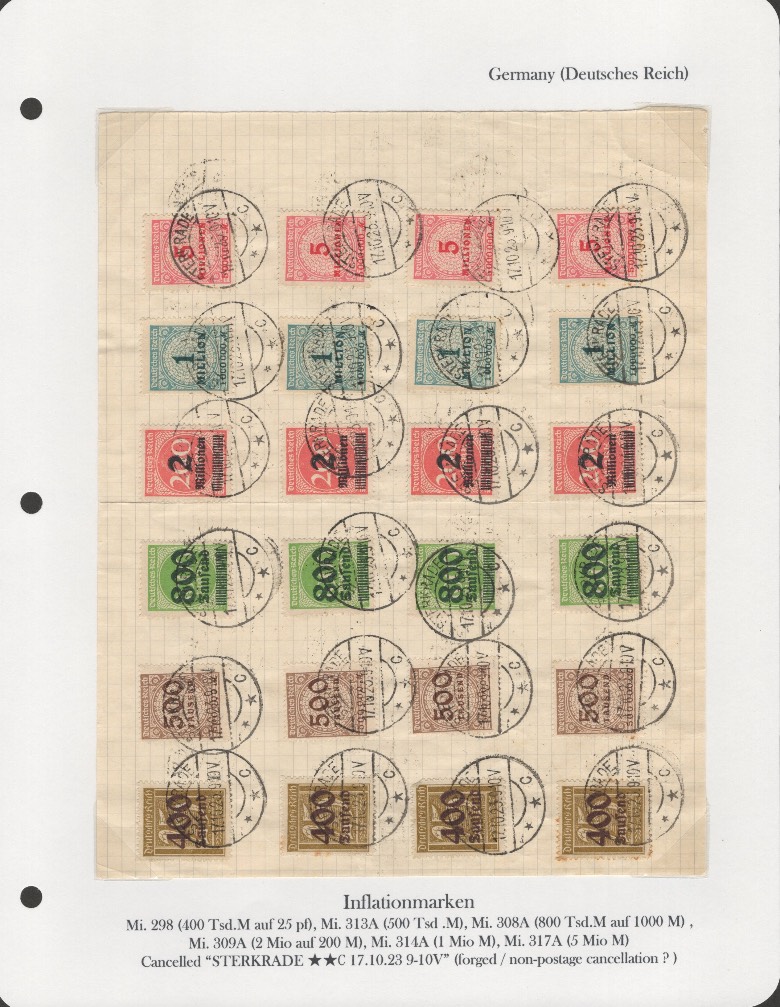
I am still not quite sure what this is, but I do believe that this is an example showing how forged used inflation stamps were produced.
So either genuine or not, it is still interesting to collect used inflation stamps - lots of investigation could be done, which is a fun part of philately (at least to me).
Hope this might give you some idea how the used inflation stamps are challenging.
Regards,
- Hironobu





 Posted 02/27/2024 9:12 pm