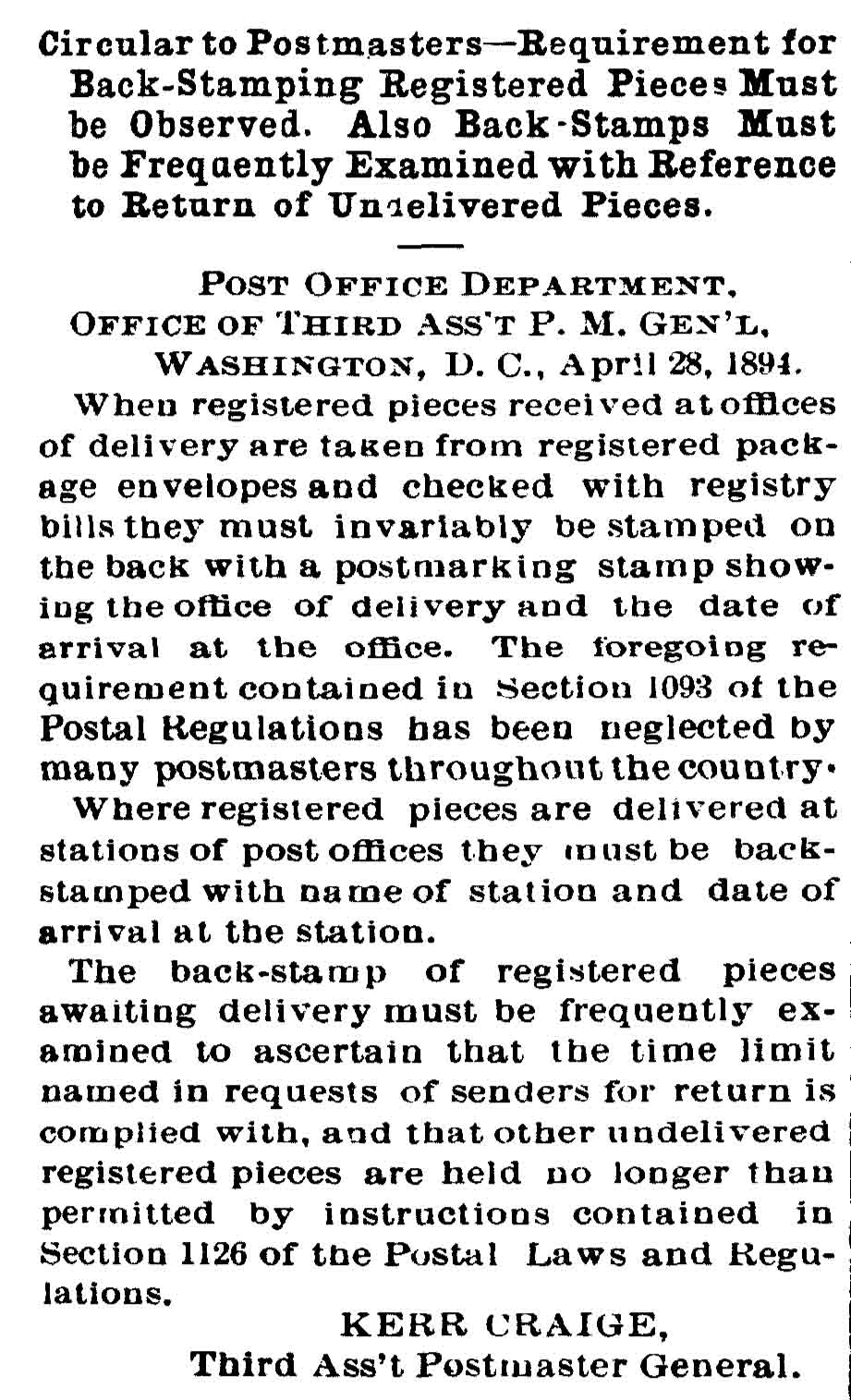
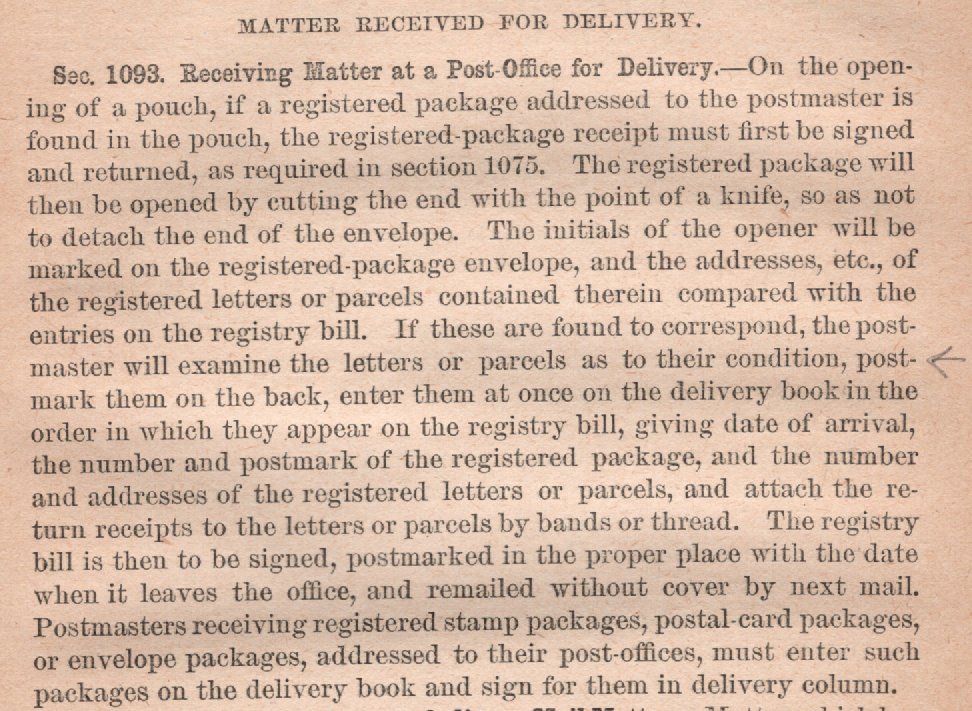
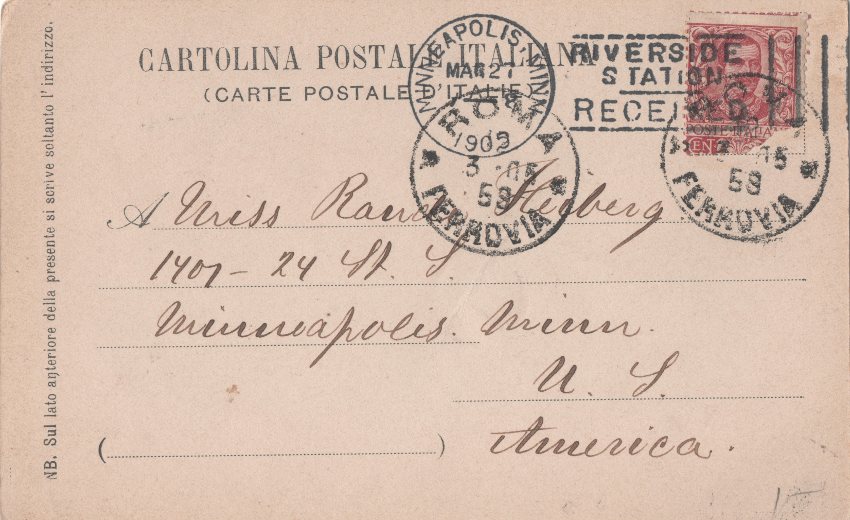
In response to a recent thread tangentially mentioning received postmarks in the U.S., it occurred to me that a separate thread specifically on them might be helpful to clarify the dates and regulations.
Very broadly, the USPOD required backstamping of mail between 1879 and 1913. More specifically for those wanting to crawl into the weeds and explore the next level of detail ...
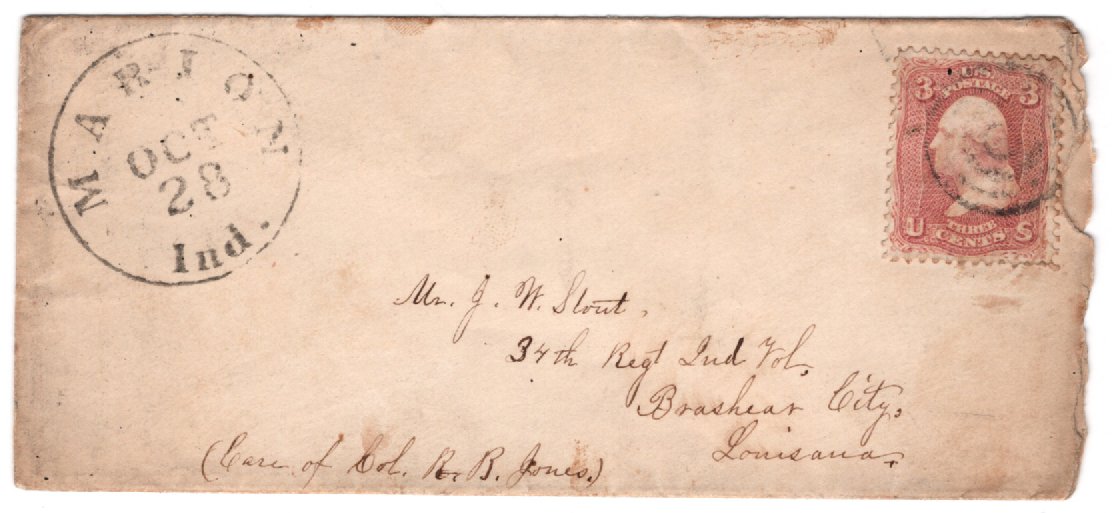
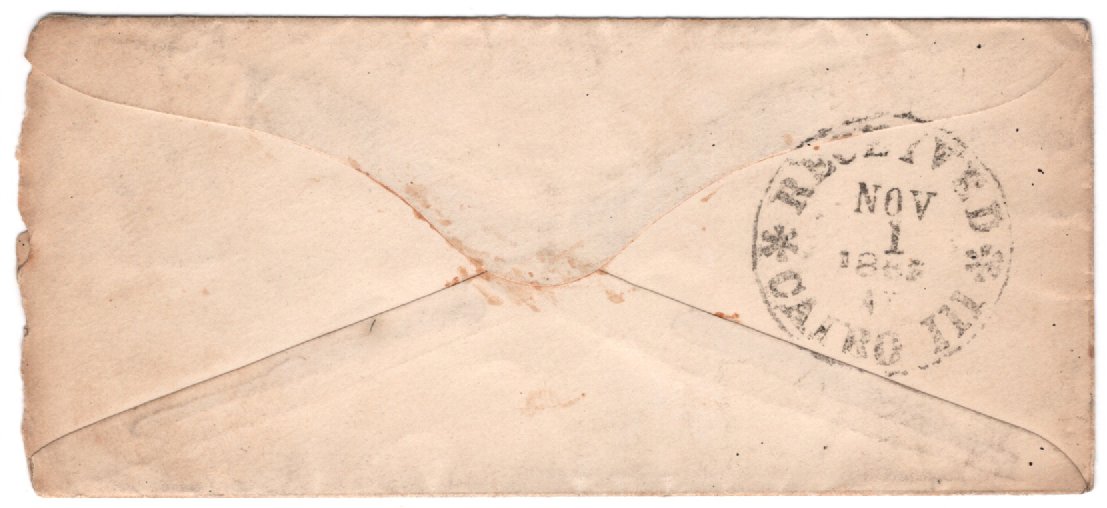
There are always some "forerunner" items. Finding the word "received" before 1879 in uncommon. Perhaps the most common being at Cairo, Illinois which applyied a received backstamp during the civil war. Mail was often slow between home and the troops in the field in the western theater. This backstamp documented the "blame" to the USPOD or the military! In this case an 1863 envelope taking 4 days from Marion, Indiana to Cairo on its way to a soldier in the 34th Indiana Volunteers in Louisiana. No idea how long it took to get down the Mississippi.
Otherwise it is best to use original sources rather than summaries. Fortunately we have the compiled "Postal Laws and Regulations" volumes which appeared about every 8-12 years and the "Postal Bulletin" published daily at that time.
From the 1879 Postal Laws and Regulations, the first notice:
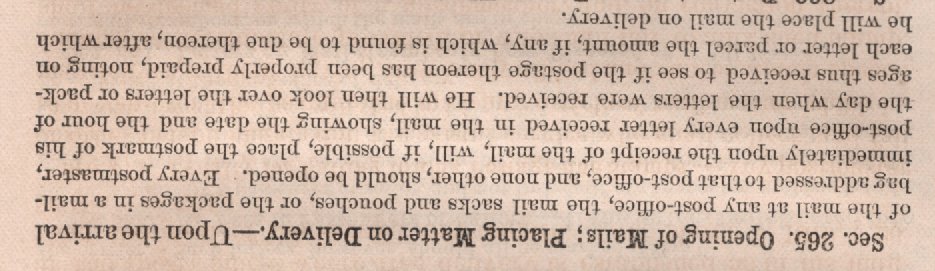
From the 1887 Postal Laws and Regulations:
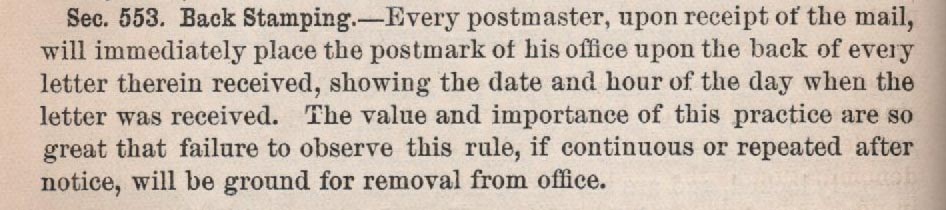
From the 1893 Postal Laws and Regulations:
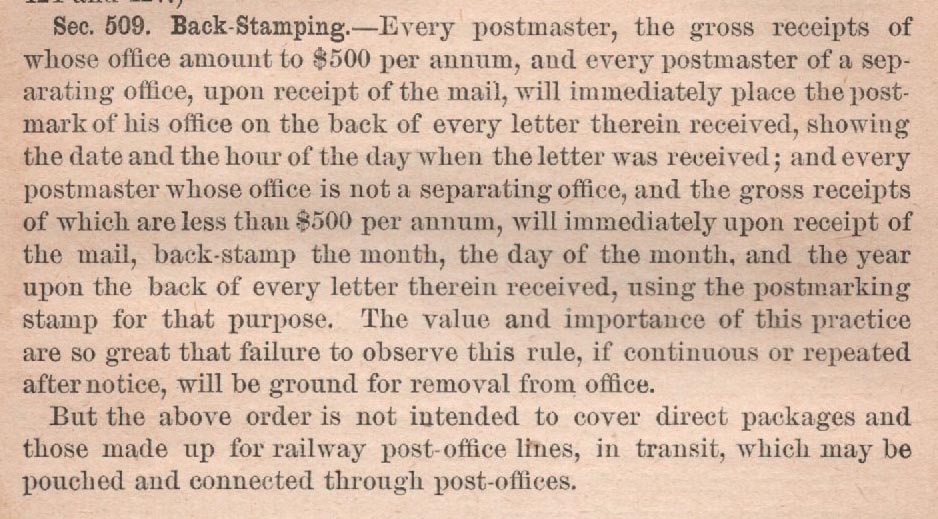
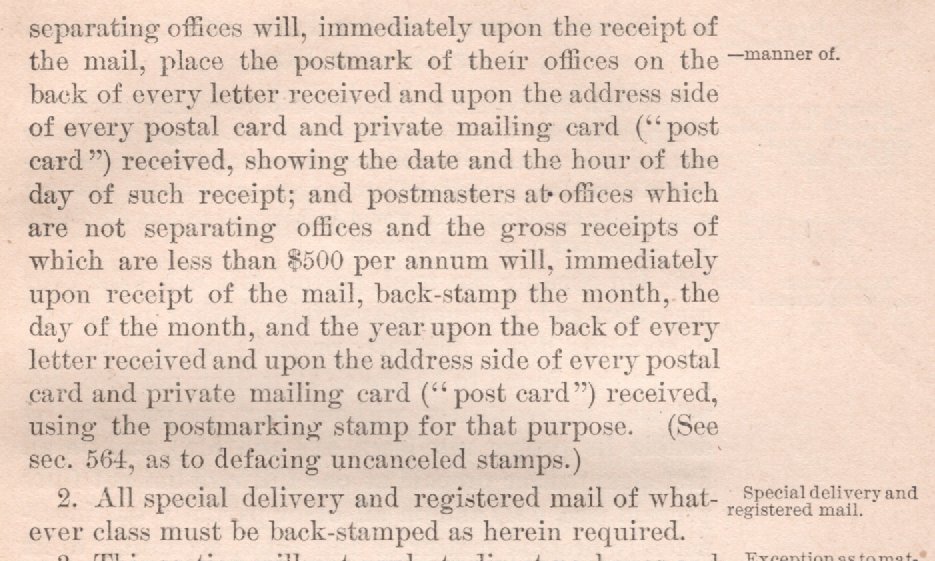
From the 1902 Postal Laws and Regulations:

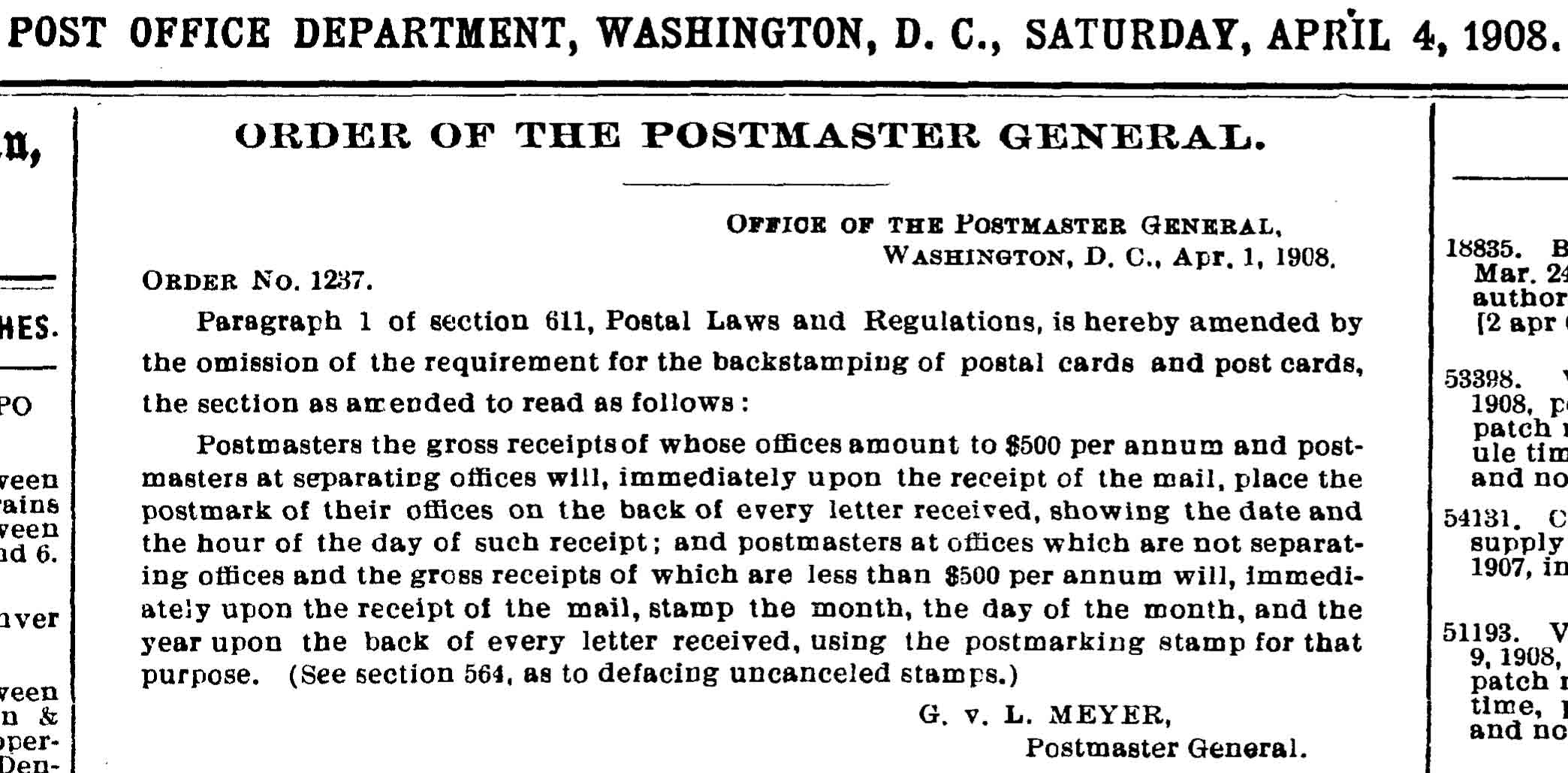
Postal cards and postcards were exempted in 1908 (Postal Bulletin issue #8567, dated April 4, 1908):
Despite the regulations, by 1910 most of the largest cities had ceased to backstamp incoming mail, and it is easy to find examples in the "backstamping era" without backstamps.
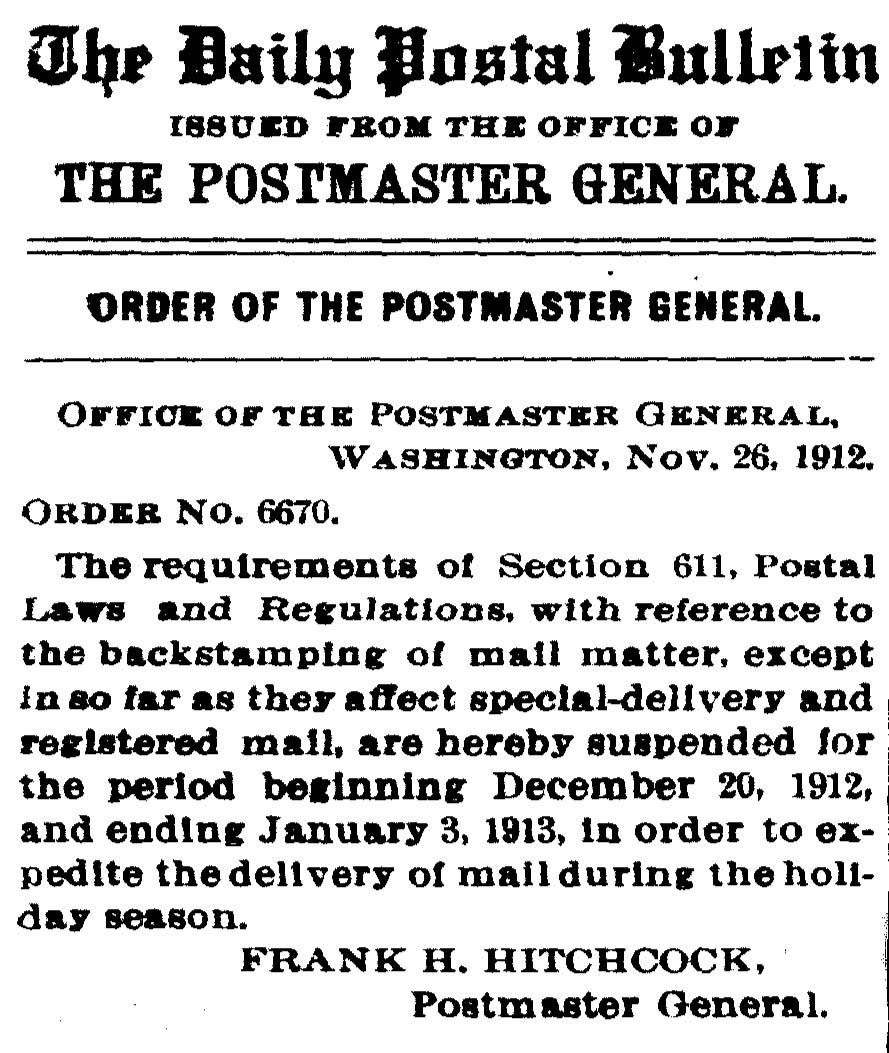
A temporary examption was issued during the Christmas 1912 holidays (Postal Bulletin issue #9988, dated November 27, 1912):
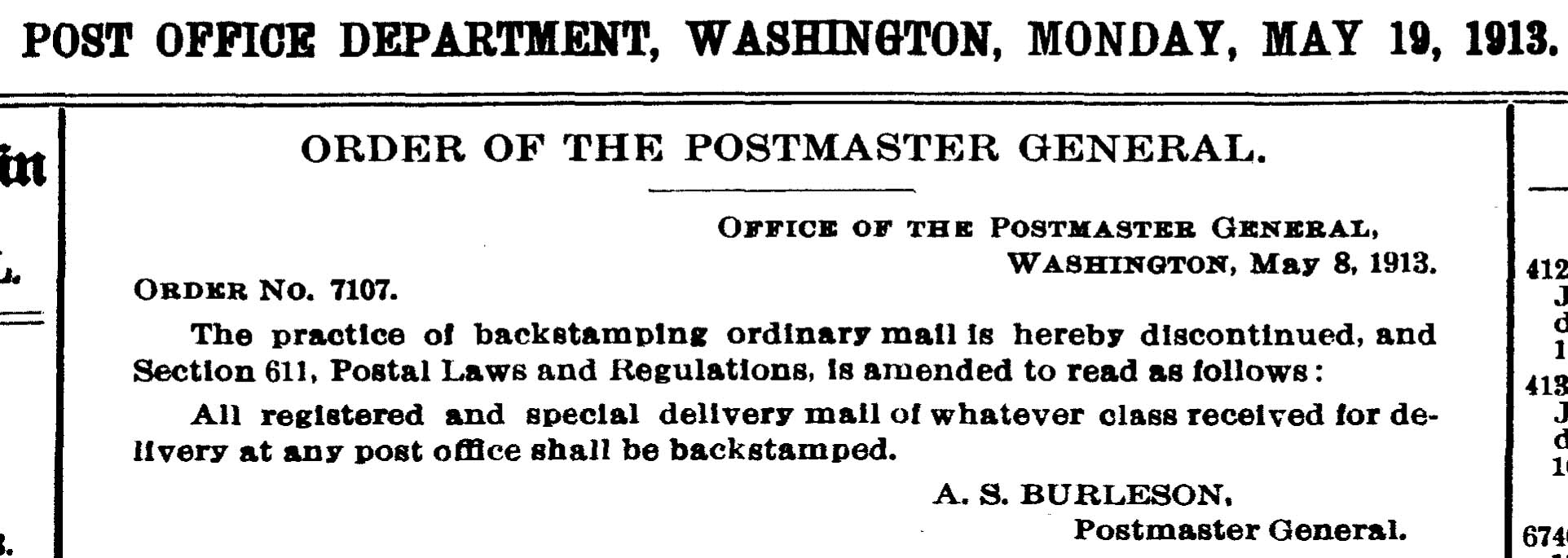
And the end of general backstamping was announced in mid-1913 (Postal Bulletin issue #10131, dated May 19, 1913):
And how the streamlined regulation appreared in the 1913 Postal Laws and Regulations volume of October 1, 1913, now mentioning special delivery and registered mail:

And fairly boring from here onward, as it appeared in the 1924 Postal Laws and Regulations volume, (with General Delivery added in 1921, although marking such had been in practice in many places already.)
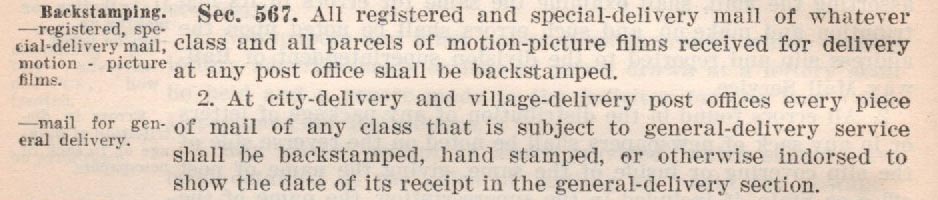
And as it appeared in the 1932 Postal Laws and Regulations volume
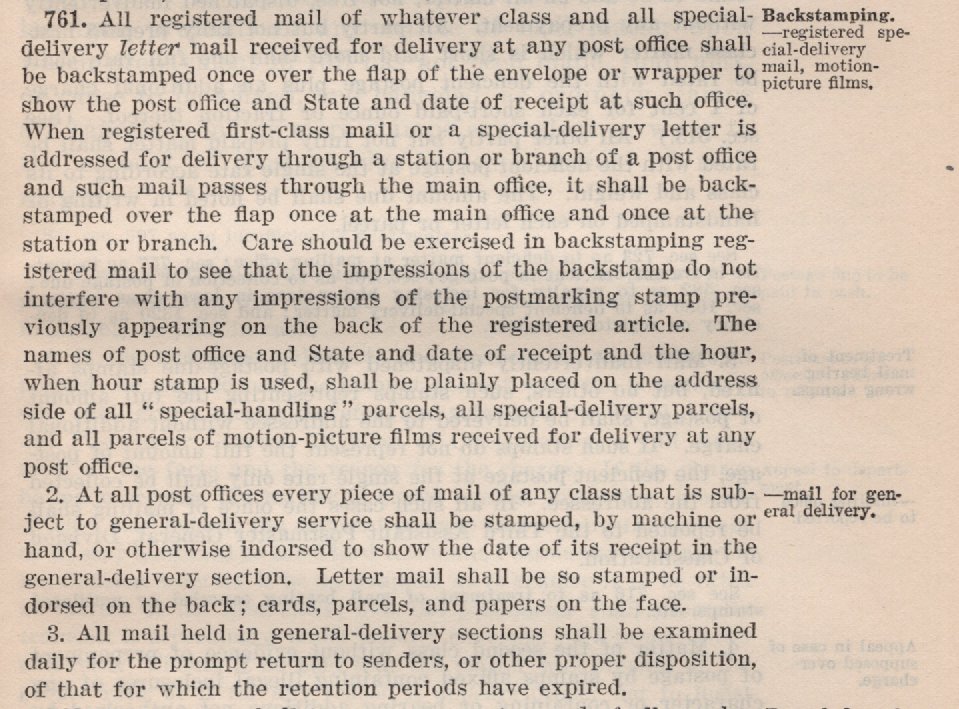
And the backstamping regulations can be traced in the PLand R volumes in 1940, 1948 and beyond through other follow-up titles covering the rules and regulations if one desires.
One can also find a considerabe percentage of airmail covers (philatelic and non-philatelic) with backstamp marks, but beyond what I wanted to go into here today..
When the regulation went in to effect in 1879, clerks typically used their standard "origin" cancel on the back of incoming mail. Gradually some acquired dedicated devices with the word "received" or abbreviated as "rec'd". As cancelling machines came in to widespread use, some manufacturers made special dials or killers which could be quickly exchanged in the machines to mark the incoming mail. And American Postal Machines Company created a variety of "service" dies to replace the flag portion in their machines. Here is a sampling:
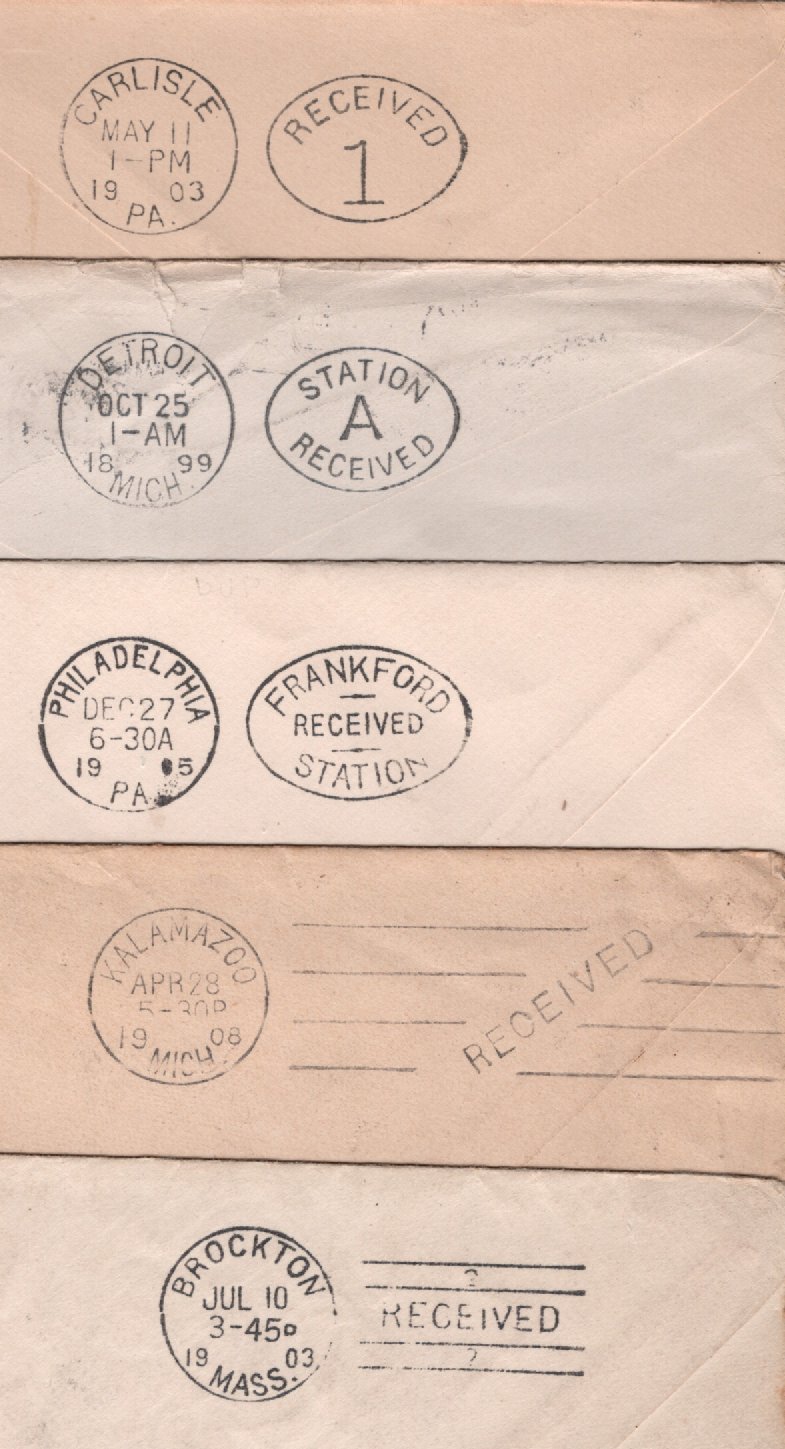
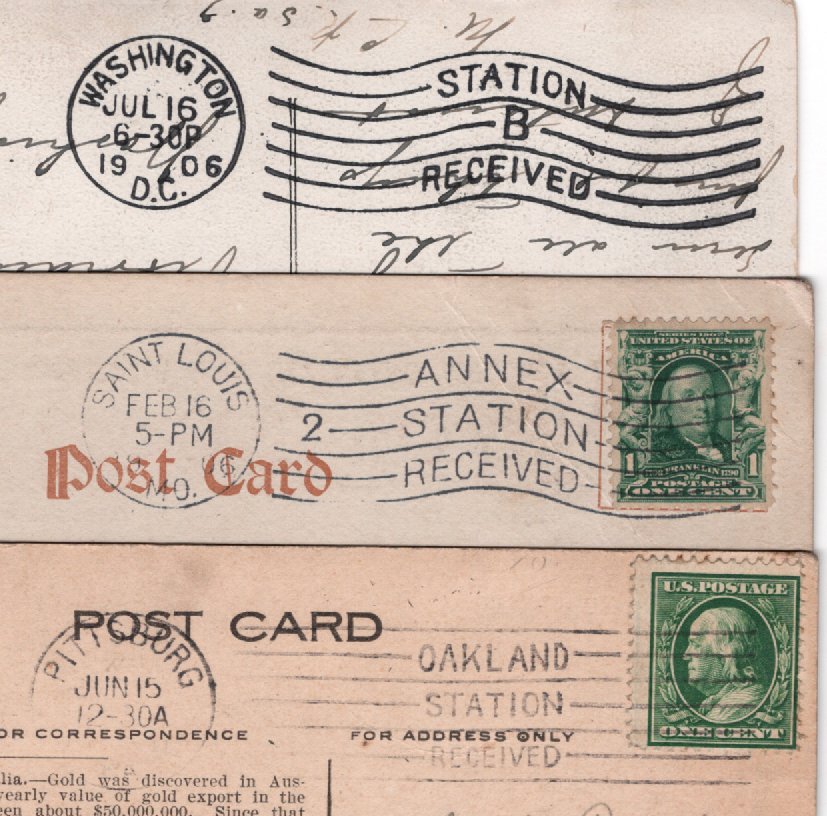
Some other machine manufacturers offered the same ability including, Barry, Barr-Fyke, Doremus, Intenational, and Pneumatic (in Indianapolis only).
An excellent overview of the evolution of received markings from one city is found in Leonard Piskiewicz's "Chicago Postal Markings and Postal History", which has an entire chapter devoted to them beginning with forerunner examples as early as 1860.
And a combination origin and "received" mark on the front, well kinda!
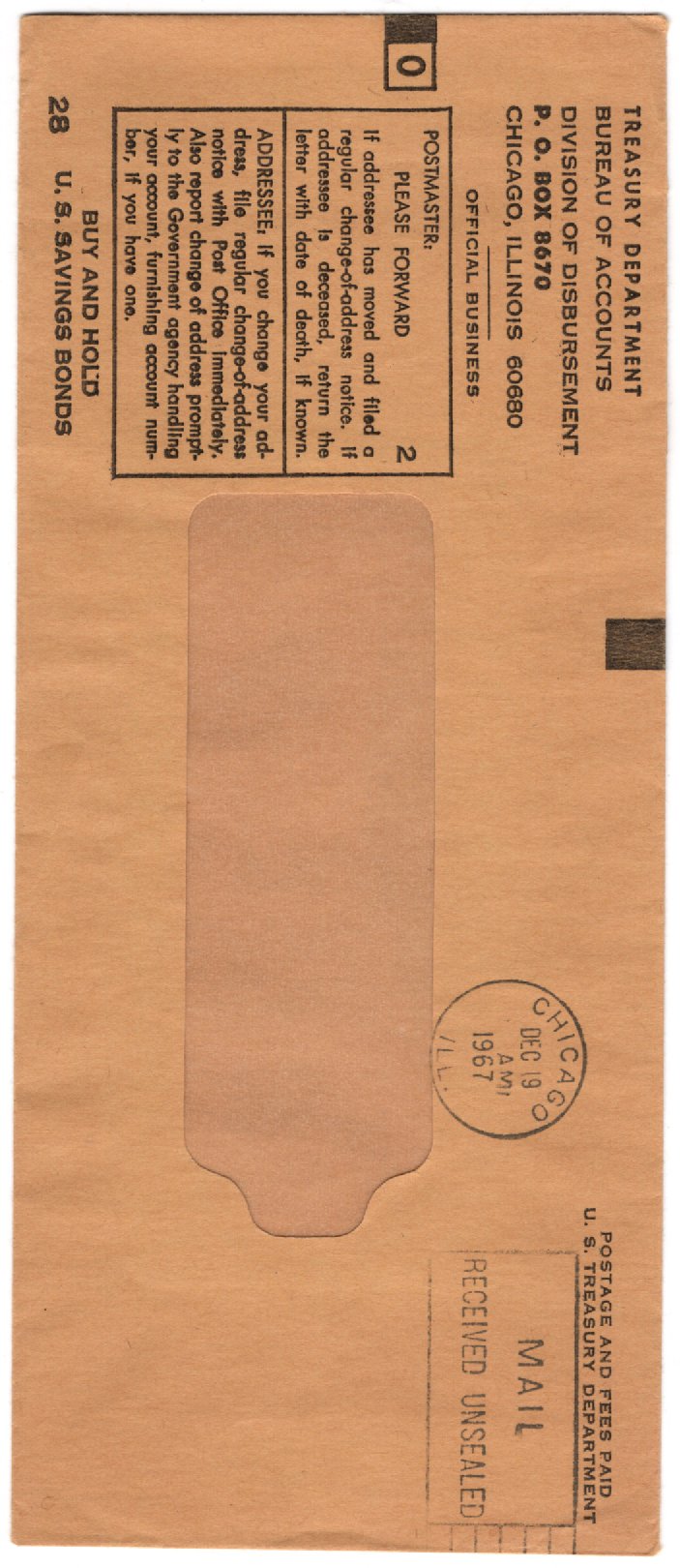
And a recent example from 1989, not backstamped properly, which in this case is NOT related to receiving, but to the lack of putting postmarks across the flaos when it entered the mails.
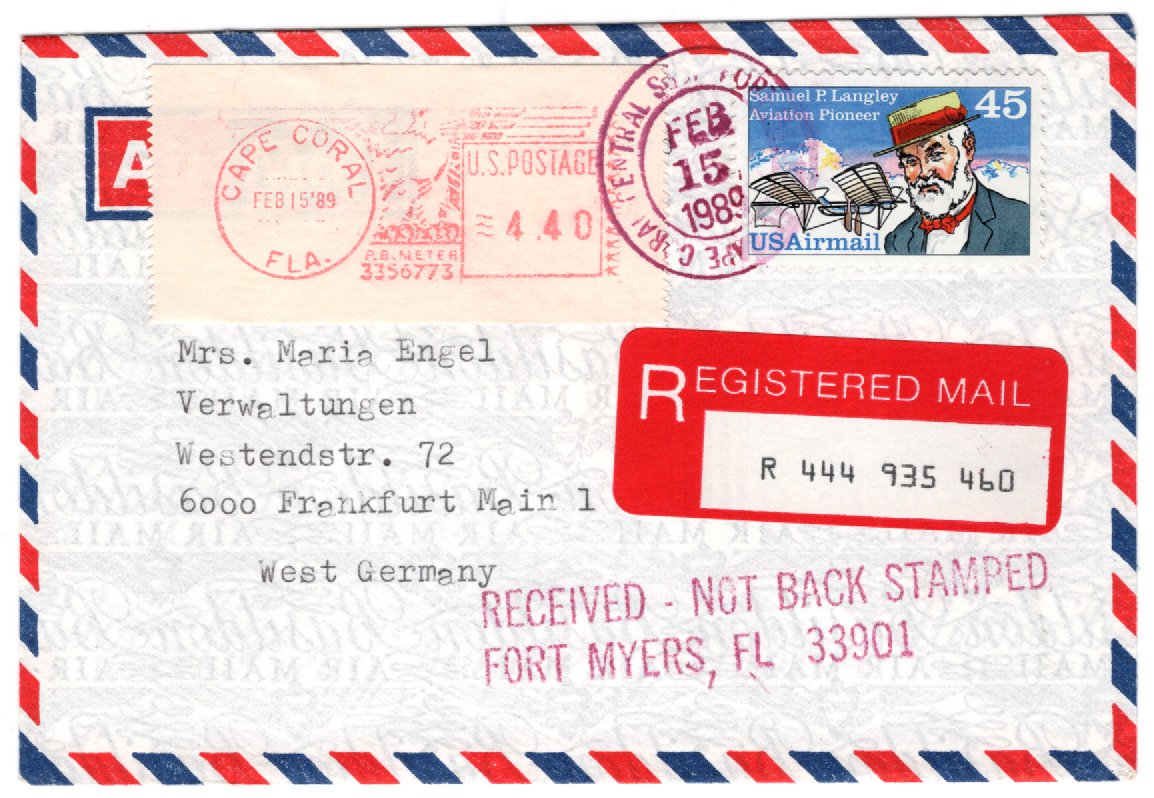
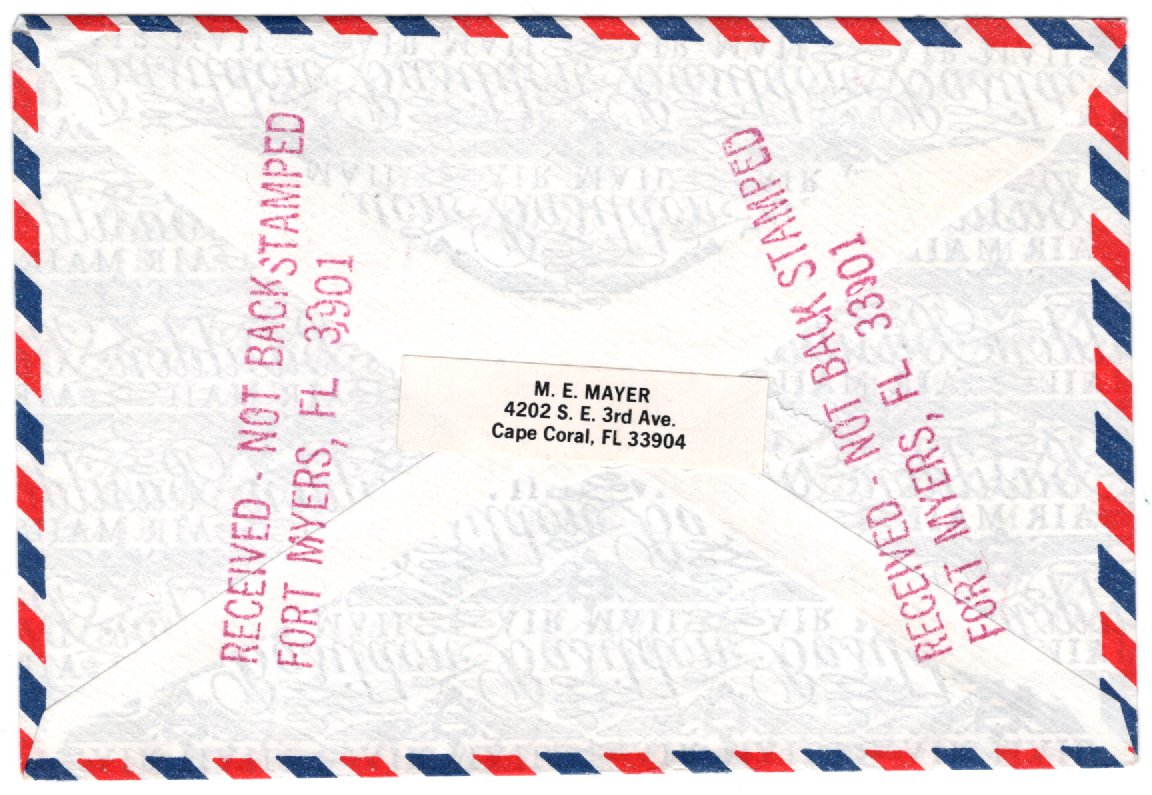
Now I'll step back for a while and let others who want to crawl into the weeds share their examples.





 Posted 03/10/2024 4:01 pm