The watermark turned 90 degrees from "normal" would indicate your stamp is from a booklet pane. The straight edge at right does not confirm/deny, as it could be from either a booklet pane or the edge of a pane of 100, but the printed design of a stamp from a booklet pane should be slightly shorter and wider than a stamp from a pane of 100. This is due to the paper (dampened for printing) shrinking differently with-the-grain versus across-the-grain as it dries.
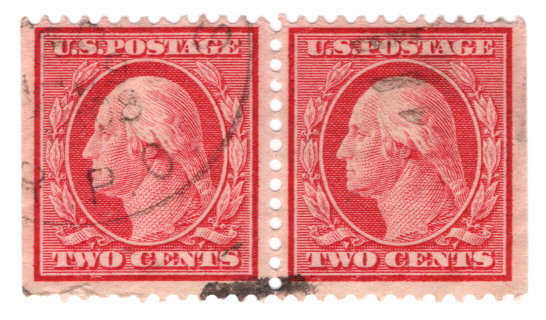
More to the point of your observations, here is a pair of Scott 331 from a booklet as proven by the straight edges at left and right:
The same pair in fluid, note the individual letters are on their sides.
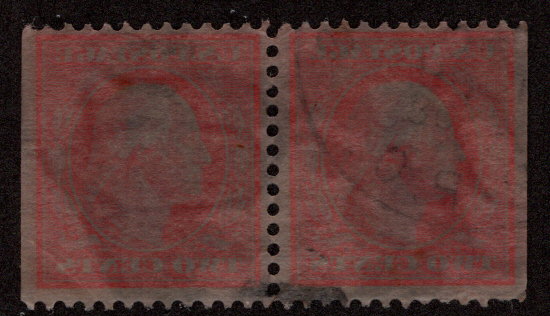
While you state your stamp has a single-line watermark (making it Scott 375), the paper orientation of both of these involves the same answer. Booklet!
The press sheets would have been slightly rectangular, so the printers paid no attention to the 4 basic orientations of paper with regard to the watermark direction when printing sheets, or when the press sheet is turned 90 degrees for printing booklet panes. And true, U.S. collectors have not generally paid much attention to the 4 positions which can occur.





 Posted 04/01/2024 8:45 pm


