Stamp Community Family of Web Sites
Thousands of stamps, consistently graded, competitively priced and hundreds of in-depth blog posts to read


Stamp Community Forum
 
Username:
Password:
Save Password
Forgot your Password?

This page may contain links that result in small commissions to keep this free site up and running.

Welcome Guest! Registering and/or logging in will remove the anchor (bottom) ads. It's Free!

#3344-48 Vintage Carousels - Is This An Error, Freak Or Oddity?

 
To participate in the forum you must log in or register.
Author Previous TopicReplies: 1 / Views: 860Next Topic  
New Member
Canada
1 Posts
Posted 04/14/2024   7:35 pm  Show Profile Bookmark this topic Add micron to your friends list Get a Link to this Message
I have five of the Vintage Carousels souvenir sheets, and in comparing them I noticed that the colouring is different on one of them, and it seems to affect all the stamps on this sheet.

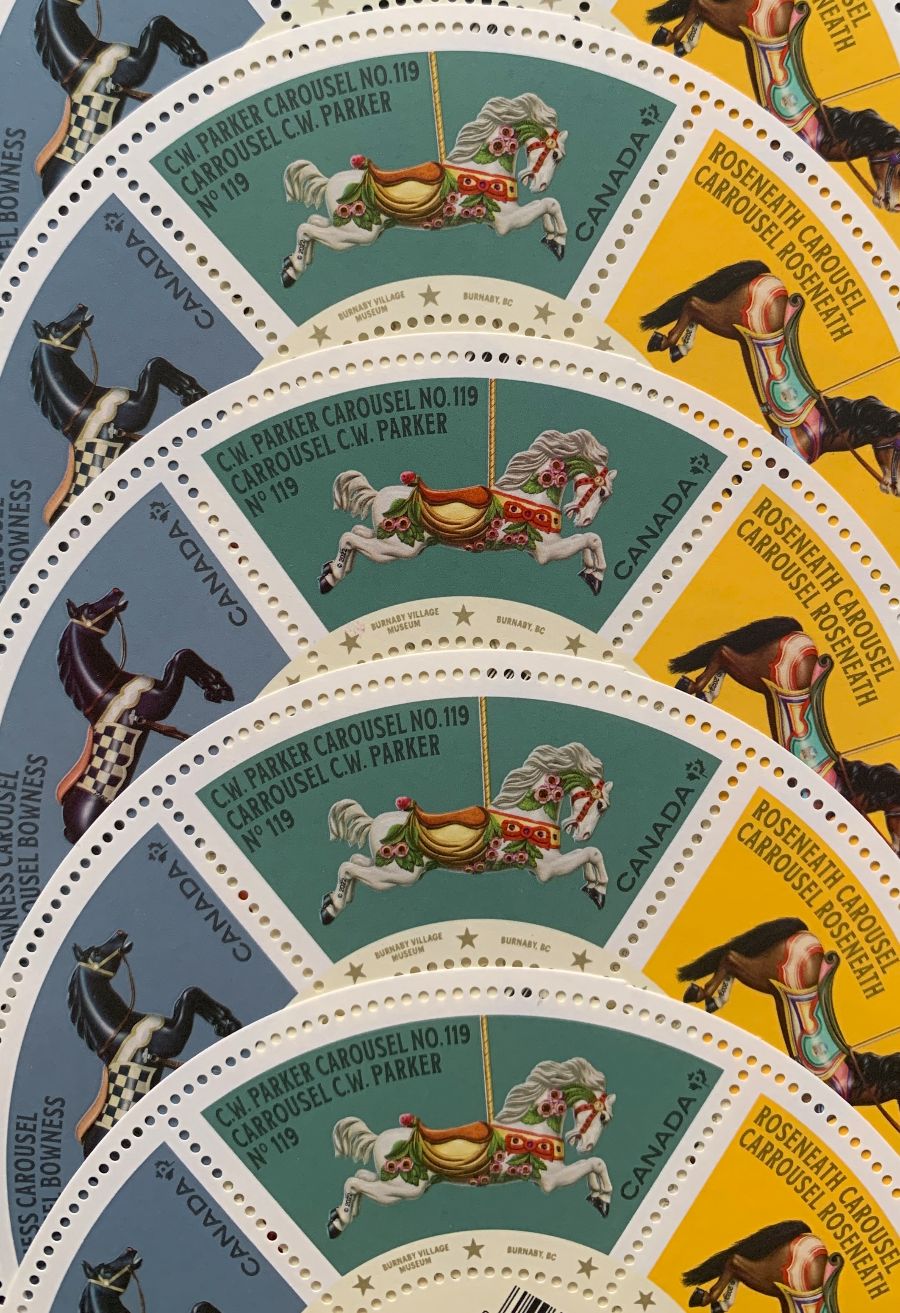
The 3348 C.W. Parker Carousel is what first caught my attention, as there is a sizable smudge of magenta ink on the bottom between the leftmost star and "Burnaby Village Museum" text.


The horse also has a magenta tinge to it, particularly obvious on the mane, tail and the saddle. The sheet in question is the 2nd one (I placed it among the other sheets so you can see the difference).


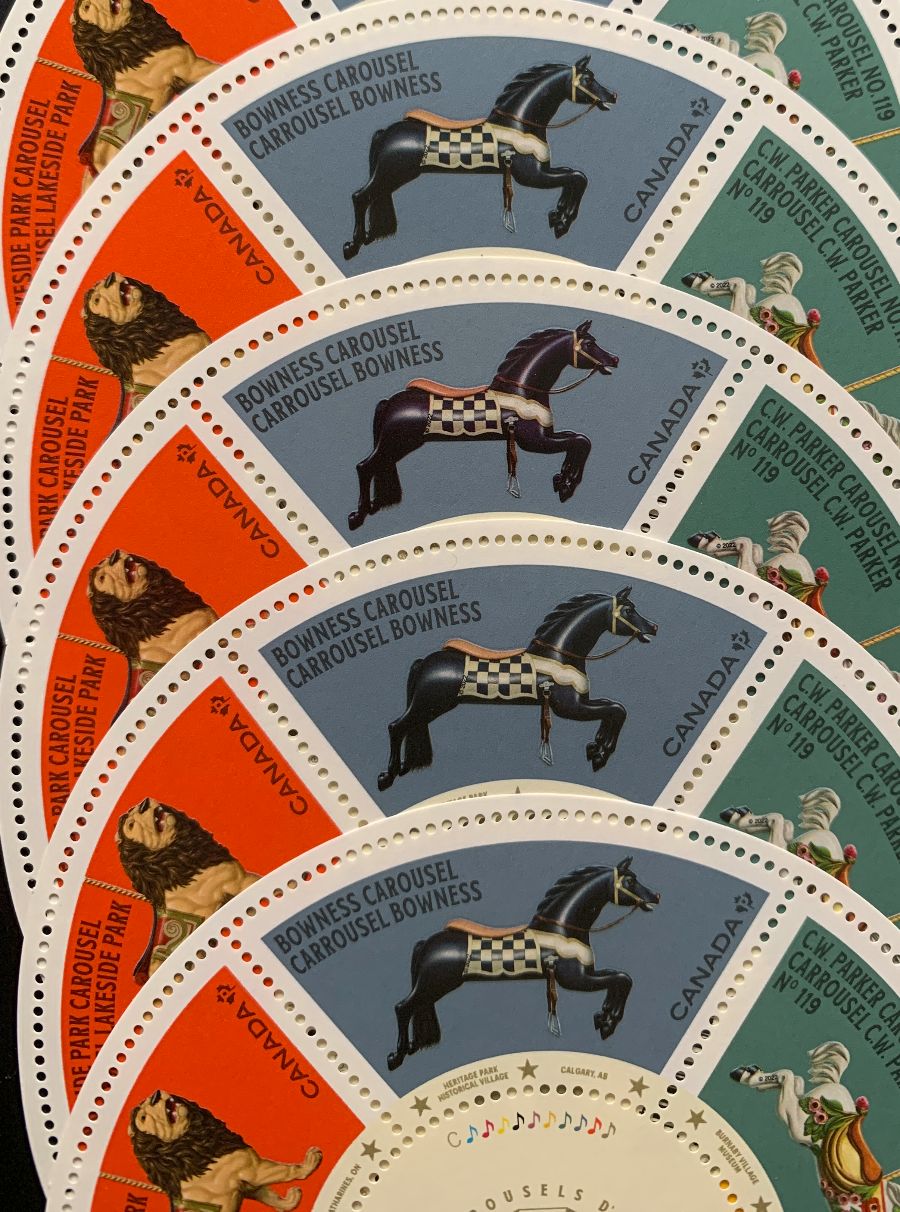
This magenta tinge is likewise noticeable on the 3347 Bowness Carousel stamp, particularly when you look at the head, neck, and saddle. Again, the sheet in question is the 2nd one.


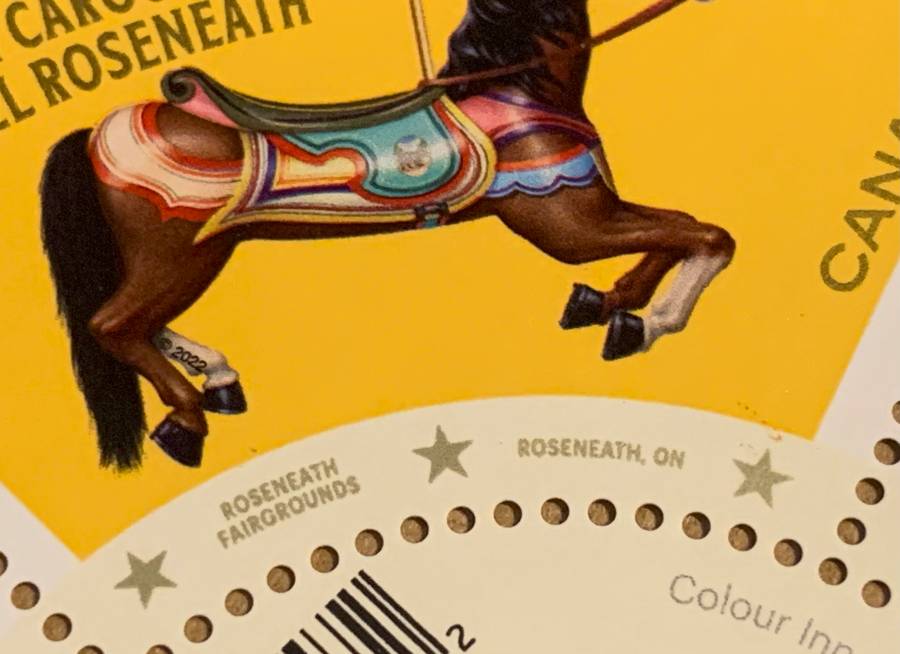
All five stamps on this souvenir sheet have this magenta tinge, but these two stamps are more immediately obvious. Curiously the background colours seem the same, only the horses have different coloration. There is also a smaller smudge of (likely magenta) ink below the 3344 Roseneath Carousel, by the rightmost star.


My question is, how would you classify this sheet? Is it an error, freak or oddity? As a philatelic newbie, the definitions don't seem clear cut so I'm not sure.

Also how common is this type of thing in modern stamps? Is it because of the number of colours involved? (The printing process description for the Vintage Carousels says they are printed in Lithography in 10 colours). Would appreciate any insight!
Send note to Staff

Valued Member
United States
55 Posts
Posted 05/05/2024   10:47 pm  Show Profile Bookmark this reply Add Jay Smith to your friends list  Get a Link to this Reply
This type of color (shade, intensity) difference is actually very common on most stamps printed by lithography (or by photogravure) when the subject area of the design is printed with a halftone screen instead of a solid block of color. (Look at it under a 10x magnifier and you will see the dots).

[Though the difference is obvious to you, the example you are showing is not very different from the normal examples compared to what most experienced collectors are used to seeing. To your question about categorization, IF somebody thought of this as being "out of gamut", it would be classified as an "oddity". A "freak" would have to be much more obvious, such as a major fold-over resulting in a partially printed stamp. An "error" would have to be something much more major, such as entirely missing the perforations or entirely missing a color. "Oddities" certainly may be of interest to other collectors, but they typically do not command much of a price premium.]

The dots are printed by as many different plates as there are colors. In this case, you said that 10 colors were used, however, many areas of the design are likely printed by only four colors (thus four plates), with the size of the dots varying. To make a color darker, the dots may be larger. To make a color more green or more red, the dots of that color will be larger, etc.

The four basic colors normally used are CMYK: Cyan (blue), Magenta, Yellow, and Black. Those four colors can make nearly any color we can perceive in a printed item. However, there are sometimes more effective and convincing ways to make large areas of certain colors, thus why your information stating that these were printed with 10 colors.

Though nowadays very precise, plate making is still an art. A nearly microscopic difference in the size or density of the dots on one or more of the plates can affect the total color in significant ways.

Also, the registration (placement of each color on the paper) can make a huge difference in the final perception of the colors. The printing is normally done with the lighter colors first, followed by the darker colors: Yellow, Magenta, Cyan (blue), and then Black. Thus if the black plate is 0.1 mm out of registration on the printing press, the black can easily cover some yellow (or other colors), thus dramatically changing our color perception of the final printed product.

The best illustration of this that most adults will understand is to remember the color printing of Sunday newspapers "back in the day". Remember that sometimes pictures looked terrible because one or more colors were obviously out of register. The same thing can happen with stamp printing, even though stamp printing is done to much higher tolerances and accuracy.

By the way, this color shade difference (or even much more severe) can also sometimes be the result of environmental factors, such as exposure to UV light (sunlight or other sources) or exposure to chemicals / gasses (quite common these days in collecting supplies that utilize "bad" types of plastics).

I hope that helps.

Jay Smith
Send note to Staff  Go to Top of Page
  Previous TopicReplies: 1 / Views: 860Next Topic  
 
To participate in the forum you must log in or register.

Go to Top of Page

Disclaimer: While a tremendous amount of effort goes into ensuring the accuracy of the information contained in this site, Stamp Community assumes no liability for errors. Copyright 2005 - 2026 Stamp Community Family - All rights reserved worldwide. Use of any images or content on this website without prior written permission of Stamp Community or the original lender is strictly prohibited.
Privacy Policy / Terms of Use    Advertise Here
Stamp Community Forum © 2007 - 2026 Stamp Community Forums
It took 0.16 seconds to lick this stamp. Powered By: Snitz Forums 2000 Version 3.4.05
