| Author |
 Replies: 11 / Views: 916 Replies: 11 / Views: 916 |
|
|
Pillar Of The Community
United States
1164 Posts |
|
|
|
|
Pillar Of The Community
United States
3515 Posts |
|
|
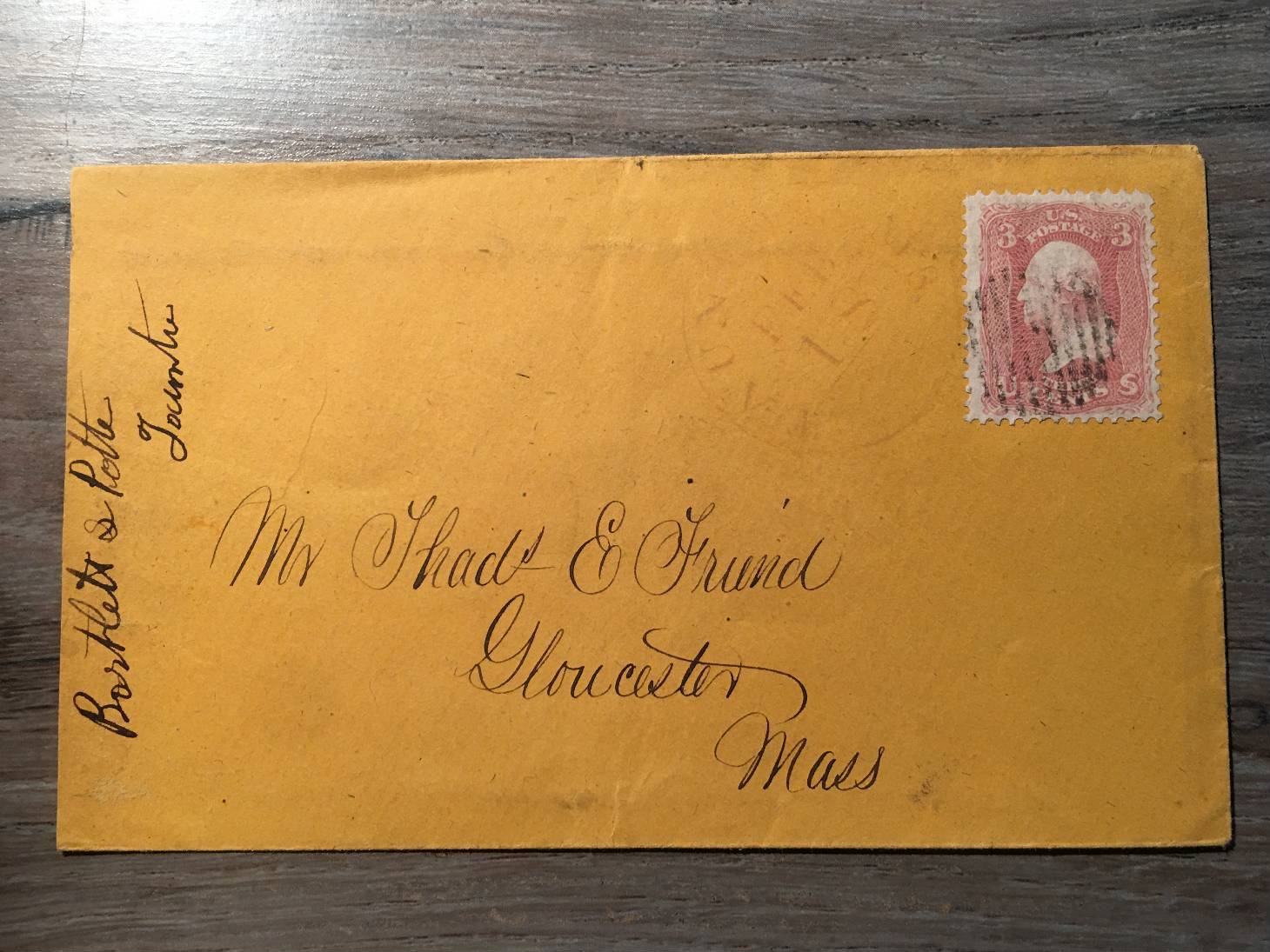
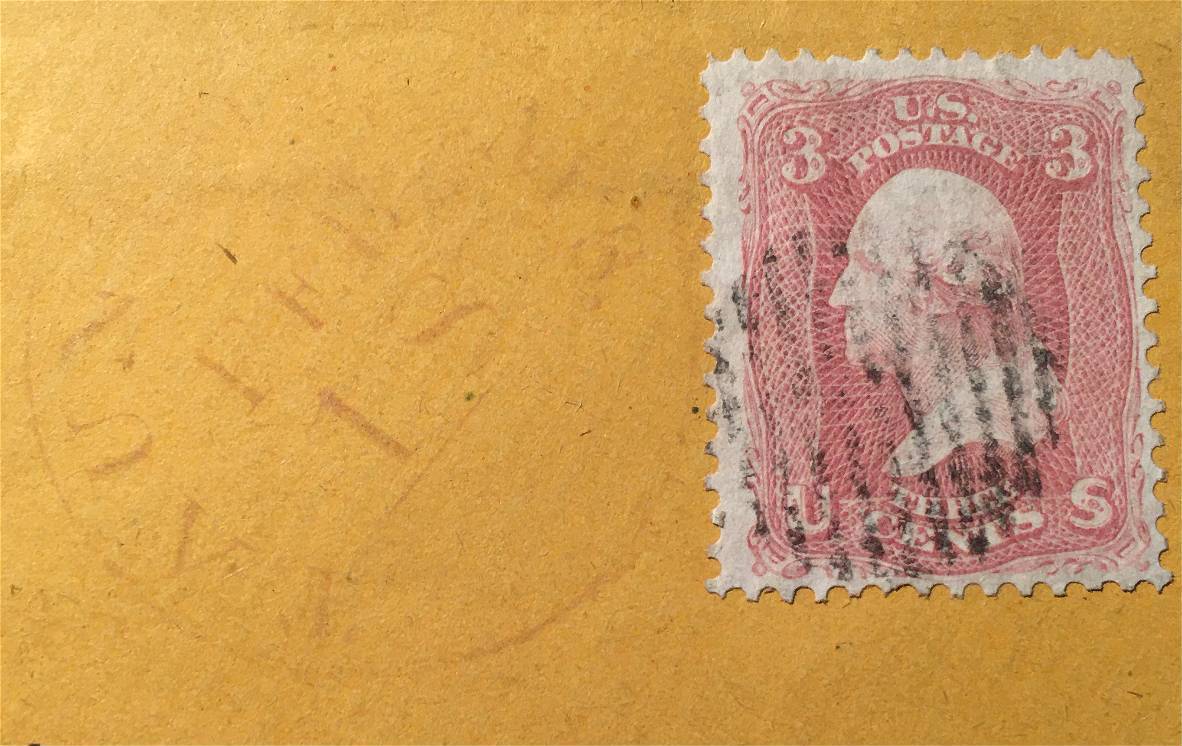
All I know is that cancellations struck on buff covers often produce very misleading visual appearances of what color they really are. Blue and Red cancels often appear very different. I don't know that one could draw the conclusion that this is Brown, without previously knowing that Taunton had a Brown. Which is what you are asking of course.  The 1997 American Stampless Cover Catalog for Taunton, MA, only covers Taunton up to about 1862 and shows no Brown. Maybe there is something that covers the 1860s better ... a Massachusetts postal history book, maybe. |
Send note to Staff 
|
|
|
Pillar Of The Community
United States
3515 Posts |
|
|
For what its worth, Siegel sale 1109, lot 610 - looks like the same device. 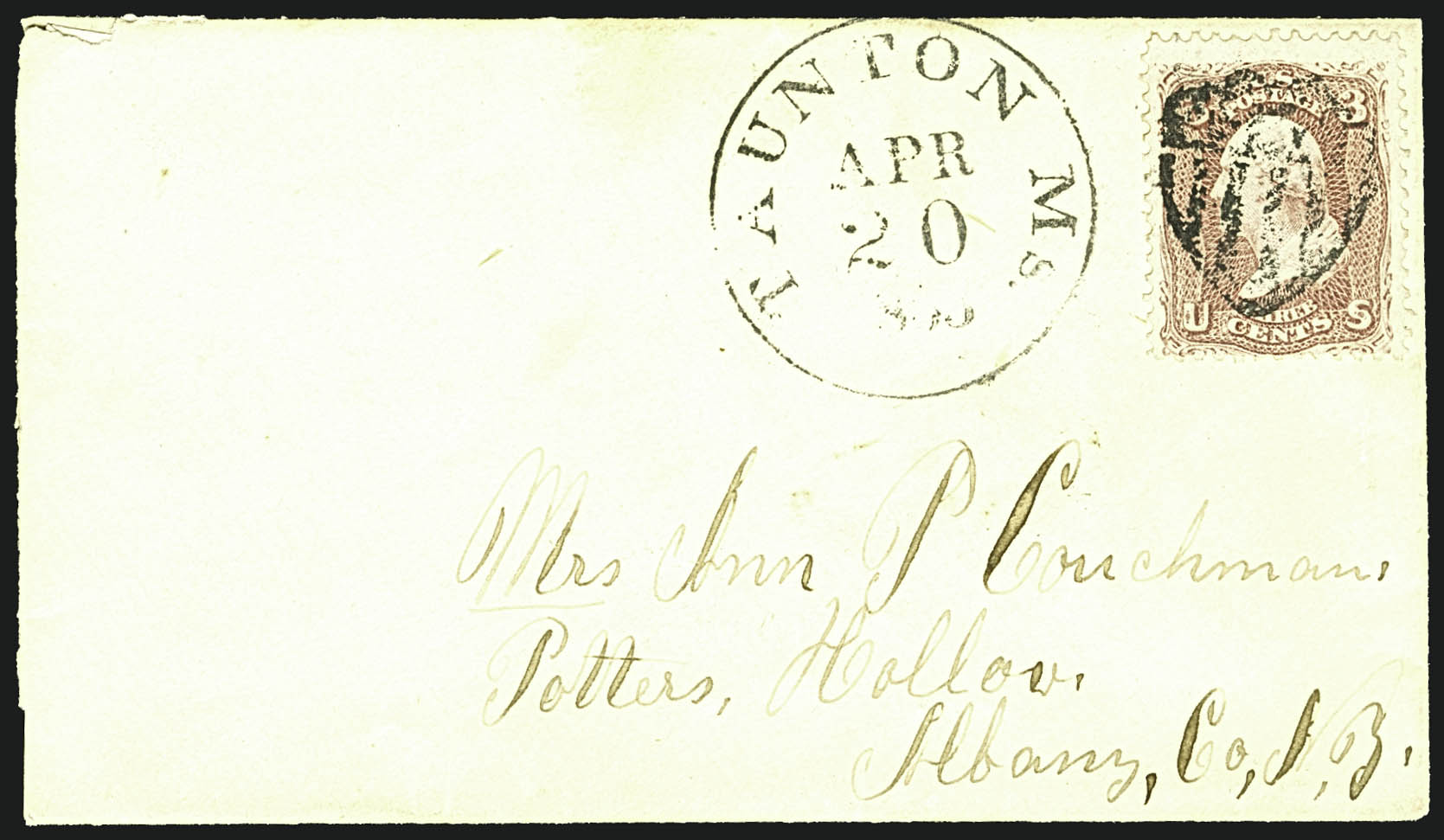 Rumsey sale 105 Lot 3136 has a funny greenish blue one. Same - sale 97 Lot 1113. Same - Sale 51 Lot 2572, an earlier blue one Same - Sale 31 Lot 1061 - closer to yours also on buff, changeling no doubt I am skeptical, and suspect yours is one of the other colors, but I don't know the 1860s inks as well as I do the earlier ones. Brown is almost non-existent in the 1850s.... |
|
Send note to Staff
|
| Edited by txstamp - 05/09/2024 4:59 pm |
|
|
Pillar Of The Community
United States
1164 Posts |
|
|
Thanks Txstamp! yeah this envelope color can play tricks on your eyes. |
|
Send note to Staff
|
Michael Darabaris |
|
|
Pillar Of The Community
United States
1868 Posts |
|
|
Iron gall inks, common in the 19th century, will undergo oxidation and hydrolysis with exposure to air and contact with paper and commonly change to brown as a result. The paper chemistry here is unknown and could have contributed to a color change. Documents written in black ink in the Revolutionary period commonly appear today as having faded brown ink. |
|
Send note to Staff
|
|
|
Pillar Of The Community
United States
1164 Posts |
|
|
I agree Cj, but the black ink written from the sender and the recipient seems unfazed and look very black. |
|
Send note to Staff
|
Michael Darabaris |
|
|
Pillar Of The Community
6352 Posts |
|
|
I see no particular evidence of "selective fading" or degradation of the CDS versus the strong colors of the envelope and stamp and the bold addressing and docketing. Nor is the CDS brown. What I see is a Taunton CDS mark in red, although lightly struck with a washed out (or more likely diluted) ink and a black killer, a fairly common combination in this era. Consider these two New England covers with bicolor marks: 1860 Boston, MS, and 1864 Providence, RI 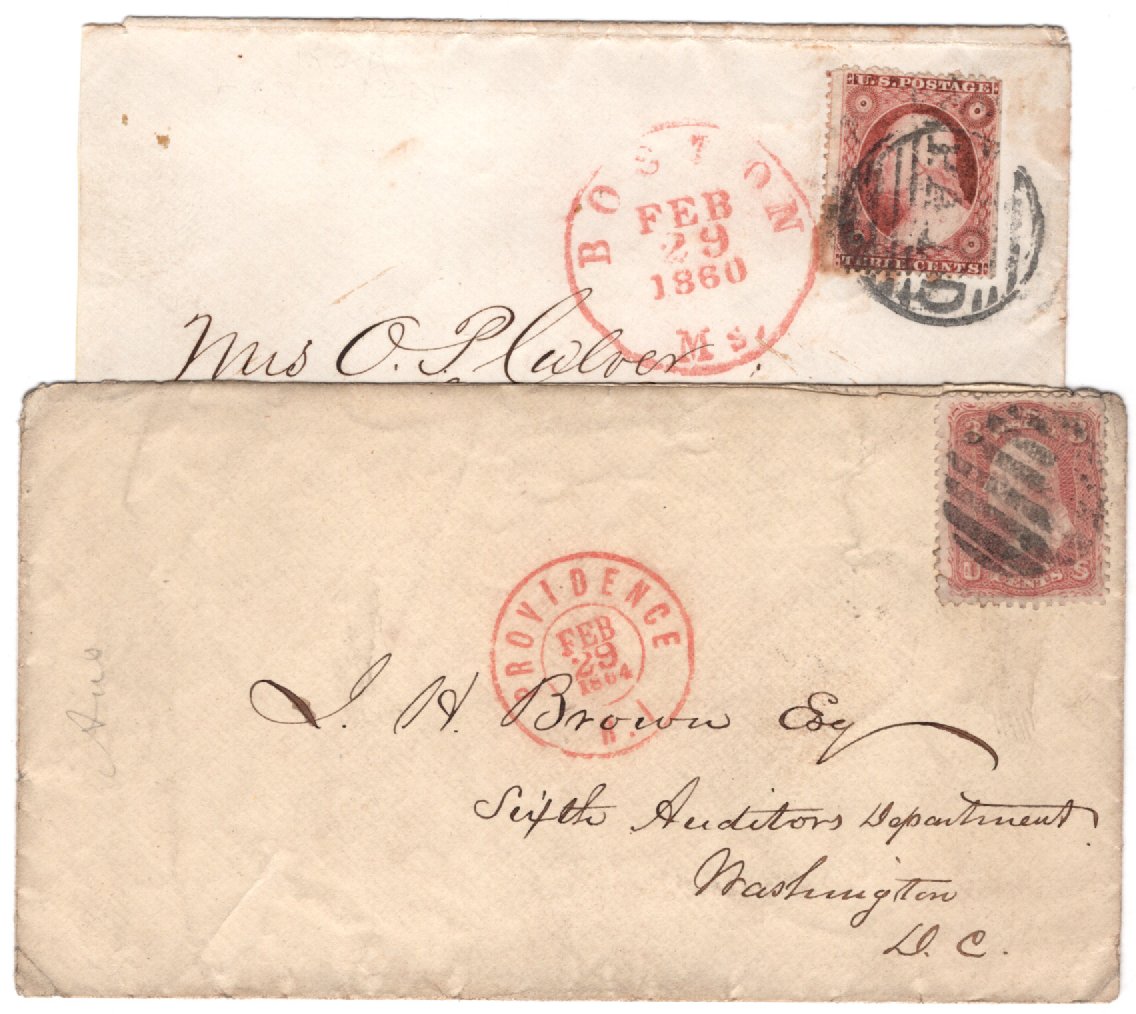 |
|
Send note to Staff
|
|
|
Bedrock Of The Community
United States
10808 Posts |
|
|
Putting the cover under UV might cause the postmark to show up more clearly, and enhance the original color. |
|
Send note to Staff
|
|
|
Pillar Of The Community

United States
1117 Posts |
|
|
Both bicolors are Feb 29th covers. Nice one John. Any particular reason or postal regulation why the the red CDS and the black killer? Seems like a lot of effort.
If the clerk accidentally stamped the red CDS on the black pad, the ink would come out dark red which may appear tinted brown, especially once faded it would be hard to tell the original ink composition. (Brown is black plus red plus yellow, the yellow/orange cover in this case providing the yellow tint). |
|
Send note to Staff
|
|
|
Pillar Of The Community
1213 Posts |
|
|
Red and orange inks from back then can change color when exposed to sulphur in the air, such as in houses with natural gas from the sometimes slightly leaky light fixtures or stoves back then, or being kept in a box or drawer where there is some rubber, etc. This is sometimes referred to as oxidation or suphurization. Some (not all) black inks were also based on ingredients that included dark brown or red components and over time can fade or change into a brownish color. Such changling ink is considered by most collectors to be damage rather than some kind of newly discovered rare brown ink. Here is an example of this phenomenon in a stamp where you can compare the original color with an changed example. This stamp was never printed in brown ink. 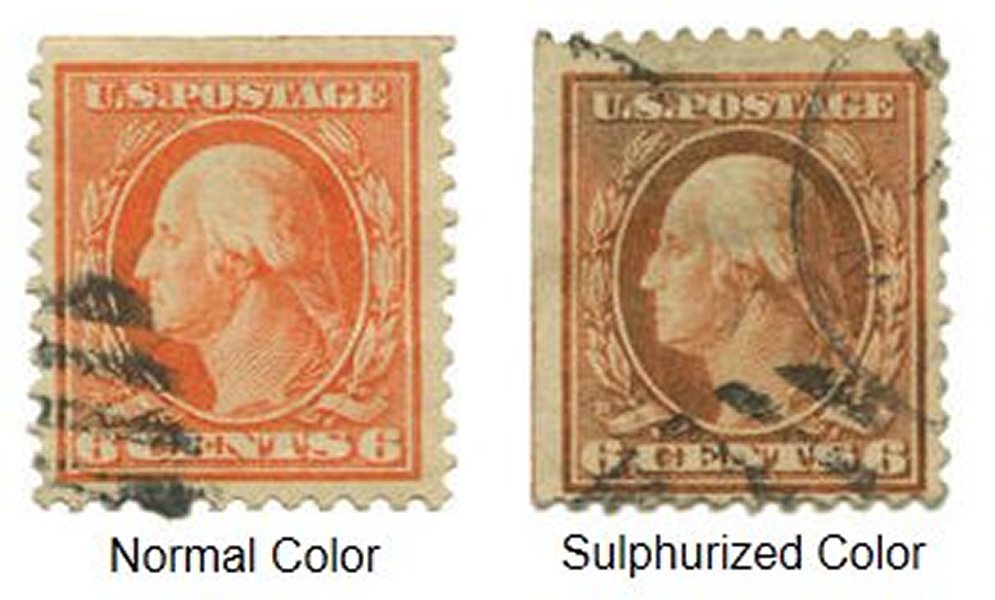 |
|
Send note to Staff
|
|
|
Pillar Of The Community
United States
1164 Posts |
|
|
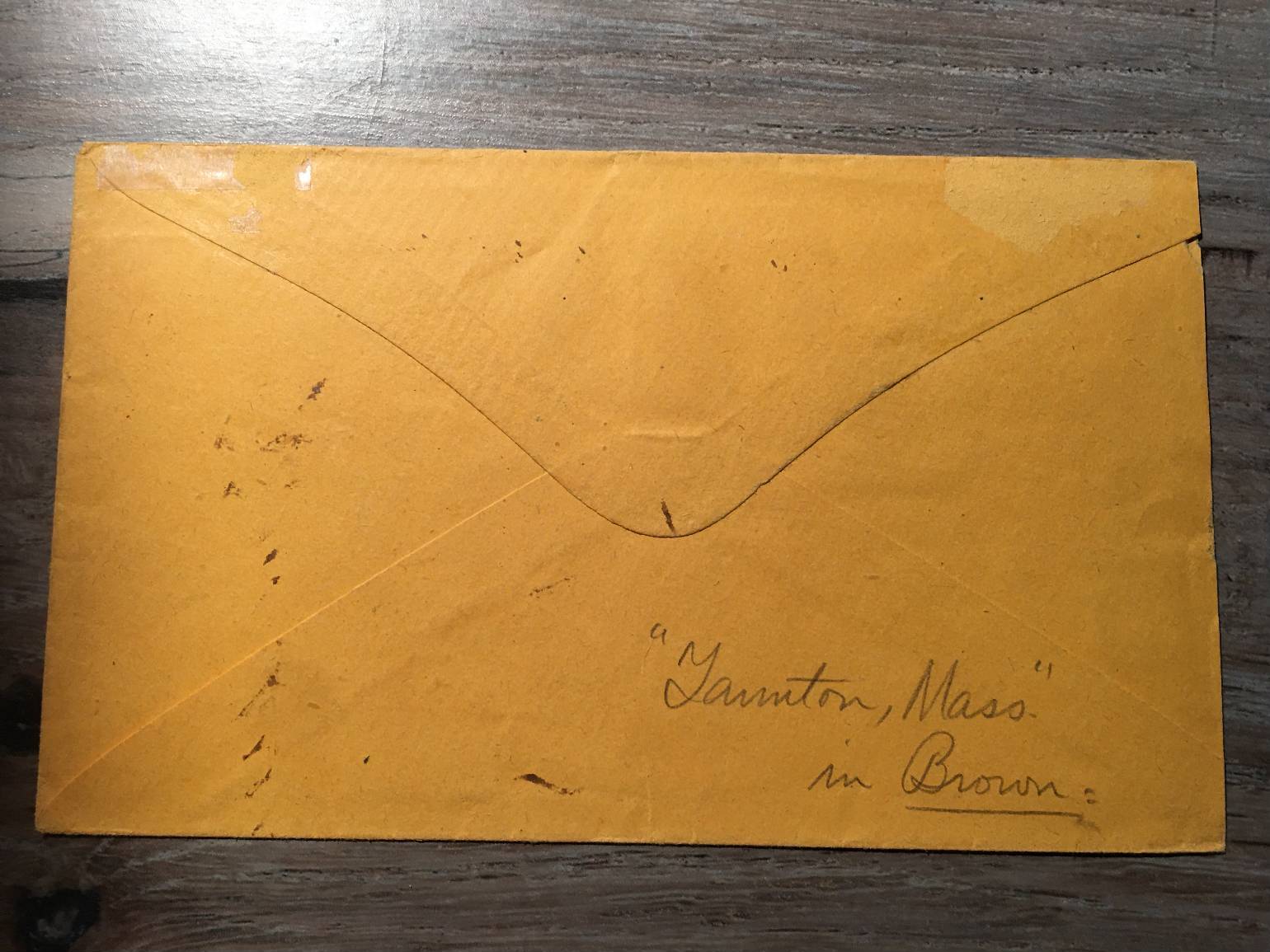
So yes I do know about changelings and oxidation, but the original owner had this for many decades and he is the one who wrote this on back. Also I don't think there is a color change on this one since all the other colors involved, the paper color, the stamps color, the text on the cover and even the ink trail on back hasn't seemed to fade. But I do think the cancel being on the golden yellow paper impacted the color we see. Scott catalog has this stamp listed with a brown cancel. I don't know how accurate that is. they also have 11 colors of cancels listed for this stamp that carry a premium. I have written to my friend at the APS to see what he thinks. This is not a rarity so sending for expertization is not an option. |
|
Send note to Staff
|
Michael Darabaris |
|
|
Pillar Of The Community
United States
1124 Posts |
|
|
I feel your pain. My Hudson, NY Marcophily exhibit has a possible brown cds included. Half of the judges believe it to be in brown ink, the other half, not so much... 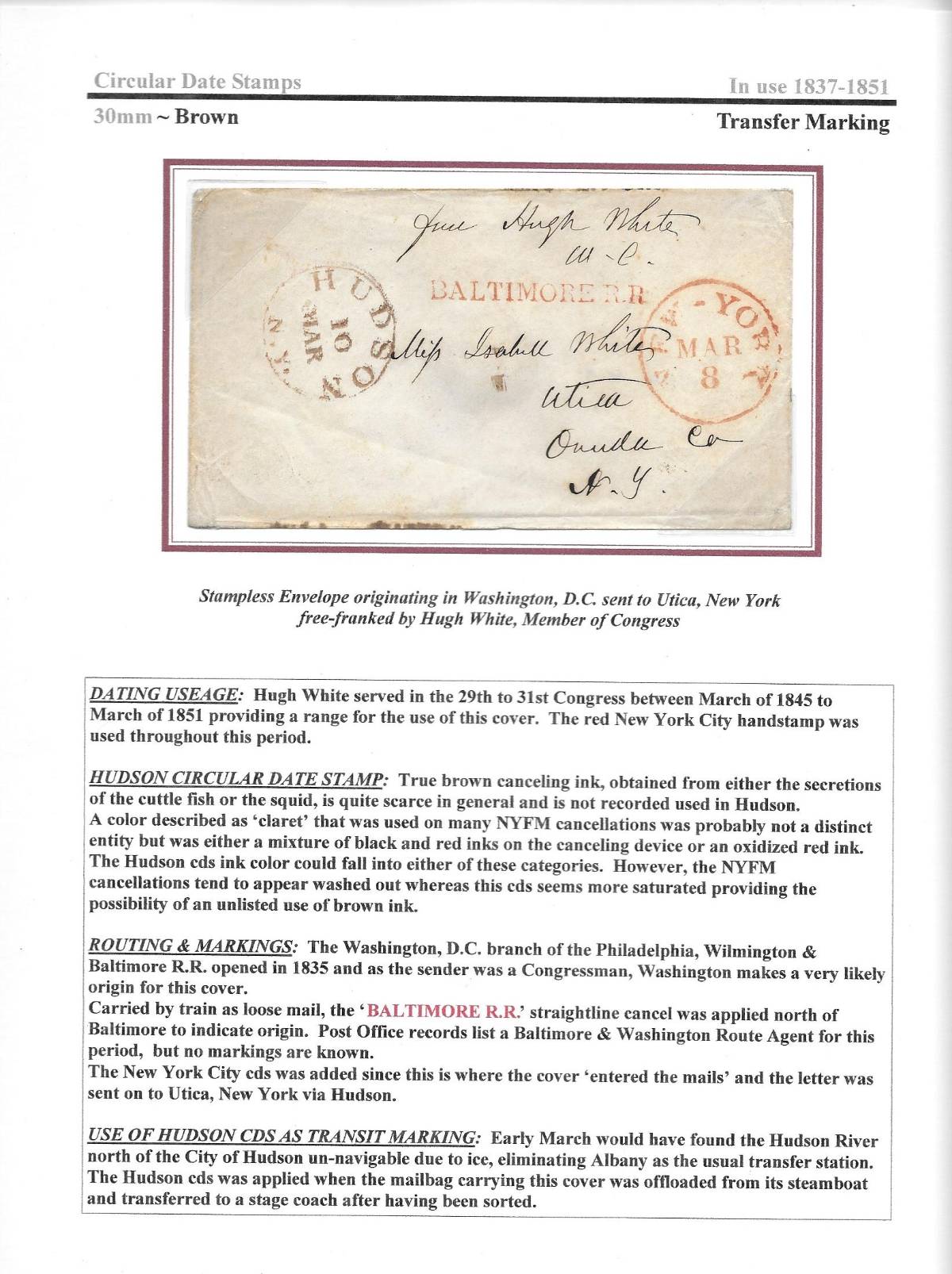 |
|
Send note to Staff
|
|
| |
Replies: 11 / Views: 916 |
|




 Posted 05/09/2024 4:30 pm