| Author |
 Replies: 18 / Views: 1,687 Replies: 18 / Views: 1,687 |
|
Valued Member
United States
149 Posts |
|
|
Could you please Explain me What does mean unusual print US Wine REVENUE RE9 (I guess it is GUM SIDE printing) Is it rare or common? Thanks 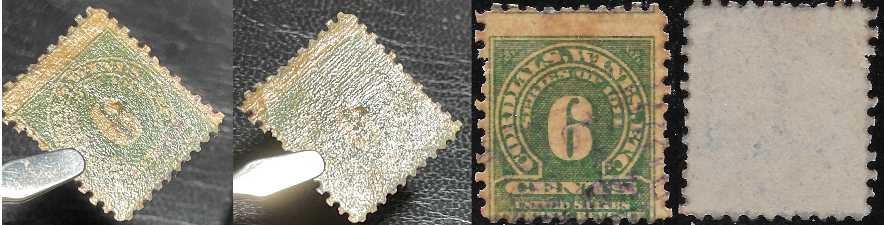 |
|
Send note to Staff
|
|
|
|
|
Pillar Of The Community
United States
4182 Posts |
|
|
Bedrock Of The Community
United States
10861 Posts |
|
|
It's used, and it was applied with some kind of gum to whatever it was on, whether it was a box or a bottle. |
Send note to Staff 
|
|
|
Pillar Of The Community
United States
1946 Posts |
|
|
For a taxpaid revenue stamp I suggest that you not soak it until you can be sure that the adhesive does not belong there. It may have been applied by the original user in accordance with special regs at the time. |
|
Send note to Staff
|
|
|
Bedrock Of The Community
United States
10861 Posts |
|
|
It was part of the original use, so there is no reason to try to remove it. It is probably not water soluble in any case. |
|
Send note to Staff
|
|
|
Valued Member
United States
81 Posts |
|
|
For the revenue experts... Judging from the early RE listings in Scott (I have the 2021 edition), it seems that if gumming is not explicitly mentioned, it is assumed that they're gummed. Is that correct?
As for gum on the face, could it be varnish? I'm aware of other type of revenues for which a coating of varnish was required to attach them to barrels, etc., so I'm wondering if what appears to be gum might actually be varnish. |
|
Send note to Staff
|
|
|
Bedrock Of The Community
United States
10861 Posts |
|
|
Yes, it is varnish or shellac, or some clear substance that will paste the stamp to the document, carton, or bottle. |
|
Send note to Staff
|
|
|
Valued Member
United States
81 Posts |
|
|
Valued Member
United States
149 Posts |
|
|
Additional Information:!!!
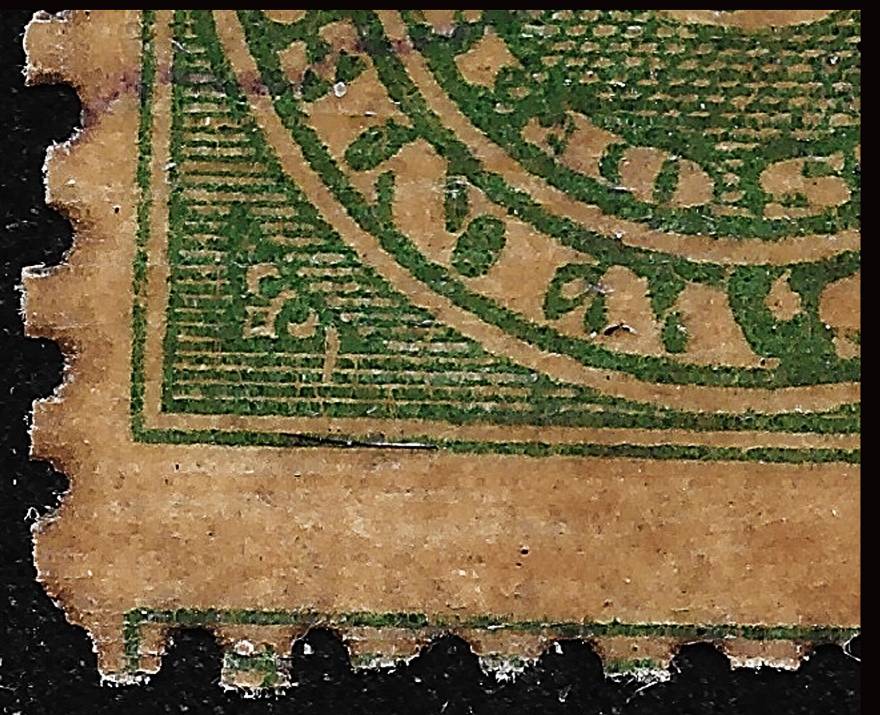
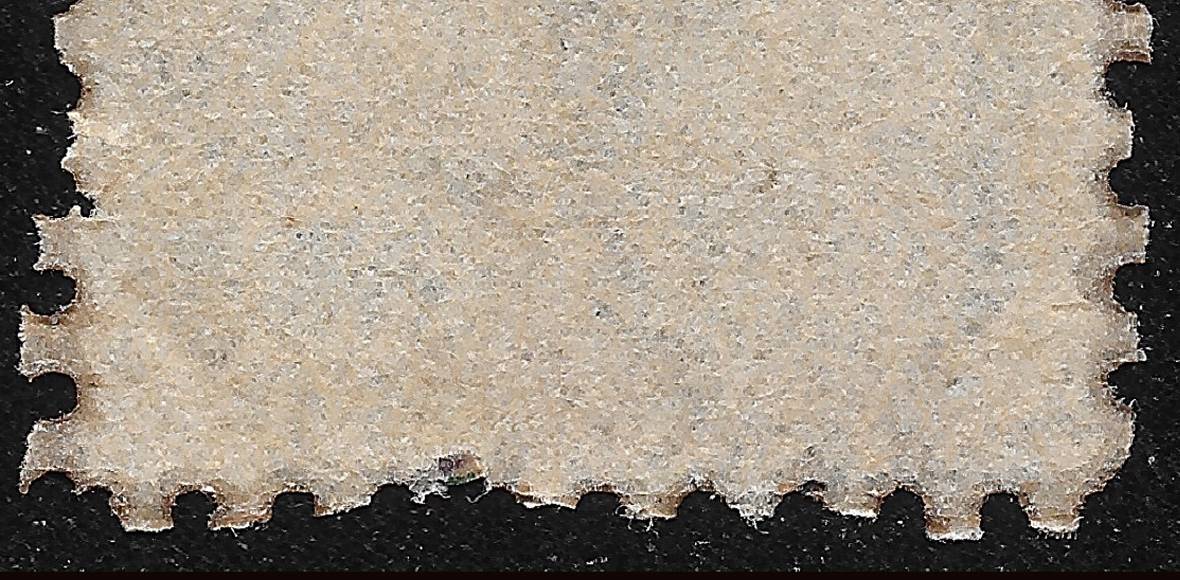
I examined the perforation: glue or some similar substances were applied to the stamp after perforation. |
|
Send note to Staff
|
|
|
Valued Member
United States
149 Posts |
|
|
Important clarification:
the gum was applied after a perforation of sheet of stamps, but before the stamps was torn off from the sheet. |
|
Send note to Staff
|
|
|
Valued Member
United States
81 Posts |
|
|
Intriguing! Quote:
the gum was applied after a perforation of sheet of stamps, but before the stamps was torn off from the sheet. What are you observing that suggests that sequence of events? Also, what leads you to think that the face of the stamp is coated with gum, and not shellac or varnish as mentioned above? |
|
Send note to Staff
|
|
|
Valued Member
United States
149 Posts |
|
|
I do not deny that this is shellac or varnish.. I used the words glue to simplify the description. Moreover, the coating is most likely NOT glue!! The coating has flowed into the perforation hols, therefore the coating was done after punching. The lack of coating on the teeth indicates that it was done before the stamp was torn off |
|
Send note to Staff
|
|
|
Bedrock Of The Community
United States
10861 Posts |
|
|
If there is varnish or shellac in the holes then it is also on the teeth, it would not have been applied until after the stamp had been placed on whatever surface was required to pay the tax involved. This was a common method of additional canceling while insuring that it would not accidentally fall off. There was no reason to add this to a full or partial sheet. |
|
Send note to Staff
|
|
|
Valued Member
United States
149 Posts |
|
|
Bedrock Of The Community
United States
10861 Posts |
|
|
You can see on the reverse how the varnish/shellac soaked into the perfs. |
|
Send note to Staff
|
|
|
Pillar Of The Community
United States
796 Posts |
|
|
Replies: 18 / Views: 1,687 |
|




 Posted 06/01/2024 01:43 am