Stamp Community Family of Web Sites
Thousands of stamps, consistently graded, competitively priced and hundreds of in-depth blog posts to read


Stamp Community Forum
 
Username:
Password:
Save Password
Forgot your Password?

This page may contain links that result in small commissions to keep this free site up and running.

Welcome Guest! Registering and/or logging in will remove the anchor (bottom) ads. It's Free!

Netherlands Imperforate Stamps Proof?

 
To participate in the forum you must log in or register.
Author Previous TopicReplies: 7 / Views: 581Next Topic  
Pillar Of The Community
543 Posts
Posted 09/01/2024   05:34 am  Show Profile Bookmark this topic Add Murasama to your friends list Get a Link to this Message
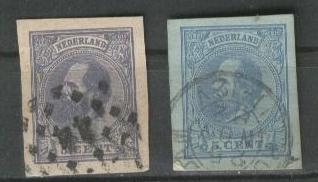
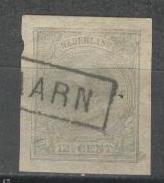
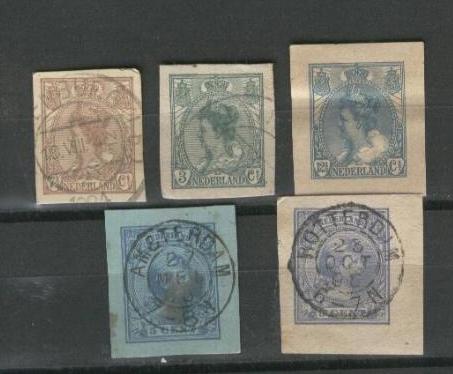
I have recently started with two new collections of classics, one from Italy and the other from Netherlands (from the first year until approximately 1900, with the possibility of increasing until 1930) with which I have really fallen in love, since they are beautiful stamps in my opinion and that Furthermore, they do not offer extreme difficulty in classifying them due to an excess of variants "only for very specialists", subjective ranges of colors, combinations of endless perforations, or continuous reissues in various discontinuous years…Characteristics that I appreciate and are the sauce of the collecting in other of my groups such as; USA, UK or Australia... good to entertain and get my head drunk like whiskey, on the contrary these two collections are really like a refreshing drink of water. Even so, when one gets into it in depth, and especially as a novice, there are always questions to be resolved that go beyond the basic catalog and that need to be consulted by experts. In this sense, I would need your help with some imperforate stamps from Netherland. The fact is that I purchased a batch online and I have had doubts. The model of the stamps in question correspond to the issues of 1872/88 (SC#23/33), 1891/94 (SC#40/50) and 1898/24 (SC#55/82), of which in the catalog notes in the first of them that the imperforate stamps are Proof.. Both the seller and in some web search I have seen that they talk about "coming from a postal card." My doubts are:
What does proof refer to in the catalog? essays? Higher quality stamps?
Are they proof or are they postal card?
Why only the 1872 group appears in the catalog as proof? What about the other two, aren't they proof?
Do they have a number in any catalog?
Send note to Staff
Edited by Murasama - 09/01/2024 05:38 am

Pillar Of The Community
United Kingdom
8582 Posts
Posted 09/01/2024   05:51 am  Show Profile Check GeoffHa's eBay Listings Bookmark this reply Add GeoffHa to your friends list  Get a Link to this Reply
These all appear to be cut-outs from postal stationery. Proofs or essays will not, in normal circumstances, be used.
Send note to Staff  Go to Top of Page
Pillar Of The Community
6329 Posts
Posted 09/01/2024   05:55 am  Show Profile Bookmark this reply Add John Becker to your friends list  Get a Link to this Reply
If you follow the posts made by others on this board, you will note there are at least two threads every month where collectors ask about "unlisted" imperforate versions of stamps. They invariably turn out to be cut from postal stationery ... postal cards, letter sheets, envelopes, etc.

One clue for the cards and letters sheets is finding part of the message on the reverse side. Another common sense clue against proofs is the fact that most are used. Scott does not list foreign stationery. This is also a good opportunity to use ebay as a crude reference tool. Searching for "Netherlands postal card", "Netherlands stationery" and similar combinations will turn up examples which match your items. Like many other threads here advise other collectors, start with the belief that an item it the most common type or style, then work toward eliminating the possibilities toward the more rare or unusual.
Send note to Staff  Go to Top of Page
Edited by John Becker - 09/01/2024 05:58 am
Pillar Of The Community
543 Posts
Posted 09/01/2024   06:42 am  Show Profile Bookmark this reply Add Murasama to your friends list  Get a Link to this Reply
Thank you!! I just saw the postcards and the cuts with a little more depth...I guess that when I get these cuts, they will be hard like cardboard and not paper like a stamp.
Anyway, it's not clear to me what Scott means by proof.
Send note to Staff  Go to Top of Page
Pillar Of The Community
United States
8956 Posts
Posted 09/01/2024   09:49 am  Show Profile Bookmark this reply Add Petert4522 to your friends list  Get a Link to this Reply
Murasama, please use the tools that are here for you. If you do not know what a proof is, use the "Glossary" on the upper right hand side of this page


Peter


Send note to Staff  Go to Top of Page
Pillar Of The Community
6329 Posts
Posted 09/01/2024   10:25 am  Show Profile Bookmark this reply Add John Becker to your friends list  Get a Link to this Reply

Quote:
these cuts, they will be hard like cardboard and not paper like a stamp

Not necessarily. The paper thickness of postal cards varies a lot depending on the country, issue, era, etc. Indeed, some will be quite thick, but some will be as thin as regular paper. And cuts from letter sheets and envelopes will tend to be "regular paper" thickness. Bottom line: look at ALL the clues like postmarks, writing on back, printing quality, etc.
Send note to Staff  Go to Top of Page
Valued Member
Canada
395 Posts
Posted 09/02/2024   01:36 am  Show Profile Bookmark this reply Add j2186 to your friends list  Get a Link to this Reply
Firstly, all the examples shown in the original post are cutouts from postal cards and stationary.

To answer the OP's question about the proofs of the 1872 (King Willem III) issue, the proofs referred to in the catalogue are colour proofs, that is, most of the proofs are in a completely different colour from the issued stamp. For example the 5 cent King Willem III proofs are in black, carmine, pale brown, green, violet and yellow brown, but not in blue. The few examples of proofs in the issued colours should probably be collected in pairs.

Similar proofs do exist for a few values of the other issued pictured in the original post.

These proofs are only listed in a specialized proof catalogue. The one I have is "Catalogus van de Proeven van Nederland ..." by J.L. van Dieten but it is the 1966 edition. There have been a few newer editions, but I am not sure which is the latest.

Jan

Send note to Staff  Go to Top of Page
Pillar Of The Community
543 Posts
Posted 09/02/2024   03:45 am  Show Profile Bookmark this reply Add Murasama to your friends list  Get a Link to this Reply
Very grateful for this detailed information that helps me to better understand the Netherlands stamps!!
Send note to Staff  Go to Top of Page
  Previous TopicReplies: 7 / Views: 581Next Topic  
 
To participate in the forum you must log in or register.

Go to Top of Page

Disclaimer: While a tremendous amount of effort goes into ensuring the accuracy of the information contained in this site, Stamp Community assumes no liability for errors. Copyright 2005 - 2026 Stamp Community Family - All rights reserved worldwide. Use of any images or content on this website without prior written permission of Stamp Community or the original lender is strictly prohibited.
Privacy Policy / Terms of Use    Advertise Here
Stamp Community Forum © 2007 - 2026 Stamp Community Forums
It took 0.18 seconds to lick this stamp. Powered By: Snitz Forums 2000 Version 3.4.05
