I think that question has never been addressed fully.
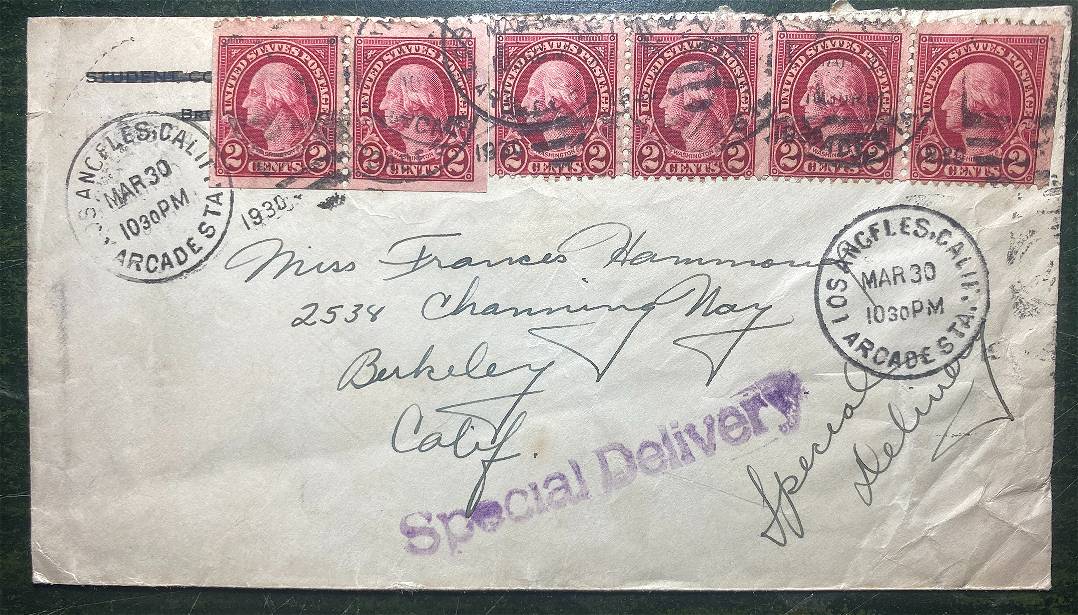
Your cover could be considered "The next best thing to a booklet pane on cover". A ranking, top to bottom of "value", would go like:
1. Full booklet pane with tab
2. Full booklet pane but without tab
3. Blocks/pairs of stamps forming a booklet pane of 6
4. Blocks/pairs of stamps forming a partial booklet pane
5. A single pair of stamps from a booklet pane
6. A single stamp from a booklet pane
As you go back in time, you'll also go down the ranking ladder. For modern booklet issues, it is not too difficult to find letters having complete panes (with some exceptions, like for example the first setenant issue, the 6c/18c pane which is difficult to find on cover as a complete pane). For the very early booklet issues, full panes are extremely rare which shows in the catalog values. Note that the panes must be cancelled in the period usually assigned "contemporary", meaning the letter should be postmarked before the next booklet stamp issue was introduced.
Some early panes were on sale for rather short periods which also makes it more likely few "top ranked" letters (still) exist. Most "used-on-cover-booklet pane collectors" (the few that still exist is my guess) are therefore happy having a booklet pair on a letter from the first few issues. Booklet pairs make it more easy than a single stamp with straight edge which could also be an ordinary sheet margin stamp.
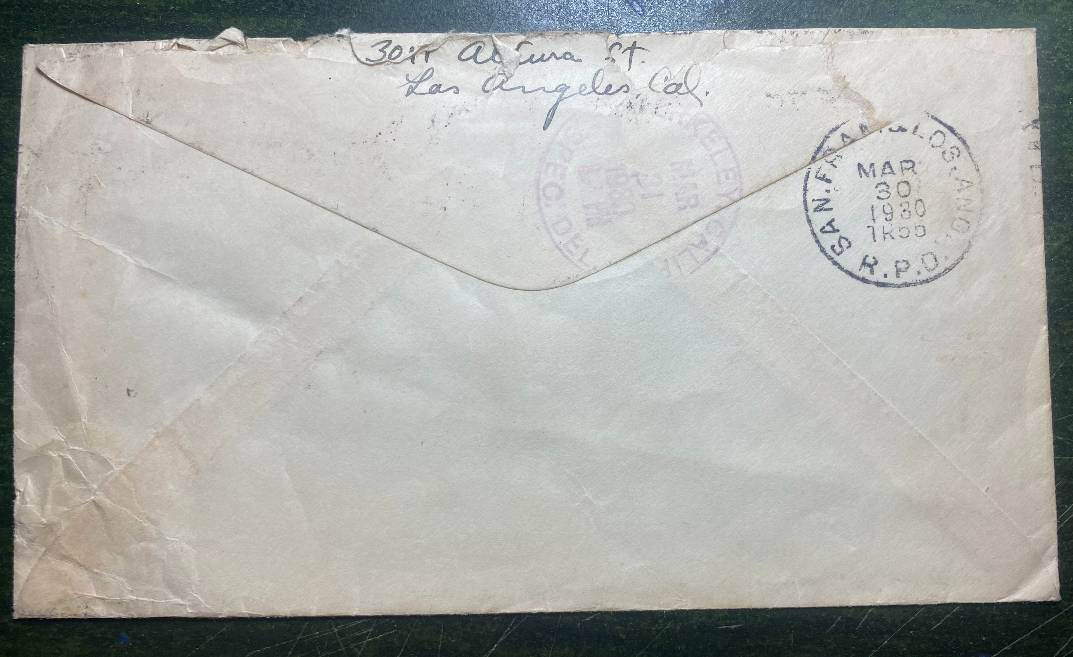
In the case of the 634d issue, it was printed in masses so there are some letters with full panes that survived, and lots of letters with blocks/pairs. Your example is absolutely collectible as "the n ext best thing". A postage rate of 12c was high at the time so it required some creative rates, like a special delivery envelope. Most letter probably show a 10c W/F and a 2c W/F stamp, a letter marked with booklet stamps only is unusual.
Also, full booklet panes usually required a rather large envelope to fit the complete pane on it, so many panes were broken up like the one you show. The suspicion also lingers that many covers with full panes with tabs (like fdc covers) may be philatelic in nature.
Here's an example of a late use of a full 634d pane (image from
ebay):





 Posted 11/04/2024 4:51 pm