| Author |
 Replies: 11 / Views: 1,106 Replies: 11 / Views: 1,106 |
|
|
Valued Member
United States
98 Posts |
|
|
These stamps are hard to identify. When I look at this stamp I see a pinkish tint. Could this stamp possibly be the dark red pink color variety? It has the lozenges watermark which can be seen very easily on the back of the stamp. Any help determing color and stamp type would be appreciated. Thanks. You can see the watermark on the front of the stamp it is the strange dark color. 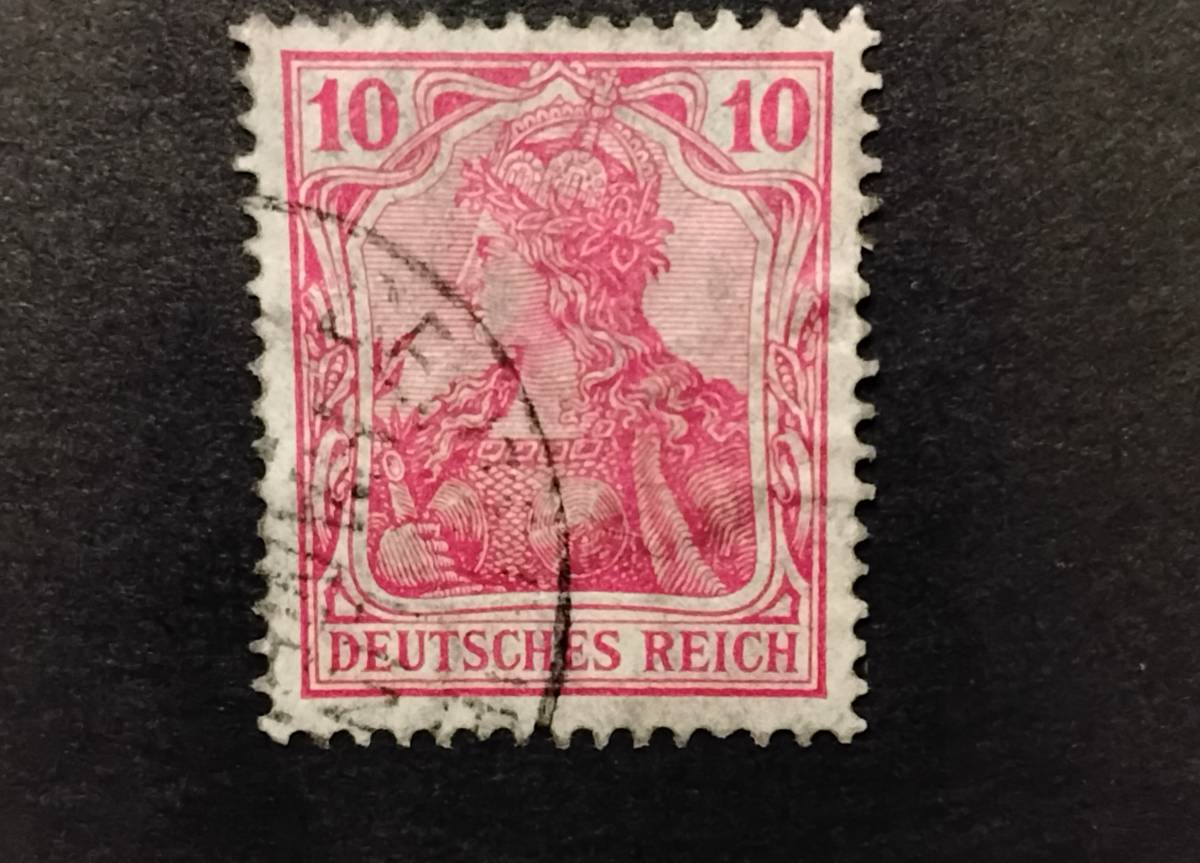 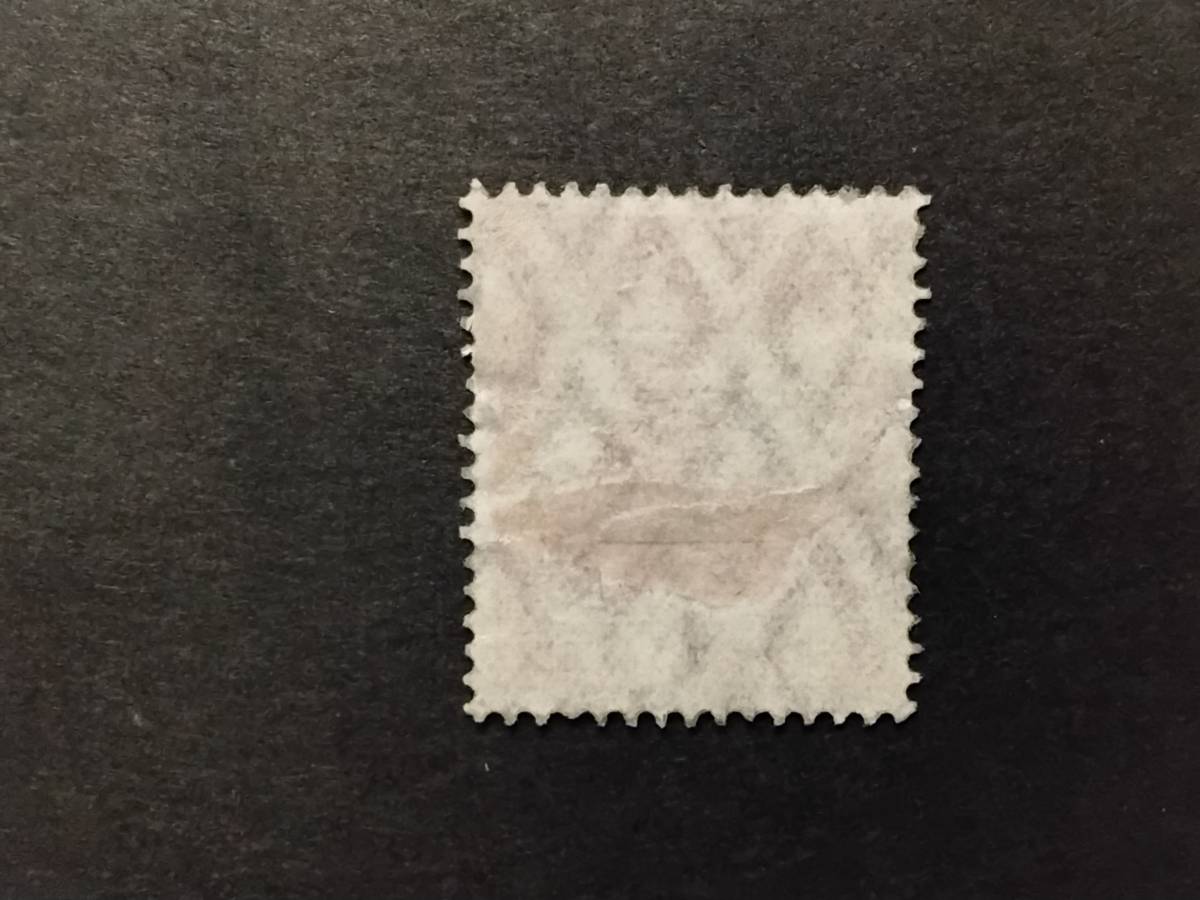 |
|
Send note to Staff
|
|
|
|
|
Pillar Of The Community
United States
775 Posts |
|
|
Your stamp is a Peace printing; otherwise completely unremarkable. Color determination is difficult on a monitor, German stamps particularly so. If you ever decide to have a German stamp expertized, especially for color, it would have to be sent to the BPP expert in Germany. |
Send note to Staff 
|
|
|
Valued Member
United States
98 Posts |
|
|
Germania-
Appreciate the information. Do you think it would be worthwhile to expertise this stamp? Or is its condition just not good enough?
|
|
Send note to Staff
|
|
|
Pillar Of The Community
United Kingdom
8628 Posts |
|
|
Bear in mind that the stamp is pretty knocked about - it's impossible to know what may have happened to the colouring over time. |
|
Send note to Staff
|
|
|
Valued Member
United States
266 Posts |
|
|
Very likely that your stamp has been exposed to direct sunlight, a weak chemical process, or any number of unknown enviromental factors before it reached your hand. |
|
Send note to Staff
|
|
|
Pillar Of The Community
United States
775 Posts |
|
|
paid, your stamp is not worth getting expertized. I have a mild bias to getting any stamp expertized for color for several reasons. Here is one. These 3 stamps (not mine) are expertized for color; can you see a difference? I cannot. Actually, I would appreciate it if someone can say that they do see a difference, maybe my color vision is a problem. (I do see that the 86Id is on slightly yellowed paper). 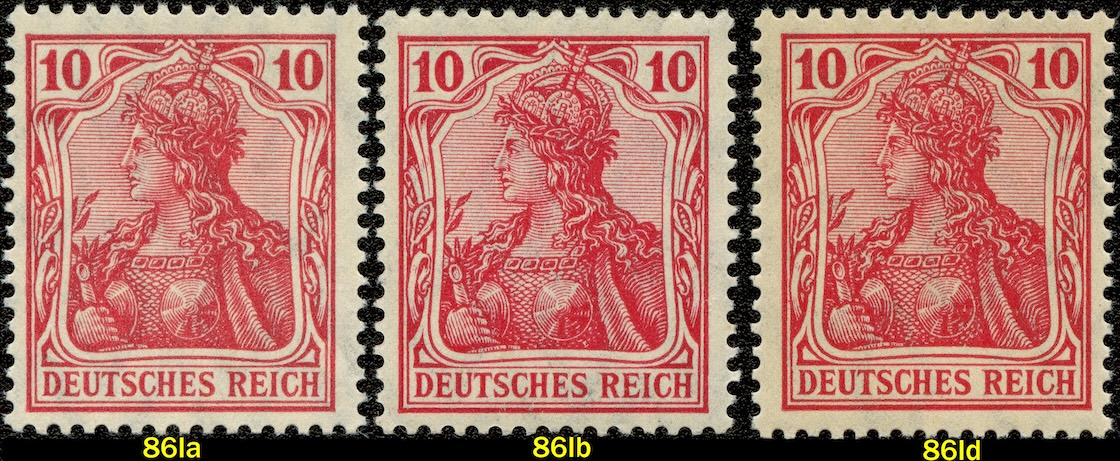 By the way, the catalog values for the above are 60, 14 and 500 euros, respectively. |
|
Send note to Staff
|
|
|
Pillar Of The Community
United Kingdom
8628 Posts |
|
|
I can't, aside from the difference imparted by the toned paper on the third stamp. |
|
Send note to Staff
|
|
|
Bedrock Of The Community
12731 Posts |
|
|
The entire "subtle color differences = huge premiums" is IMO a fraud perpetrated by the philatelic-industrial complex to make some collectors part with their money. It is bad enough with well-stored mint stamps but when you start talking about 100-year-old used stamps that have been through the proverbial wringer, including being soaked at least once, it becomes absurd. |
|
Send note to Staff
|
|
|
Valued Member
United States
98 Posts |
|
|
Germania- Looking at those 3 stamps I don't see a color difference. That is a good point and a good reference. I have other germany stamps around that same time period which are certainly a challenge determining the color. Any advice on when it comes down to selling them and I still don't have the correct color? Heres three more Germany stamps that I am stuck on. From left to right the first one I believe is bright red brown, the second one is reddish brown, and the third is brownish red. Very confusing. I took a photo of my stamp then downloaded the stamp with the corresponding color and these colors came the closest. 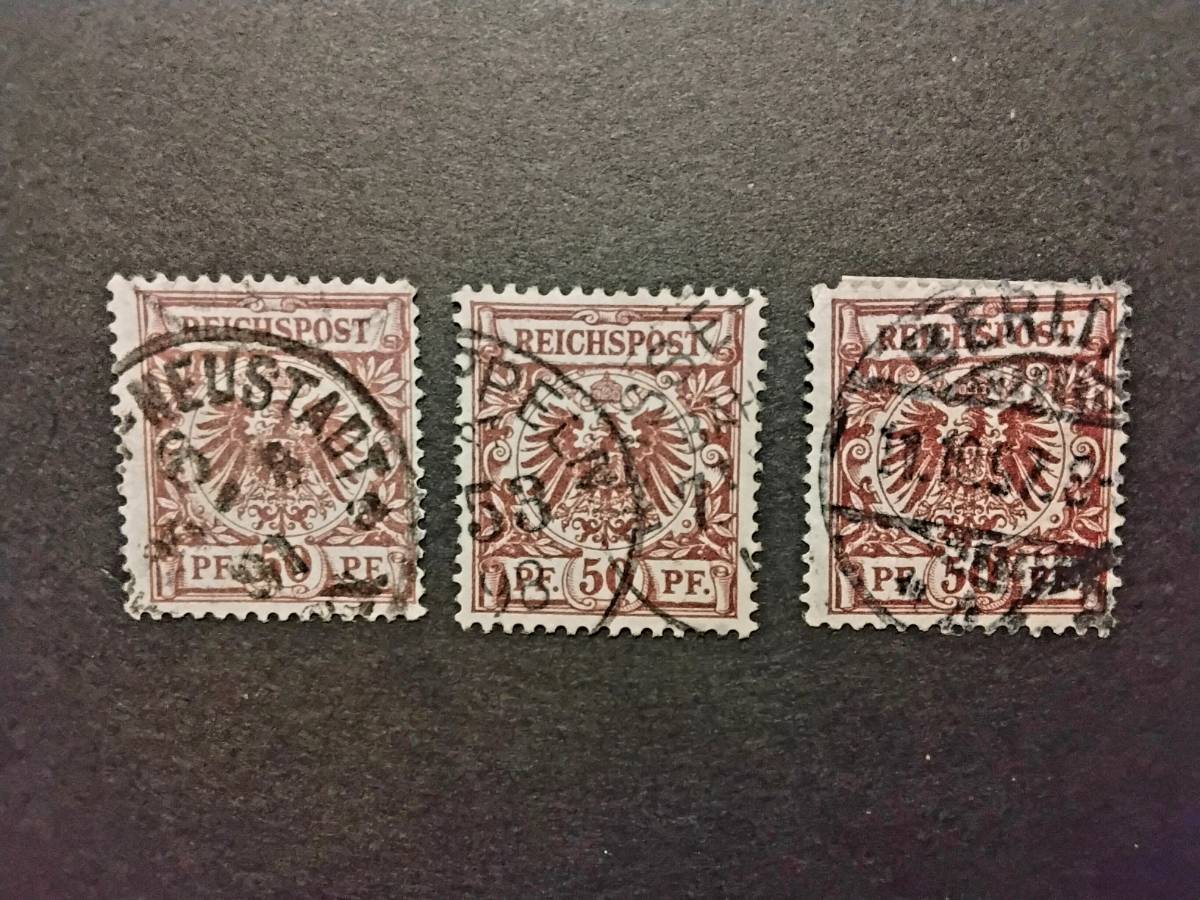 |
|
Send note to Staff
|
| Edited by Paid - 12/12/2024 6:50 pm |
|
|
Pillar Of The Community
United States
733 Posts |
|
|
I think color varieties is highly misunderstood topic in philately. There are many reasons why color variety should or should not be listed in the catalogue.
First, if the issues were printed several years apart, like earlier and later issues, then color variation of the printings could be the only way to tell them apart. However, sometimes, there could be other tell-tale signs like different color of the gum, variations in paper, and plate wear.
Second, if the batch of stamps was printed using different pigments. Sometimes similar colors can be achieved using different base colors or if different minerals were used for pigment production. With certain equipment, and the knowledge, one can differentiate between such batches if ink and properly ID the stamp.
I would say those are all valid reasons for listing color varieties.
There should never be a listing that is based solely on the human perception of the color. As a former pressman, I can tell you that no batch of ink is the same. Even the same batch of ink will result in different colors of the stamp. Changes in viscosity, changes in temperature, and subtle changes in pressure will result in different colors of the stamps during a single run.
I don't know what major catalogues base their listings of color varieties on. I assume most of them are based on the valid factors, like the two above. If not, then is a total joke. |
|
Send note to Staff
|
|
|
Pillar Of The Community
United States
775 Posts |
|
|
Pillar Of The Community
6361 Posts |
|
|
Quote:
Any advice on when it comes down to selling them and I still don't have the correct color? Don't worry about shades/colors. Leave it to the specialists. There is only so much time/effort one can put into cheap stamps being sold. And it is impossible to know everything about every stamp ever issued - and the specialty literature goes way beyond the basic catalogs. If I were preparing these for ebay sale, the title would be: "3 copies of Germany Scott #xxx with shade and color varieties, used" and start the auction 0.99 and let the bidders figure out if there is anything special to them. This is particularly true with used stamps whose handling has often been rougher that with unused stamps. |
|
Send note to Staff
|
| Edited by John Becker - 12/13/2024 09:50 am |
|
| |
Replies: 11 / Views: 1,106 |
|




 Posted 12/11/2024 11:52 pm


