| Author |
 Replies: 9 / Views: 1,083 Replies: 9 / Views: 1,083 |
|
|
New Member
United States
0 Posts |
|
|
|
After spending a few months reconnecting with my original small stamp collection and sorting hundreds of old stamps, cutting stamps off of their original envelopes, soaking to remove old hinges and to uncurl many, I have opinions about how I "should" have proceeded.
It's their an internet site/article that includes the definitive (pardon the pun) tutorial on how to process one's inventory? Let's say you have an old footlocker full of 1. A 1938 International album that is 40% full, 2. cigar boxes full of unsorted stamps from 1860-1935. 3. Envelopes cancelled with some fun history 4. A 1975 album that is 50% full, 5. 2 albums with blocks, pairs, strips.
What is the recommended top down process? For example, what if you cut all stamps off of their envelopes? Maybe some cancellations are valuable but lost if just the stamp is removed.
And if you start sorting and picking stamps with the best condition, you might leave behind a valuable stamp (a rare watermark or error) because you hadn't yet learned about such stamps.
Perhaps there's an app that is thorough AND includes what to look for.
|
|
Send note to Staff
|
|
|
|
|
Bedrock Of The Community
12555 Posts |
|
|
Wow, that is a BIG question. There are about as many ways of processing a large lot as there are collectors/dealers. There is no "right way" IMO. I have been buying really large lots for many years as have quite a few others here and everyone is different to some extent, but I suppose there are some basic steps.
This is my usual process:
Pull out the obvious low-quality stuff such as heavily remaindered albums, modern subscription material, most UN (LOL) and set aside.
Separate out any face value stamps that could be sold or used.
Separate covers from stamps.
Once I have the above done, I start to pile things by geographical area, Country or topic depending on what there is and how it is grouped.
Put aside any cigar or shoe boxes to be gone through later.
At this point I take a 30,000-foot view and decide what interests me the most and dig in.
How adept you are at this process depends upon experience. After a while you get a sense of what goes where and what you should not waste a lot of time on, and it goes pretty fast.
There is no hack that substitutes for experience.
PS: Some people could care less about time and will spend as much as they want on every item while others want to dump the chaff and get that wheat sorted ASAP. |
Send note to Staff 
|
|
|
New Member
United States
0 Posts |
|
|
Thanks. That's helpful. To go a little deeper into why I ask … At times I wish I had read more about valuation, perforations, watermarks, fancy cancels. Perhaps made several cheat sheets on stamps to be on the lookout for. Then I would be handling a stamp once. Instead I picked the best conditioned stamp among the 2 to 20 that appeared to me to be the same. In the beginning I would mount the better looking stamp in my album and file the others in an envelope. Granted my envelope filing method is strong but you can see many mistakes that I eventually fixed. I didn't have a perforation gauge. I didn't check for watermarks. I pulled off old hinges when many required soaking.
I'm having a Great time and yes, in no hurry, but have a sense I've overlooked my more valuable stamps. For now anyway. |
|
Send note to Staff
|
|
|
Bedrock Of The Community
12555 Posts |
|
|
Once you get a sense of what could require more attention it helps a lot. Honestly, I don't know many people that are going to use a perf gauge on every single stamp when you know that there are no recorded varieties, especially for more modern material. Same goes for watermarks. Many don't even have watermarks. |
|
Send note to Staff
|
|
|
New Member
United States
0 Posts |
|
|
I didn't mean to suggest I would use a gauge on a lot of stamps. Only those that I know have varieties. Same with watermarks. But I would have sorted a bit better had I first known about things to look for before mounting Anything. |
|
Send note to Staff
|
|
|
Bedrock Of The Community
12555 Posts |
|
|
New Member
United States
0 Posts |
|
|
Valued Member
United Kingdom
439 Posts |
|
|
I think a catalog for the topics or countries that interest you most is a must I use old catalogues, because I don't collect after the year 2000 and the values are of little interst to me. If I need to use a perforation gauge I use a stanley gibbons clear plastic one. it allows you to measure down to one tenth of a perforation. Easy to learn how to use it, I don't recommend allowing anyone to sit on your stamps. |
|
Send note to Staff
|
|
|
Bedrock Of The Community
12555 Posts |
|
|
Quote:
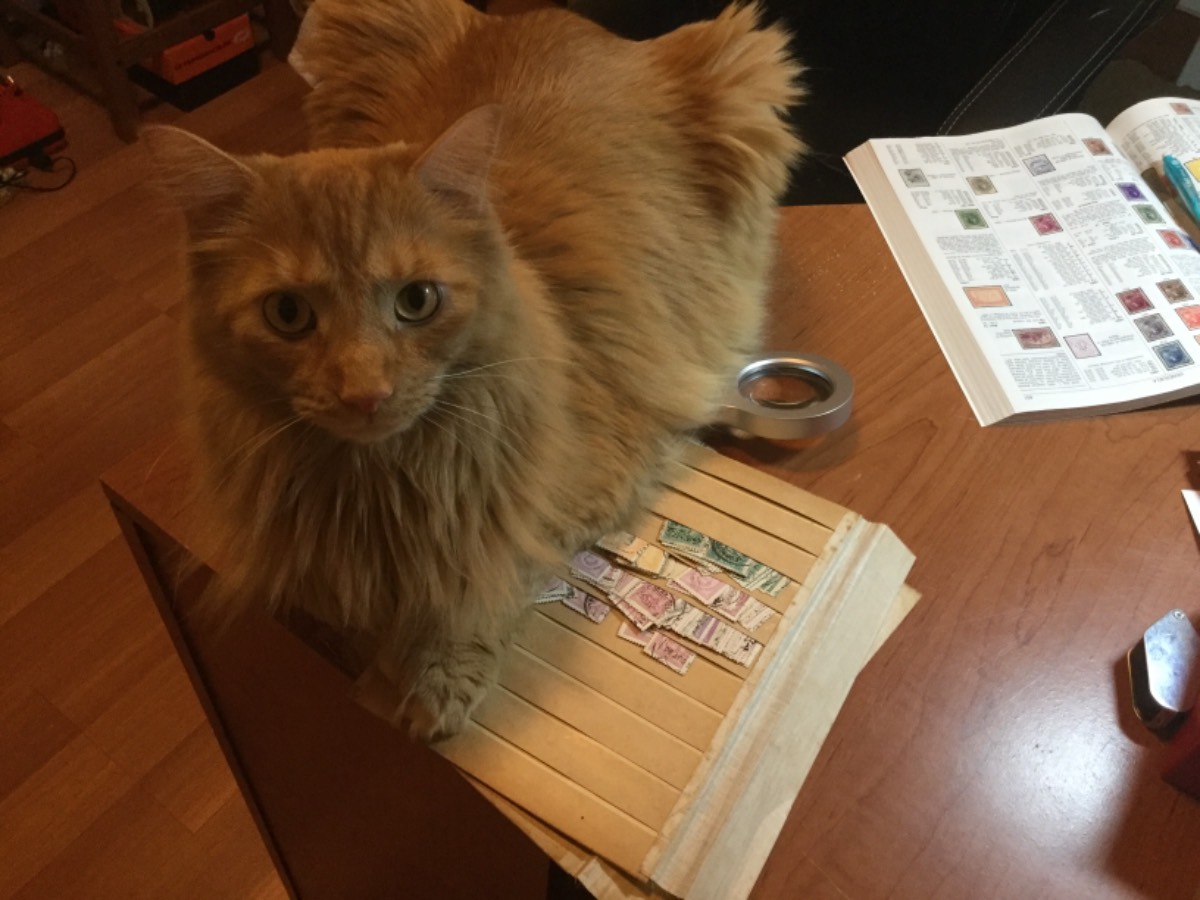
I don't recommend allowing anyone to sit on your stamps. You tell him. The last time I reprimanded him he peed on my bed.  |
|
Send note to Staff
|
|
|
Valued Member
United States
226 Posts |
|
|
I feel like first you need to have a goal. People spend a lifetime on plating specific stamps. Machin collecting seems almost endless. I chose Albums and date ranges for my collections. I'm not interested in duplicates, and tho I do put some extras in margins, I mostly ignore stamps that don't have a home in them. I do have a lot of mostly later US sheets, strips, and plate blocks, just from how me & my mom got new issues as a kid, so I incorporated them into my US album.
For starting out, I think separating by country, then by rough year is best. If you plan to sell dups there is the process of setting that up. But knowing hwere you want to head should give you more clarity on your process. |
|
Send note to Staff
|
|
| |
Replies: 9 / Views: 1,083 |
|




 Posted 12/25/2024 3:30 pm