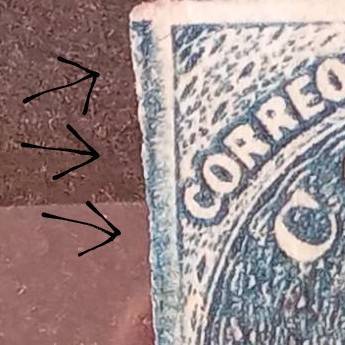
The dates are those when stamps were put into circulation.
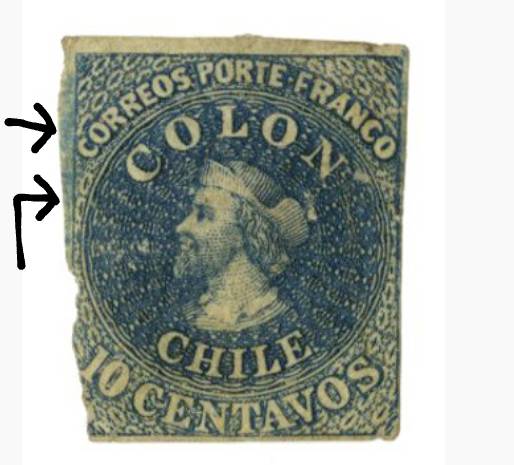
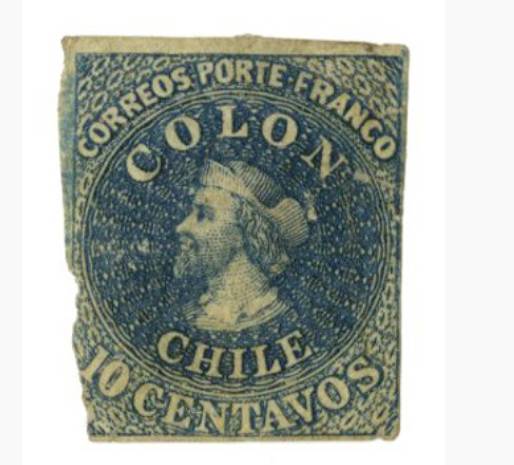
July 1853Printed in London by Perkins, Bacon & Co. Ltd.
200.160 stamps (834 sheets) were sent to Chile along with the plate and watermarked paper. The watermark is a number 10 (11x8 mm).
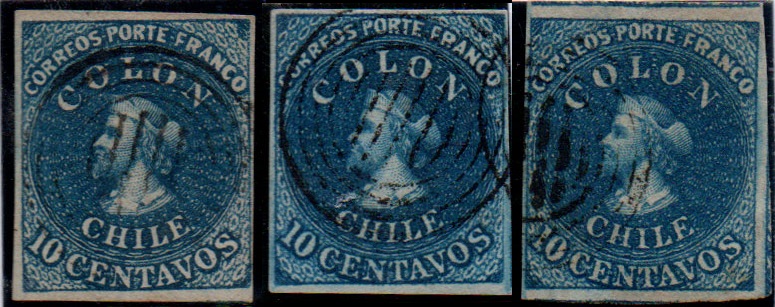
The use of thick ink makes the printing looks with excess ink, specially on the edges of the letters "Correos Porte Franco" (the letters remain sunk like footprints in the mud). Color is dark blue.
September 1854Printed in Santiago-Chile with the plate and paper received from London. Printer: Narciso Desmadryl.
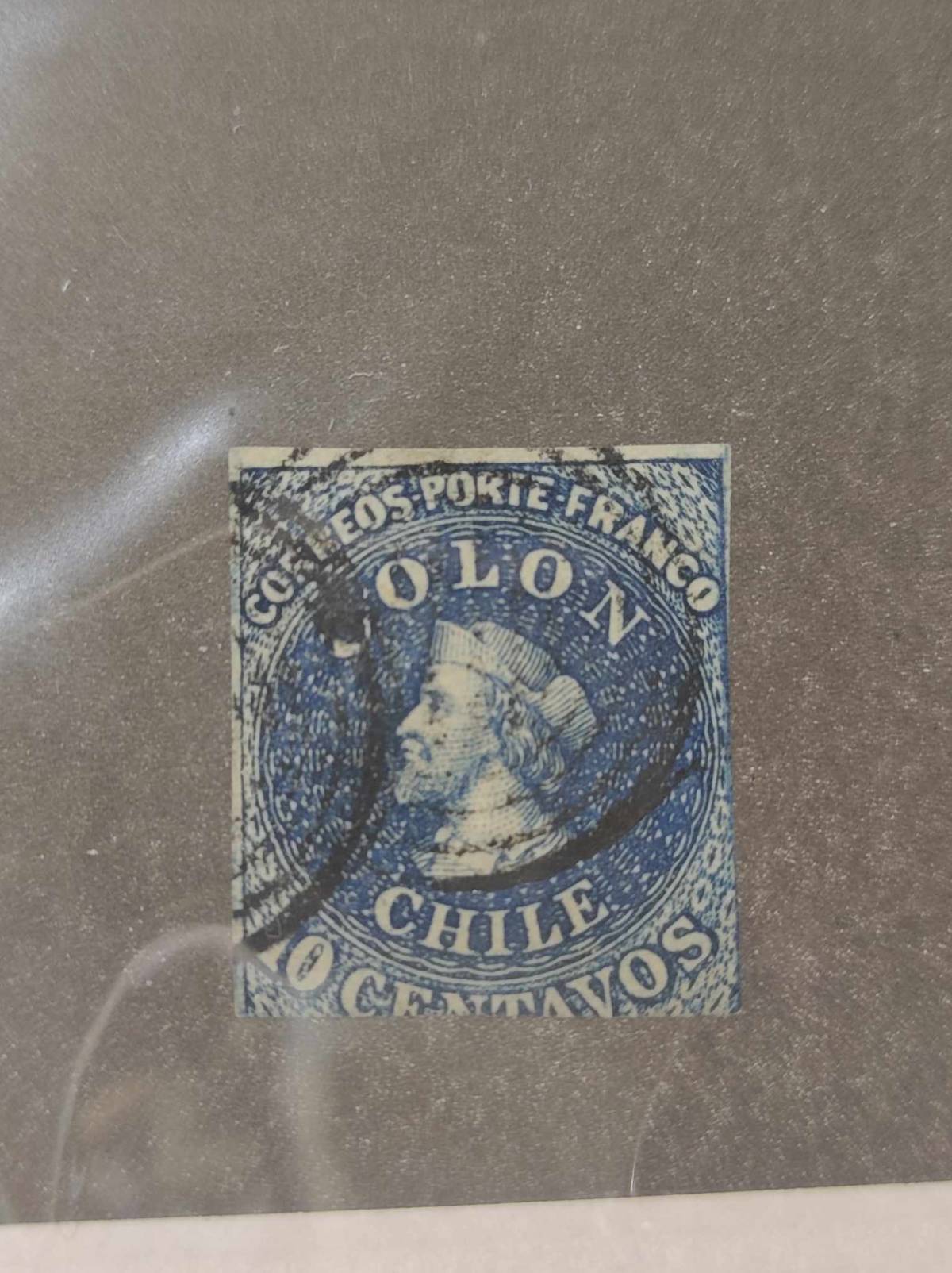
Total: 239.040 (996 sheets). Most of the stamps have a blue color lighter than stamps of 1853.
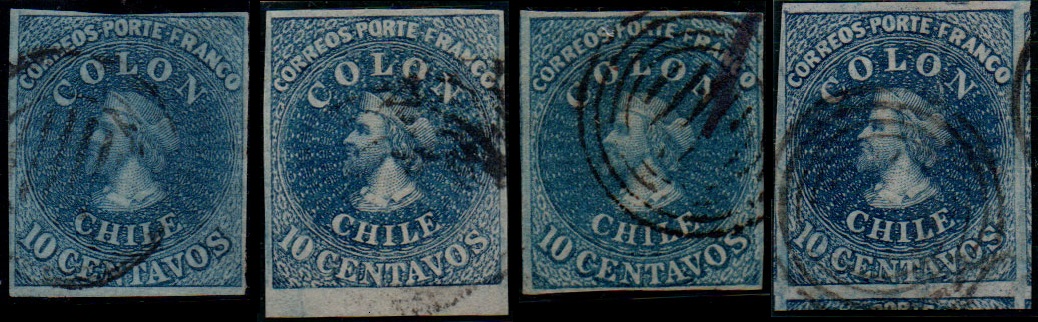
Sharp print with fine detail (guilloche background, shading dots on the nose of Columbus). Well-defined letters that appear wider and whiter (Correos Porte Franco).
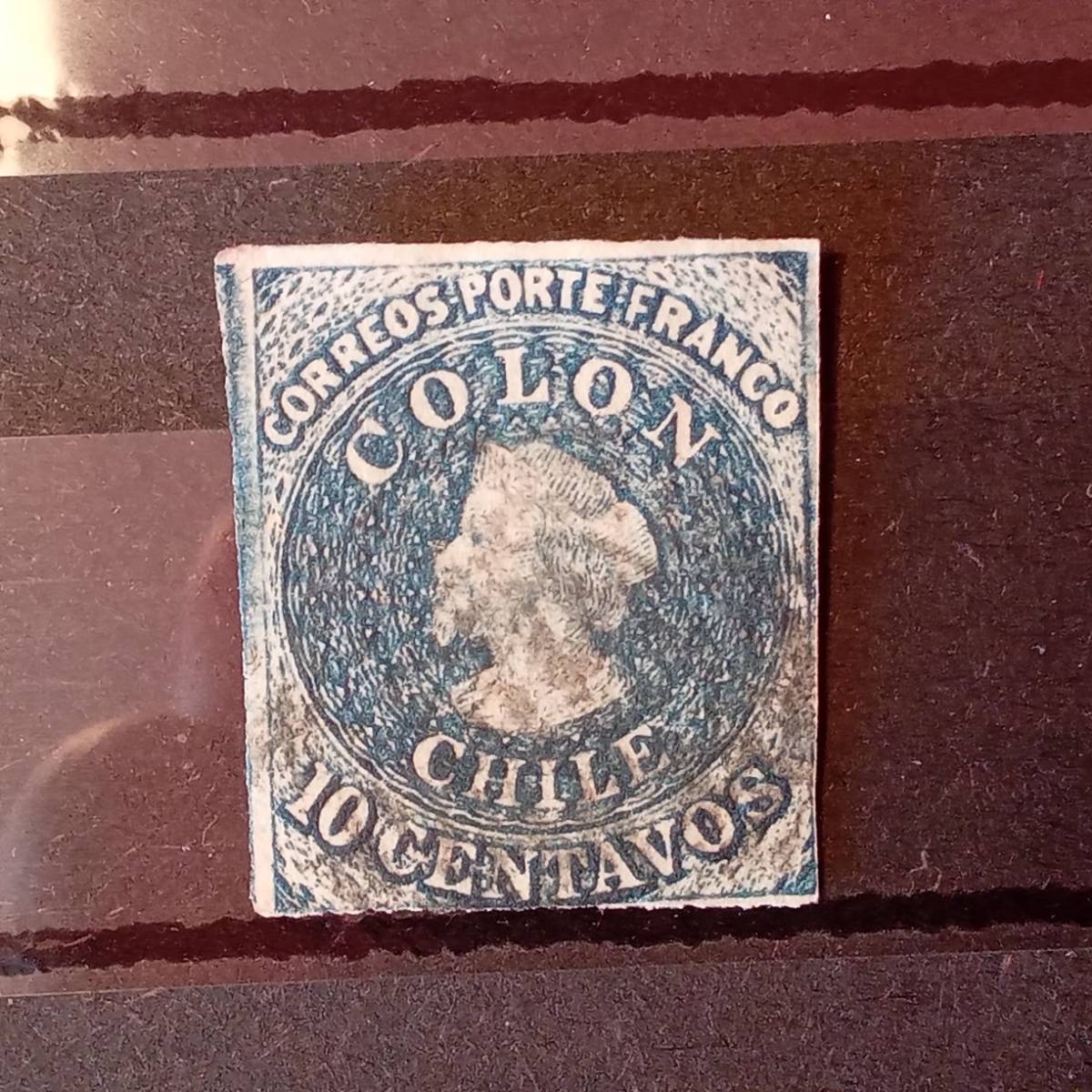
June 1856 to December 186010 prints were made between those years. Same plate and paper as the previous ones. The first prints are of better quality, but the use of the plate already begins to wear out and the prints become increasingly dirty, blurry and of poor quality.
These stamps were printed by the Post Office in a workshop that was set up in its main office in Santiago. Total printed 1.917.600
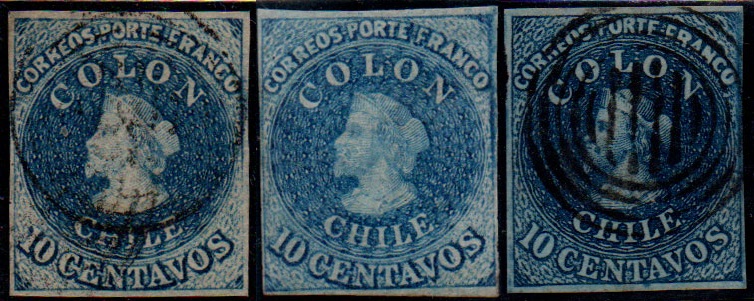
These stamps are called "Estancos" and are the ones with most color variations: dark blue, slate blue, light blue, indigo, greenish blue, etc.
Columbus head has more wear, details are lost and it looks more whitish.
October 1861Printed in London by Perkins, Bacon & Co. Ltd. with new plate and new paper with watermark 10 a little larger (12x9 mm). Total: 3.000.000 stamps.
Most of them were obliterated with the postmark "Cancelled" although in some small cities the previous postmark (concentric circles) continued to be used.
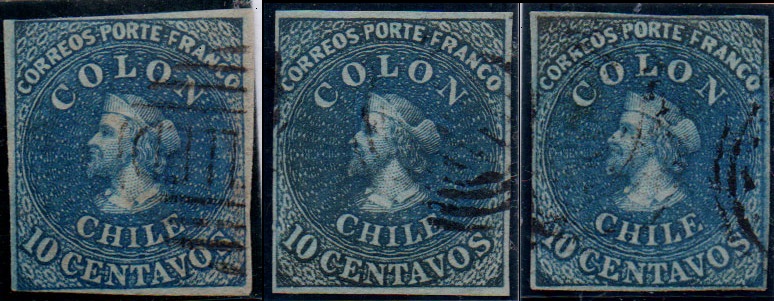
These stamps have a sharp and clean impression and the blue color is very stable and without major variations





 Posted 01/15/2025 6:56 pm