| Author |
 Replies: 17 / Views: 2,031 Replies: 17 / Views: 2,031 |
|
Valued Member
United States
67 Posts |
|
|
|
I've noted that some postings give the plate position of a stamp using letters found on the stamp. Why is this something collectors want to know? Also, plate blocks are of interest, so why do collectors like these as well?
So if I wanted to buy a penny black, would the letters in the corners be of concern?
|
|
Send note to Staff
|
|
|
|
|
Pillar Of The Community
Australia
3298 Posts |
|
|
Plating stamps is as challenging as it is rewarding. Some collectors will aim to reconstruct the entire plate of a given issue. I think it's a certain mindset, in that some folks love a challenge. I can't help you with plate block collectors, but I think there's a lot of variation under that umbrella. Cylinder numbers, control numbers, millesimes etc. Some penny black plates are rare, so it's nice to know what you have, or what you're buying. In the main, they're not too terrifying to plate  |
Send note to Staff 
|
|
|
Pillar Of The Community
United Kingdom
8631 Posts |
|
|
Conversely, you can collect stamps perfectly happily without peering at plate numbers, just as you can ignore shades, perforation counts and watermarks. If you just want an example of a 1d black, look first for four clear margins, a nice apperance and no other damage and expect to pay around £100. |
|
Send note to Staff
|
|
|
Pillar Of The Community
Netherlands
6641 Posts |
|
|
People, mostly, identify plate positions because each stamp in a plate is somewhat different. In part, it satisfies curiosity. As it has been written above, it makes it possible to reconstruct plates. It also makes stamps that look the same unique. If you have hundreds of Penny Blacks, you can throw away all but one. Alternatively, you can put one of each corner letter combination in your album and have hundreds of stamps instead of many of one stamp. Plate blocks, and in the UK cylinder blocks help identify the plate from which stamps were printed. Would it not be fun to have a Penny Black from each of the 11 plates used to print it? Cylinders printed two counter sheets at the same time: left and right sheet  Different cylinders (the 10p, primarily is a question of year codes not showing in the picture) and thus different print runs: 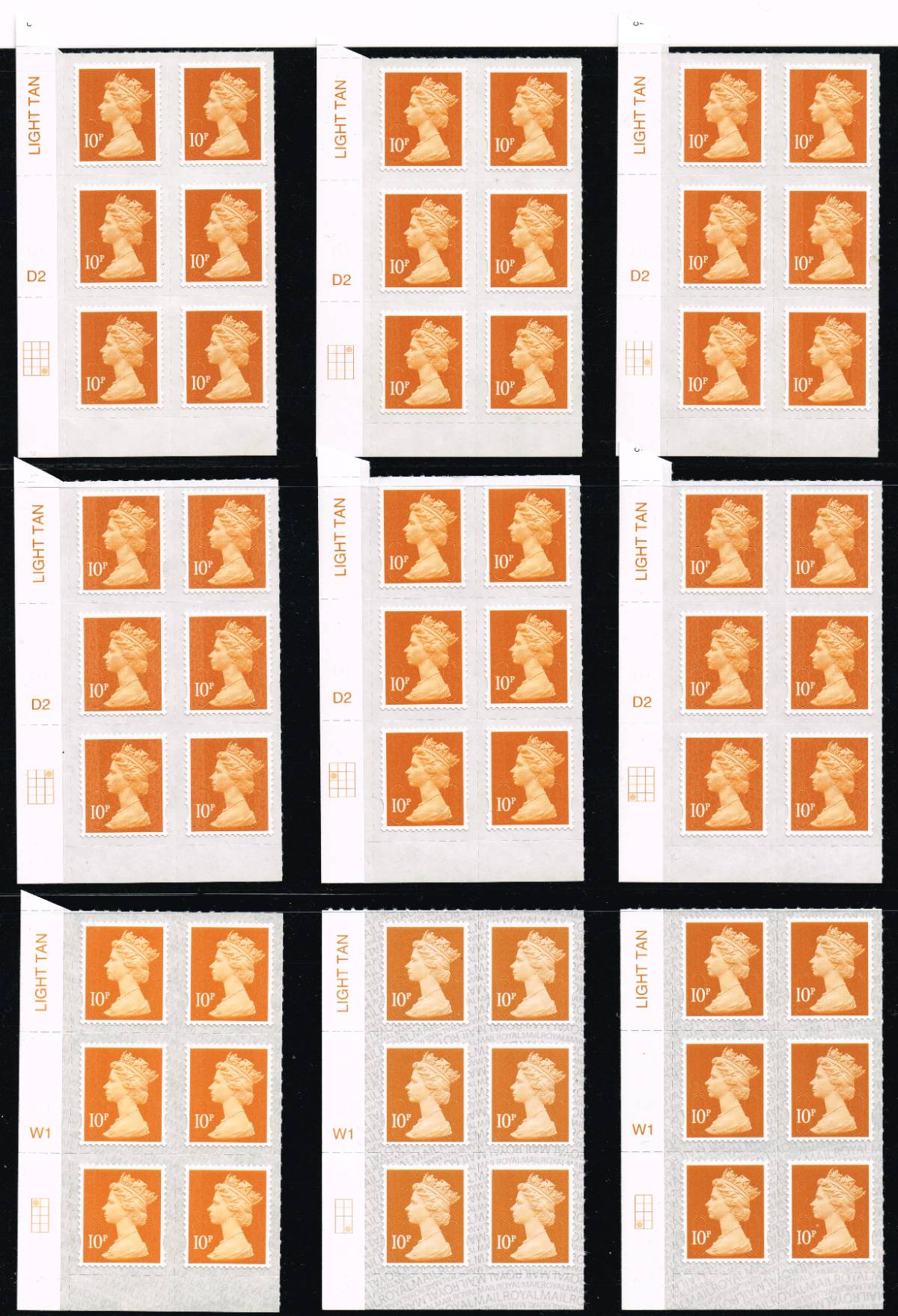 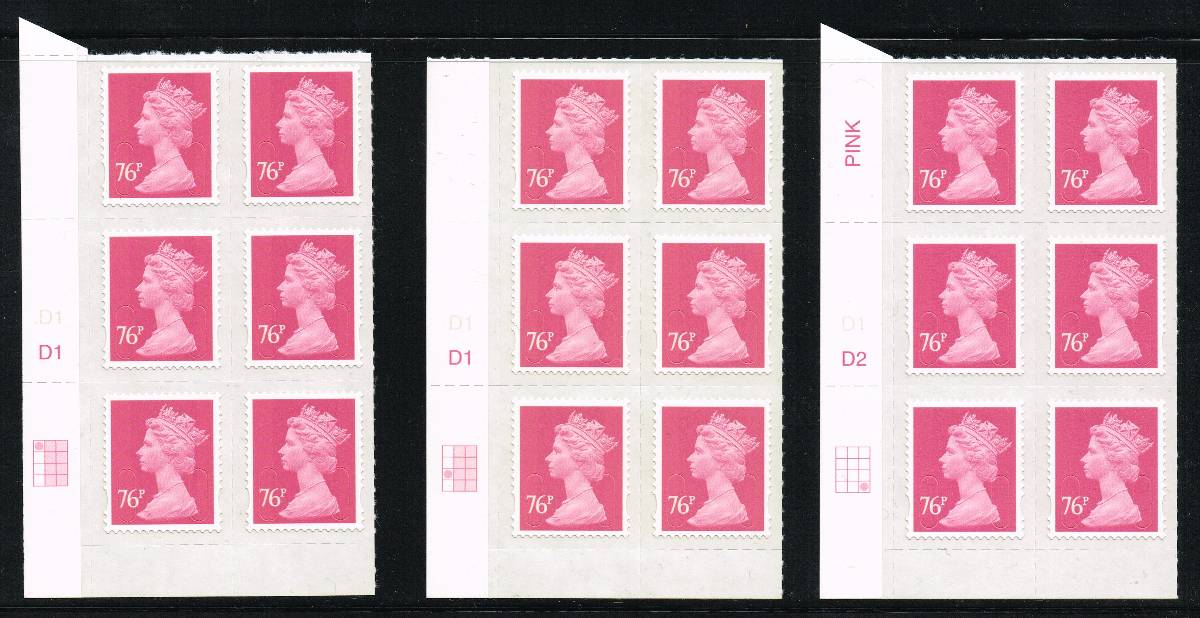 Different printers: 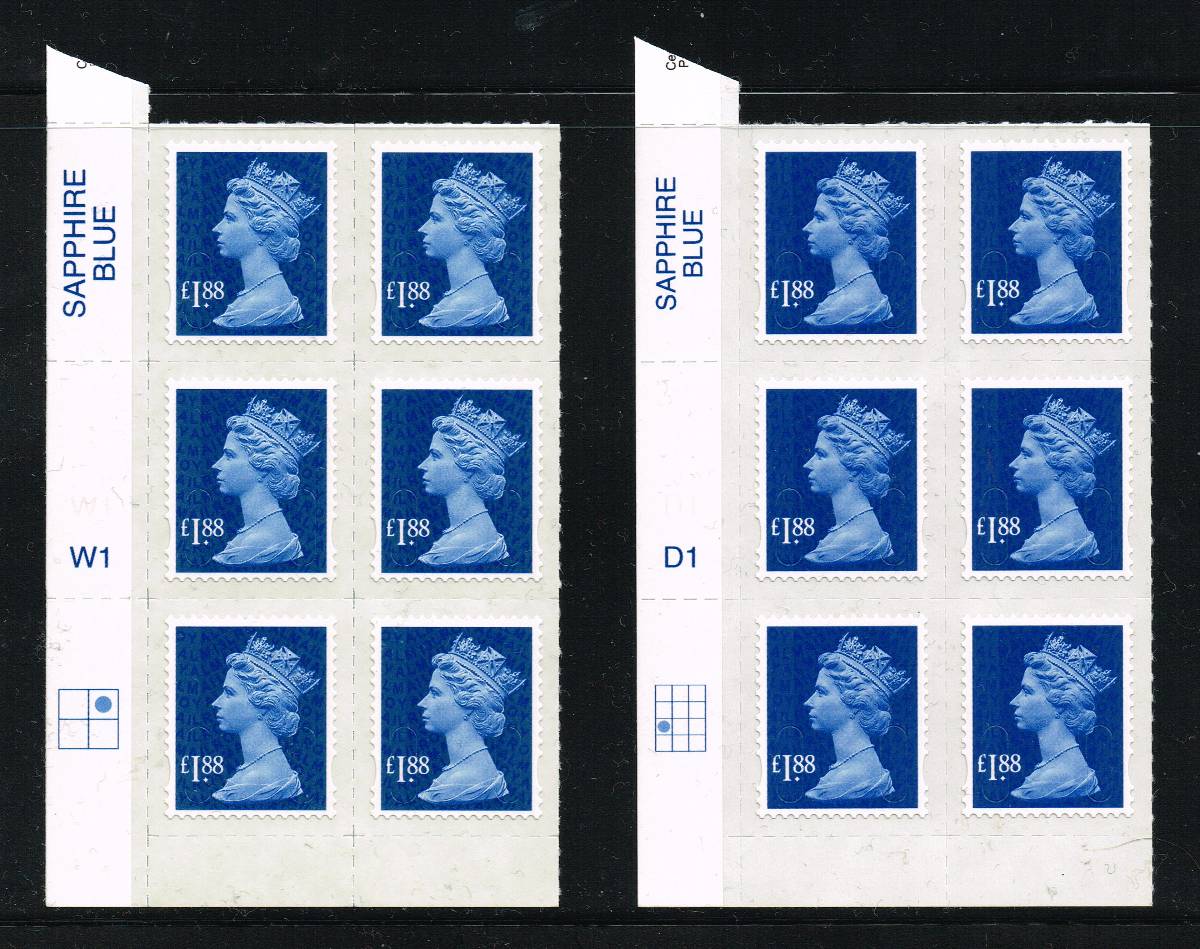 And I know what part of the sheet I have. |
|
Send note to Staff
|
| Edited by NSK - 08/29/2025 01:24 am |
|
|
Valued Member
United Kingdom
380 Posts |
|
|
Quote:
If you just want an example of a 1d black, look first for four clear margins, a nice appearance and no other damage and expect to pay around £100. Mine's got one full margin, which includes the top of the next stamp down. It's C K, so whoever's got a wonky B K may have the top of my copy. I found an SG catalogue from 1963 in a pile of junk the other day. The listed price for a used Penny Black then was 75 shillings, which MeasuringWorth reckons is equivalent to £105 today. |
|
Send note to Staff
|
|
|
Valued Member
United States
67 Posts |
|
|
Thank you everyone for explaining it to me. I think I will be in the ignore plate position camp. If I do find out the plate position I would probably think "oh that is interesting".
Thank you for posting images as well. |
|
Send note to Staff
|
|
|
Valued Member
United States
230 Posts |
|
|
In almost every area of life, some people will take a thing and take to great great detail. In stamps, completing album pages could be great detail to those interested in 1 stamp per country. Collecting every plate number and/or position of a stamp is an even greater degree of detail, and you can go further still if you desire (new vs old plate printings, repaired plates, etc.). Part of what makes life interesting, everyone gets to decide what they are interested in. |
|
Send note to Staff
|
|
|
Bedrock Of The Community
United States
10862 Posts |
|
|
Quote:
Part of what makes life interesting, everyone gets to decide what they are interested in. That's the best part of collecting, that there are dozens of ways to do so and they are all valid. |
|
Send note to Staff
|
|
|
Valued Member

United Kingdom
230 Posts |
|
|
Quote:
Would it not be fun to have a Penny Black from each of the 11 plates used to print it? Having both Plate 1A and Plate 1B would allow a tidy arrangement of twelve stamps on the page. And the next page could include some interesting re-entries and re-struck corner letters. And the third page could include examples of a single plate position exhibiting increasing wear and corrosion. And so on and so on. If somebody gave me a million pounds to spend on stamps, that's how I'd spend it. But if somebody else, given a million pounds, spent it on a million obviously different stamps of the world, that would be just as good. In both cases, the fun of sorting and arranging is the same. |
|
Send note to Staff
|
|
|
Pillar Of The Community
United Kingdom
8631 Posts |
|
|
Valued Member
United Kingdom
230 Posts |
|
|
Quote:
So if I wanted to buy a penny black, would the letters in the corners be of concern? Leaving aside all the entertaining discussion, the answer to your question is NO. If you're thinking about buying a single 1d black because it's a nice thing to own, don't worry about plate numbers or corner letters. Just buy the cleanest, least damaged, widest-margined stamp you can afford. And go for a red maltese cross cancellation, because it spoils the design less than a black one does. |
|
Send note to Staff
|
|
|
Valued Member
United States
67 Posts |
|
|
Thank you pjr. That's exactly what I was thinking cleanest, least damaged, widest margined stamp I can afford. I have a penny red that is in good shape, I'm looking for the penny black now. I hope it doesn't cost me an arm and leg. |
|
Send note to Staff
|
|
|
Pillar Of The Community
Australia
3298 Posts |
|
|
Quote:
I hope it doesn't cost me an arm and leg. I think it was Robson Lowe who said something like 'the pleasure of ownership remains long after the purchase price has been forgotten'...or something like that |
|
Send note to Staff
|
|
|
Pillar Of The Community
United Kingdom
8631 Posts |
|
|
Valued Member
United States
51 Posts |
|
|
It may be just me being odd, but the areas I focus on - US 1873 officials and Most Germany - The plate position of plate varieties matters, at least to me.
On the officials a similar plate variety may exist in multiple locations, but to varying degrees. I consider them different varieties and lok for each identifiable position.
In at least one case there's a major listed variety on one position that extends into the next stamp over. The first is listed and expensive, the position to its right is unlisted.
I'm not sure if each position being identifiable is true for some German stamps, but I'll find out eventually |
|
Send note to Staff
|
|
|
Bedrock Of The Community
United States
10862 Posts |
|
|
Replies: 17 / Views: 2,031 |
|




 Posted 08/28/2025 6:27 pm


