| Author |
 Replies: 28 / Views: 2,642 Replies: 28 / Views: 2,642 |
|
Valued Member
63 Posts |
|
|
|
Hello,
The expertizing organizations I have contacted so far informed me that they only issue certificates referencing Scott numbers for listed items and confirming authenticity. However, they do not provide detailed specification reports, which Scott publishers require with certified measurements from expertizing bodies.
I would be most grateful if someone might be able to assist me personally, or alternatively recommend a certified specialist or organization capable of preparing a full technical specification and observation report for a stamp.
|
|
Send note to Staff
|
|
|
|
|
Pillar Of The Community
United States
811 Posts |
|
|
Pillar Of The Community
Netherlands
6647 Posts |
|
|
Valued Member
63 Posts |
|
|
Valued Member
63 Posts |
|
|
Hello Philazilla, NSK
i am unable to share a google drive link where more precise details are explained.
Yes, I have the above dilemma, where stamp expertizing organisations does not provide detailed specification reports irrelative of Scott numbers listed.
|
Send note to Staff 
|
|
|
Pillar Of The Community
Netherlands
6647 Posts |
|
|
You might want to learn to state your objectives and stop being vague.
Considering you are unable to state a clear question, I am not surprised you received the answers you did from the expertising organisations.
It appears you are looking to get confirmation you have an unlisted variety of a listed stamp.
Considering you mentioned Scott nrs. 594 and 596 in your other thread that was locked because you were unwilling to provide clarity, it looks like you have a stamp that is neither a rare and valuable (the clue!) 594, nor a dito 596, but you are trying to get it confirmed as an unlisted variety of one of those, rather than being a highly common stamp with little value.
Edit: that is what all the vagenuess - on top of lingual issues - and references lead me to believe is going on. |
|
Send note to Staff
|
| Edited by NSK - 08/29/2025 05:43 am |
|
|
Valued Member
63 Posts |
|
|
Hello NSK,
Regardless of my own conclusions about this stamp—whether it is rare, common, or not yet documented—I have observed measurable physical varieties that differ from what is currently listed and known.
I submitted this stamp, along with my study case, to an expertising organization. In my request, I specifically asked for a complete data sheet independent of the Scott reference number. However, the stamp was returned without a specification report or any additional details.
At this point, I am seeking a certified expert or organization that can provide comprehensive data sheet reports covering all specifications of the stamp. Once I obtain such a report, I will be able to determine the next steps accordingly.
I would also be glad to respond if anyone has specific technical questions regarding this stamp.
Thank you.
|
|
Send note to Staff
|
|
|
Bedrock Of The Community
United States
10869 Posts |
|
|
You are dealing with a 100 year old piece of paper that has undergone a number of operations involving various types of moisture. This means that there are going to be some very minor variations involved when producing billions of examples. That's why there are multiple factors involved in determining what catalog number a specific example is. |
|
Send note to Staff
|
|
|
Valued Member
63 Posts |
|
|
Hello Revcollector,
Exactly, I took that into consideration while calculating the perforations tolerances.
Thank you |
|
Send note to Staff
|
|
|
Bedrock Of The Community
12778 Posts |
|
|
You didn't get a report because the notes stay in-house but more importantly they had zero reason to go beyond the simplest examination when they saw it was a common stamp. You don't ask for a CAT scan and lab workup on your blood if you present with an ingrown toenail and neither should you expect a lot of testing when your stamp doesn't require it. Simple as pie. |
|
Send note to Staff
|
|
|
Valued Member
63 Posts |
|
|
Hello Rogdcam,
I wish it were as simple as pie. I respect and welcome all opinions that are supported by proper documentation. If you have a specific question regarding this stamp, I will be glad to respond, and I encourage referencing certified experts whenever possible. |
|
Send note to Staff
|
|
|
Bedrock Of The Community
12778 Posts |
|
|
Quote:
I wish it were as simple as pie. I respect and welcome all opinions that are supported by proper documentation. If you have a specific question regarding this stamp, I will be glad to respond, and I encourage referencing certified experts whenever possible. Stop with the word salad. You have answers. Your stamp is common. There will be no report. How long will this drag on for and why am I even participating?  I am going to go workout and never return to this topic. Yes, that sounds marvelous. |
|
Send note to Staff
|
|
|
Pillar Of The Community
United States
775 Posts |
|
|
For those of you who are interested here are some references. Some are freely available, some require a subscription. The One Cent 1921 Perf. II Rotary-No. 544 Richard A. Kiusalas, The United States Specialist June 1966 (this article is available here (page 3): https://goscf.com/t/89707&whichpage=1Perforation Measurements of United States Stamps - A Series of Articles Reprinted from The United States Specialist Bureau Issues Association, Inc. Reprint Series, No.2 (with additional references on page 13) The United States Washington Franklin Rotary Press Rarities by Christopher J. Palermo (who is also a member here) Rotary Press Sheet Stamp Waste by Ken Lawrence, Nov 1994 and June 1995 in American Philatelist Is your 1 cent green Franklin stamp a Scott 594 or 596? If it is, you have a winner by Ken Lawrence Linn's Stamp News Feb 16, 2015 Am Teck - there is no such thing as a "certified specialist". There are no degree or licensing requirements to become an expertizer. If someone is considered an expert it is because of their reputation. |
|
Send note to Staff
|
|
|
Valued Member
63 Posts |
|
|
Hello Germania,
Thank you for your reply and for sharing your extensive knowledge. In fact, my case study is based on the references you mentioned and others along with those from the BEP.
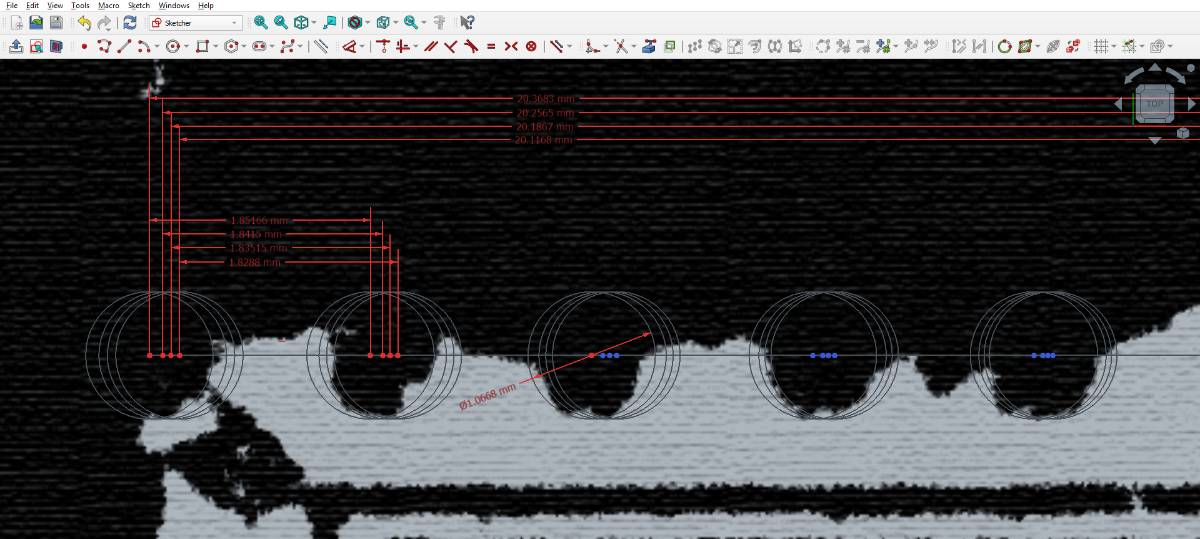
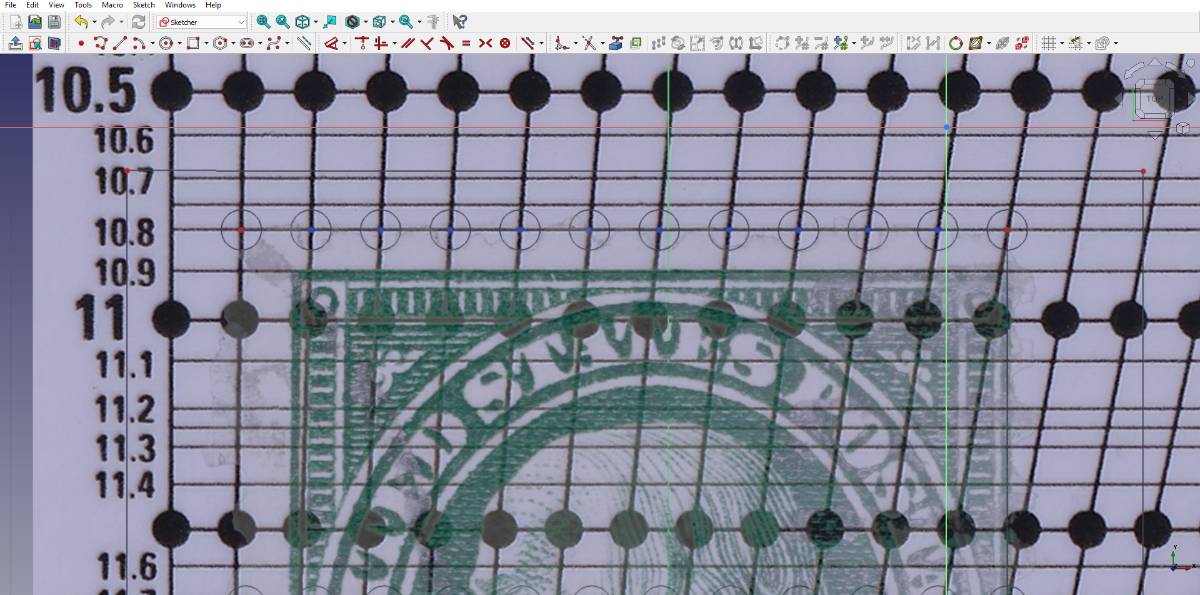
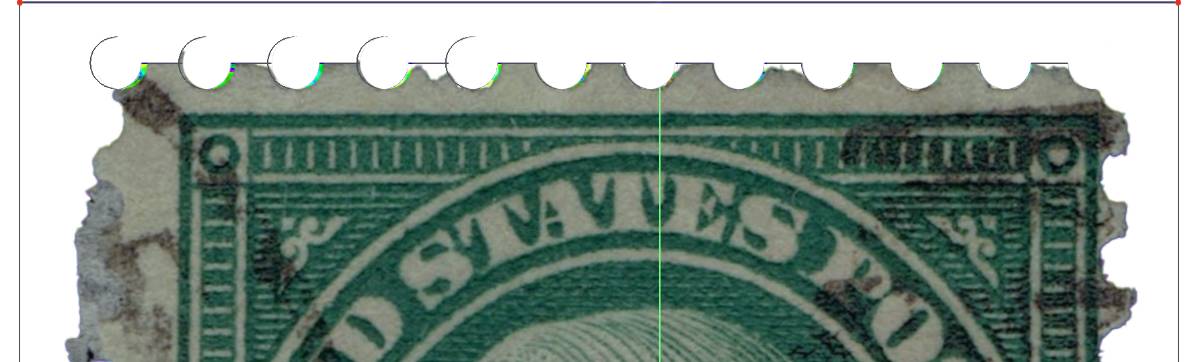
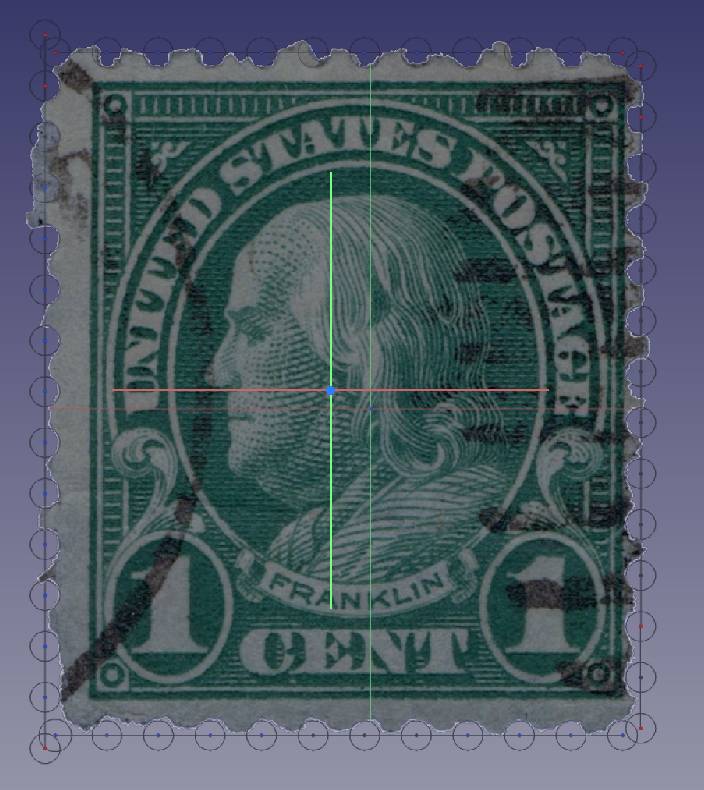
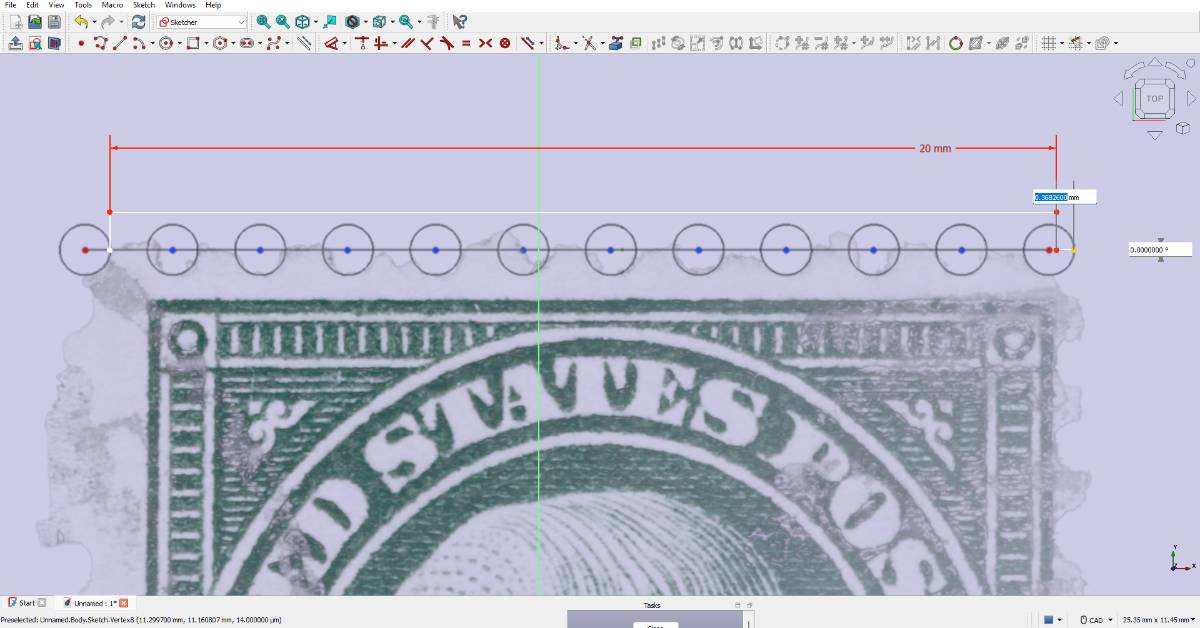
Since one of the main varieties of this stamp lies in its unusual combined, undocumented perforation (not yet officially recognized in the Scott Catalogue), I have applied a reverse-engineering approach and prepared a detailed technical case study. The report documents all measurable specifications of the stamp, with particular focus on perforation tolerances on each side, design dimensions...and even paper feeding angle, as well as other related observations.
Regardless of my own conclusions about this stamp—whether it is rare, common, or not yet documented—and regardless of whether my study proves correct, to whom should I submit it for formal evaluation?
I sincerely appreciate your support, as well as that of the community members. |
|
Send note to Staff
|
|
|
Pillar Of The Community
703 Posts |
|
|
Am Teck, Need to go back to basics and strip away most of the conversation for everything above this. Suggest you provide several clear, concise BULLET statements in as few words as possible I believe I have a Scott xxx The perfs measure aa x bb Scott catalog lists xx as perf yy x zz, so my example can not be Scott xxx, yyy, or zzz I read over the above discussion many times bound and determined to figure out what your concern was and why you don't think it is a currently listed stamp. Still stumped. I have many PhDs who work for me and I face this issue pretty regularly. Since I am a mere mortal and not part of the cool kid PhD club, I need them to clearly outline their issue as if I was a child. Saves everyone a great deal of time  |
|
Send note to Staff
|
|
|
Valued Member
63 Posts |
|
|
Hello SateRevs,
Summary numbers as per your request.
Perforations
Top-bottom 11-73, sides 11-72
Perforation top-bottom count per 20 mm: 10.80
Design Size:
Measured: 19.25 mm × 22.32 mm.
CAD sections average: 19.263 mm × 22.332 mm
CAD Diagonals Vary: 29.556 mm × 29.418 mm
|
|
Send note to Staff
|
|
|
Replies: 28 / Views: 2,642 |
|




 Posted 08/29/2025 03:41 am