| Author |
 Replies: 96 / Views: 6,939 Replies: 96 / Views: 6,939 |
|
|
|
Pillar Of The Community
Israel
4904 Posts |
|
|
Stone Carvings, Gabon, 1991. - Lizard fugure - Large triangular figure - Vulvar engravings (prehistoric carvings symbolizing the female form or fertility) - Chains of circles, concentric circles and meandering grooves 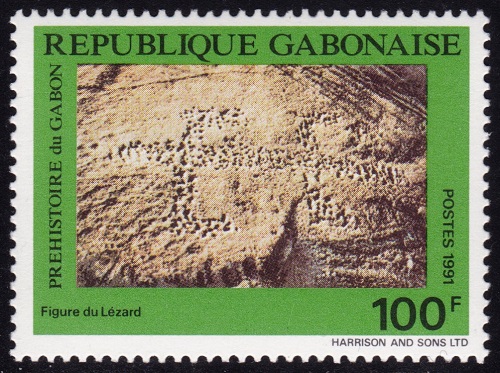 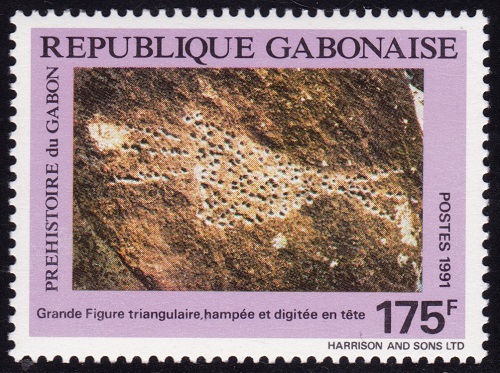 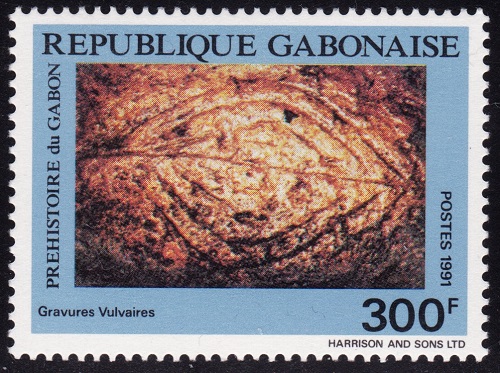 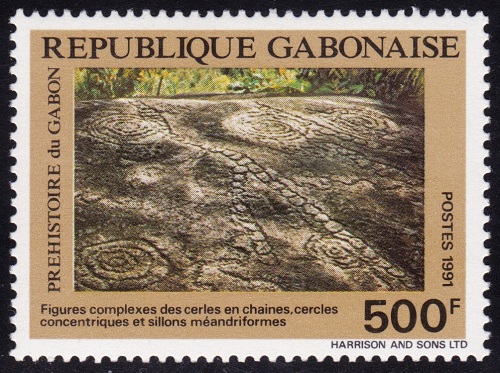 |
Send note to Staff 
|
| Edited by LaoPhil - 11/05/2025 07:43 am |
|
|
Pillar Of The Community
Israel
4904 Posts |
|
|
Rock paintings from the region of Zemmour, Mauritania. Designed by Seguin, engraved by different engravers as indicated, Mauritania, 1975. - Archers - engraved by Jacky Larrivière - Ostrich - engraved by Didier Guedron - Elephant - engraved by Claude Jumelet 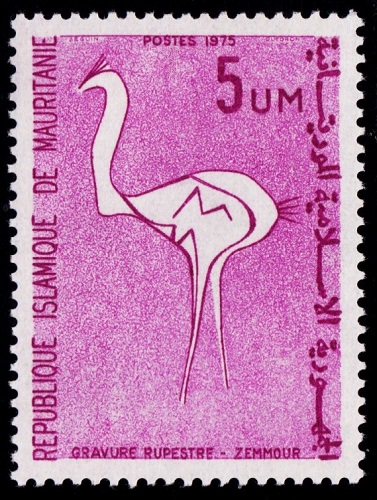 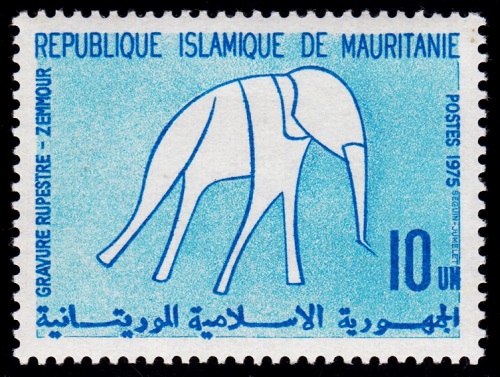 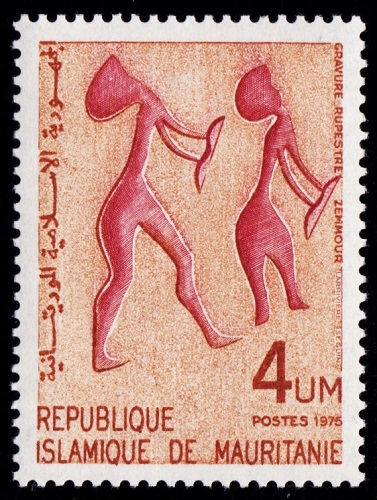 |
|
Send note to Staff
|
|
|
Pillar Of The Community
Israel
4904 Posts |
|
|
The Helan Mountains in northern China, on the border between Ningxia and Inner Mongolia, contain thousands of prehistoric rock engravings dating from about 10,000 BCE to the Western Xia period (11th–13th centuries CE). Carved mainly into dark sandstone cliffs, the images depict animals, hunting scenes, human figures, and geometric symbols. The Helankou (Helan Mountain Entrance) site includes one of the largest and best-preserved concentrations of rock art in northern China, providing important evidence of early nomadic and pastoral cultures in the region. Rock engravings from Helan Mountains, China, 1998. 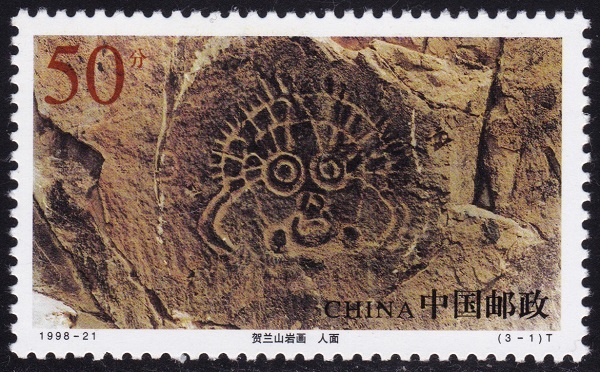 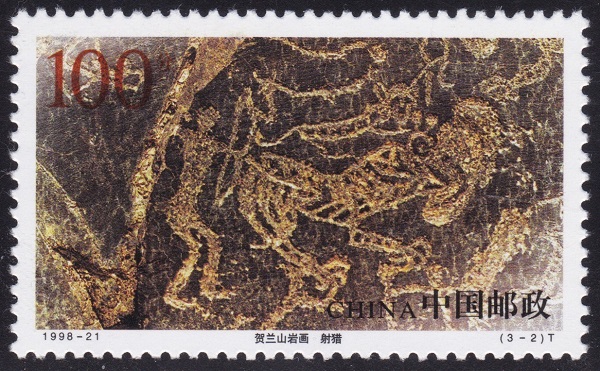 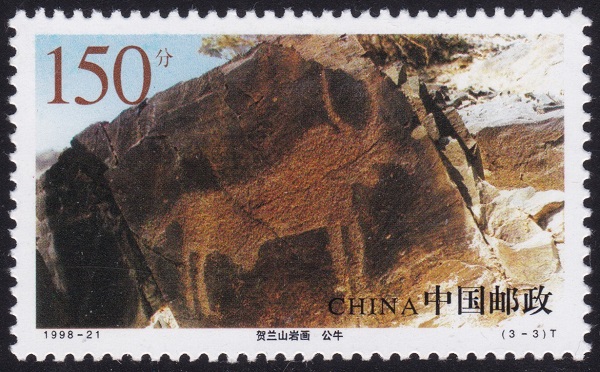 |
|
Send note to Staff
|
|
|
Pillar Of The Community
Israel
4904 Posts |
|
|
Pillar Of The Community
Israel
4904 Posts |
|
|
Cave paintings, History of Art. Stamp feature prehistoric items and researchers on the background of cave paintings, Guinea, 2011. - Pendant made of fossilized coral – A personal ornament likely used for decoration or symbolic purposes, showing early use of natural materials for adornment during prehistoric times. - Abbe Henri Breuil (1877–1961), archaeologist – see page 3. 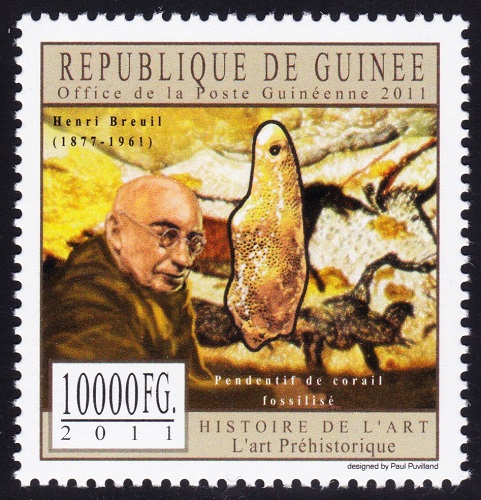 - Reindeer engraved on a piece of wood – A portable artwork from the Upper Paleolithic, illustrating the importance of reindeer in Ice Age hunting cultures and their early artistic expression. - Marcelino Sanz de Sautuola (1831–1888), researcher of Altamira cave – see page 1. 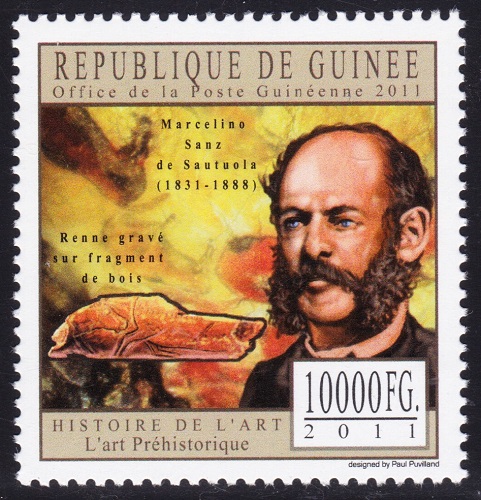 - Aurignacian blade – A finely crafted stone blade dating to about 40,000–30,000 BCE, characteristic of the Aurignacian culture associated with the first modern humans in Europe. 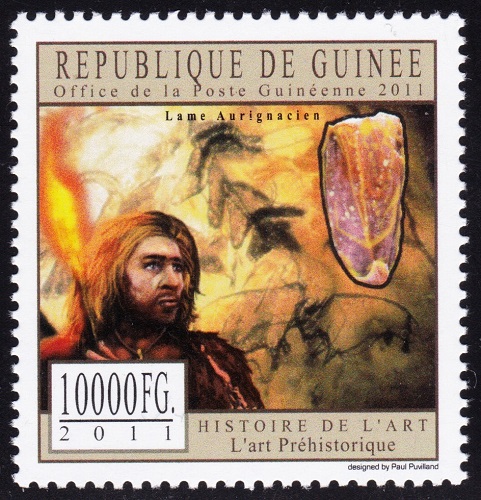 - Lamp made of red sandstone – A prehistoric lamp used to hold animal fat and a wick, providing light inside caves where paintings and engravings were created. 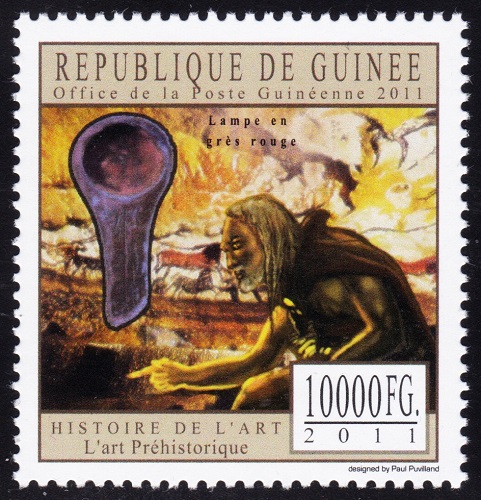 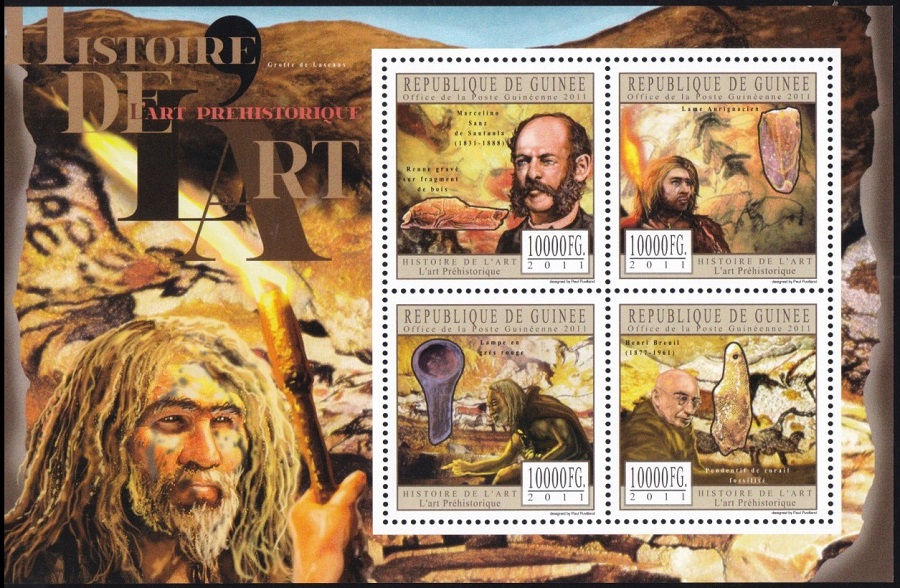 - Pech Merle is a prehistoric cave located near Cabrerets, in the Lot region of southwestern France. It is famous for its Paleolithic cave paintings and engravings, which date to about 25,000 BCE (Gravettian period). The artwork includes spotted horses, mammoths, bison, human figures, and hand stencils, many preserved in their original colors of black, red, and yellow ochre. 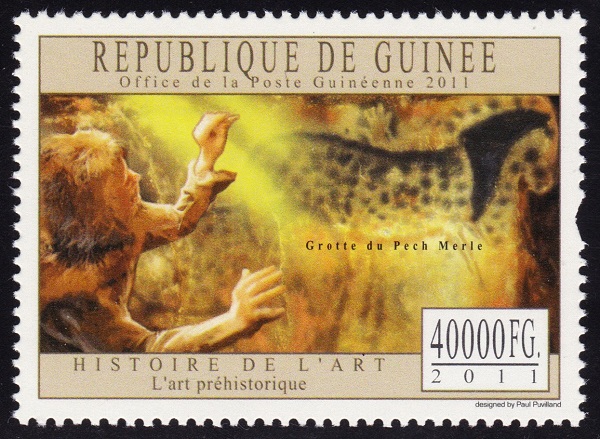 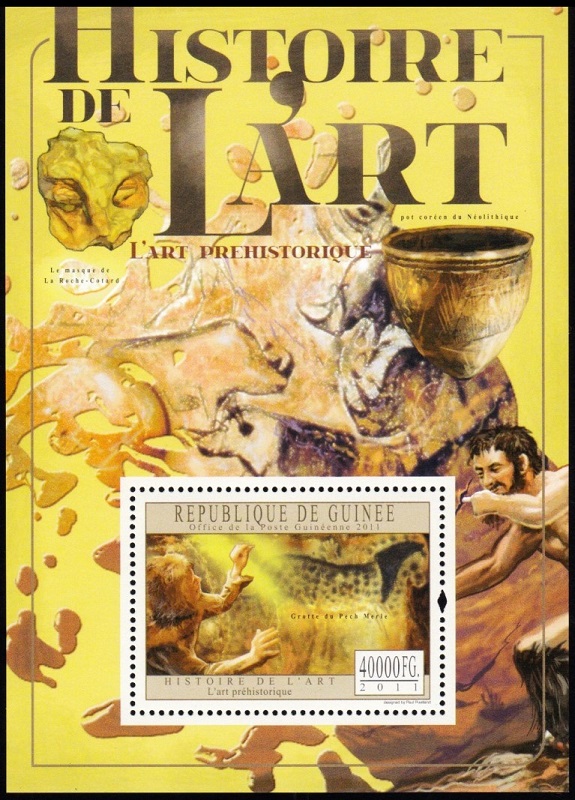 |
|
Send note to Staff
|
|
|
Pillar Of The Community
Israel
4904 Posts |
|
|
Stone paintings, Condoa, Tanzania, KUT (Kenya, Uganda, Tanzania), 1967. 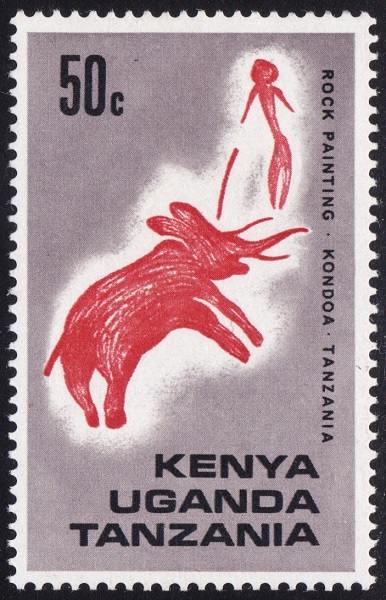 FDC of the set "East Africam archaeological relics" signed by Louis Leakey and his wife Mary Leakey, British paleoanthropologists whose discoveries in East Africa, particularly at Olduvai Gorge, provided crucial evidence for early human evolution and the origins of Homo species. 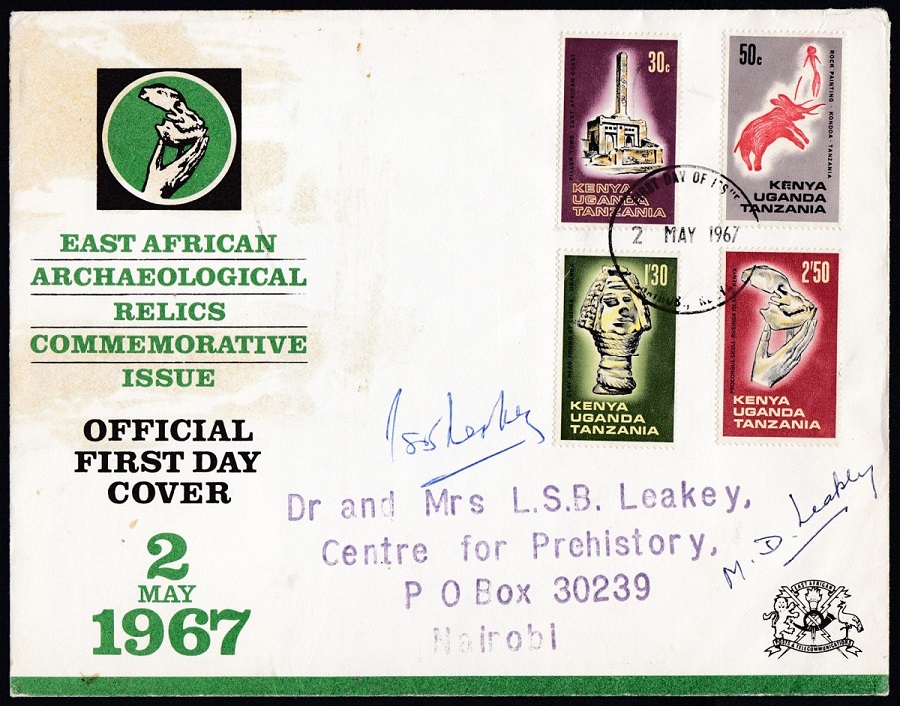 |
|
Send note to Staff
|
|
|
Pillar Of The Community
Israel
4904 Posts |
|
|
Valued Member
Bolivia
18 Posts |
|
|
Pillar Of The Community
Israel
4904 Posts |
|
|
Pillar Of The Community
Israel
4904 Posts |
|
|
Two postmarks from France. - The spotted wild horses painting, Pech-Merle cave, France, 1995. 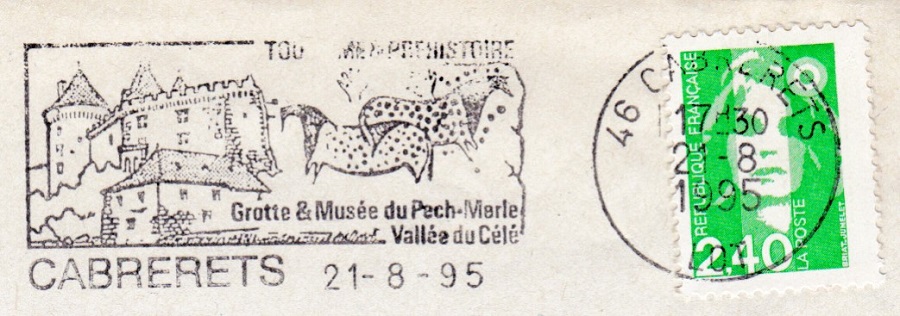 Horse paintings fron cave in Mouthiers-sur-Boeme (Charente), France, 1999. 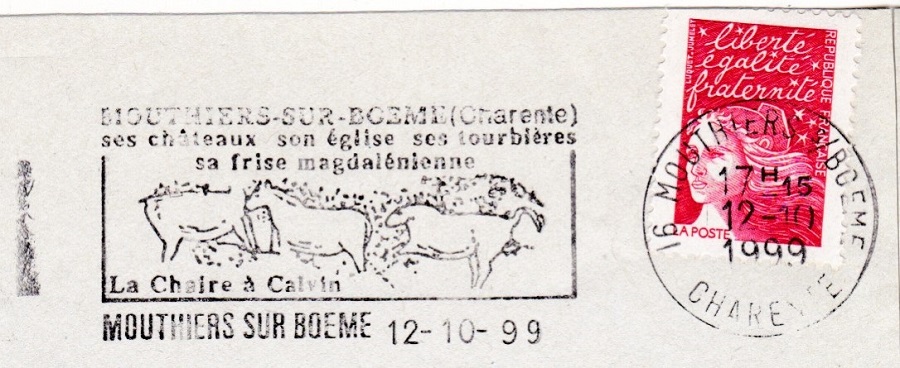 |
|
Send note to Staff
|
|
|
Pillar Of The Community
Israel
4904 Posts |
|
|
The Rouffignac Cave, located in the Dordogne region of France, contains Upper Paleolithic art dating to around 13,000–14,000 BCE (Magdalenian period). Its long galleries feature over 250 engravings and black drawings, mainly of mammoths, bison, and horses, making it one of the largest decorated caves in Europe. Mammoth paintings, Rouffignac Cave, France, 2006. 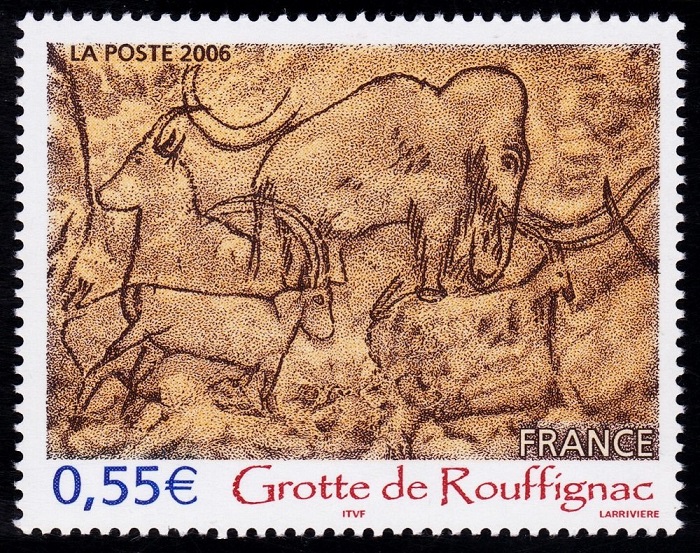 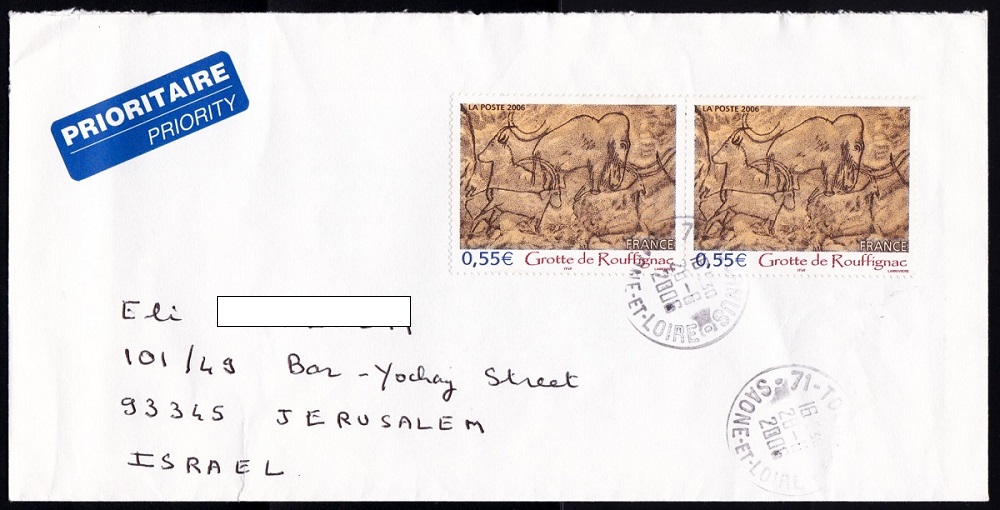 |
|
Send note to Staff
|
|
|
Pillar Of The Community
Israel
4904 Posts |
|
|
Cave and stone paintings on a stamp of Sri Lanka issued in 1994 for the "World's Indigenous People's Day". On the right, the horse painting from Lascaux cave in France. I think the left image is stone painting from Australia and the central is from South America. 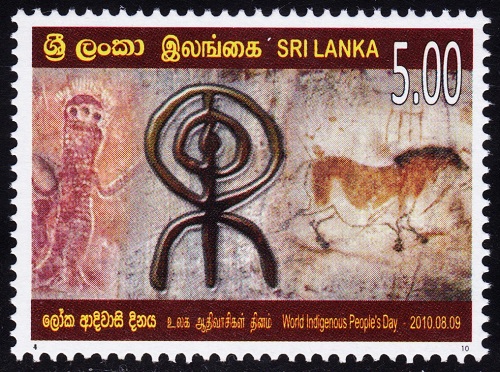 Issued in SS contains rock paintings on the left margin.  |
|
Send note to Staff
|
| Edited by LaoPhil - 11/09/2025 01:37 am |
|
|
Pillar Of The Community
Israel
4904 Posts |
|
|
Cave and stone paintings, Mali, 1994. The Rock Carvings in Tanum, located in western Sweden, date from the Bronze Age (c. 1800–500 BCE) and feature thousands of images carved into granite outcrops. The motifs include ships, humans, animals, weapons, and symbols, providing valuable insight into the prehistoric Scandinavian societies. The Tanum carvings declared a World Heritage Site by UNESCO in 1994. 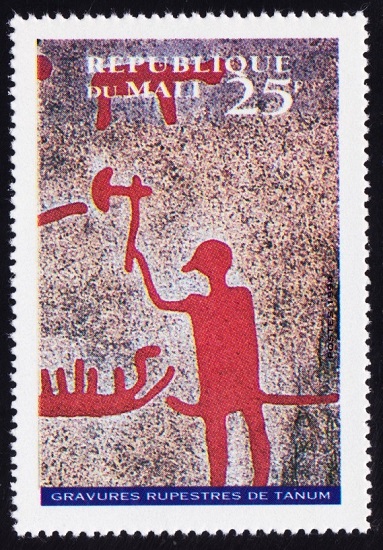 Early Painters. 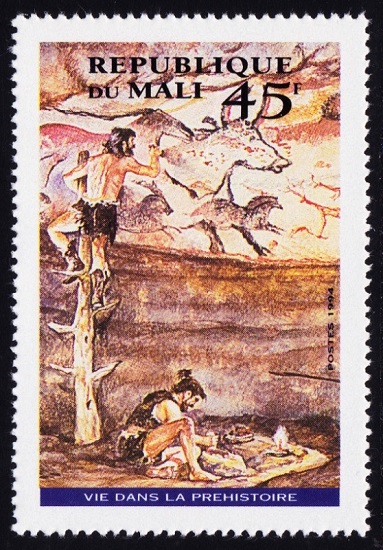 Lascaux Cave paintings. 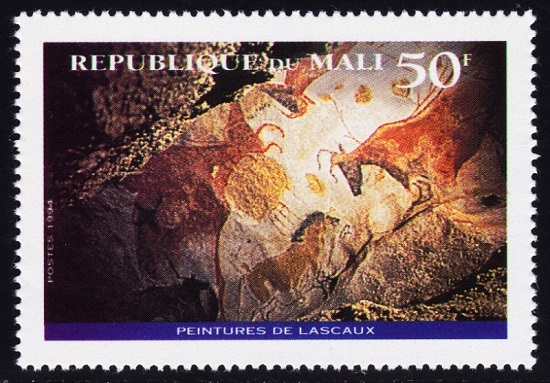 |
|
Send note to Staff
|
|
|
Pillar Of The Community
Israel
4904 Posts |
|
|
Cave paintings, Niger, 2016. Lascaux Cave, France. 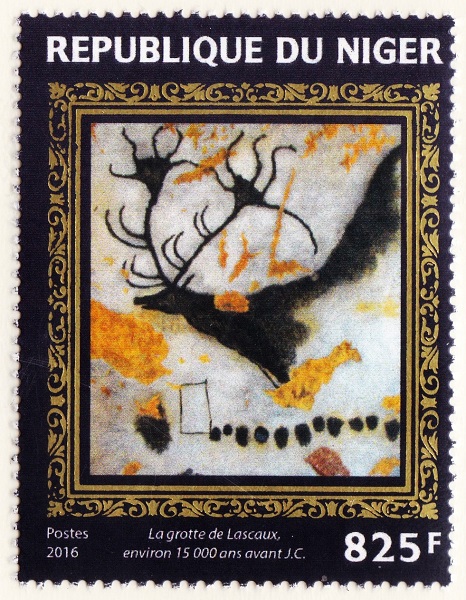 Bhimbetka rock shelters, central India. 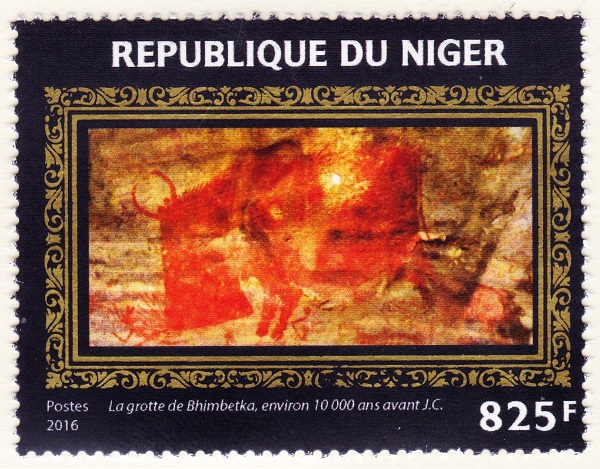 The Tadrart Acacus mountains in southwestern Libya contain thousands of rock paintings and engravings dating from 12,000 BCE to 100 CE, depicting animals, humans, and daily life scenes. The site was inscribed as a UNESCO World Heritage Site in 1985. 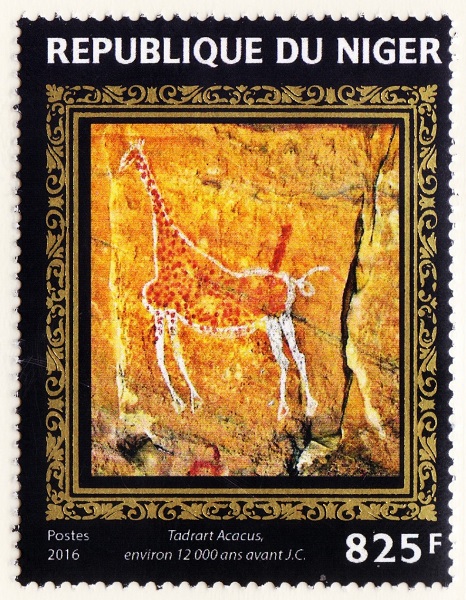 The Magura Cave in northwestern Bulgaria features prehistoric wall paintings created between 10,000 and 3,000 BCE, depicting hunting scenes, dances, animals, and abstract symbols; it is one of Southeast Europe's most significant prehistoric art sites. 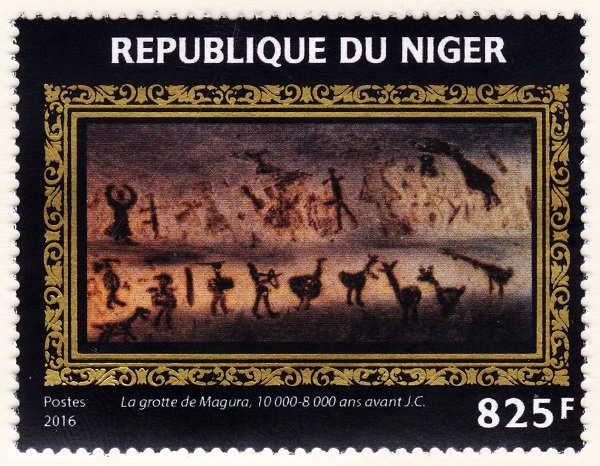 Issued in a sheet. 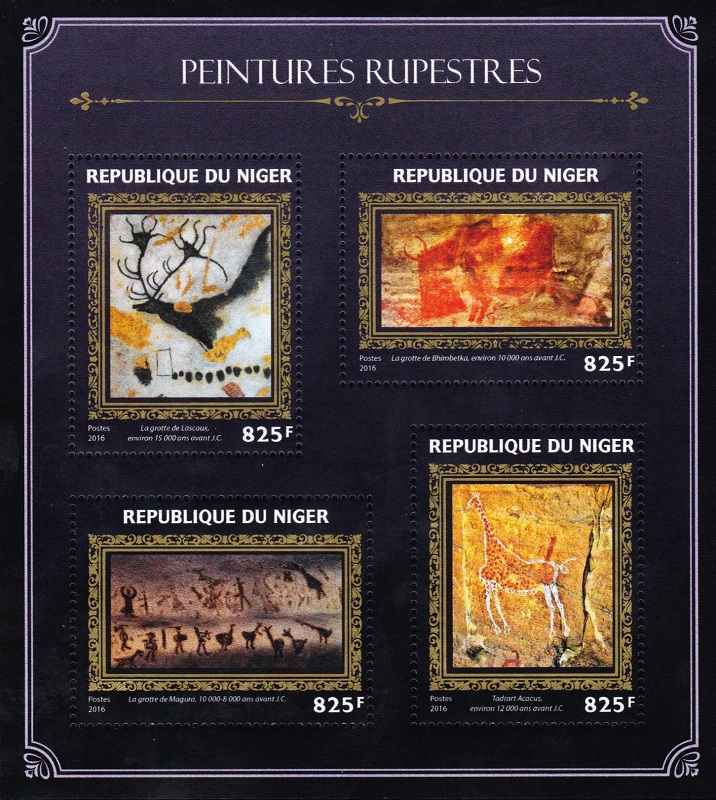 SS: stamp - Chauvet Cave, France. Margin - Rock art in Kakadu National Park, Australia.  |
|
Send note to Staff
|
|
|
Pillar Of The Community
Israel
4904 Posts |
|
|
Replies: 96 / Views: 6,939 |
|




 Posted 11/05/2025 07:42 am